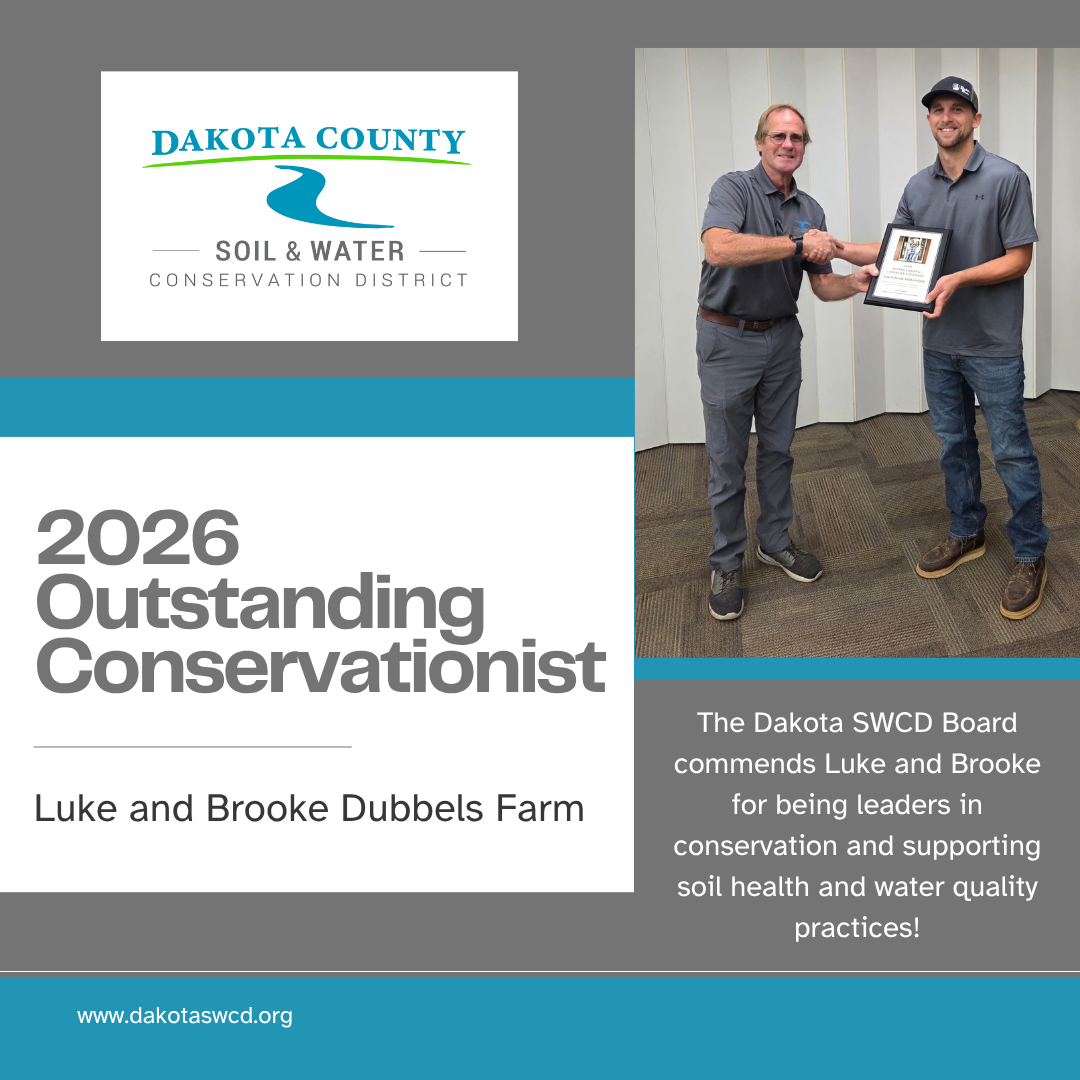
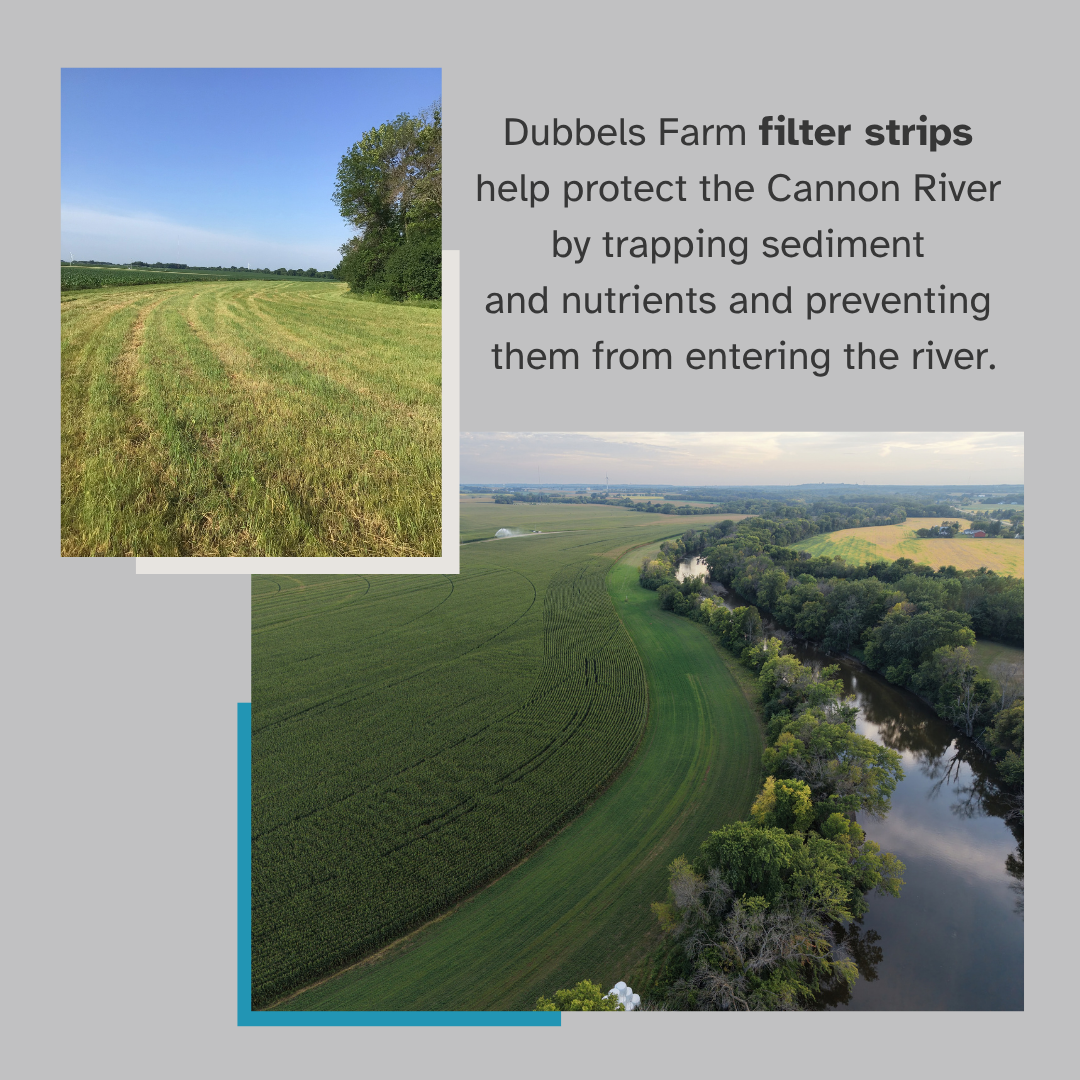
The Dubbels Farm was selected for this year’s award as they implement soil health practices on a farm started by Luke’s great grandfather. They grow corn, soybeans, peas, and sweet corn and implement conservation practices that include cover crops, no-till farming, and nitrogen and irrigation water management. They also maintain filter strips and several structural practices which help protect the Cannon River.
The Dubbels understand the importance of building soil health through long-term, sustainable land management. They rely on this soil to support their family and want to preserve productive farmland for future generations. In addition to operating the farm, they operate a seed and trucking business and are strong advocates for combining soil health practices into their farm operations.
The SWCD commends the Dubbels family for being leaders in conservation and supporting water quality and soil health practices.
Every year, the SWCD honors a landowner, business, or organization for their contributions to conserve or restore natural resources in Dakota County.
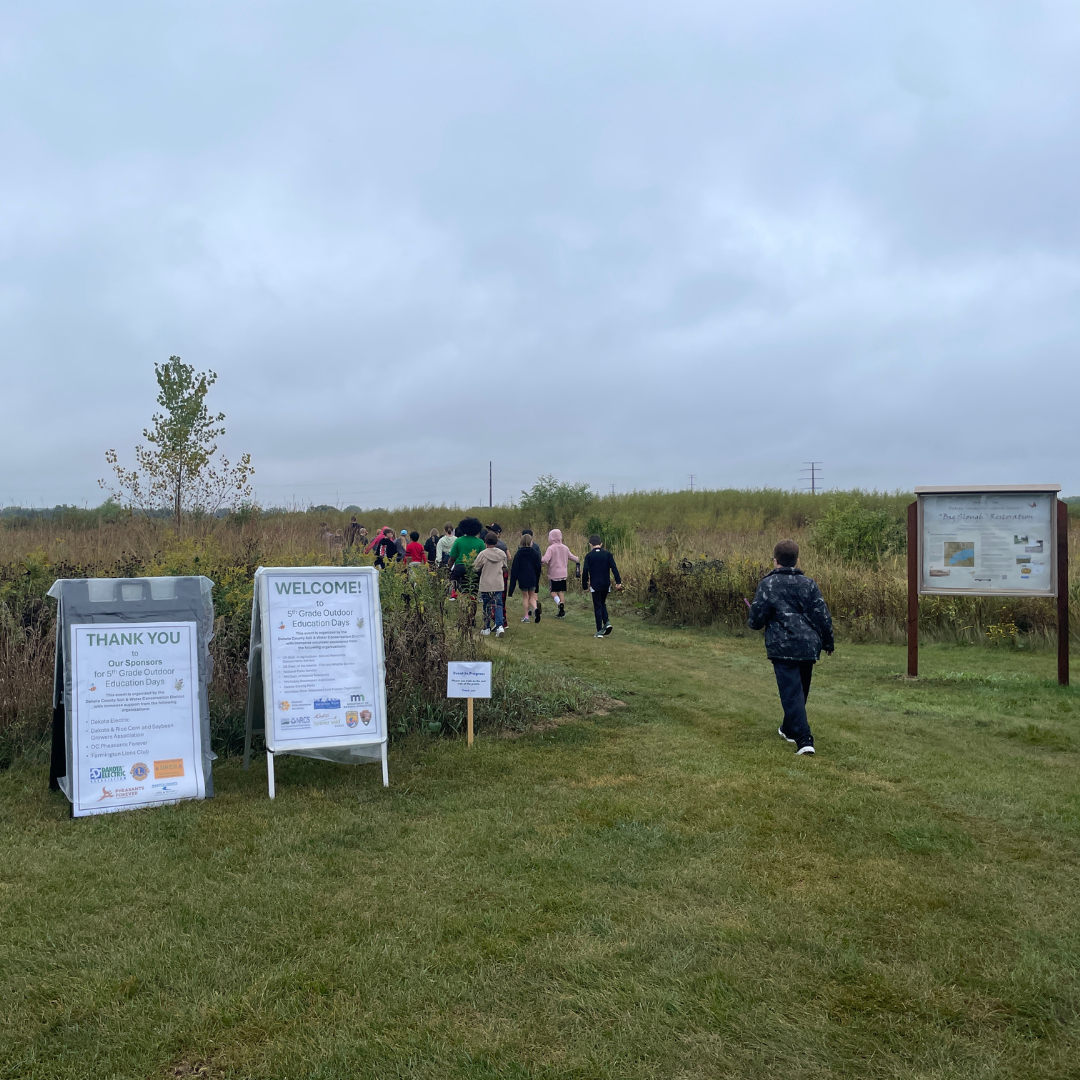
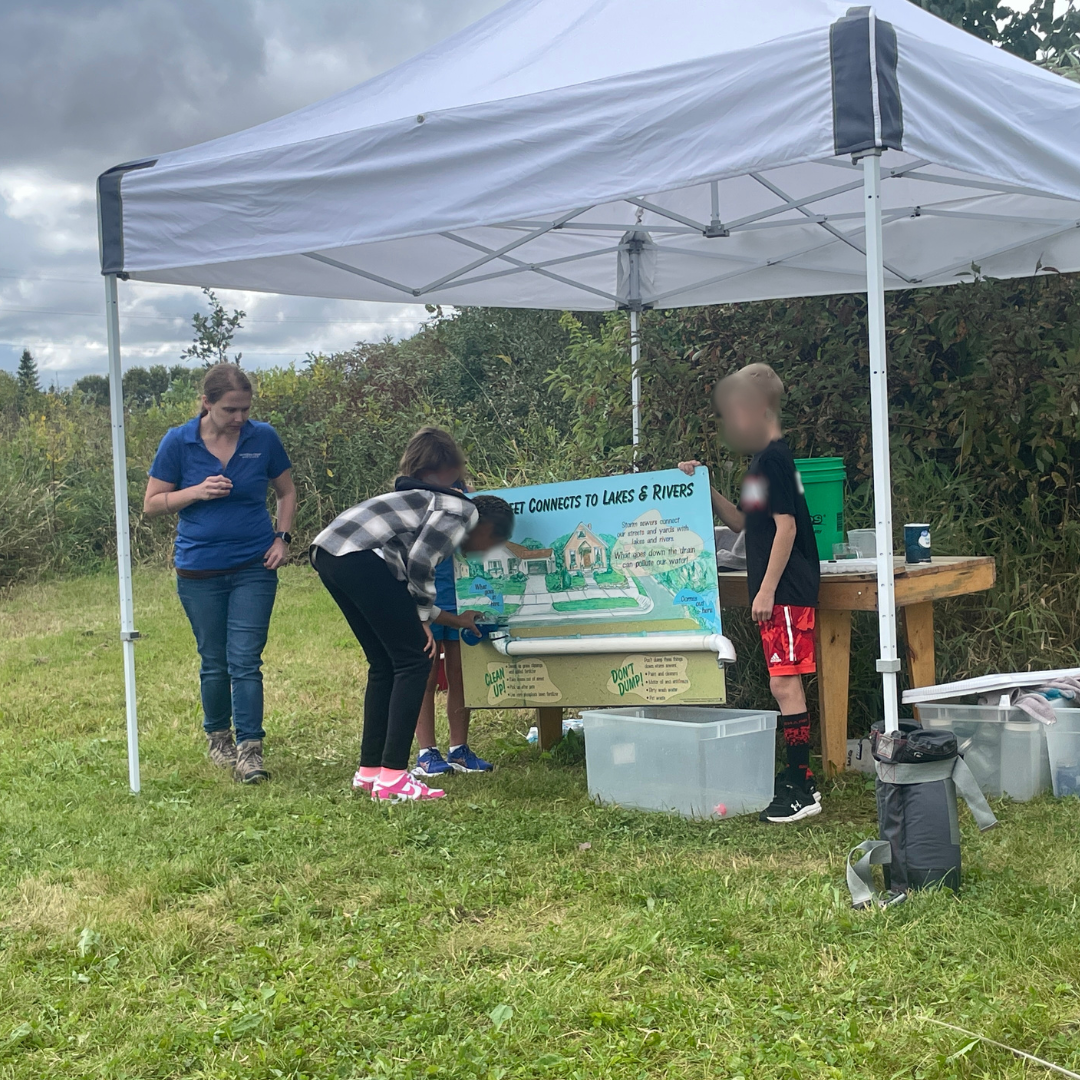
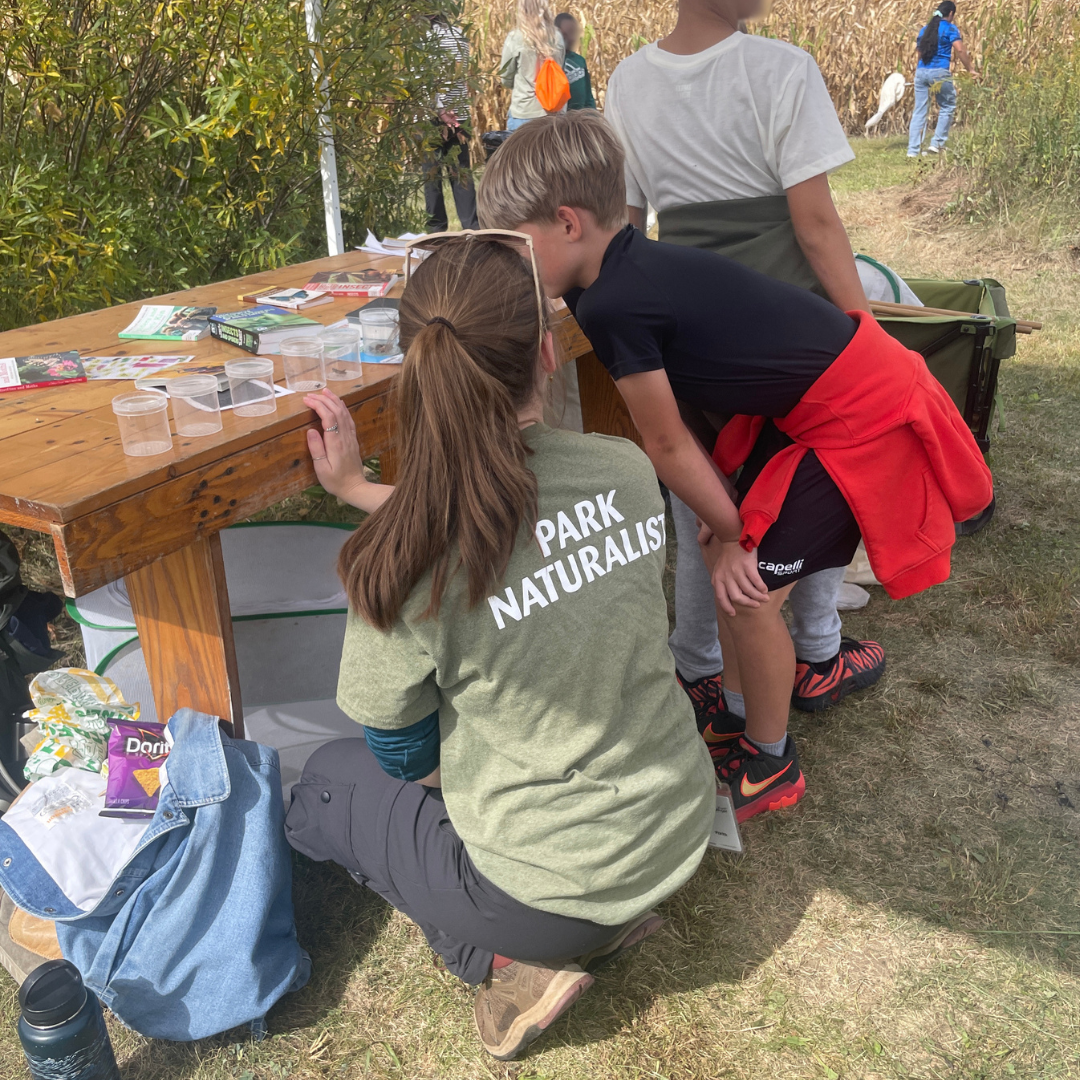
For two weeks starting in mid-September, we hosted our 24th annual Outdoor Education Days! Every year in September, local fifth grade classrooms get the chance to experience a 220-acre native prairie ecosystem located at the Dakota County Fairgrounds in Farmington. Traveling between hands-on, educational stations, the students learn about water quality, soil, insects (bees!), and prairie plants and animals from a host of experts, and experience walking a trail through the tall grass of the prairie.
We would also like to share our gratitude for the station educators, teachers, and chaperones who helped the kids navigate the prairie! We are looking forward to seeing all of you again next year!
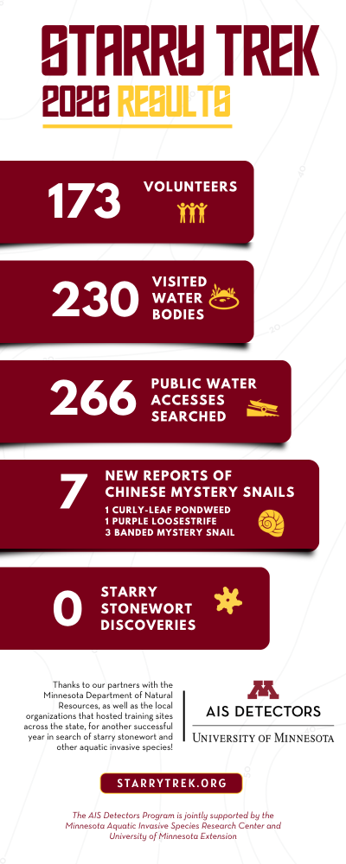
Starry Trek 2026 Results
On Saturday August 8th, 14 volunteers met at the Central Park Pavilion in Eagan to take part in the 9th annual Starry Trekevent, a statewide aquatic invasive species (AIS) monitoring event focused on searching for one of Minnesota's newest aquatic invasive species, starry stonewort (and other invaders).
This year, 173 people joined in across the state to search a total of 266 public accesses on 230 water bodies across Minnesota. You can view a full summary of Starry Trek efforts from our start in 2017 to present on our Starry Trek Results Map- that’s 10 Starry Treks worth of data!
This year, volunteers donated 70 hours to monitor 22 lakes and river boat launches in Dakota County. One new invasive species, purple loosestrife, was confirmed at Farquar Lake in Apple Valley. Several mystery snail samples were collected at both new lake sites and at previously reported sites during Starry Trek. Mystery snail findings do not result in additions to the Minnesota Department of Natural Resources' (MN DNR)infested waters list.
Past efforts by Dakota County volunteers have led to the discovery of a new zebra mussel population (2018 - Isabelle), Eurasian watermilfoil findings (2017 - Blackhawk; 2017 - Orchard; 2022 - Thompson), and mystery snails reports at multiple lakes around the county. With the new findings, Dakota County’s total number of new AIS infestations discovered through Starry Trek is at 19 over the past nine years.
Thank you to all the volunteers for their hard work and Dakota County and the City of Eagan for their partnership with this event! We hope you had a great day exploring Minnesota lakes while helping to search for new AIS and that you'll join us again next year on August 14th!
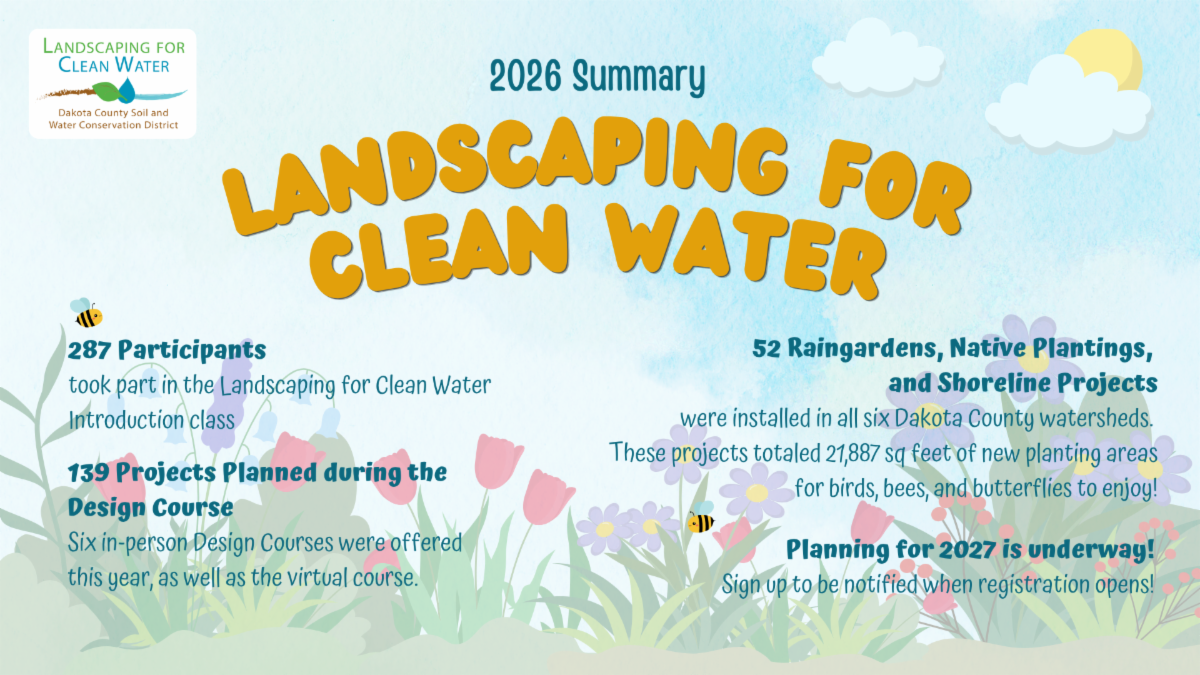
The 2027 program will include Introduction to Clean Water Classes (both in-person and virtual), in-person Design Courses (virtual option for returning participants!), and Maintenance and Natural Shoreline Classes!
Head to our website to learn more about the program and the different class options available. Use the button below to sign up and be notified when registration opens in December 2026!
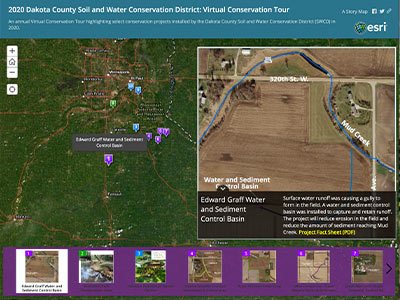
Take a trip around Dakota County to check out projects installed in 2025! Read what landowners have to say about their projects and experience.
Tour stops include raingarden, native garden, and shoreline restorations installed with our Landscaping for Clean Water program, a native prairie restoration, and several soil health and erosion control projects!
CRWJPO Virtual Learning Sessions: Land to Lake Lectures
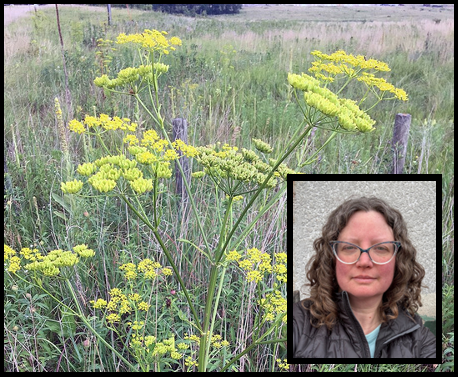
Invasive species can quickly take over natural areas, outcompete native plants, and threaten valuable habitat. Emilie Justen from the Minnesota Department of Agriculture will highlight some of the most common invasive species landowners should be controlling, as well as emerging species that could make their way into our area in the future. Learn how to identify these invaders, understand the threats they pose, and take action to help stop their spread.
These sessions are open to everyone and are a great way to learn about how you can help improve the watershed. Sessions will be held during the lunch hour every month, running from October to March. This series is offered in collaboration with the University of Minnesota-Extension.
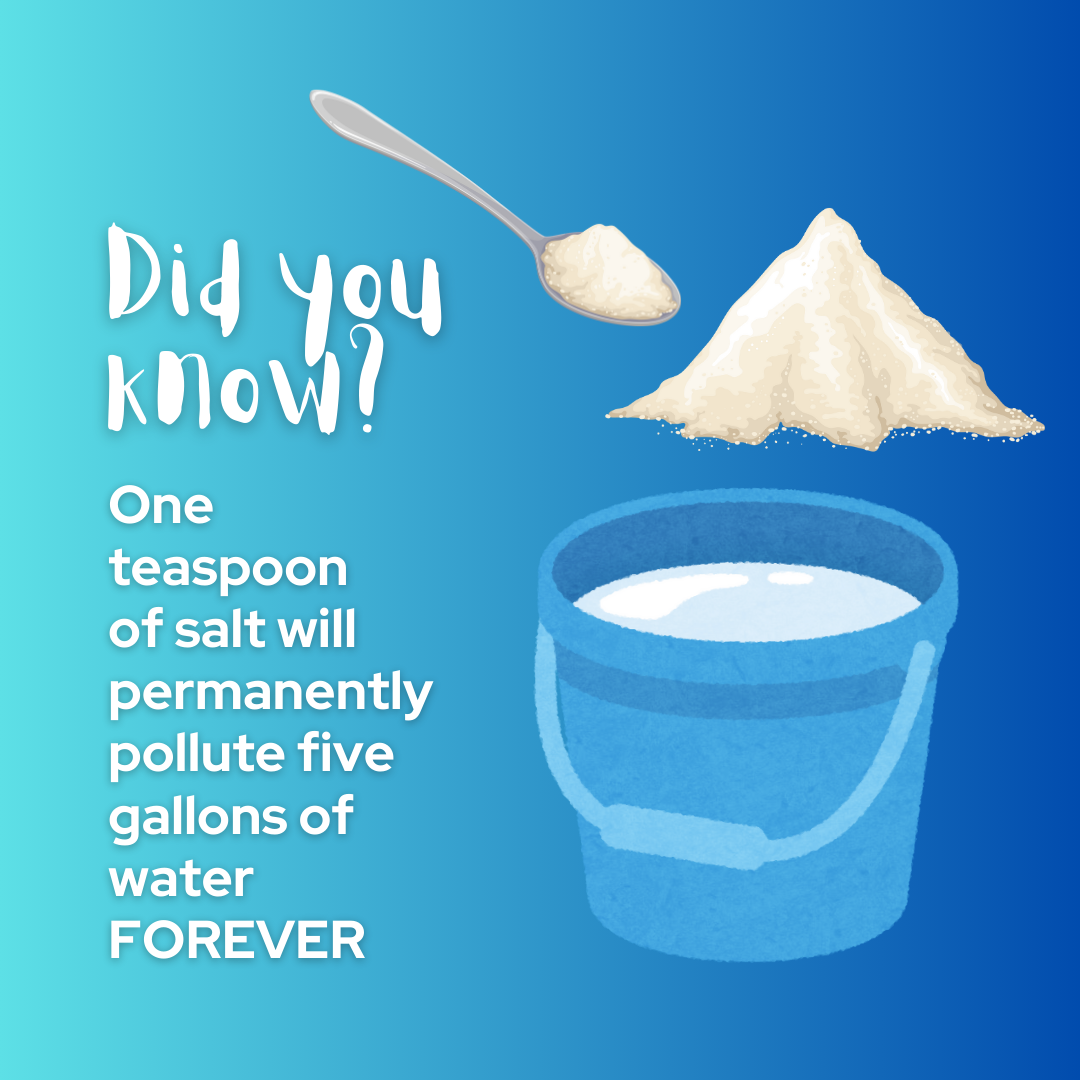
Cold weather is approaching, and with it comes snow and ice. While de-icing salt is necessary to keep us safe on sidewalks and roads, it also contaminates our local lakes, rivers, and groundwater. The melting snow and ice carry the salt, which contains chloride, into our waterways, and there is no practical way to remove it. Just one teaspoon of salt can permanently pollute five gallons of water!
De-icing salts—including those labeled “eco-friendly”—have negative impacts on wildlife, plants, pets, and infrastructure. They can even contaminate our drinking water supplies. You can help reduce chloride pollution in our watershed by adopting smart winter-salting practices, including shoveling first, sweeping up excess salt, and storing it properly.
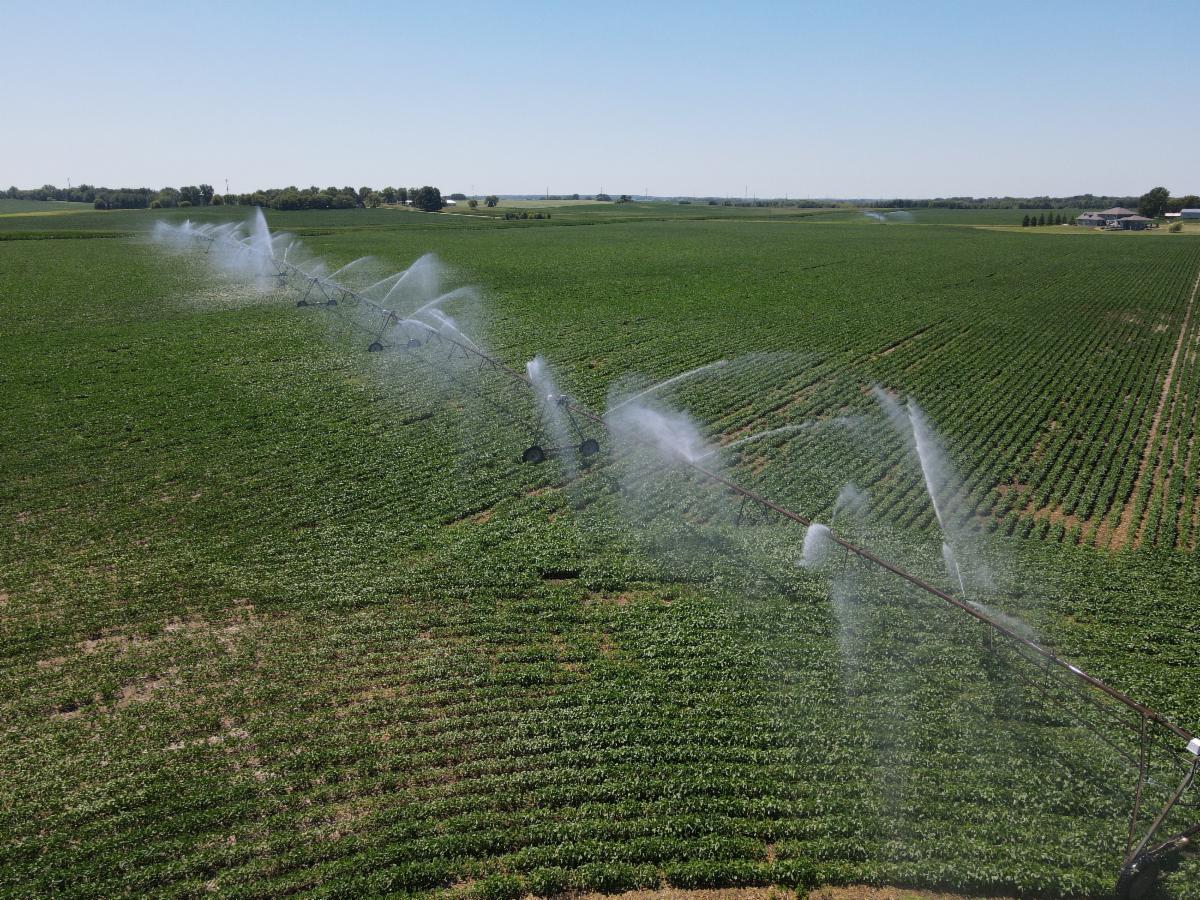
Groundwater is the primary source of drinking water for many Minnesota communities, and irrigated agriculture plays an important role in protecting both water quality and water supply. Dakota SWCD and our federal partners at the Natural Resources Conservation Service (NRCS) have assisted irrigators in Dakota County for many years with upgrades to systems for efficiency and have helped support new technology for better irrigation scheduling. However, funding has never been able to keep pace with demand. Through USDA’s Regional Conservation Partnership Program (RCPP) and in partnership with Minnesota Department of Agriculture (MDA), SWCD’s worked to bring $11.6 million to high priority irrigated cropland acres throughout the state, which includes Dakota County.
With the program, participating irrigators may receive assistance for:
Soil moisture sensors and irrigation scheduling tools
Precision irrigation packages, including variable rate technology
Nozzle and pump upgrades to improve system efficiency
Advanced system upgrades with remote operation and monitoring
Improved nitrogen management tied to irrigation practices
SWCD and NRCS staff will work one-on-one with producers throughout the process, providing technical support, application assistance, and follow-up services. The deadline for accepting applications will be February 12, 2027. Farmers interested in applying are encouraged to contact our office at 651-480-7777 or SWCD@co.dakota.mn.us to learn more about eligibility, available practices, and next steps.
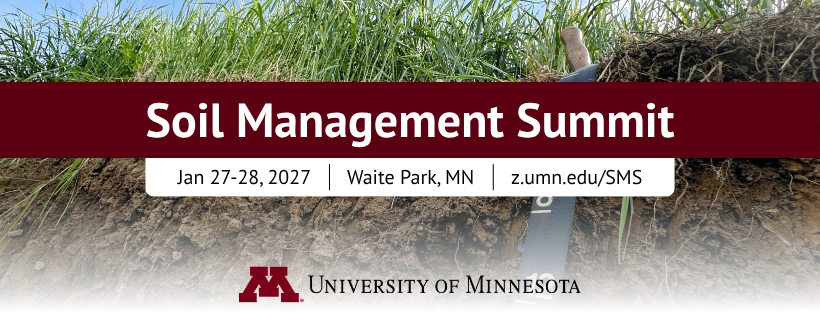
Save the date - Soil Management Summit 2027
The Soil Management Summit is on January 27-28, 2027 at the Park Event Center in Waite Park, MN! It is a 1.5 day event centered around learning and networking with folks in agriculture across Minnesota and beyond.
At the Soil Management Summit, you can:
Engage in presentations and table talks from experienced farmers, researchers, and agricultural professionals on a variety of soil management topics.
Connect with attendees from across the state on the topics that matter most to you.
Interact with vendors at the exhibitor booths to learn about resources and equipment to help you on your soil management journey.
Topics covered include: Cover crops, tillage, livestock integration, nutrient management, economics, and more! Whether you're a beginning, or advanced soil health farmer, or an agricultural advisor from industry, government, or research, there’s something for you at the Soil Management Summit.
For more details and registration information, visitz.umn.edu/SMS.
Upcoming Events
Tuesday, October 20th at 12pm: Land to Lake Lecture series| Join the Cannon River Watershed Joint Powers Organization as they host their lunchtime virtual learning series Land to Lake Lectures. Emilie Justen from the Minnesota Department of Agriculture will highlight some of the most common invasive species landowners should be controlling, as well as emerging species that could make their way into our area in the future.Learn more.
December 2026:Landscaping for Clean Water |The Landscaping for Clean Water program includes free educational classes focusing on raingardens, native gardens, and shoreline stabilization, garden design courses, natural shoreline and garden maintenance classes, and grants for homeowners that install a raingarden, native garden, or native shoreline planting. The goal of the Landscaping for Clean Water program is to teach residents how to beautify their yard while also protecting local water quality and providing habitat for pollinators. Registration opens in December 2026 with programming starting in February 2027. Learn more.
January 2027:SWCD Tree Sale Opens| The Dakota SWCD's 2027 Tree Sale will open in January 2027. All trees are bare root with sizes ranging from 6” to 24”and includes conifer, deciduous trees and shrub species. Trees must be ordered in advance and picked up on the scheduled days in April at the Dakota County Fairgrounds. Learn more.
Wednesday, January 27th:Soil Management Summit |The Soil Management Summit is a 1.5 day event centered around learning and networking with folks in agriculture across Minnesota and beyond. Topics covered include: Cover crops, tillage, livestock integration, nutrient management, economics, and more!Learn more.
Dakota County SWCD | 4100 W 220th Street | Farmington, MN 55024 US