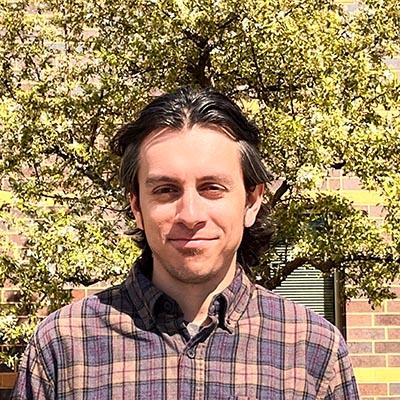
The Dakota County SWCD (DCSWCD) is excited to welcome a new Conservation Technician, Ray Rivera-Parker, to our team. In his role, Ray will work on rural and urban projects, site assessments and surveys, project design, installation and maintenance, and water monitoring. He has experience with restoration of natural habitat, fire management, and stormwater maintenance and holds certificates in GIS, Erosion and Sediment Control Construction Installation, and is a licensed pesticide applicator. Ray received his BS in Natural Resource Conservation from the University of Montana with minors in Fire Science and Restoration Ecology.
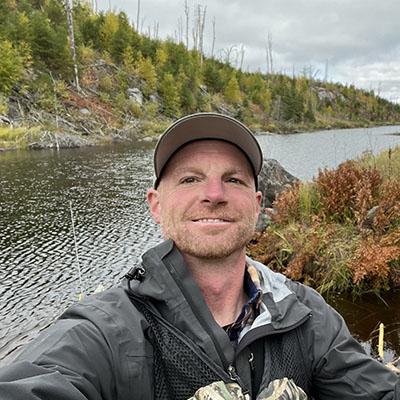
The DCSWCD is also delighted to welcome John Stelzner back as our new Resource Conservationist. He will be responsible for ecological restoration, coordinating conservation easements, and assisting landowners with various local and state conservation programs. He will also organize the annual SWCD tree sale and serve as the primary point of contact for tasks related to vegetation establishment and maintenance. John is a certified Minnesota tree inspector and a licensed pesticide applicator. John received his BS in Environmental Studies from the University of Minnesota-Twin Cities.
Partnering for Pollinators and Water Quality with Local High School Students
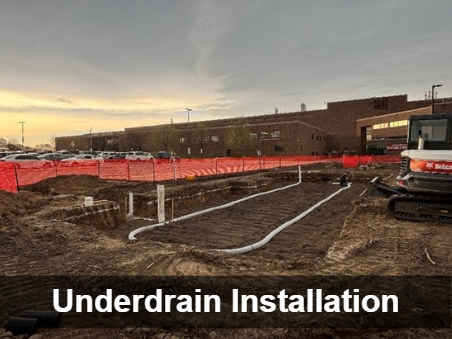
This past spring, the DCSWCD partnered with Two Rivers High School in Mendota Heights on a stormwater improvement project aimed at improving water quality and pollinator habitat in the Mississippi River Watershed. The DCSWCD provided technical assistance during design and installation and $50,000 in funding for the construction of the bioretention basin through the State of Minnesota’s Clean Water Fundcoordinated watershed grant process.
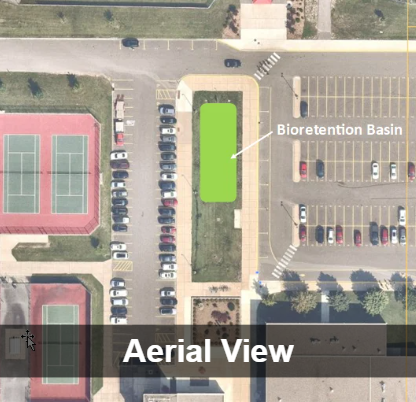
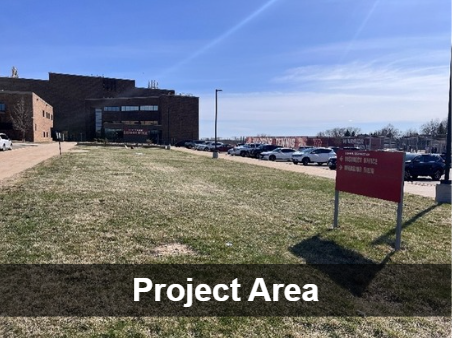
To meet sustainability goals set by the Independent School District (ISD) 197’s LiveGreen sustainability program, Two Rivers High School and District staff approached the DCSWCD for guidance on stormwater improvements that could be done on campus to minimize their impact on nearby water resources. An assessment of the school grounds identified an under-utilized grass island in the parking lot north of the school as the perfect site for a stormwater improvement project.With assistance from Dakota County’s Senior Water Resources Engineer, the DCSWCD designed and engineered a large bioretention basin to be constructed in this area.
The basin will capture and treat stormwater runoff from a large area of the parking lot reducing the sediment, pollutants, and overall stormwater volume that was previously making its way to Valley Creek, helping meet one of the Lower Mississippi River Watershed Management Organization’s watershed management plan goals to implement stormwater best management practices that address phosphorus, sediment and volume issues in the watershed. The planting area will also promote groundwater recharge and infiltration in the basin.
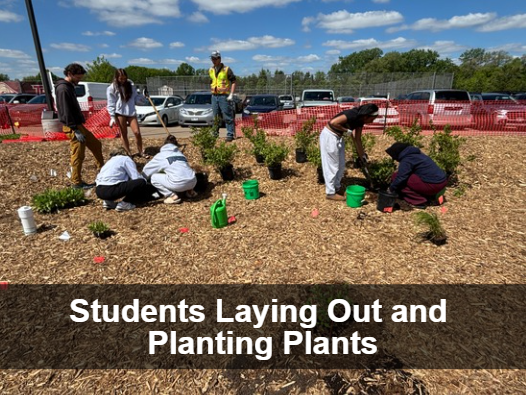
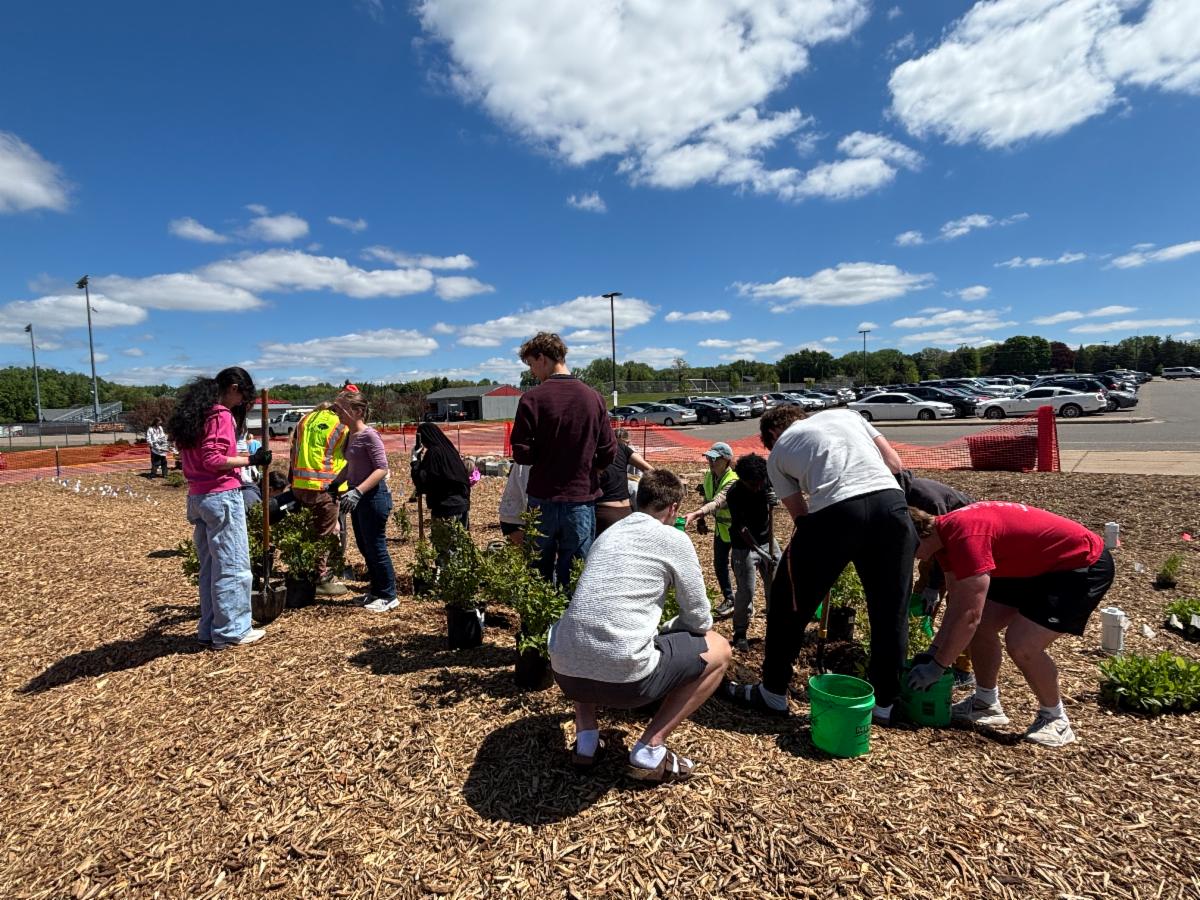
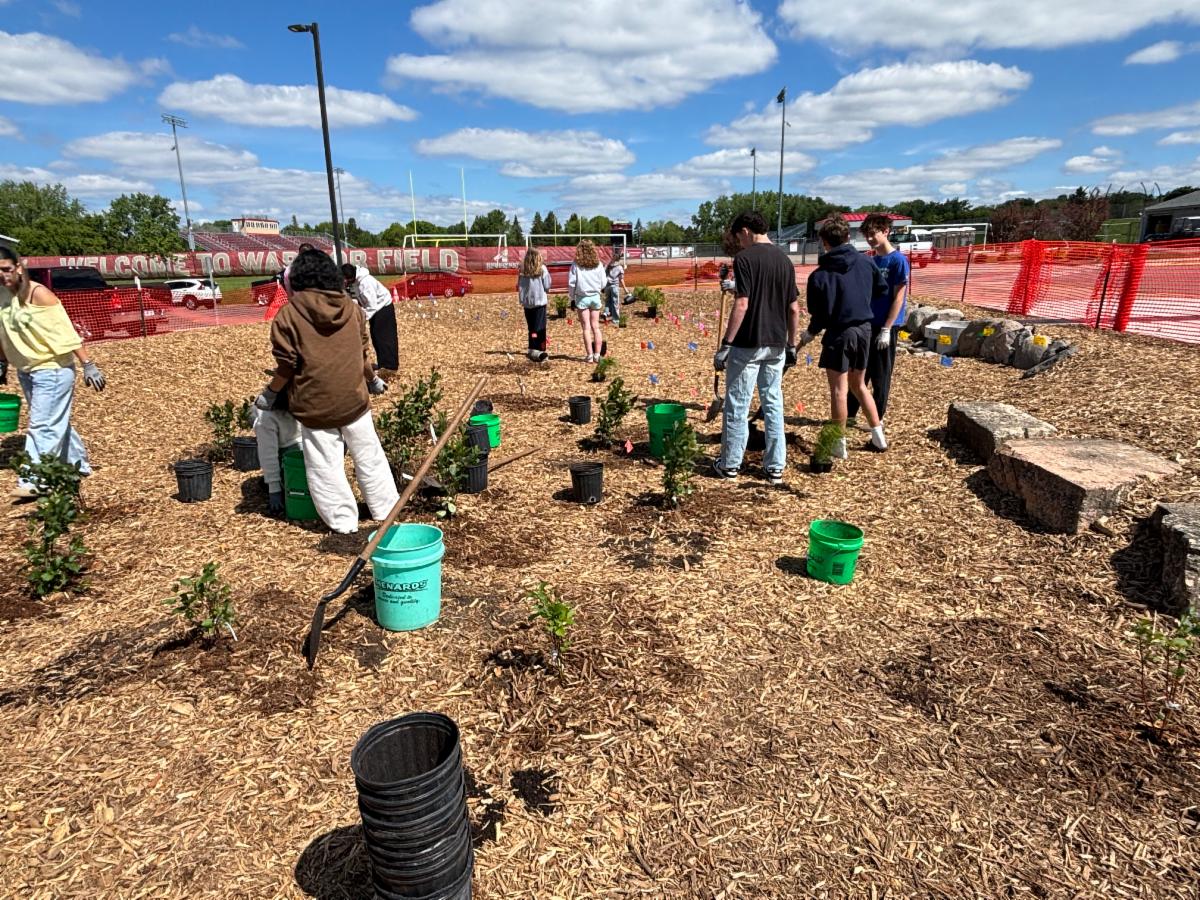
The installation of the bioretention basin serves as an educational opportunity for students at Two Rivers High School. The students participated in a two day planting event, planting over 1,200 native grasses, forbs, and shrubs including wild bergamot, prairie dropseed, black eyed susan, and red-osier dogwood. While placing the plants, students learned about the important role the native plants will serve, not only for stormwater infiltration and nutrient uptake, but also for native pollinators and wild bird habitat. As this project is located in a high visibility area, it will serve as both a functional resource, as well as an opportunity to increase public awareness with plans for signage on site for passersby's to learn about the basin and its functions.
Interested in learning how your organization can partner with the DCSWCD on a large scale project like this? Please contact the DCSWCD at SWCD@co.dakota.mn.us or (651) 480-7777.
Leave A Legacy
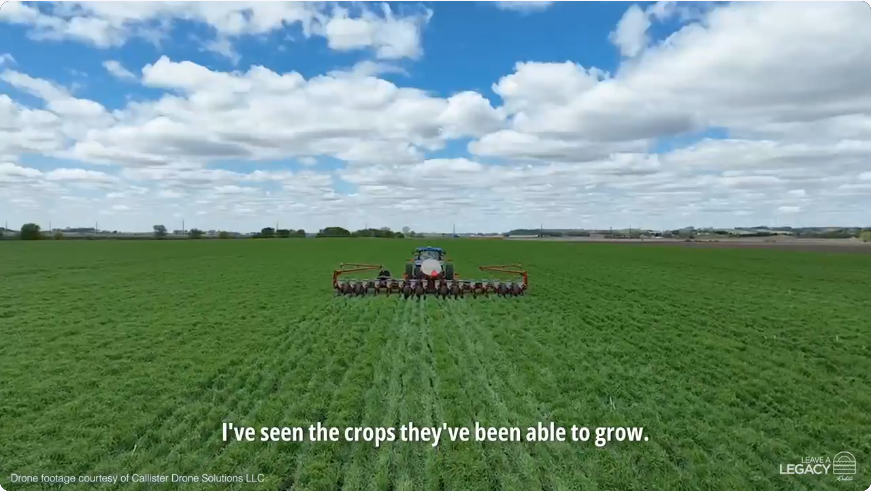
Farmers in Dakota County can Leave A Legacy and enhance the health and productivity of their land through the adoption of soil health practices.
The DCSWCD has partnered with Dakota County to encourage farmer adoption of best management practices and alternate management tools to reduce nitrate and other agricultural chemicals in groundwater. Example practices include cover crops, perennial crops, native prairie, irrigation management, and nutrient management plans.
Interested in learning more about the types of financial and technical assistance that the DCSWCD offers? Check out the video to hear about one Dakota County farmer's experience and then click here to request DCSWCD staff connect with you to discuss conservation opportunities on your land!
Dakota County farmer,
Luke Dubbels, wanted to protect his farmland and Leave a Legacy by making land management changes that would have long-term benefits. Watch the video to hear about his experience!
Prairie Tours at the Dakota County Fair
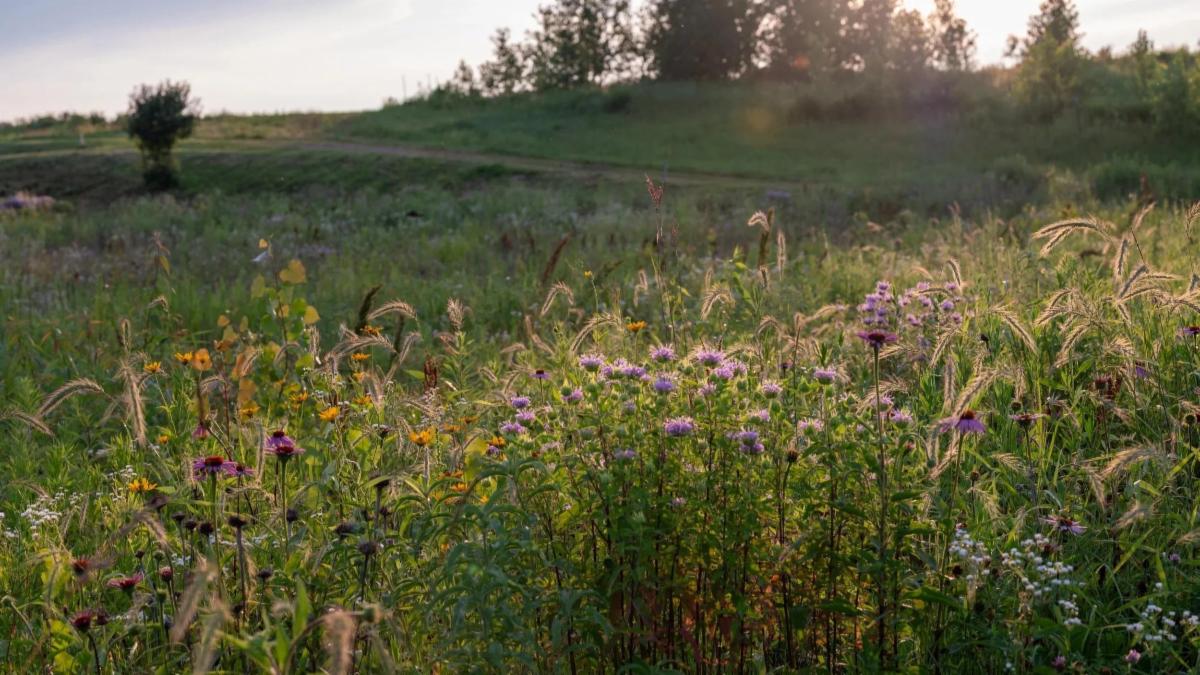
Join DCSWCD staff on a tractor-pulled trolley tour of the “Big Slough” prairie located just south of fairgrounds! Immerse yourself in a mosaic of native wildflowers and learn more about the history of this restoration site as well as the benefits of prairie ecosystems.
Tours will be held daily Monday, August 10th at 11:30am and Tuesday, August 11th through Friday, August 14th at 10:30am (pickup located on side street north of Ahlberg Hall (fair office)). Trolley seating will be first come, first served with all ages welcome to attend!
Starry Trek
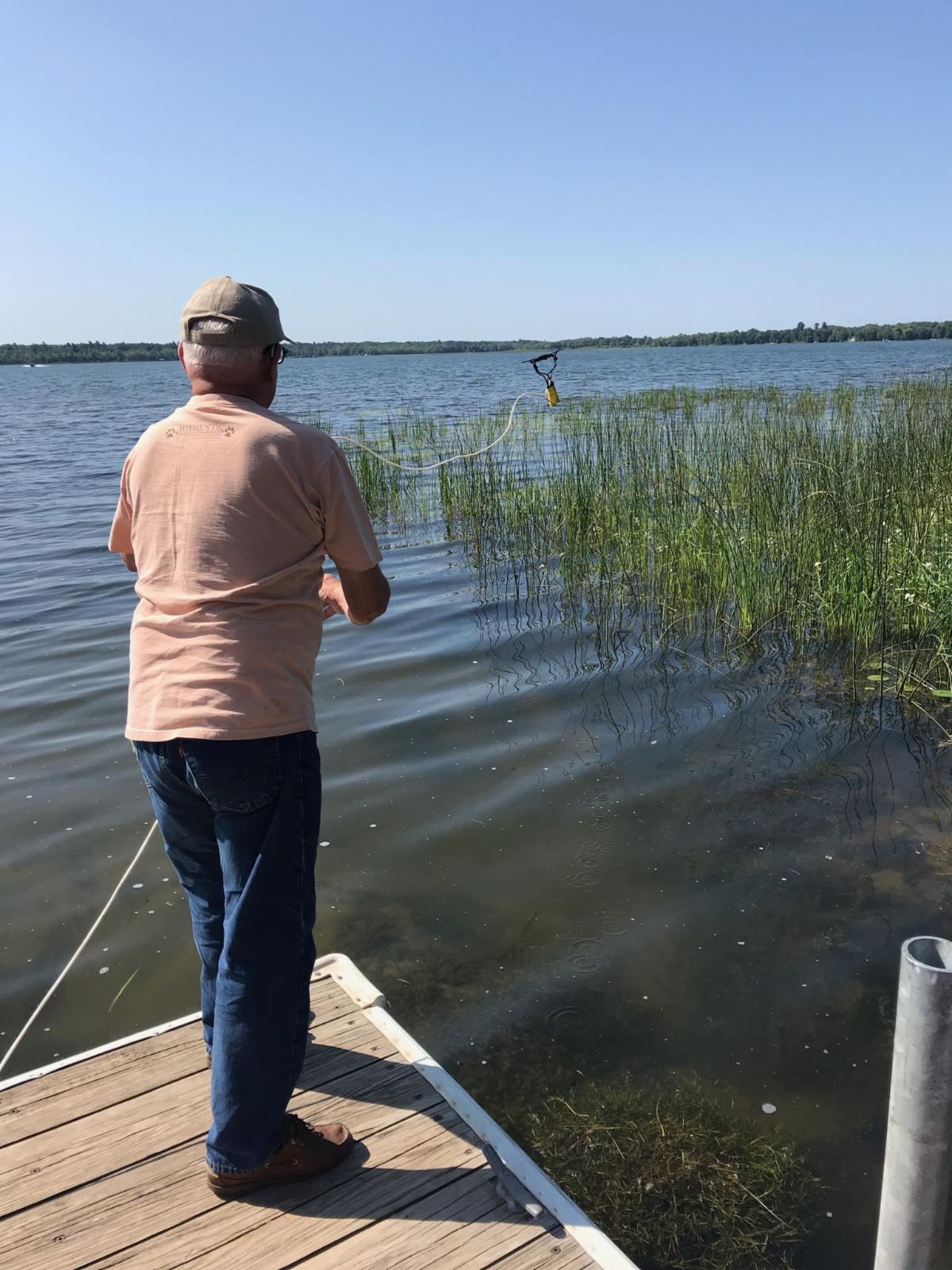
Volunteers who love Minnesota waterbodies are needed on Saturday, August 8th to help search for starry stonewort, an aquatic invasive algae that can spread easily and form dense mats, interfering with boating and other recreational activities.
Starry Trek is an annual, one-day event where the public meets at training sites across Minnesota to learn how to identify starry stonewort and other aquatic invasive species (AIS). After the training, participants head out to local water access points to look for signs of these AIS. Want to know more? Check out this short video about Starry Trek!
No experience or equipment is necessary to participate in Starry Trek. This event is free, but registration is required. Children under 18 must be accompanied by a parent or legal guardian. Youth clubs (Scouts, 4-H, etc.) can contact Megan Weber, University of Minnesota Extension Aquatic Invasive Species educator, for information about club participation.
Contact Lindsey Albright, DCSWCD Monitoring & Outreach Coordinator, if you have any questions!
Get your irrigation water tested for nitrate for free in 2026!
Collect roughly 16 ounces of irrigation water at any time. Please drop off samples at:
River Country Co-op
15460 180th St. E., Hastings
Samples can be dropped off at any time, either with staff or an after-hours drop box. Please ensure containers contain your name, mailing address, email address and phone number to provide results. Containers will not be returned.
Samples will be analyzed, and results will be privately mailed or emailed to you with more information on your results and how to credit your irrigation water for nitrate from local experts.
Crediting irrigation water for nitrate can save significant costs by reducing fertilizer use. For example, a farmer with 20 mg/L of nitrate can save $18/acre when applying 8 inches of water during the growing season.
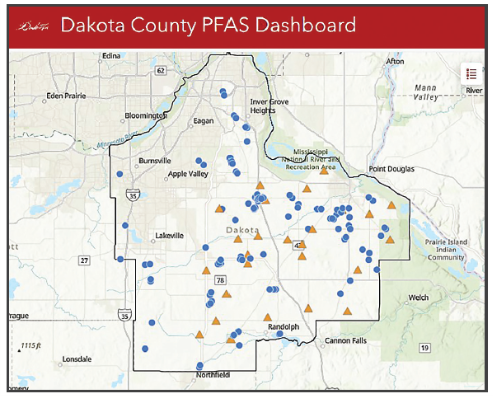
New this year, Dakota County has created an online dashboard with PFAS groundwater sampling results from sampling conducted by the county from 2018–2025.
PFAS (per- and polyfluoroalkyl substances) were widely used for decades for their ability to resist water and grease. They are known as “forever chemicals” because they do not break down in the environment and build up in wildlife and humans through exposure.
The dashboard map shows PFAS levels in public environmental wells and private drinking wells sampled with owner permission. Sampling found PFAS in all 27 environmental wells and in 94 of 114 private drinking wells tested. Eighteen different PFAS were detected, some at levels above state and federal drinking water guidelines.
Testing for PFAS is expensive and current laboratory methods are only able to detect a small fraction of the thousands of PFAS chemicals that have been manufactured. For this reason, routine testing may not be practical for all well owners. Learn more aboutMN Department of Health recommendations for private wells.
If PFAS are found in your water or you want to reduce your potential exposure, look for a water treatment device certified for PFOA/PFOS reduction. For more information, visit the Environmental Protection Agency's website and review the Granular Activated Carbon Filter Fact Sheet.
If you have questions about private wells, please contact environ@co.dakota.mn.us or 952-891-7000. For other information, please contactCathy Undem, Environmental Assessment Program Manager, at cathy.undem@co.dakota.mn.us or 952-891-7132.
Free Field Day: Wildlife at Work – Birds, Beavers, Bats, and Beneficials on the Farm
Join Wild Farm Alliance and fellow agricultural professionals out in the field for a FREE hands-on field day exploring how wildlife supports working farms.
The event is part of a Soil Health & Habitat Field Series to explore conservation practices that strengthen pest control, improve water systems, and build climate resilience.
‘Sacred Water Shared Future’ Campaign Celebrates 100 Years of Restoration
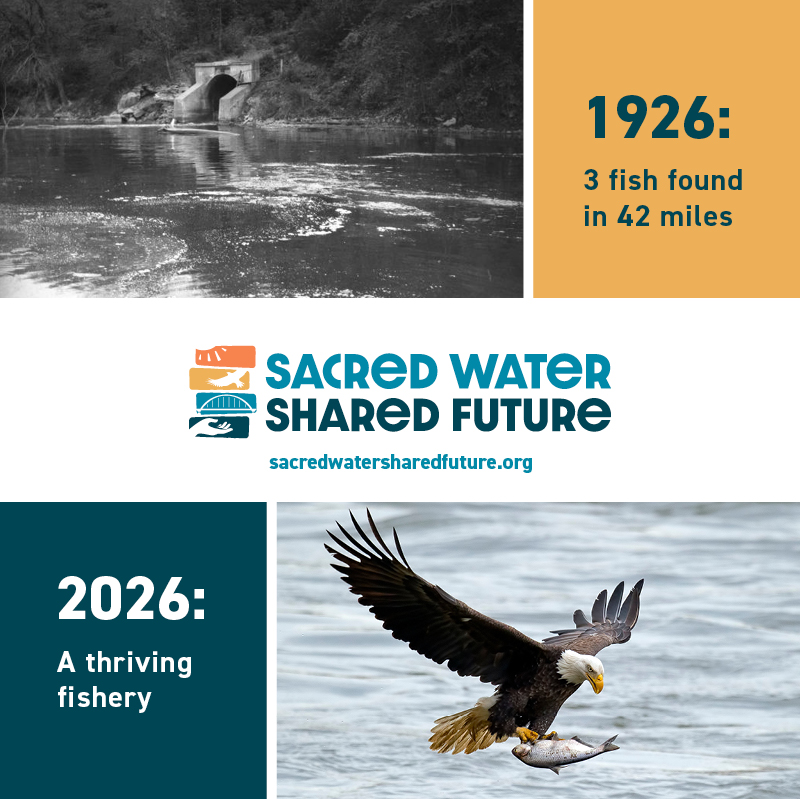
In 1926, the Mississippi River in the Twin Cities was so polluted that it had become a dead zone. Today, the river thrives. The Sacred Water Shared Future campaign is celebrating 100 years of restoration through local events, art, and stewardship.
Help write the river’s next chapter. Whether you are interested in paddling tours and history lectures, or art installations and volunteer cleanups, there are countless ways to explore the river and define what it means to you.
Nominations Now Open for Farmers to Serve on USDA Farm Service Agency County Committees
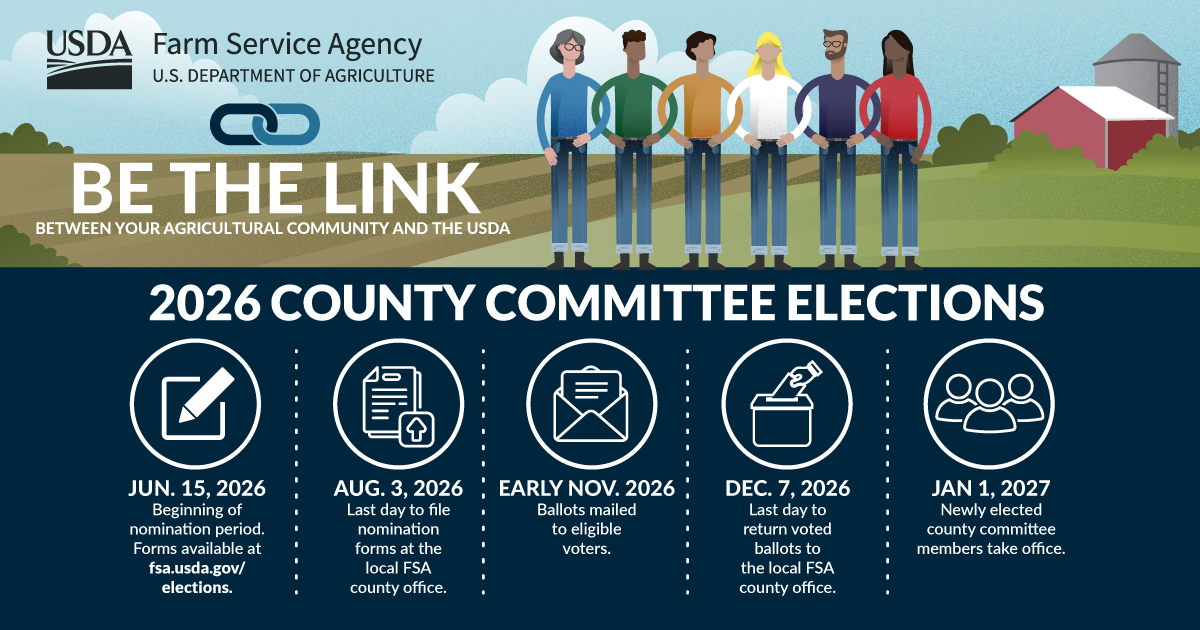
The nomination period for USDA Farm Service Agency (FSA) county committees is open now through August 3rd. Each county office is looking for producers to serve on the local county committee.
County committees are unique to FSA and serve as a direct link between agricultural communities across the country and USDA. Producers who serve on committees work to make FSA agricultural programs serve the needs of local producers.
Are you willing to serve? Contact your local FSA office or go online to learn more and download a nomination form.
Upcoming Events
Thursday, July 21st at 8am: Wildlife at Work on the Farm| Join DCSWCD and Dakota County Parks for a FREE, hands-on field day hosted by Wild Farm Alliance at Sharing our Roots Farm in Northfield. The event will explore how birds, beavers, bats, and beneficial insects support working farms. Learn practical strategies to help strengthen pest control, improve water systems, and build biodiversity on your land. Learn more.
Thursday, August 6th at 9:30am:Mighty Machines| Stop by Farmington Library for a touch a truck event! Climb inside, touch and explore trucks, vehicles, and other machines from Dakota County's large fleet of equipment. Presented by Dakota County Fleet Management. Geared for youth ages 2 and older with parent or caregiver. Learn more.
Saturday, August 8th at 8:30am: Starry Trek| Meet up with conservation-minded Minnesotans at locations across the state for a fun-filled morning of searching for starry stonewort and other aquatic invasive species! Dakota County volunteers will meet at the Central Park Pavilion in Eagan for a brief training before heading out to local lakes and rivers for monitoring. No experience necessary! Learn more.
Monday, August 10th to Sunday, August 16th:Dakota County Fair | Come to the fairgrounds and enjoy carnival rides, food and fun! Check out our booth in the Natural Resources building and enter the native plant giveaway. You can also take a load off and enjoy a trolley ride through the native prairie Monday through Friday. A demolition derby, 4H livestock shows, and live music will be going all week and continuing through the weekend! Admission to the 2026 Fair is FREE/parking $10; tickets for grandstand shows and carnival rides are available now. Learn more.
Wednesday, August 26th at 9:30am:Mighty Machines| Stop by Pleasant Hill Library in Hastings for a touch a truck event! Climb inside, touch and explore trucks, vehicles, and other machines from Dakota County's large fleet of equipment. Presented by Dakota County Fleet Management. Geared for youth ages 2 and older with parent or caregiver. Learn more.
Dakota County SWCD | 4100 W 220th Street | Farmington, MN 55024 US