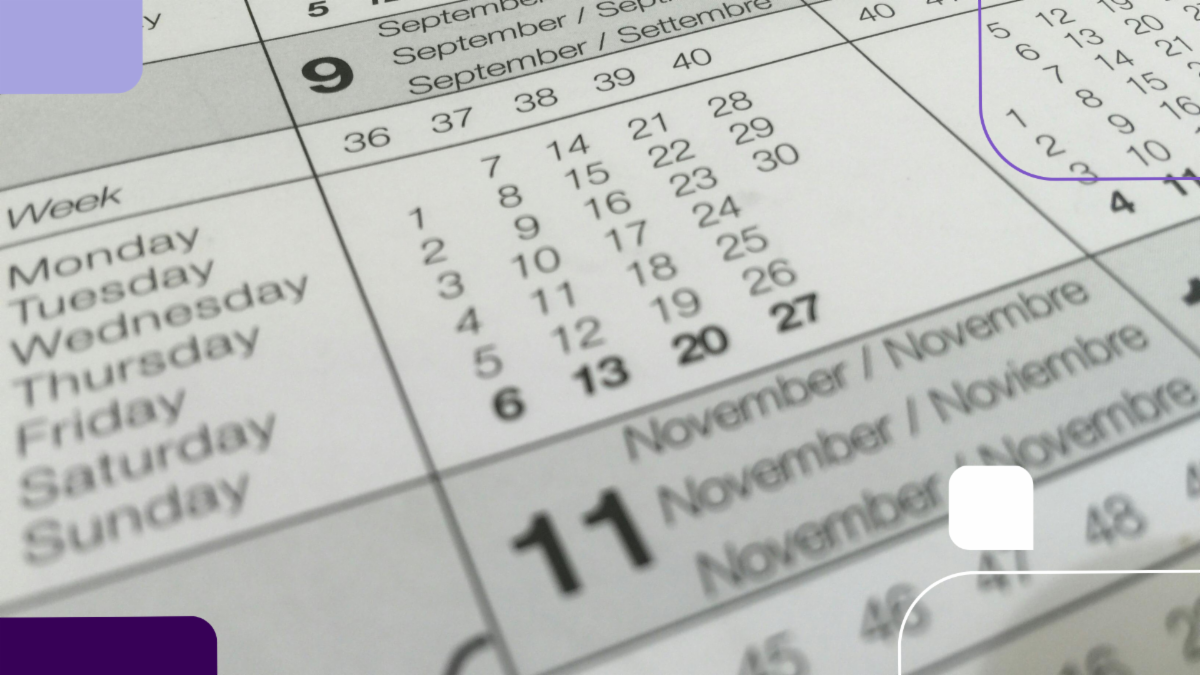
Danes and the week numbers
Cracking the system

Do you have plans for week 11? What about week 13?


If I just made you roll your eyes, thinking "Not the week numbers again," then this email has landed in the right inbox.


Using numbers is a no brainer for Danes, yet a huge frustration for many expats. However, once you know the key points, which I'll cover in this newsletter, it's not that bad to navigate the week system.

Why Danes use it?

The force of habit

Using week numbers is a habit. Week numbers were officially implemented in a Danish calendar in 1973, however, people already used it before that. Several generations grew up with this system, taking it for granted, so many use it without a second thought.


The role of the education system

It seems to me that those who have a touchpoint with the education system are more likely to use week numbers. From what I have experienced, both schools and universities make curriculum plans by week, so people who are in the education system or are parents of school-aged children are exposed to week numbers often enough to somewhat remember them and use them in contexts outside education.


Convenience

It's not every Dane who uses the week system, but those who do find it convenient. Looking at time from a week perspective gives an overview that is divided into manageable chunks.


Weeks are also convenient for making plans far into the future. For example, the school break is in the same week every year, even if the dates vary by a few days. It is common for parents to take those weeks off work. So much so that you notice emptier offices, slower business responses, and more crowded entertainment and leisure institutions. Workplaces know not to make big plans, and you know not to get over your head expecting swift answers to your emails in week 7 and week 42.

📸 cottonbro

How widespread is it?

Hearing people use week numbers may come as a shock if you have never encountered it before, but in reality, Danes rarely overuse them. Some do not use them at all, and few use them for everything.


In my experience, it is connected to the way the institutions you are part of operate. Besides the education system, it can depend on the individual workplace's culture and your role there. It can be a convenient way to plan in certain situations. In my work experience, there has been a balance between some things being structured by weeks and others by precise dates, depending on the purpose.

How are the week numbers used?

It might seem that Danes use week numbers for everything, but it's important to pay attention to the context: no one says “Grundlovsdag is in week 23” instead of “June 5.” But they might say “Week 23 is a short week,” referring to the public holiday affecting the work week. Again, it's a way to perceive time.


There are some unwritten rules for the use of week numbers:

  • The matter covers the whole week (canteen or cleaning schedules, school plans, project timelines, vacation).
  • When the exact day has not yet been set (“Let’s have a follow-up meeting [at some point] in week 46,” “I am busy in the upcoming weeks, but I have time in week 11. [You choose when it suits you.]”).
  • Special weeks. As already mentioned, school break is always on the same week. The week number often serves as a title, synonymous with winter break (week 7 or 8, depending on the municipality) and autumn break (week 42). It's quite similar to the U.S.A.'s Independence Day, known as the 4th of July.

📸 Pixabay

How do Danes know which week it is?

Denmark follows the International Organization for Standardization ISO week date system, so the numbering is standard and probably applicable in your home country too, even if no one uses it.


Danes don't know every week by heart but navigate it by using a few fixed points:

  • A year almost always has 52 weeks. 2026 has 53, but that happens irregularly every few years, and it is not very important.
  • The week number resets between December and January:
  • The year starts on week 1. It is the first week in which at least four weekdays are in January.
  • The year ends on week 52 or 53. It is the week in which at least four weekdays fall in December.
  • Week 7 is the winter school break in mid-February.
  • Weeks 29–30 are the main summer vacation weeks in mid-July.
  • Week 42 is the autumn school break in mid-October.


The rest is filling in the blanks.


Secret weapon: the calendar

Besides the few key weeks, Danes mainly keep track of week numbers by checking their calendars. When a week comes up in a conversation, usually for planning, it often happens with a calendar open. It is not so different from having to check which day is the 7th of May.


You can do the same by turning on week numbers in your calendar. Find the option in the settings or look up a step by step guide for your specific app online. You can find a guide for most popular calendar apps on this website. You can also see the week number on the homepage of the same website. Here is a Danish version of it, so you can also follow public holidays and other special days in Denmark.

📸 energepic.com

It may be new and confusing to be introduced to the week system as an expat, especially if no one has explained it to you. However, I hope this newsletter has made the system clearer. You can always ask the person to specify the date if a week number does not say much to you.


You could argue that other date formats can work conveniently too, and that is fair. It boils down to personal preference and force of habit. The use of weeks has been around in Denmark for a while, and it is part of the culture in the same way as biking, leaving strollers outside, or not staying at work past 3 pm on a Friday.

Don't get lost in the weeks,

Justina from Expat in Denmark


P.S. Do you have a fun story, a cool tip or questions about life in Denmark? We'd love to hear from you! Drop us a line at jusr@di.dk.