Data, Dignity, and Direction | | |
“Data talks” is a common saying pointing to the fact that data is used to tell stories. What gets counted influences our understanding and priorities, which is why Caltrans developed the Caltrans Transportation Equity Index (EQI), to identify communities most burdened and least benefited by the transportation system. We have a responsibility to serve these communities, many of which were historically left out of transportation decision-making, by researching and compiling metrics on past harms and current realities to have a better picture of what’s happened and what’s taking place now.
Additionally, ground truthing data is essential. Engaging directly with the people who use, rely on, and are affected by the state transportation network provides nuance that numbers alone can’t capture. Lived experience helps reveal gaps, provides context, and humanizes the data – expanding the story. Data, paired with community insights, strengthens our ability to address barriers to access, disparities in safety or mobility, and enhance livability and opportunities.
Through research and with data tools like EQI and the development of engagement guidance and resources, we can ensure that when data and communities talk, we are listening.
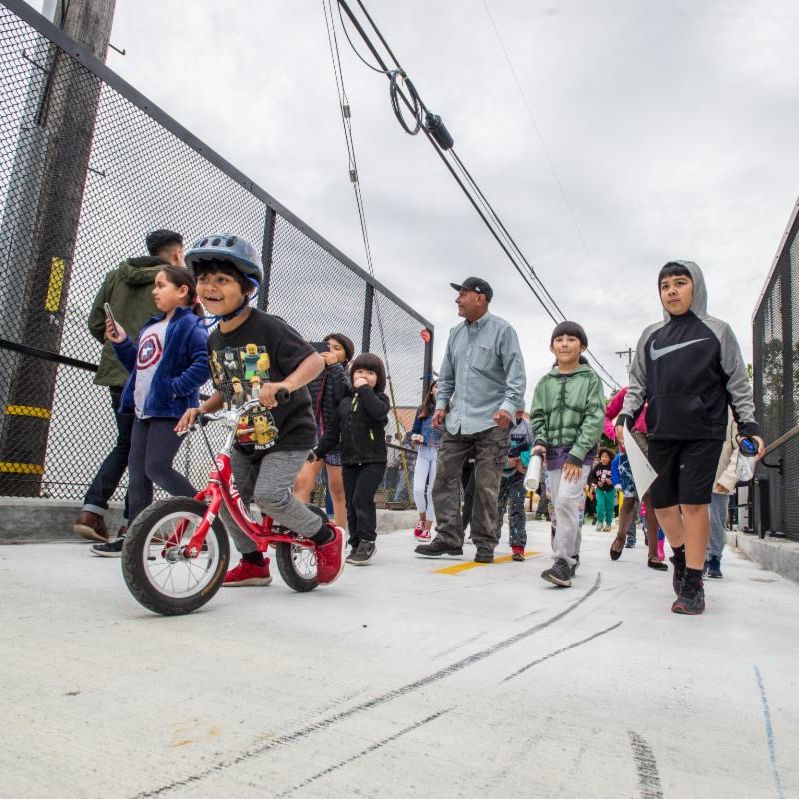
Pictured: Community members walking and biking across the Clarke Street pedestrian bridge in District 4.
Nailah Pope-Harden
Deputy Director, Director’s Office of Equity & Tribal Affairs
| |
| | Celebrate Rosa Parks Day- Recognized by the California Legislature in 2000, Rosa Parks Day is observed annually on Ms. Parks’ birthday, February 4. At Caltrans, we honor Ms. Parks’ legacy by reflecting on her strength, courage, and impact as an activist whose choices helped advance the civil right movement and the fight for transit equity in the United States. | | | |
| | ATP Cycle 8 Virtual Workshops in February - Please join the California Transportation Commission’s (CTC) Active Transportation Program (ATP) staff for one of three virtual technical assistance Branch Workshops designed to help your agency succeed. These informal, interactive sessions are a great opportunity to ask questions, learn ATP basics, and get application tips from CTC staff. Register through the Commission’s ATP website and sign up for the workshop that matches your Caltrans district. | | | |
| | Public Comment Period through February 27, 2026 - Caltrans has released the final draft of the California Federal Surface Transportation Reauthorization Principles. The document will serve as the foundation for a coordinated federal advocacy strategy in collaboration with our transportation partners statewide. To submit comments or express interest in becoming a signatory, please complete the public comment fields on the following website: https://build.ca.gov/iija-reauthorization | | | |
| | NEW Webinar Recording Available - On January 22, 2026, the Caltrans Division of Research, Innovation and System Information (DRISI) hosted a webinar for the Transportation System Network Replacement (TSNR) Project. Watch the recording to learn about the modern, Geographic Information System (GIS) based safety data system that will transform how we analyze and improve roadway safety across the State Highway System. The webinar covers how the TSN system supports data-driven safety decisions and Vision Zero goals, improves operational efficiency and meets federal requirements, and enables local agencies to access and share robust safety data. | | | |
| | NAAC Meeting in March - The Native American Advisory Committee will meet statewide virtually on March 11, 2026. | | | |
On the Road with Caltrans:
Department Highlights
| | Researching the History of Freeway Siting in California | |
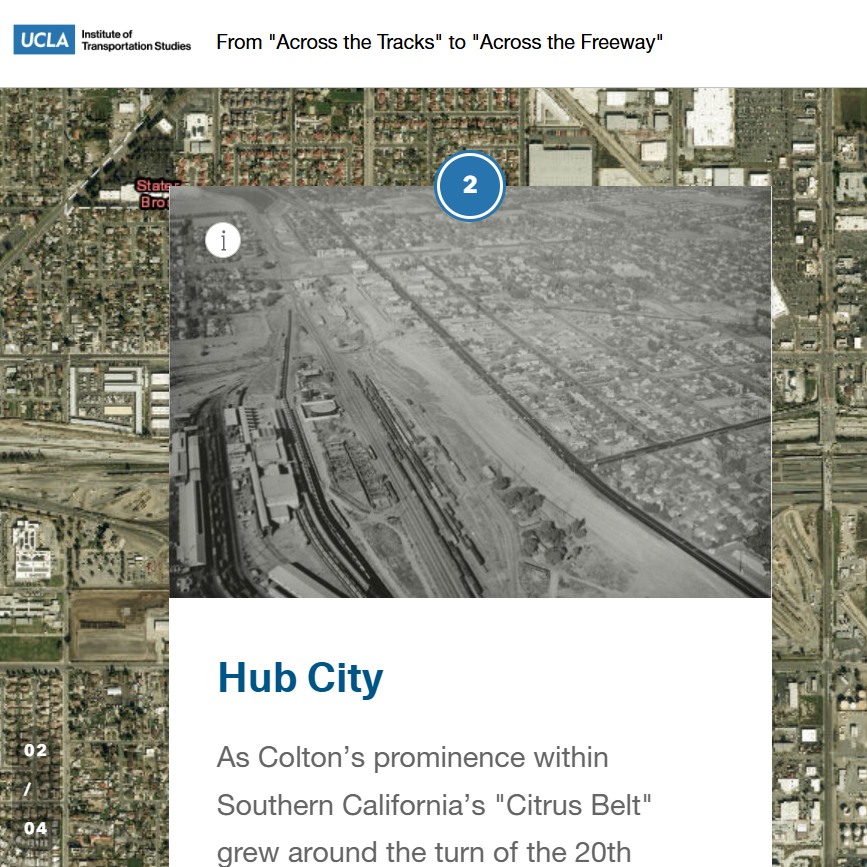
California’s freeways have had disproportionately adverse impacts on low-income populations and populations of color. To understand the history of freeway siting in California, Caltrans funded two studies looking at the historical and lasting impacts of decisions and societal factors that led to the construction of freeways in seven communities. The first study focused on projects in Pasadena, Pacoima, Sacramento, San Jose; meanwhile, the second study focused on Fresno, Colton, and San Diego. UCLA developed story maps to share this complex research in a digestible format that includes interactive images and maps. Check out the story maps for Pasadena, Pacoima, Colton, Fresno, and San Diego. Caltrans funds research annually on a breadth of topics to support innovation in transportation, learn more here.
Pictured: The story map for the City of Colton titled, From “Across the Tracks” to “Across the Freeway”.
| | Caltrans Transportation Equity Index Tool (EQI) | |
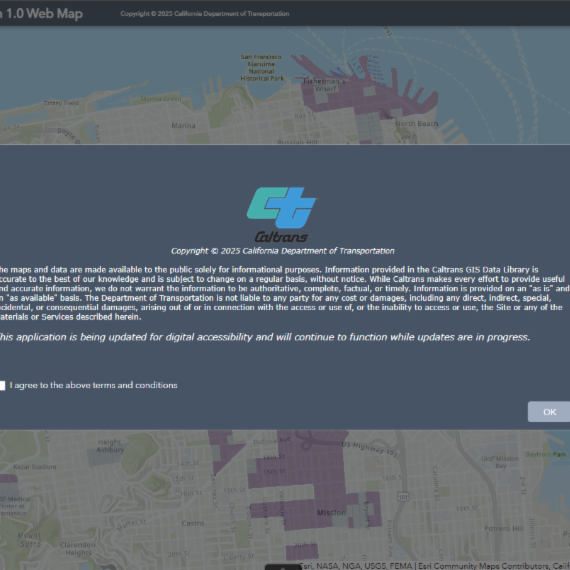
Caltrans continues to advance the integration of the Transportation Equity Index (EQI) across the department to support transportation planning, safety, and investment decisions. The EQI is a spatial screening tool designed to identify transportation-based priority populations at the census block level. The EQI integrates transportation and socioeconomic indicators into three screens. All screens reflect low-income status and tribal land status. The tool is now embedded in key programs including early project development, safety performance and risk assessment, and statewide investment prioritization. The EQI is supporting more equitable decision-making at Caltrans and supporting more inclusive engagement by identifying underserved communities.
Pictured: The Caltrans EQI web map interface.
| | Meet our Advisory Committee Members | | Equity Advisory Committee (EAC) | |
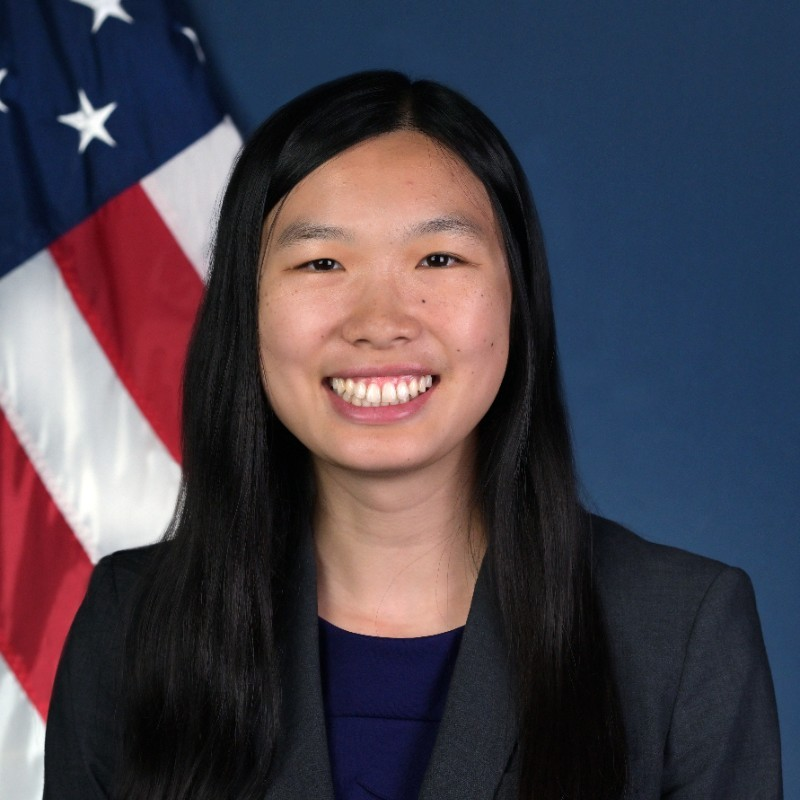
Florence Simons
City of San Francisco
Director of Mayor's Office of Innovation
📍Caltrans District 4
| | |
Florence Simon is Director of the Mayor’s Office of Innovation for San Francisco. Previously, she helped lead implementation of President Biden's Bipartisan Infrastructure Law, the largest federal transportation investment in the last 50 years, as an appointee at the Department of Transportation. This involved launching dozens of funding programs to build critical infrastructure projects that advance equity, climate, and economic opportunity.
Florence got involved in transportation equity as policy lead for both infrastructure and Asian American and Political Islander (AAPI) priorities on then-Mayor Pete Buttigieg's presidential campaign. She also served on the Biden-Harris Transition Team, focusing on the Department of Transportation.
| | |
Florence started serving on the EAC in 2025 and is excited by the opportunity to deliver more transportation options and better transportation outcomes to underserved populations. She hopes to ensure equitable transportation access for California's large and diverse AAPI population.
“AAPI communities in SF are highly dependent on transit. Since the onset of COVID-19, safety in public spaces, including transit, has also been a concern. It's key to me to maintain and expand access to transit and transit safety.”
Pictured: A headshot of EAC member, Florence Simons.
| | Tune into what our team is reading and listening to this month! | | |
Equity Strategy Manager, Jinnae Looney, shares a clip from a TED Talk from Luvvie Ajayi Jones titled, “Get comfortable with being uncomfortable”. She shares, “The message in this video reminds us that equity work thrives through collective care, courage, and connection. Growth requires being comfortable with discomfort — leaning into it as part of change. When we make space to listen, speak up, and support one another, we create healthy, transformative spaces rooted in unity, belonging, and shared purpose on our journey toward a more just and equitable future.”
| | | | | |