|
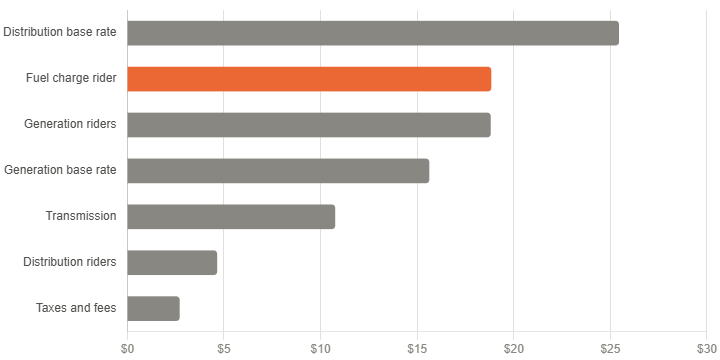
---Notice what's missing from that list: a line item for "data centers." That's because there isn't one (not on a residential bill, anyway). What is on the bill is the fuel charge rider, a straight pass-through of natural gas commodity costs, and it's the single fastest-moving piece of the bill. Dominion is even carrying roughly $1.1 billion in unrecovered fuel costs it's now trying to securitize because gas prices ran up faster than the rider could catch up.
---The takeaway: most of what's hitting your bill right now is a commodity story, not a data center story.
So where do data centers actually come in?
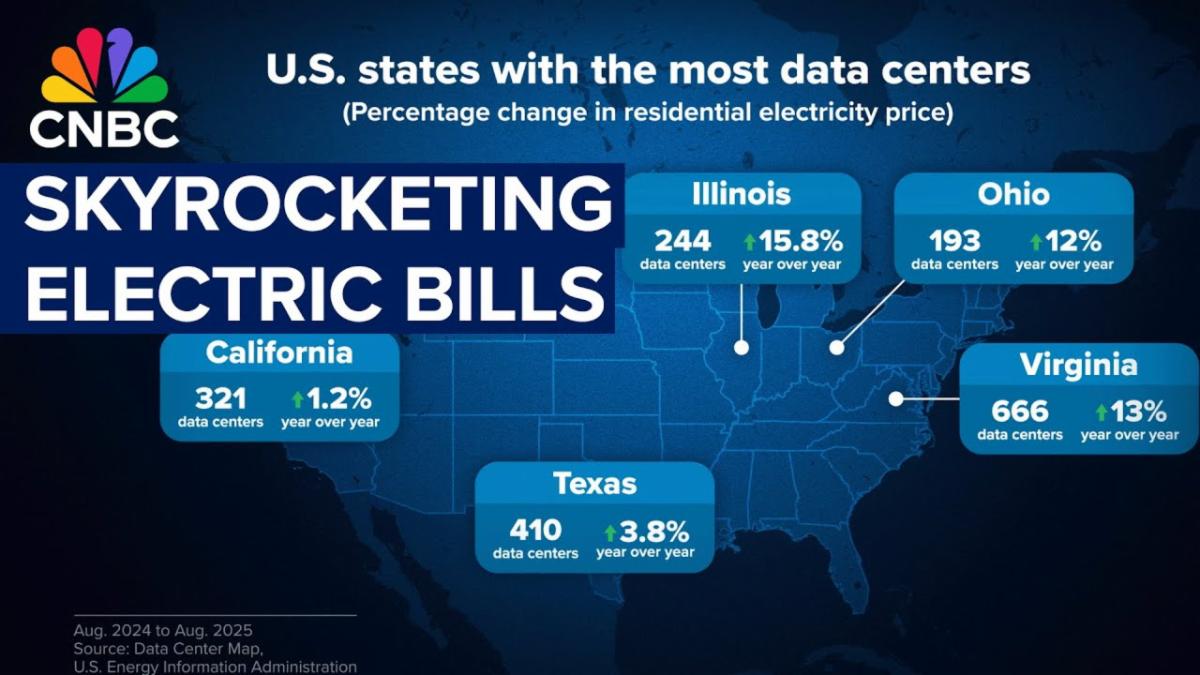
---They're real, they're just further upstream. Virginia hosts more data centers than anywhere else in the world, concentrated in Northern Virginia's "Data Center Alley." That load growth has pushed PJM's (the regional grid operator) capacity auction costs from $2.2 billion to $14.7 billion in a single auction cycle (a roughly tenfold jump) because PJM has to pay generators to guarantee enough power is available to meet a demand curve that's steepened dramatically since 2022.
---That capacity cost shows up in your bill as part of the transmission and infrastructure riders (Rider T1, Rider DIST, Rider GEN), which together are a meaningfully smaller slice than fuel, but growing. PJM itself projects capacity price increases will add 1.5% to 5% to customer bills year over year going forward.
---In other words: today's bill is dominated by gas. Tomorrow's bill is where data centers start to matter more.
Regulators are already responding
---Virginia's State Corporation Commission isn't waiting to find out how this plays out. It has ordered Dominion to move away from its old "average and excess" method of allocating generation costs and toward a model that more directly assigns costs to the customers actually causing them. Starting January 2027, any data center pulling 25 MW or more has to sign a 14-year contract under a new rate class (GS-5) that requires it to pay for at least 85% of its contracted demand, even during off-peak hours when it isn't using it.
---That's a direct response to a 2024 legislative study warning that if data center demand went unmanaged, the average residential bill could rise $14 to $37 a month by 2040. Regulators are trying to plan against that now, before that cost shift happens.
What this means for utility allowances
---For anyone managing LIHTC or HCV properties, this distinction matters more than it might seem. HUD's FY2026 Utility Allowance Factors, effective February 11, 2026, already reflect the energy cost run-up from 2024–2025, and in some markets, two-bedroom allowances jumped $30 to $50 a month. That's the fuel story catching up to allowances.
---The data center story is the one to watch next. As PJM capacity costs and infrastructure riders climb, especially in Dominion, BGE, and other PJM-territory markets, portfolio-average PHA schedules are going to lag further behind what residents are actually paying, which means owners relying on stale HUD Utility Schedule Model estimates instead of engineered, consumption-based studies are increasingly exposed to rent erosion they can't see coming.
---If it's been a while since your utility allowances were tested against current market rates, now might be a good time to look.
Have questions about how these rate trends might affect your property's utility allowances? Reach out (we're happy to walk through it).
|