eNews

June 2026

Imagination as a Practice of Emancipation


This article was originally published by Newsweek


Each year on June 19, we commemorate Juneteenth, the day in 1865 when Union troops arrived in Galveston, Texas, and announced the end of slavery. Their announcement was directed to people who had remained enslaved more than two years after the Emancipation Proclamation had been issued.


This is a story of freedom delayed but not denied. It is a story of liberation, persistence, and the enduring determination of people who refused to accept bondage as their permanent condition. It is a reminder that we need not embrace that which has been offered as permanent if our spirit yearns – indeed demands - something more.

For many (North) Americans, Juneteenth is a celebration. For others, it is a solemn reminder of the distance we continue to bridge between our aspirations and our reality. In truth, our existence, has always been both.


Black people have never had the luxury of choosing between celebration and resistance. We have always done both. We have celebrated every hard-won advance while continuing to struggle against every force that sought to reverse, diminish, or deny our humanity. We have found ways to rejoice in advance, anticipating the victory, taking our charge from the familiar gospel refrain written by Walter Hawkins: "Don't wait 'til the battle is over, shout now—you know in the end you're gonna win."


We have learned to celebrate possibility even while confronting adversity, to grieve and dream, to survive and build. That is why I believe Juneteenth invites us to do more than remember. It invites us to imagine.


Not imagination as fantasy. Not imagination as escapism.


Imagination as a practice of emancipation.


The Brazilian theologian and educator Rubem Alves wrote in 1972, "In the long run, control of the imagination is much more effective than the use of violence."

His words reveal a profound truth. Every system of oppression attempts to narrow the imagination. It seeks to convince people that the world as it is, must remain as it is. It teaches limits before possibilities. It conditions resignation before action.

Liberation works in the opposite direction.


Long before freedom is written into law, it must be imagined. Long before institutions change, someone must envision a different future. Long before people organize, vote, march, litigate, build, or govern, they must first believe another reality is possible.

Our ancestors understood and modeled this well. But how are we faring in this regard?

It’s understandable to question the path forward and to question if the ‘Lord will make a way somehow.’ However, this sentiment is the start of transformation not the end result. We must remember that pause and possibility can coexist. Power and possibility are available.


To do this, it is appropriate, in this moment of remembrance and celebration to recount the example of those who came before us. Even in their darkest hour, our ancestors – foot soldiers in the fight for liberation – mentally mapped strategies to secure their, and our, liberation.


There are documented stories of formerly enslaved people courageously and creatively setting the course of history. Some used their imagination to navigate the Underground Railroad. Others clandestinely communicated with one another, in song, word and deed. All forged bonds of love and care, when something entirely different was modeled. Chasing worlds yet to manifest, they imagined possibilities that are our realities today.


This legacy of possibility has been passed down from generation to generation. In fact,

every major protest movement in the United States began with imagining that which was different from what was offered. The question before us, is whether we have the capacity to see that which hasn’t unfolded.


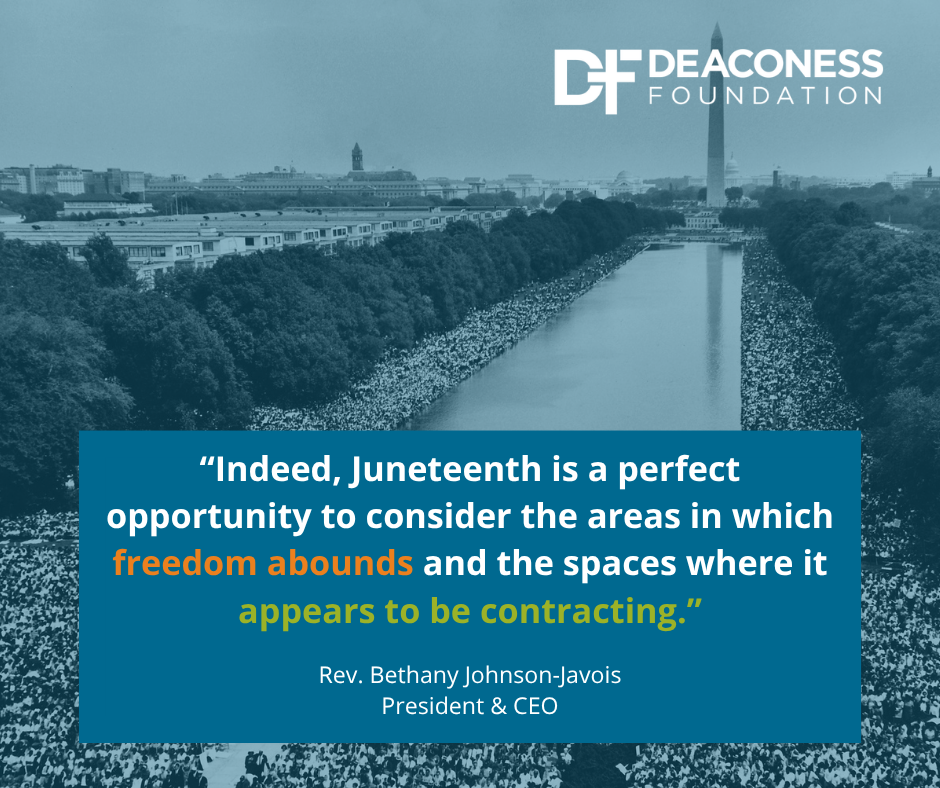
Indeed, Juneteenth is a perfect opportunity to consider the areas in which freedom abounds and the spaces where it appears to be contracting. I know mass media will promulgate messages that inspire fear. But this is a moment to abandon fear, reject prevailing narratives and imagine.


I submit to you that in addition to marking your plans to indulge in foods colored red, green and black (the hue of Juneteenth), that you also grab friends and family, and dream with intention. Don’t ask whether your goal is possible; ask what it would take to make it possible. 


We are invited, indeed compelled to imagine, and then create something new. If we practice communal imagination, we can respond versus react. If we creatively imagine, we will fuel future generations to do the same. Isn’t that what this is all about?


In service to the mission,


Rev. Bethany Johnson-Javois

President & CEO

THE MORE YOU KNOW

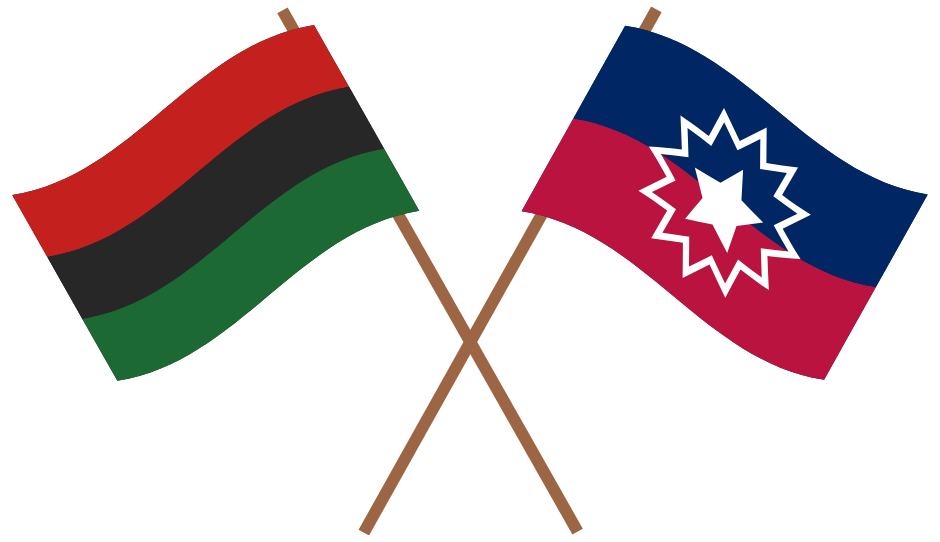
Understanding the Juneteenth Flag and the African Liberation Flag


Every flag tells a story. The Juneteenth flag and the African Liberation flag tell interconnected stories of freedom, identity, struggle, and possibility.


Created in 1997 by activist Ben Haith and later refined with the help of illustrator Lisa Jeanne Graf, the Juneteenth flag commemorates June 19, 1865, when enslaved people in Galveston, Texas learned of their freedom more than two years after the Emancipation Proclamation. Its red, white, and blue colors affirm that formerly enslaved people and their descendants are an inseparable part of the American story. The five-pointed white star represents Texas, the Lone Star State, where the news of freedom arrived. Surrounding it is a larger starburst, symbolizing a new horizon and the expanding promise of freedom that could not be confined to one place, one moment, or one generation.


The African Liberation flag, often called the Pan-African flag, was adopted in 1920 by the Universal Negro Improvement Association under the leadership of Marcus Garvey. Its colors carry a powerful message of peoplehood and self-determination: red represents the blood shed through struggle and sacrifice, black represents the people, and green represents the abundant land and wealth of Africa. For more than a century, the flag has stood as a symbol of global Black unity, pride, resistance, and liberation.


These flags are not in competition with one another. They tell different chapters of a shared story. The Juneteenth flag reminds us of a hard-won freedom, an unfinished promise of citizenship in the United States, and that emancipation required both proclamation and enforcement. The African Liberation flag reminds us that liberation is larger than any one nation, connecting Black communities across generations and across the globe. Together, they help us remember where we have come from, understand the sacrifices that made our progress possible, and imagine a future where freedom is not merely declared, but fully realized.


FROM THE FOUNDATION

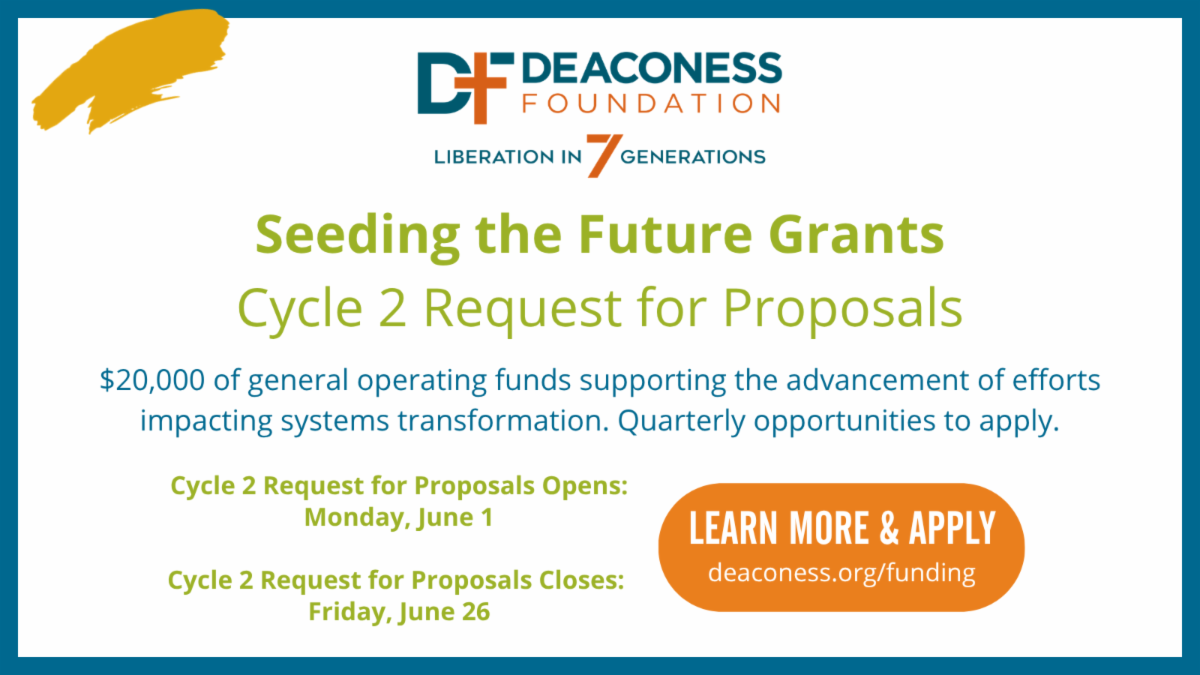
Seeding the Future Cycle 2

Our second cycle of the Seeding the Future Grants is now open and closes Friday, June 26! The grants provide general operating funds for one year to organizations with proposals that align with Deaconess' intended impact. Funding supports organizational and civic infrastructure expansion, advancement of public policies, and/or efforts impacting systems transformation through an intergenerational approach, for the improved health and wellness of people in Eastern Missouri and Southern Illinois. Learn more and apply here.

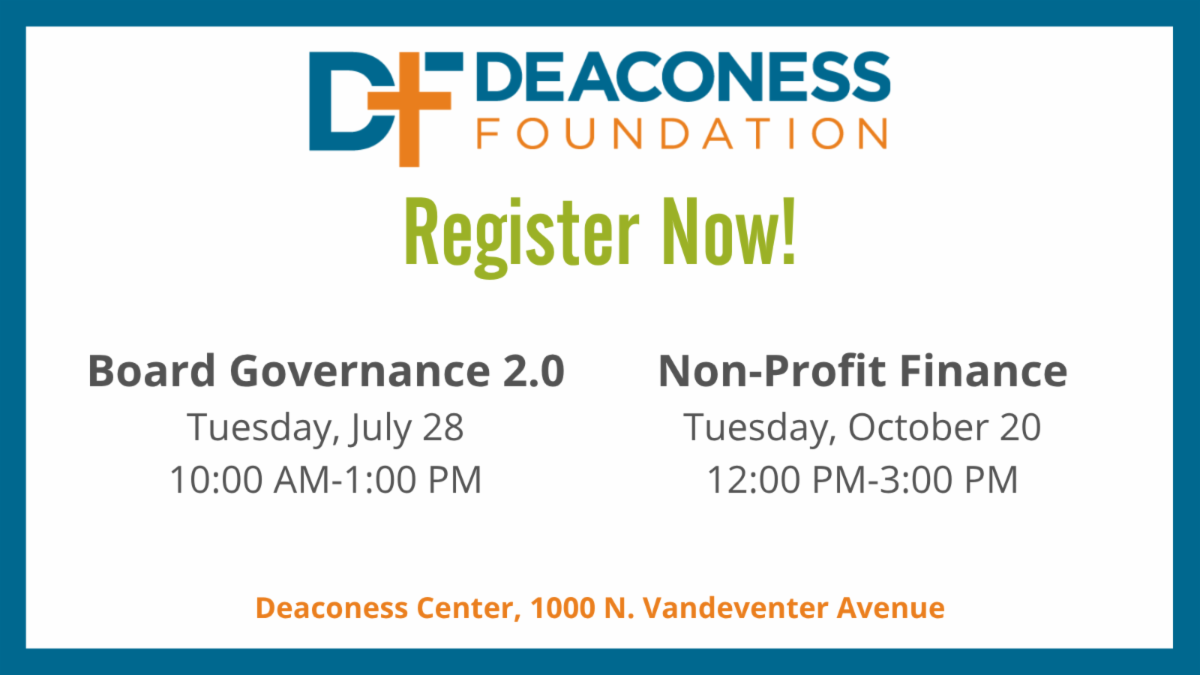
Learning Sessions


Deaconess is committed to leveraging all of our non-grant assets to complement our financial investments and provide nonprofit leaders and team members peer learning experiences and trainings to refine and strengthen our collective capacity to advance community well-being.

Board Governance 2.0: From Transactional Governance to Transformational Leadership


This year's interactive Board Governance workshop will explore how nonprofit governance can move beyond compliance and oversight into a more strategic, relational, and transformational leadership practice. Building on Deaconess Foundation’s 2025 governance training, this session will share practical tools and reflections related to board culture, trustee engagement, strategic meeting design, onboarding, trust-building, adaptive leadership, and governance in times of complexity and change. 

Non-Profit Finance 


The Nonprofit Financial Basics Workshop will focus on building foundational knowledge of nonprofit financial management through a mix of didactic instruction and discussion-based activities. Key topics will include:


  • Understanding the basics of nonprofit financial statements, including cash flow, compliance, risk management, and strategies for sustaining resources
  • Exploring nonprofit assets as public goods and what that means for accountability and stewardship
  • Examining IRS Form 990 as both a compliance requirement and a powerful marketing and transparency tool
  • Using financial statements to build trust with stakeholders, donors, and the broader community
  • Discussion on nonprofits facing public or federal scrutiny and what it means for transparency and compliance 
  • Overview of document retention policy best practices for legal compliance and organizational accountability
  • Do you have examples of non-profit organizations that have come under scrutiny during this federal administration?
  • What kind of document retention policy can we adopt?

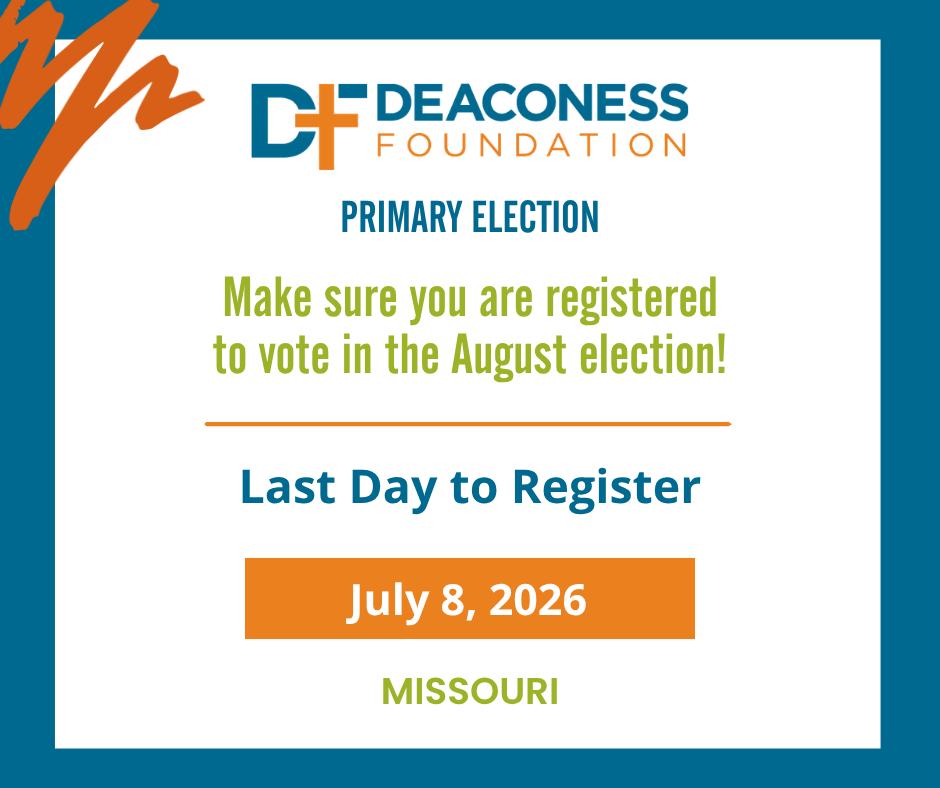
Your voice matters in every election. The deadline to register for the August Primary Election is July 8, 2026. Don't let it pass you by. Make sure you are registered to vote. Double and triple check.

The window for impacted people to submit a claim for the Workhouse settlement is coming to a close on June 29th. The $4 million settlement is to be distributed to more than 16,000 people who were jailed amidst inhumane conditions between 2012 and 2022 in St. Louis’ Medium Security Institution, also known as the Workhouse.


When is the last day to make a claim for the Workhouse lawsuit?

  • Monday, June 29th


How do you make a claim?


What do you need to make a claim?

  • To submit a claim, people either need their Claimant ID or their DOB or SSN.


What else do people need to know?

  • People can only file a claim if they were in the Workhouse after November 13, 2012. To learn more, visit www.stlmediumsecurityinstitutionclassaction.com or call 1-800-591-0732.


WHAT WE'RE READING


This Juneteenth, Use Imagination as a Practice of Emancipation | Newsweek


Illinois EPA takes ‘toxic tour’ through these contaminated Metro East sites | St. Louis Public Radio


When Disruption Hits: Making Hidden Risks Visible to Meet the Moment and Move Our Missions Forward | Nonprofit Quarterly


PARTNER OPPORTUNITIES & EVENTS

June 22 – Data Center Meetings | Missouri Workers Center | Register Here 

June 27 – Townhall Showdown | Missouri Jobs With Justice

June 30 – Community Health Commission Meeting

July 1 – Affordable Housing Coalition Meeting | Empower Missouri

July 6 Data Center OC Meeting | (6:00–7:30 PM CT) | Missouri Workers Center

July 8  NO MO Dirty Data Centers – Statewide Call | (6:00–7:30 PM CT) | Missouri Workers Center

July 8 Smarts for Advocacy 4 Part Series | NAMI 

July 9 – Community Justice Coalition Meeting | Empower Missouri

July 9 – St. Louis Organizing Committee | Missouri Jobs with Justice

July 10 – Food Security Coalition Meeting | Empower Missouri

July 13 – Springfield Organizing Committee Meeting | Missouri Jobs with Justice

July 15 – Kansas City Organizing Committee Meeting | Missouri Jobs with Justice

July 15 Smarts for Advocacy 4 Part Series | NAMI 

July 15 – Upcoming Regional Lunch: Franklin County, MO

July 16 – Ntosake Mini Session | United Congregations of Metro East

July 20 Data Center OC Meeting | (6:00–7:30 PM CT) | Missouri Workers Center

July 20 Courtwatch Support for Wrongful Death Trial of Brandon Pace | Missouri Justice Coalition

July 22 Smarts for Advocacy 4 Part Series | NAMI 

July 29 Smarts for Advocacy 4 Part Series | NAMI 


Deadline of June 29 – Submitting a claim for Cody v. City of St. Louis Settlement | Arch City Defenders

Now Hiring


CONNECT

Follow us on social media for continued shared news, opportunities, events, and more. 
Facebook  X  Instagram  Youtube  Linkedin  

www.deaconess.org

Receive this information from a friend? Subscribe.

Current partners of Deaconess Foundation submit a job posting or event.

Request a convening space at the Deaconess Center.