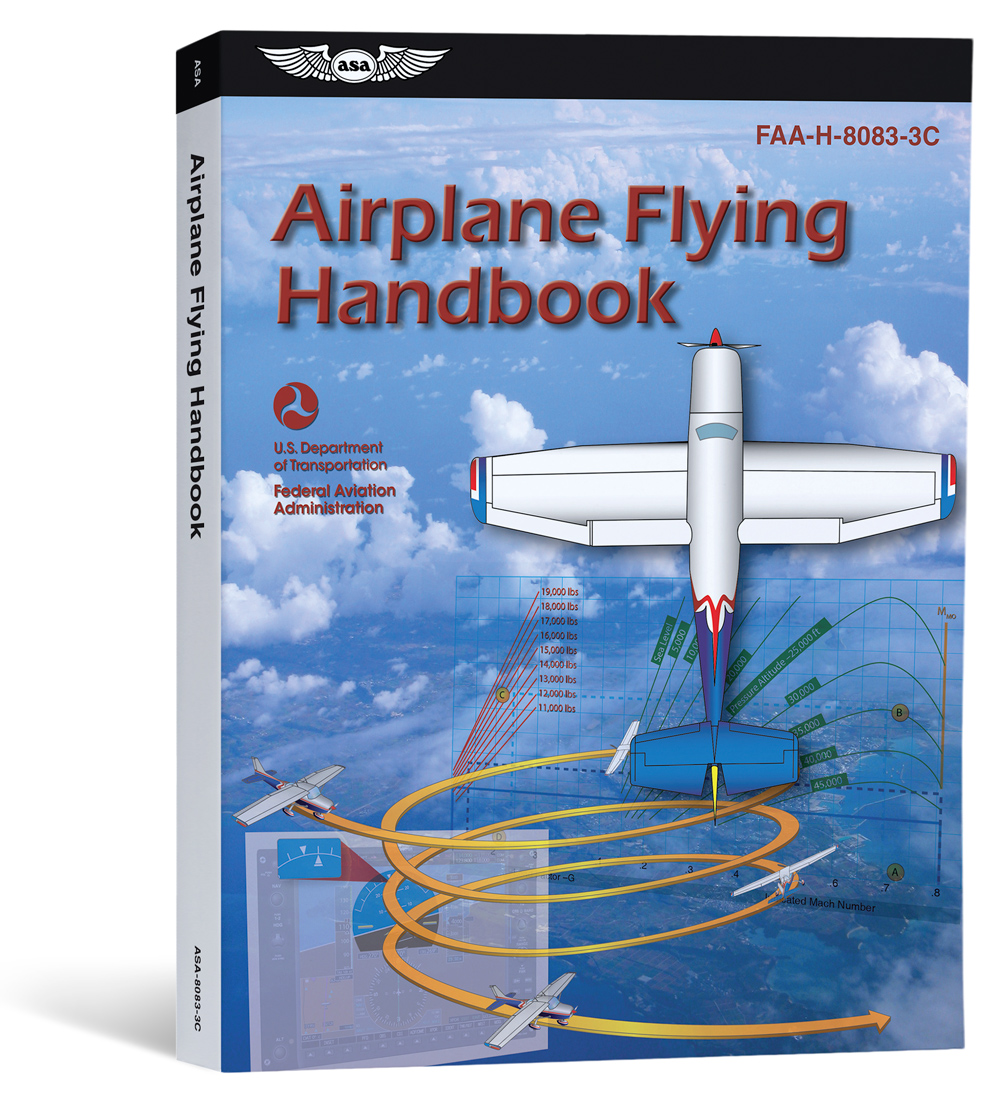
The FAA Airplane Flying Handbook introduces the basic pilot skills and knowledge essential for flying airplanes and has been pilots' required reading for more than 40 years. This book benefits student pilots just beginning their aviation endeavors as well as pilots who are preparing for additional certificates and ratings or who want to improve their flying proficiency, and it is useful for flight instructors engaged in teaching pilots of all skill levels.
This handbook provides information and guidance on the procedures and maneuvers required for pilot certification. Chapters are dedicated to introduction to flight training, ground operations, basic flight maneuvers, energy management (mastering altitude and airspeed control), maintaining aircraft control (upset prevention and recovery training), takeoff and departure climbs, ground reference maneuvers, airport traffic patterns, approaches and landings, performance maneuvers, night operations, emergency procedures, and transitions to different types of aircraft including complex, multi-engine, tailwheel, turboprop, turbojet, and light sport airplanes (LSA). Last updated in 2016, this new edition expands and updates the material that is a key reference in FAA testing and Airman Certification Standards (ACS), and it incorporates new areas of safety concerns and technical information such as loss-of-control upset prevention and recovery training, and energy management.
The Airplane Flying Handbook is the official FAA source for learning to fly and for many of the test questions in the pilot FAA Knowledge Exams. Complete with chapter summaries and illustrated throughout with detailed, full-color drawings and photographs, it also includes a glossary and index.
Softcover, 8.25 x 10.75 inches, 416 pages. Also available in eBook formats and as a money saving eBundle. Cover returns for Airplane Flying Handbook (ASA-8083-3B) will be accepted from distributors only through January 31, 2022.