Volume 10 : Issue 11AAAAAAAAAAAAAAAAAAAA June 2, 2026


Your Local Source for Green Inspiration and a Deeper Connection to Nature!

June has arrived and it's now the growing season! Lawns are thriving, gardens are in bloom, and landscapes have come to life across the area.


As temperatures rise, our focus shifts to maintaining healthy growth and keeping your property looking its best. We’re also keeping a close eye on weeds and pests, which tend to become more active as the season progresses. In this issue, we’re focusing on managing excess water and in the next we'll shift focus to the opposite challenge: drought conditions.

A few June tips for your landscape:

  • Water deeply but less frequently to encourage strong root systems
  • Keep an eye out for early signs of lawn stress or insect activity
  • Deadhead flowers to promote continued blooming
  • Mulch beds if needed to retain moisture and suppress weeds

Our team is committed to making sure your outdoor spaces stay vibrant, healthy, and enjoyable all summer long. As always, thank you for trusting us with your landscape. If you have any questions or are thinking about seasonal enhancements, don’t hesitate to reach out! -Shayne

DRAINAGE ISSUES


Drainage issues occur when water fails to flow away from your property, leading to standing water, soggy soil, basement leaks, and potential structural damage.

Excess water isn’t always obvious right away, but over time it can take a toll on your property - lawn, plants, and the foundation of your home.


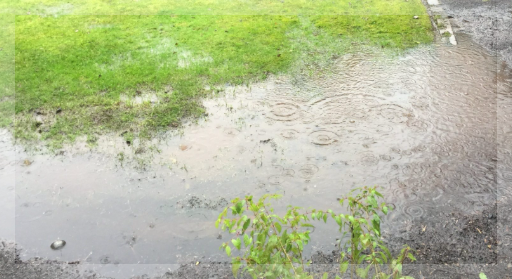
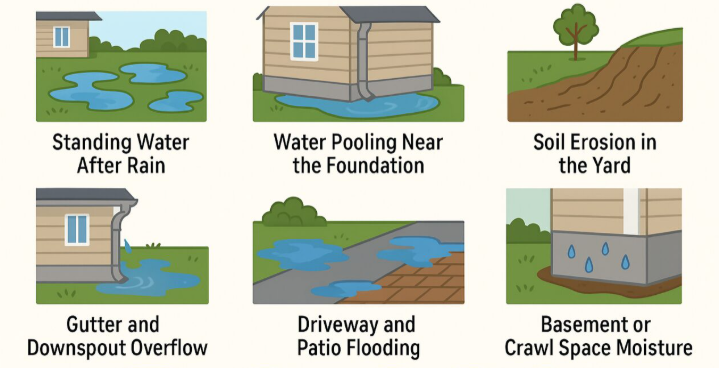
One of the most common signs of a drainage problem is standing water or puddles that stay long after the rain has stopped. You may also notice consistently soggy or muddy spots in your yard, which indicate that water isn’t being absorbed or redirected properly.


Your lawn and plants can also give you clues. Yellowing or thinning grass, along with an increase in moss, algae, or certain weeds, often signals that the soil is staying too wet. In other areas, you might see the opposite effect—erosion, washed-out soil or mulch, or exposed roots—caused by water moving too quickly across the surface instead of soaking in evenly.


If you’re seeing any of these signs, our team can help identify the cause and recommend the right solution for your property. From regrading problem areas and extending downspouts, installing effective drainage systems, or designing natural solutions like rain gardens, we tailor each approach to your landscape. Our goal is to move water safely away from your home and planting areas while keeping your yard healthy, functional, and beautiful.

RAIN GARDENS

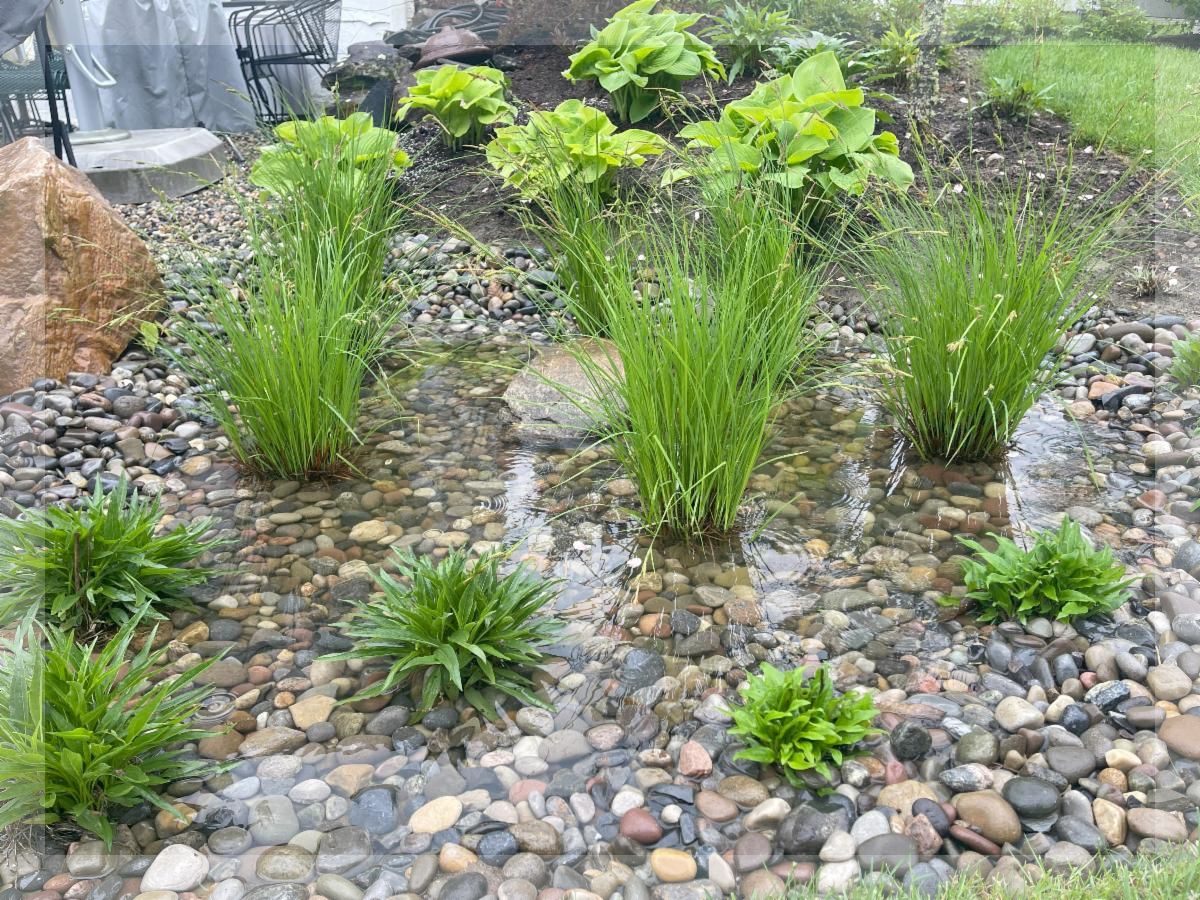
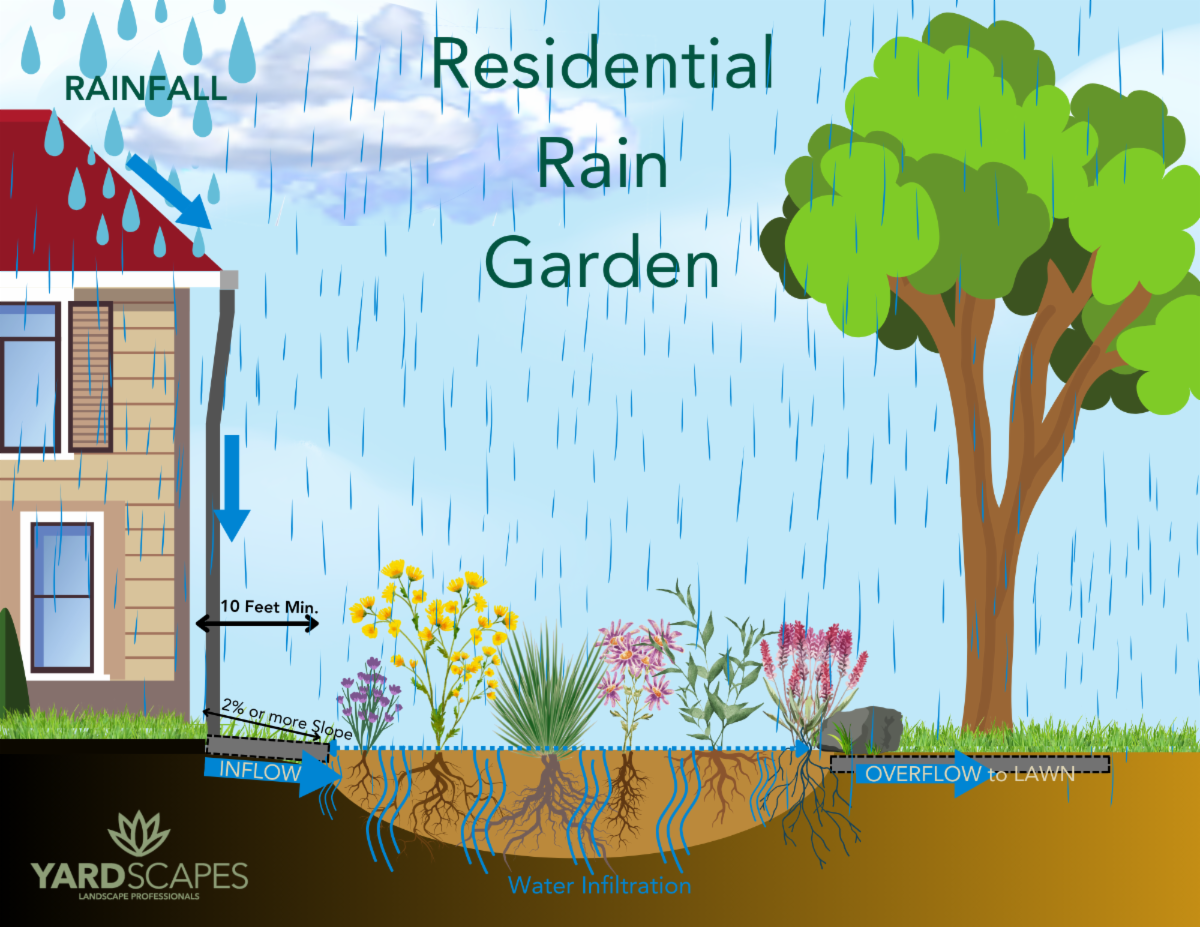
A home rain garden is a simple, attractive way to manage excess water on your property, especially in areas where drainage is a problem. It’s a shallow, planted depression designed to capture and absorb rainwater runoff from roofs, driveways, and lawns. Instead of water pooling in unwanted spots or flowing directly into storm drains, a rain garden allows it to slowly soak into the soil, reducing erosion and improving overall drainage.


We plant rain gardens with a mix of deep-rooted native plants, grasses, and flowers that can tolerate both wet and dry conditions. These plants help loosen compacted soil, increase infiltration, and filter out pollutants carried by runoff. Over time, the garden improves soil structure and creates a more resilient landscape that can manage heavy rain more effectively.


Beyond solving drainage issues, a rain garden adds visual interest and supports local wildlife such as pollinators and birds. We can design your garden to blend seamlessly into your yard, looking like a natural garden bed rather than a drainage feature. A rain garden is both a practical and environmentally friendly solution for managing stormwater at home.

Web  Facebook  Instagram  LinkedIn  Pinterest  Email

YardScapes Landscape Professionals(860) 350-2737 18 Aspetuck Ridge Road New Milford, CT 06776 US

Constant Contact