Asian Biotechies Walk Into A Bar
The Newsletter of InScienceWeTrust Community
| |
|
“Slow” ASCO24 Has Many Hidden Gems; Celebrate Bioverse Webinar Anniversary!
Issue 47; 2024-05-26
| |
|
Summary
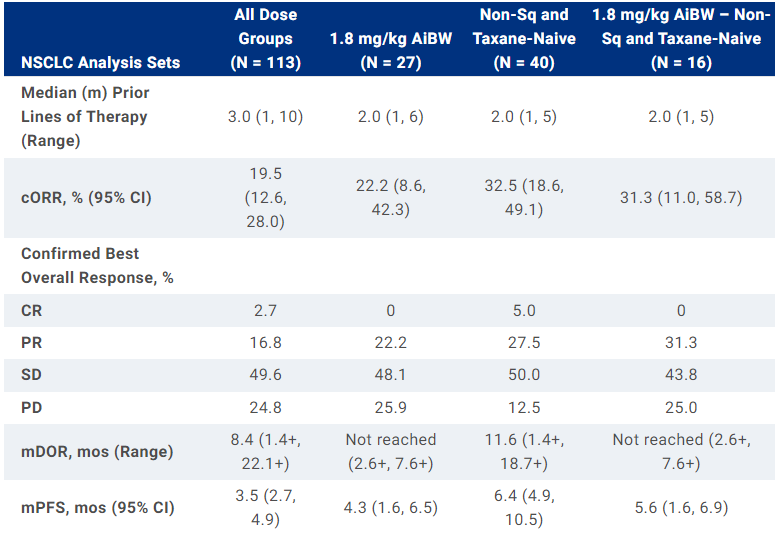
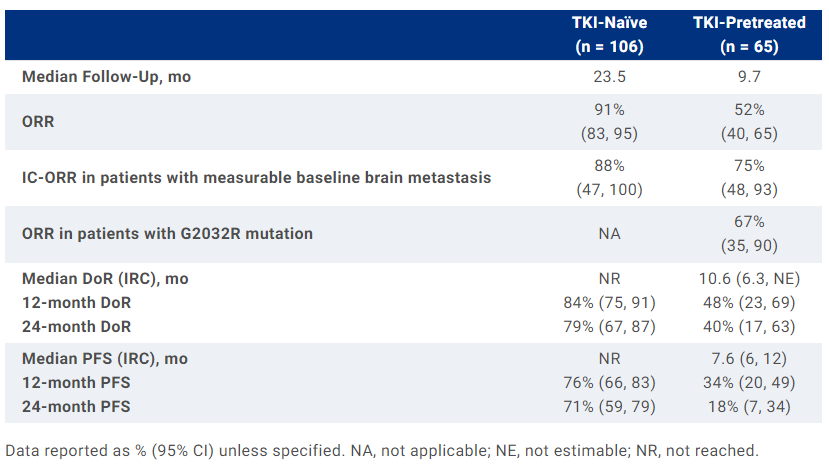
ASCO abstracts were released last week, which officially kicked off the most important medical conference for the biotech/biopharma industry. Out of thousands of abstracts, Angus Liu highlights the new data from immuno-oncology assets in melanoma space, including Bristol Myers Squibb’s PD-1/LAG-3/CTLA-4 triplet combo, Iovance’s TIL/PD-1 doublet combo, and Immunocore’s PRAME x CD3 bispecific antibody; Jiamin Zhuo dives into the initial clinical data from USP1-targeting assets, and he finds the initial clinical data is underwhelming; Leon Tang flags a few abstracts of early stage clinical trials on an ITGB6-targeting ADC from Pfizer, the ROS1-targeting taletrectinib from Nuvation, HPK1-targeting NID-101150 from Nimbus, and kallikrein-2-targeting radiopharmaceutical JNJ-6420.
Other notable global biotech news includes Biogen’s acquisition of another immunology company, two China biotech deals involving molecule glue specialist Degron Therapeutics and antibody specialist Nona Biosciences, and other Asia biotech news.
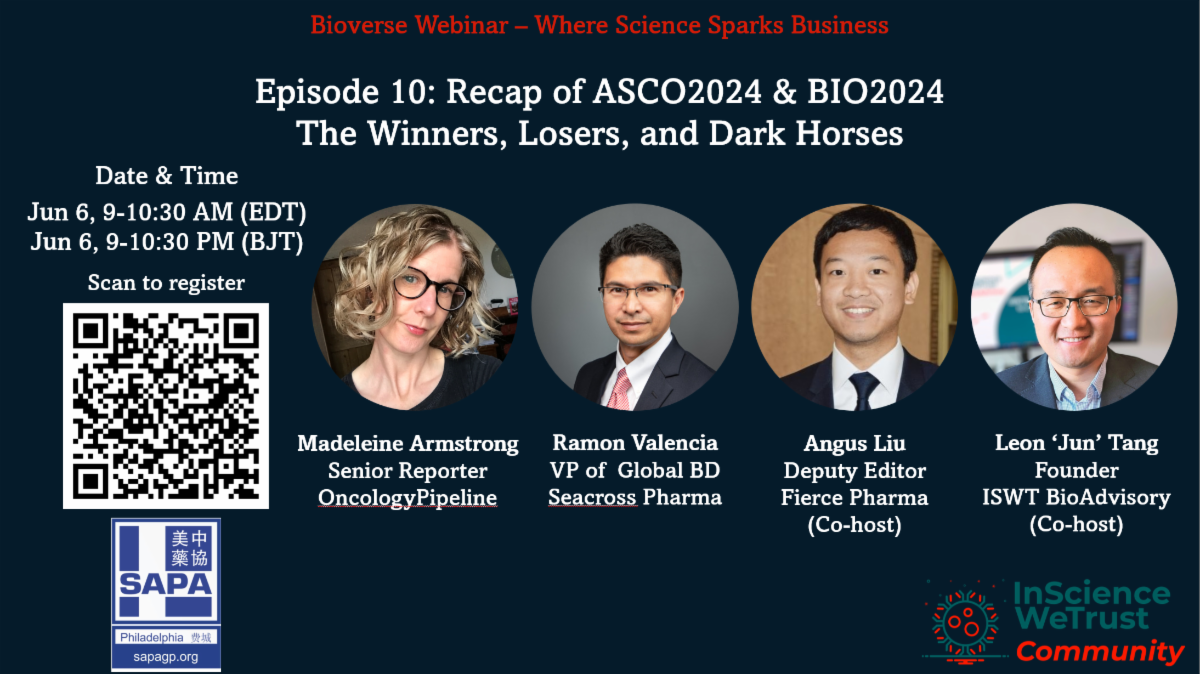
Book your calendar from 9AM to 10:30 AM of June 6th and register for Bioverse Episode 10 - Recap of ASCO24 and BIO24 - The Winners, Losers, and Dark Horses. In Bioverse Episode 10, Madeleine Armstrong from OncologyPipeline and Ramon Valencia from Seacross Pharmaceuticals will join co-hosts Angus Liu from Fierce Pharma and Leon ‘Jun’ Tang from InScienceWeTrust BioAdvisory to discuss the winners, losers, and black horses from ASCO 2024 and BIO 2024. This episode is the anniversary of Bioverse Webinar, the 12th episode out of the ISWTC/SAPA-GP/BioSpark collaboration.
ISWT Community created a networking group on WeChat for the Community members to mingle with each other in person during ASCO and BIO. If you are attending ASCO or BIO in person and want to join, please contact Angus Liu, Jiamin Zhuo, Devin Chen, or Leon Tang.
Please send your questions and feedback to partnership@iswtb.com.
| | |
|
Melanoma is the Battlefield of Immuno-Oncology 2.0
At ASCO, Bristol Myers Squibb and Iovance are reporting novel immunotherapy combination data in first-line advanced melanoma, Fierce Pharma reports. Bristol’s PD-1, CTLA4, LAG-3 combo showed 58.7% ORR in 46 patients, including 17.4% CRR, after a median 49.4mo follow-up of a cohort in the phase 1/2 RELATIVITY-04 trial.
Iovance’s TIL/PD-1 combo of Amtagvi and Keytruda showed 65.2% ORR among 23 patients in cohort 1A of the phase 2 IOV-COM-202 trial. Median follow-up was 21.7mo. Perhaps more importantly, the combo recorded 30.4% CRR. Historically, CRRs by PD-1 monotherapy, PD-1/CTLA4 and PD-1/LAG-3 regimens were below 20% even after longer-term follow-ups.
Iovance’s data are encouraging, albeit in a very small population. Leerink Partners analysts previously said they would like to see a 65% ORR ideally in at least 50 patients to be convinced. Besides, the DOR remains unknown given the short follow-up and could be interesting to watch given Amtagvi is a one-time therapy. As Leerink noted, existing PD-1 regimens have set the DOR bar very high (median NR after five-year follow-up). Eventually, Amtagvi also needs to show some major efficacy to compensate for the cell therapy’s limited access thanks to the complicated manufacturing and administration processes.
Bristol’s triplet looks less exciting, with the caveat of cross-trial comparison. Its ORR and two-year OS rate are not so different from those previously posted by Opdivo, Opdivo-Yervoy and Opdaulag.
While Iovance has already moved Amtagvi-Keytruda to phase 3, with a plan to use ORR for accelerated approval in the first line, BMS said it’s still reviewing the data.
Meanwhile, Immunocore also disappointed with its PRAME×CD3 TCR bispecific brenetafusp (IMC-F106C). An ASCO abstract showed just 13% ORR in post-checkpoint cutaneous melanoma. The number was simply no match to the 55% that Immatics reported earlier this month for its PRAME TCR candidate IMA203 from 29 heavily pretreated melanoma patients. Among 16 cutaneous melanoma patients, the ORR was 56%. — Angus Liu
| | |
|
Eearly Clinical Setbacks Dampen Enthusiasm for USP1 Inhibitors
Last Thursday's ASCO abstract release revealed the first human data of ubiquitin-specific protease 1 (USP1) inhibition from KSQ-4279, Roche's licensed FIC USP1 inhibitor from KSQ Therapeutics. However, the data showed minimal efficacy and a concerning toxicity profile (ASCO Abstract). Additionally, Tango Therapeutics announced the termination of its own USP1 inhibitor, TNG348, due to liver toxicity (Press Release), marking the second setback for this emerging class of agents on the same day.
USP1, a deubiquitinating enzyme that regulates DNA damage response, is one of the emerging targets for synthetic lethality, an approach validated by PARP inhibitors like Merck/AstraZeneca's Lynparza. These synthetic lethality molecules have seen business development interest recently, including Roche's deal with KSQ for KSQ-4279 last July.
Initiated in August 2021, the first-in-human study of KSQ-4279 enrolled 64 patients with advanced solid tumors, enriched for deleterious HRR mutations. KSQ-4279 was tested as monotherapy or in combination with Lynparza or carboplatin. According to the abstract, only one partial response was identified in the 42-patient monotherapy cohort. The combination cohorts yielded stable diseases at best, suggesting poor potential synergy between USP1 inhibitors and PARP inhibitors. Furthermore, 30% of patients required dose interruptions of KSQ-4279, with one treatment discontinuation. The most common Grade 3+ TEAEs were hyponatremia (12%) in the monotherapy cohort, and anemia in combination with Lynparza (73%) and carboplatin (29%), highlighting safety concerns for the PARP inhibitor combination, likely due to PARP inhibitor-induced hematologic toxicity.
Tango Therapeutics, Roche/KSQ's competitor, planned to test TNG348 monotherapy and a Lynparza combination in patients with BRCA1/2-mutant and other HRD-positive cancers. However, last Thursday, the company terminated the project citing "Grade 3/4 liver function abnormalities observed in patients remaining on study longer than eight weeks," based on monotherapy cohort results. This decision questions the single-agent safety of USP1 inhibitors.
Currently, Exelixis is testing ISM-3091, another USP1 inhibitor licensed with an $80 million upfront payment from Insilico Medicine last September. Simcere and Haisco have also initiated Phase 1/2 trials to evaluate their own USP1 inhibitors in China. Their clinical readouts could provide more clarity on the potential of USP1 inhibitors, which appear less promising given the recent setbacks. (Fierce) — Jiamin Zhuo
| | |
|
Lacking Earth-Shaking Abstracts, Is ASCO24 Still Worth Going?
Sell-side analysts Umer Raffat and Jon Miller from Evercore received only 3 emails about ASCO24 last week, versus hundreds of them 5 years ago; Cantor’s Josh Schimmer will likely sit out this ASCO as well, among a few others. However, the investors’ lukewarm interests do not dampen the enthusiasm among oncologists, drug developers, and most importantly, the deal-makers from both the “sell-side” biotechs and the “buy-side” biopharmas. I found the following abstracts very interesting in the current deal-making landscape.
| | |
-
Leveraging the same small-molecule drug discovery platform that led to a $4Bn transaction to Takeda, Nimbus will present their Phase 1/2 data of their HPK1-targeting NDI-101150 as monotherapy. However, the monotherapy data was underwhelming, with only one complete response out of 24 evaluated patients. Combo with pembrolizumab seems the only viable path for this asset but they will face a high bar from other PD-1 combos, especially ADC/PD-1. Given the impressive data from Padcev/Keytruda in frontline bladder cancer and data from few other promising PD-1/ADC combos, NDI-101150/Keytruda combo must clear a high bar to gain interests.
-
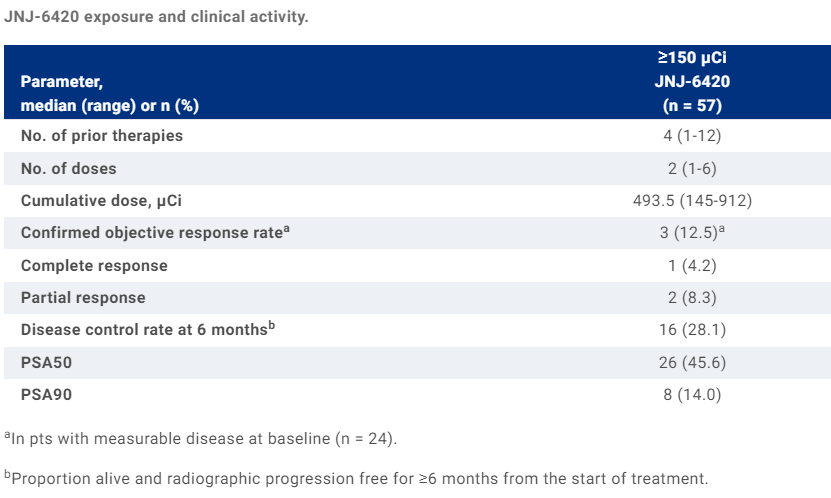
There is no doubt that radiopharmaceutical has induced FOMO among biopharma, and all major pharma with ambition in oncology wants to get into the space, exemplified by the recent M&A and BD deals in this space. JNJ, which recently acquired ADC company Ambrx to strengthen their franchise in prostate cancer, showed the first-in-human data from their kallikrein-2-targeting actinium-loaded antibody-based JNJ-6420. Safety data from 57 patients in the ≥150 μCi cohort does not look promising, which shows 61.4% grade 3+ treatment-emergent adverse event (TEAE) rate, 36.8% SAE, and 4 deaths. The efficacy also looks underwhelming with a 12.5% ORR. A few radiopharmaceutical experts suggest the antibody backbone, which enables a long blood half-life but also produces enormous off-target toxicity, might cause most of the severe toxicity. Although JNJ-6420 will very unlikely compete with Pluvicto and other prostate cancer radiopharmaceuticals, JNJ could still find attractive assets from a dozen of radiopharmaceutical companies with assets for prostate cancer. — Leon Tang
|  | | |
Global Biotech News
Lilly Asia Ventures’ social media account in China published an Chinese article authored by 金淘沙捡, titled “GIP之侠客行”. This investigative article tells the backstory of the development of MariTide, whose recent data added ~$20B market cap for Amgen. The key person and unsung hero behind MariTide, according to this article, is Junming Yie, a former scientist from Amgen, and he currently serves as the CSO of ArkBio.
| | |
|
Biogen doubled down on immunology with the $1.15B acquisition of Human Immunology Bioscience last week. The deal aims to expand Biogen’s presence in immunology by gaining control of the anti-CD38 antibody felzartamab, which has shown promise in treating renal diseases with unmet need. This acquisition is part of the current trend of targeting B-cell driven autoimmune diseases, which includes kidney disease, systemic lupus erythematosus, myositis, rheumatoid arthritis, among others.
Degreon Therapeutics, a molecule glue-focused biotech founded 3 years ago, closed a collaboration deal with Takeda that is worth $1.2B biobucks. Nona Biosciences, a fully-owned subsidiary of Harbour BioMed, inked another deal with AstraZeneca that will pay $19M upfront, $10M near-term milestone, and up to $575M biobucks and will leverage Nona Biosciences’ platform to develop oncology assets for AstraZeneca.
Other Asia biotech news includes AstraZeneca doubles down on Chinese innovation while plans to build a manufacturing facility in Singapore, Otsuka terminated their Alzheimer drug after phase 2 failure, Chinese CDMO Asymchem expands in the UK through the purchase of Pfizer’s site, and more.
— The Editorial Team
| | |
|
BioVerse Webinar, Where Science Sparks Business
In Bioverse Episode 10, Madeleine Armstrong from OncologyPipeline and Ramon Valencia from Seacross Pharmaceuticals will join co-hosts Angus Liu from Fierce Pharma and Leon ‘Jun’ Tang from InScienceWeTrust BioAdvisory to discuss the winners, losers, and black horses from ASCO 2024 and BIO 2024. Register for the webinar here.
All our speakers will attend ASCO or BIO in person, and they will share the highlights of the latest breakthroughs in clinical oncology presented at ASCO2024 and the industry-shaping deals announced at BIO2024.
Episode 10 also marks the anniversary of the Bioverse webinar series. We would like to take a moment to thank our volunteers from BioSpark Group, SAPA-GP, and ISWT Community, as wel as E药经理人, Tonacea,Drug Times, BiG, 猎药人俱乐部, 动脉新医药, and Blue View. Their dedication and selfless contribution in the past one-year have helped Bioverse grow into an influential webinar series in the global biotech industry.
Watch our previous episodes on YouTube here.
| | |
To Travel Far, Travel TOGETHER | |
InScienceWeTrust Community is a registered 501(c)(3) nonprofit in New Jersey, USA | | | | |