|
In our third and final part of the series on leader wisdom, and our last edition of Inspiration for Change for the year, I'm reflecting on the concept of stickiness. We've already explored why valid data and self-reflection are vital ingredients to wise change management. To make the change stick requires one final ingredient: perseverance.
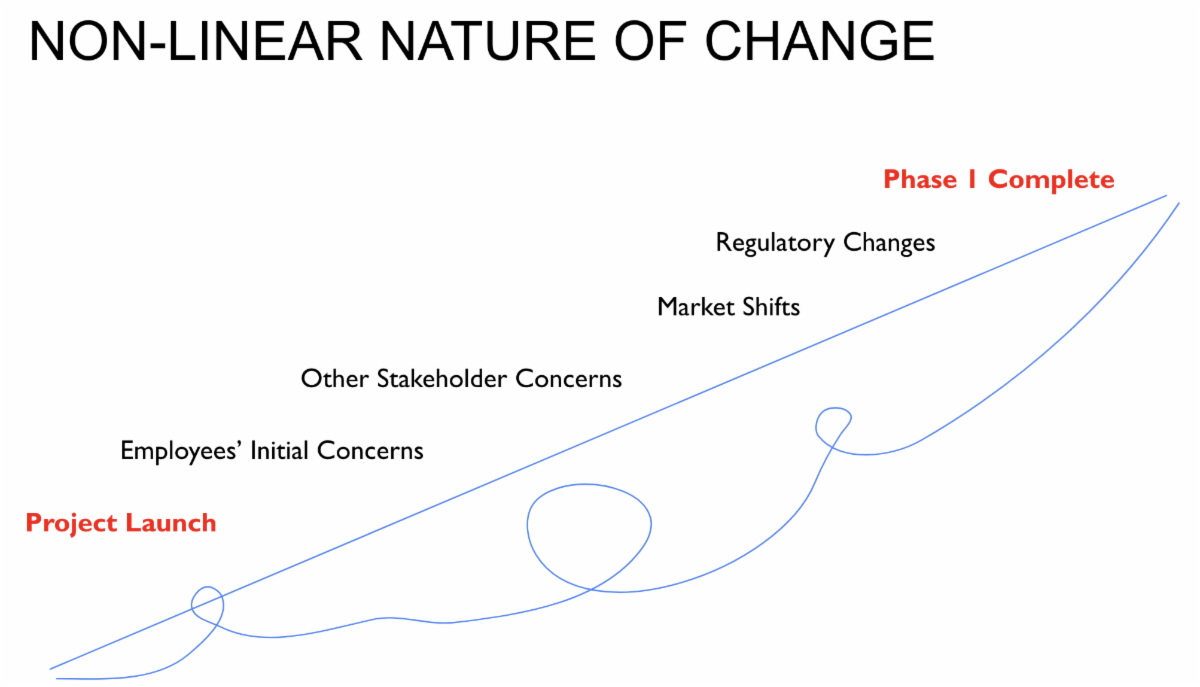
When most people visualize change, they see a linear path from Point A to Point Z. If we complete all of the tasks on our change plan in the exact order at the planned time, then we will have arrived at our final destination.
What actually happens is that the change process has a non-linear nature (see the graphic below for a visualization). There are bumps in the road, traffic jams, or detours. Wise leaders anticipate these divergences, are flexible to adjust course to maintain site of the end goal, and encourage others to lean into the process and adapt. Leaders must work through the frustration and challenges of the change not progressing according to the plan. When those unplanned detours present themselves, the leader appropriately pauses, digs deep to understand the issue, and collaborates with the right people and resources to address the issue and continue moving the organization forward.
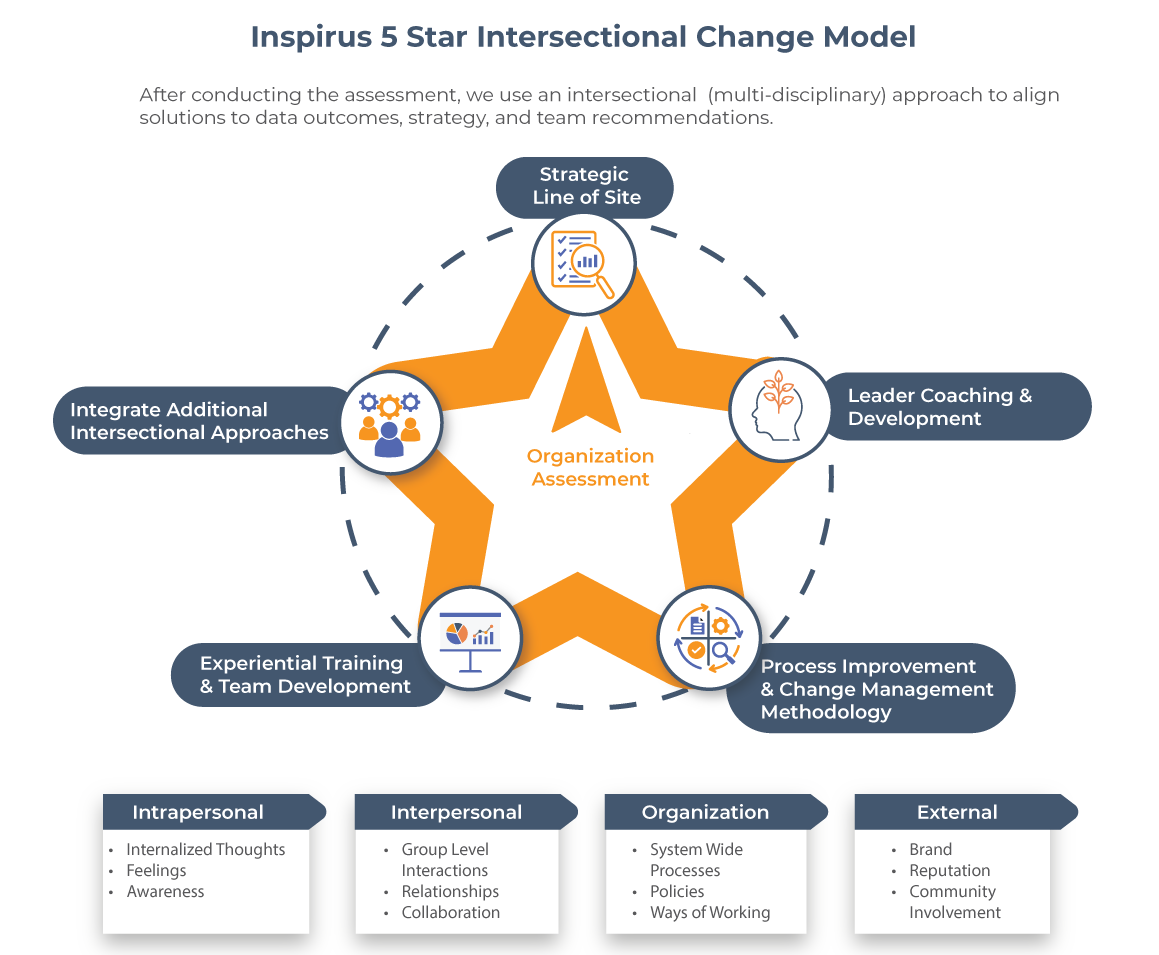
A helpful framework to support leaders working through these types of challenges is called the Four Levels of System. It requires leaders to look at the issues through the lenses of:
-
Intrapersonal (understanding what is going on inside of people),
-
Interpersonal (understanding what is happening between individuals, teams, and departments),
-
Organizational (understanding what is happening across the system re: processes), and
-
External (understanding what influences outside of the organization may be having an impact, eg: regulations, customers, market trends).
My question for you is, how can you use the Four Levels of System to effectively navigate through the non-linear nature of change in your organization?
|