I just took an amazing course called "The Voice and the Pelvic Floor." It was taught by Ginger Garner, an amazing PT who used to be a professional singer.
I have always been interested in the voice/pelvic floor connection because of my background as an amateur performing artist, because my daughter (a college junior) is planning to become a speech-language pathologist, and because the intra abdominal pressure (IAP) control system is the system that should power the voice, but most often doesn't in patients who come in for pelvic PT. As part of learning to control IAP (and intrathoracic pressure, and subglottal pressure), I have my patients produce various sounds that challenge the muscles in different ways, and I wanted to learn even more treatment techniques.
These are some of my favorite highlights from the course. My comments are in italics.
• According to the British Voice Association, these are common physical signs of vocal distress: gut problems (e.g. acid reflux and irritable bowel syndrome), skin problems (e.g. eczema/psoriasis), back, neck, or other muscle pain (including laryngeal pain), breathing difficulties (e.g. over-breathing panic attacks, a trigger for attacks in some asthmatics), and hoarseness (dysphonia) or complete voice loss/whisper (aphonia).
• These conditions are red flags for vocal dysfunction (meaning if you have this condition, you are more likely to develop vocal dysfunction): respiratory dysfunction, long Covid, pelvic floor dysfunction, pelvic organ prolapse, stress urinary incontinence, hernias, GERD, vocal dystonia, laryngitis, balance issues, postural control issues, developmental delays, vocal fatigue, poor vagal tone, poor digestion, cardiovascular issues, persistent pain, apnea/poor sleep.
• Urinary incontinence can be caused by using "non-sustainable vocal techniques," which cause an increase in IAP that overpowers what the bladder neck can stand, causing a leak.
• According to the speech-language pathology research literature, the biggest driver of vocal dysfunction is excessive stress/poor response to stress. Light bulb moment for me! Stress is also one of the biggest drivers of pelvic floor tightness and dysfunction.
• The vocal folds are infoldings of mucous membranes and muscles stretching across the larynx. The muscles change the shape of the opening. This arrangement is very similar to the pelvic floor, especially the female pelvic floor.
• The vocal folds vibrate at a rate of 110 cycles per second in males and 180-220 cycles per second in females.
• If you habitually clear your throat or repeatedly cough, your body will send more mucus to the area, creating a chronic excess of mucus. Don’t start the bad habit of clearing your throat all the time.
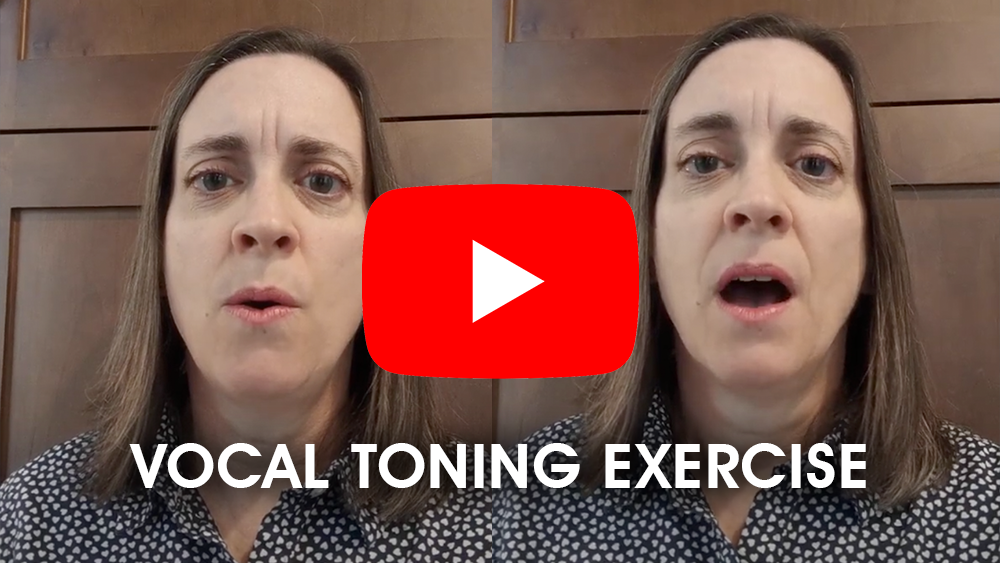
• Vocal toning (see exercise below) is more effective in quieting the mind than meditation. Vocal toning significantly improves heart rate variability (a good thing), improves ventilatory efficiency, and slows respiration to almost exactly 6 breaths per minute. This is the ideal respiratory rate that syncs with your body’s endogenous circulatory rhythms.
• One important part of breath re-education is establishing full-time nasal breathing during wakefulness and sleep.
• Another important part of breath re-education is correcting the resting position of the tongue. During phonation (speaking), the tongue should be behind the bottom teeth. During rest, the tongue should be behind the top teeth.
• If you are anxious, exhale through your nose. This lessens fear.
• Making pleasant sounds relieves pain and stress. This is common sense, but we forget to do it in our busy lives.
These highlights were just the tip of the iceberg of all I learned during this course. There are lots of creative ways to use the voice to improve pelvic floor health, and vice versa. And there are a lot of exciting possibilities for pelvic health physical therapists and speech-language pathologists to collaborate and learn from each other. Dr. Garner has a fabulous website, including a free medical therapeutic yoga library that you can sign up for. The library has a free e-book called "Learn to Breathe" and multiple videos on breathing.