The monthly newsletter of the Tennessee Suicide Prevention Network (TSPN) | |
|
Call to Action
TSPN publishes a Mental Health and Suicide Prevention Services Statewide Directory and Resource Information Guide, currently funded by the Tennessee Department of Health (TDH). In addition to sharing available resources across the state, it overviews suicide risk factors and warning signs. It also features specific information on high-risk population groups, the programs and coalitions working to prevent suicide in Tennessee, and laws and policies governing our state's suicide prevention efforts.
TSPN has 3,000 of these guides in stock, ready for distribution across Tennessee. In this newsletter, we debunk the myth that suicide deaths are highest in December. While suicide deaths generally decrease slightly during the winter holiday months, we know these deaths do not near zero and each suicide is one too many. We also know that many are battling seasonal depression, suicidal ideation, recovering from suicide attempts, and navigating the holidays while grieving suicide loss. We want everyone to know that resources and support are available. Help us with our goal to share this information widely throughout our communities by requesting copies and working with your friends, family, church groups to get options for support into as many hands of Tennesseans as possible.
Contact your TSPN Regional Director to pick up copies, tspn.org/staff. Additionally, you can request pick up from our central office in Nashville, or bulk orders to be shipped to you via our order form at TSPNorderform.
TSPN plans to publish a new iteration of the directory for publication in late 2025/ early 2026. If you see contact points in this document that need updating, or you would like to recommend a resource for inclusion, you can submit these online at
TSPNsuicidepreventionresourceguide_contentsubmission.
| |
|
In this issue
- Myths and facts about suicide, holidays, and media coverage
- Tips for increasing connectedness during the holidays
- Regional news and updates
- Disaster-related mental health resources
- Information about the C-SSRS screening tool
and more!
| |
|
Facts and myths about suicide and the holidays
There is a common myth often repeated by the media that suicide rates increase around Christmas. A 2023 survey by the University of Pennsylvania’s Annenberg Public Policy Center (APPC) reports that 81% of participants incorrectly identified December as the month when suicides are most common. Further analysis by APPC suggests that news stories published over the holiday season are just as likely to support the myth as to debunk it.
What are the facts?
Suicides in the U.S. generally decrease slightly during the winter holiday months, according to the Centers for Disease Control and Prevention. The social connectedness created by family and community gatherings, festivities, and traditions may provide a protective factor.
The CDC data shows suicides are more common in late spring and summer. Consider that suicide rates peak between September and February in Australia—their spring and summer months—but drop during December.
| |
|
Why does the holiday suicide myth keep showing up in mass media?
The holiday season can be stressful for many people. A poll conducted by the American Psychiatric Foundation reported that 64% of people with a diagnosed mental illness said the holiday worsened their condition to some degree, and 41% of respondents overall noted increased stress during this period.
Researchers suggest that news sources reporting on the holiday blues unintentionally conflate the genuine problems of holiday stress and seasonal affective disorder with the recurring urban myth. News sources may contribute to suicide contagion by inaccurate reporting on increases in suicide not borne out by actual numbers.
| |
|
Managing your mental health during the holidays
Maintaining mental wellness during the holidays can be challenging due to heightened stress or the pressure to meet perceived expectations by friends and families.
Many people feel isolated during the holidays. The CDC Report on Social Isolation and Mental Health notes how loneliness and lack of social support correlate with higher rates of depression, stress, and suicidal thoughts.
Here are some tips compiled by NAMI, the Mayo Clinic, and the American Psychiatric Association to help you cope and prioritize your well-being during the holidays:
- Reduce financial stress by sticking to a budget for gifts; consider giving homemade gifts.
- Avoid striving for perfection in holiday plans or traditions.
- Communicate boundaries with family or friends in advance of gatherings to reduce stress.
- Create a schedule to balance your “to do” list like shopping, cooking, and attending events. Ask for help and delegate tasks to reduce your burden.
- Get 7-8 hours of sleep and engage in exercises such as walking or yoga.
- Take short breaks from holiday tasks and gatherings to relax and recharge.
- Eat balanced meals while enjoying holiday treats in moderation.
- Remember that it’s OK to feel sadness or grief during the holidays, especially if you're missing loved ones.
- Reach out to friends, family, or community groups to combat loneliness; participate in holiday gatherings or online events to feel connected.
- Do activities that bring you joy, such as reading, crafting, or meditating.
- Reflect on the good things in your life by keeping a gratitude journal. Also, journaling can help process emotions.
- Volunteer or help others in need to foster a sense of purpose and connection.
- Limit time scrolling through social media posts.
- Focus on the present moment and meaningful interactions with others.
| |
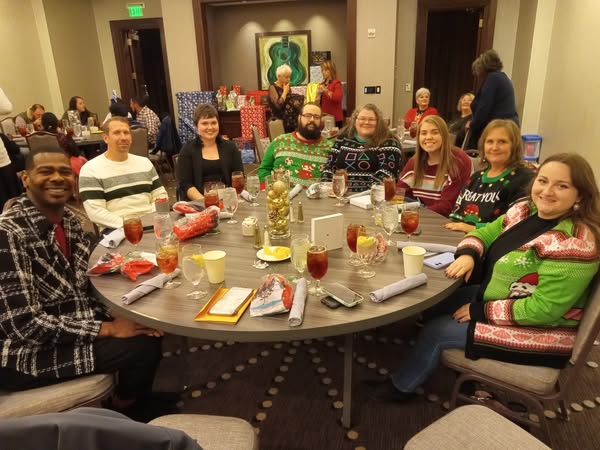
TSPN staff were included in the Tennessee Association of Alcohol, Drug & other Addiction Services (TAADAS) holiday party at the Omni Nashville Hotel on December 13. Guests enjoyed a catered dinner, a white elephant gift exchange, and had the option of touring the Country Music Hall of Fame and Museum attached to the hotel. | |
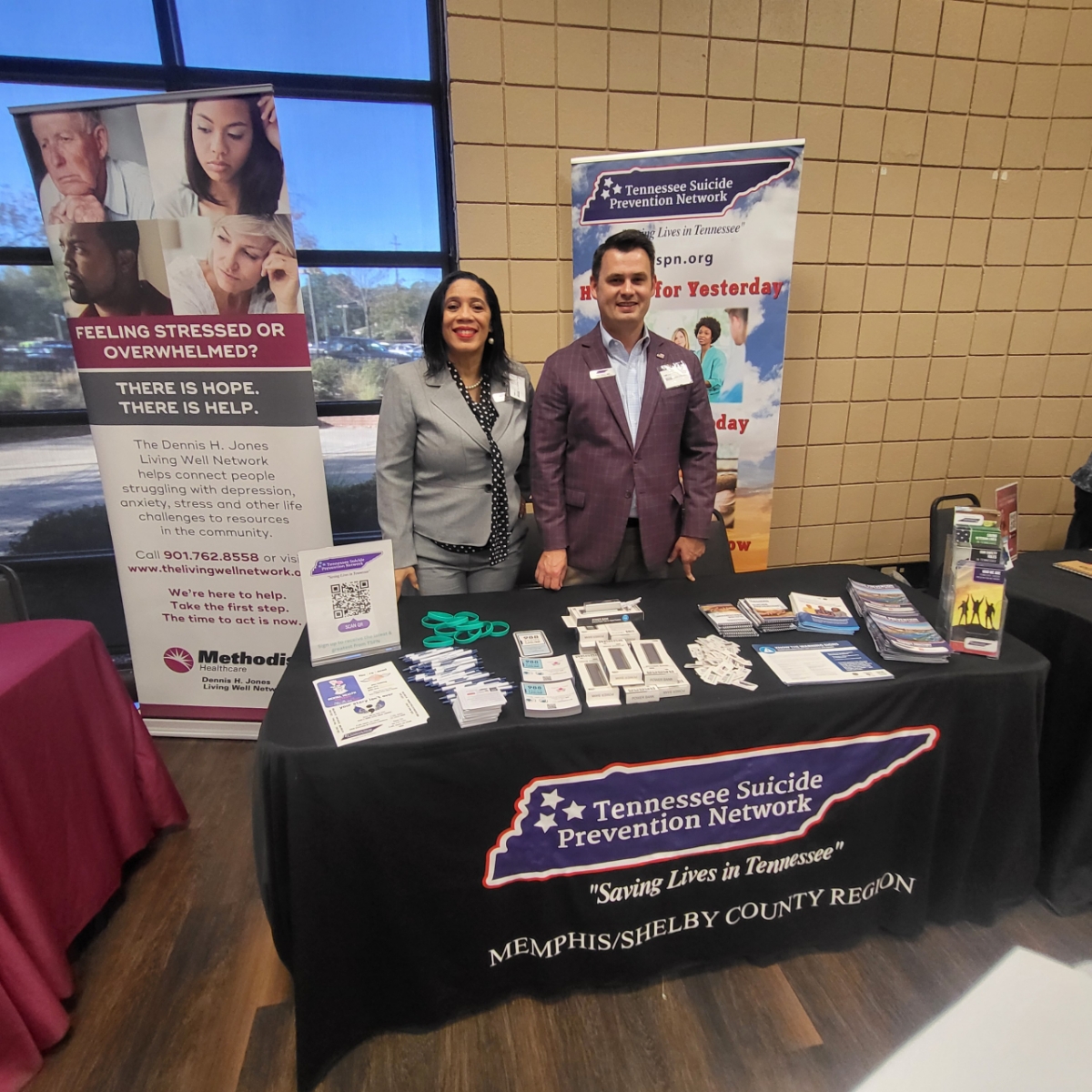
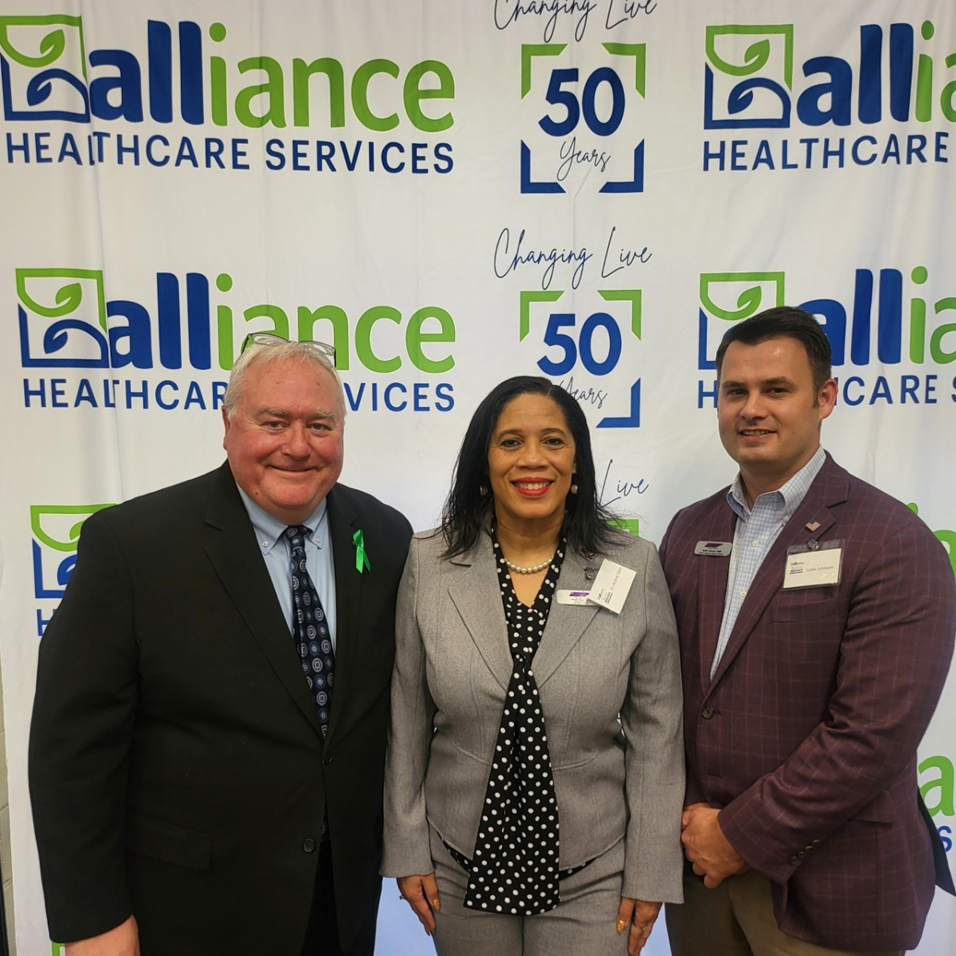
TSPN was among the sponsors of the Alliance Foundation's Third Annual Mental Health Awareness Breakfast held November 12 at the Great Hall in Germantown. Greater Memphis Advisory Council Chair and Executive Committee Secretary Dr. Audrey Elion (at left) and Greater Memphis Regional Director, Justin Johnson, host a booth with TSPN resources. At right, they posed for a photo with Mark Billingsley, the Foundation's Executive Director. | |
|
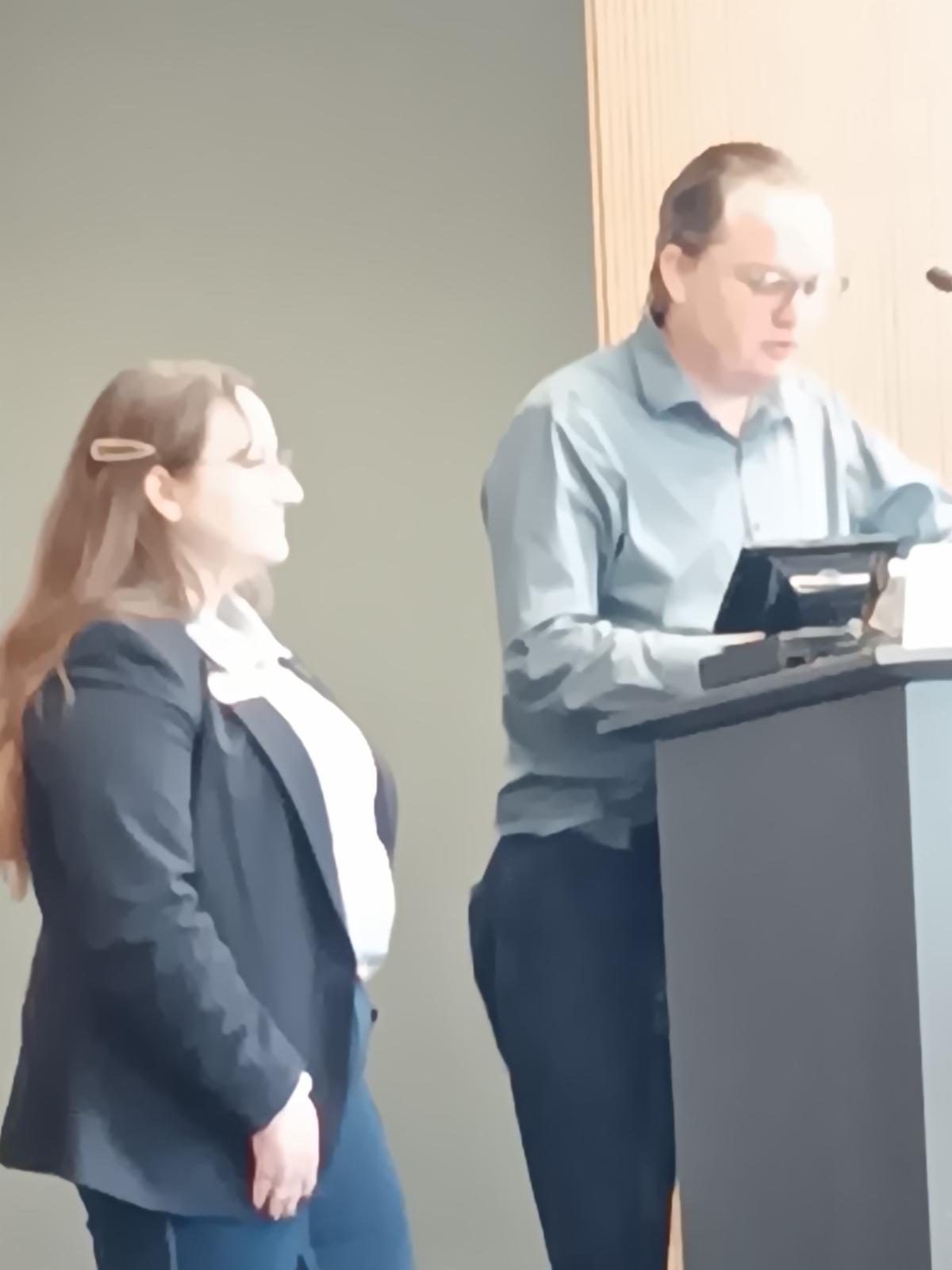
TSPN supported the Rutherford County Suicide Prevention Coalition's symposium held on November 9 at the Murfreesboro Police Department. At left, Mid-Cumberland Regional Director Darrell Bouldin (at podium) provides remarks alongside Greater Nashville Regional Director Hannah Quinn.
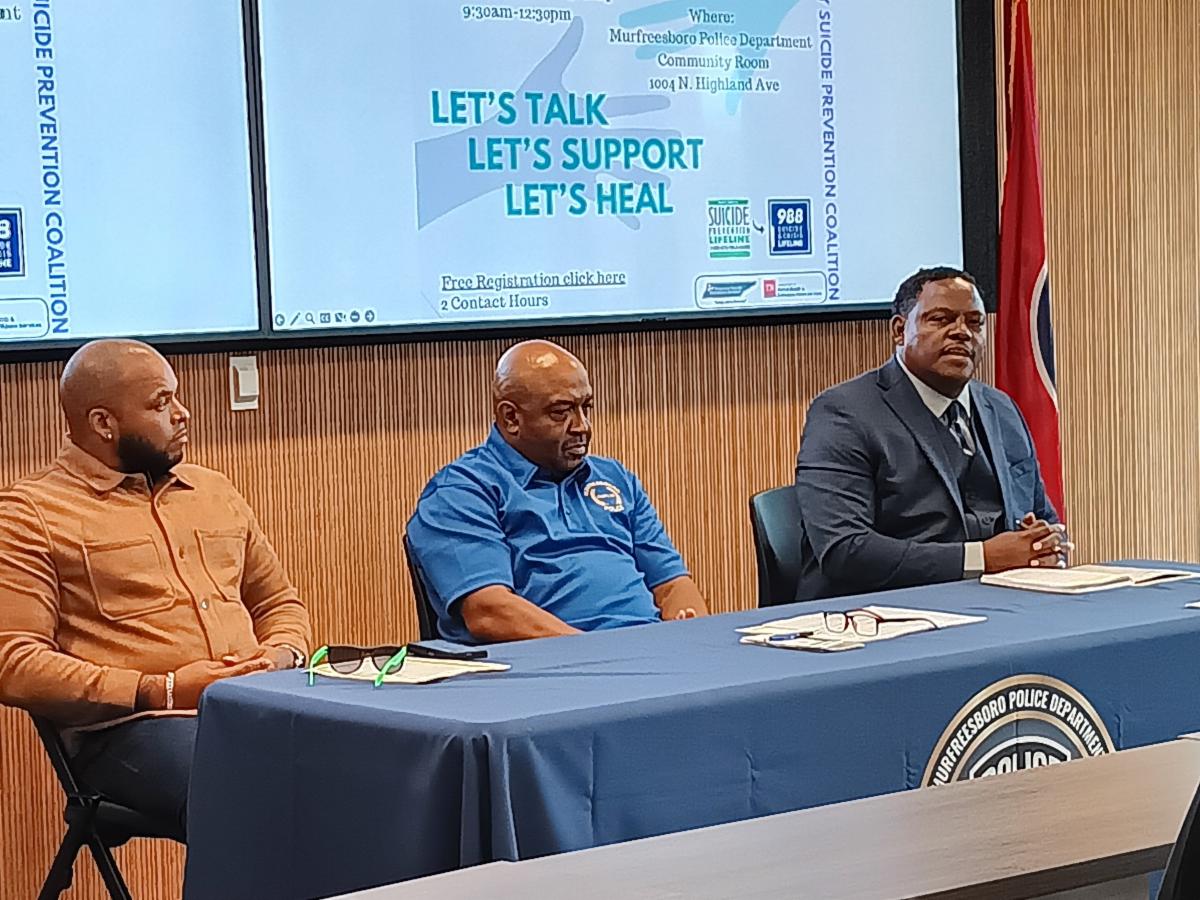
At right, guests also heard from panelists Francis Garcia, MA, of Tennessee Voices (left); Clyde Gershman, Pastor of New Providence Missionary Baptist Church and Chaplain of the Murfreesboro Police Department (center); and Donald Whitmore, Pastor of True Gospel Missionary Baptist Church.
| |
|
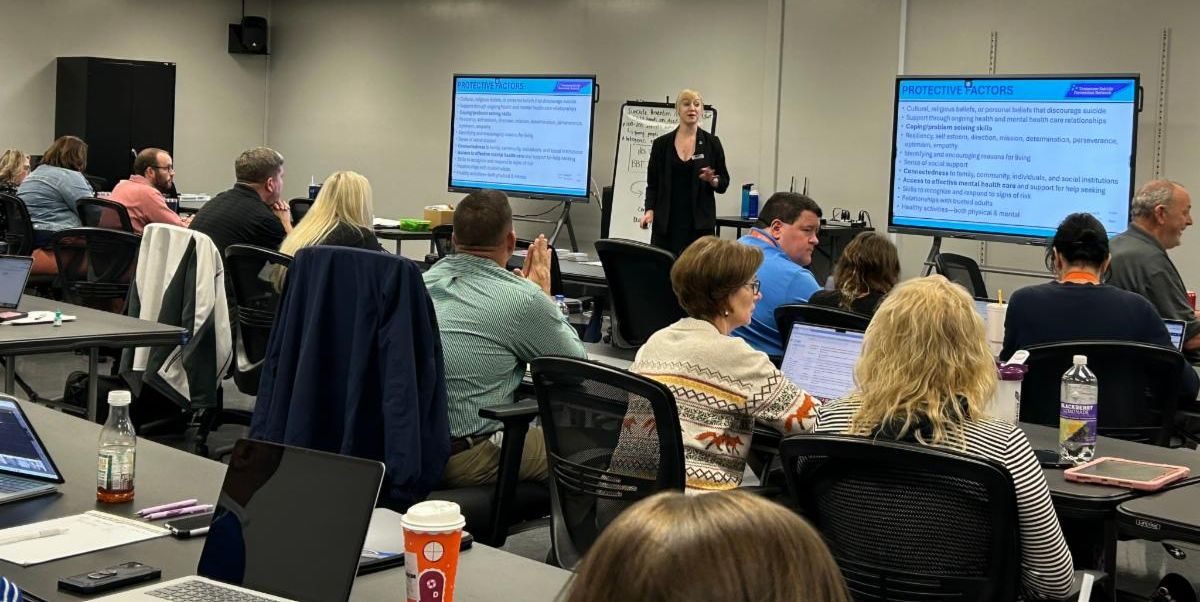
TSPN Executive Director Anna Sever (at front) and Northeast Regional Director Cori Johnson recently consulted with Sullivan County Schools to update their suicide prevention protocol and facilitate a training for all counselors and administrators throughout the school system last month.
TSPN continues to consult with Sullivan County and other school systems to review and update their current suicide prevention, intervention, and postvention plans. If you are interested in making similar updates to your school or organization's contingency plans, contact the TSPN central office at tspn@tspn.org.
| |
|
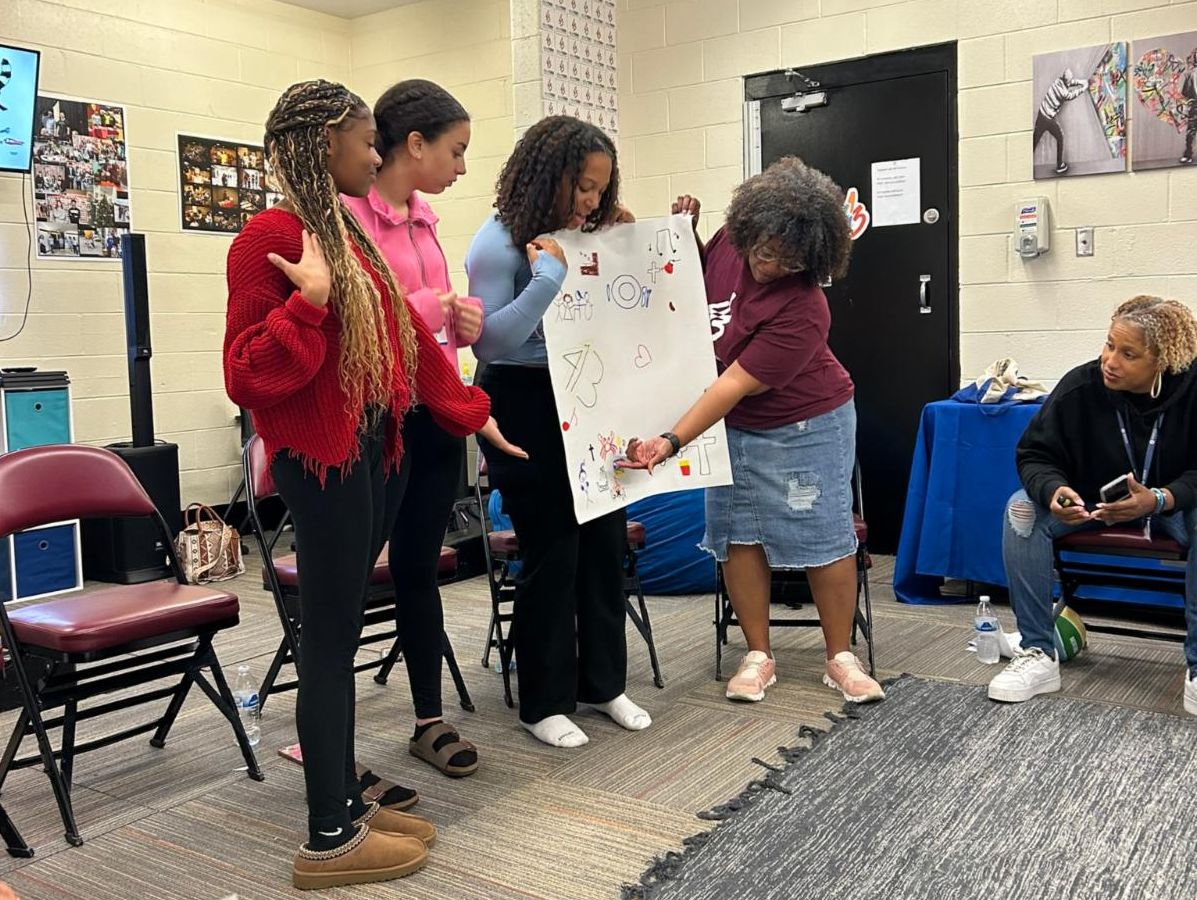
4thirTEEN Ministries recently completed its Sources of Strength training with the assistance of Cori Johnson and a national Sources of Strength trainer. At left, 4thirTEEN members pose for a group photo; at right, members along with guests from a local student group join 4thirTEEN co-founder Carla Dunn (second from right) in presenting their promotional poster for the group.
4thirTEEN Ministries is a youth-led organization focused on ensuring every high school student knows they have a place to belong in the world and within their community. The organization received this year's TSPN Community Partner Award during our statewide conference this September. More information about 4thirTEEN is available at 4thirteen.org.
Sources of Strength is an upstream prevention program designed to increase protective factors such as coping skills and resiliency. TSPN has received state grant funding to train rural communities in Sources of Strength across Tennessee. Learn more about Sources of Strength and how to bring it to your school, church, or youth program: tspn.org/sources-of-strength
| |
|
Upper Cumberland Region
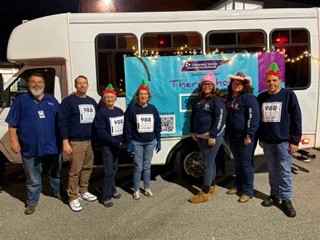
Volunteers from this region, alongside Regional Director Michael Anderson (second from left) show off their 988 sweatshirts at this year's Algood Christmas Parade, held December 13.
Thanks to Anne Stamps, Upper Cumberland Advisory Council Chair and Center Director of Volunteer Behavioral Health, for the submission.
| |
|
|
Post-hurricane mental health resources
TSPN is promoting mental health resources available in East Tennessee following the devastation caused by Hurricane Helene back in September. Thank you to Regional Directors Cori Johnson of the Northeast Region and Taylor Murmann of the East Region for staying in touch with colleagues in their community who are working tirelessly to respond to people impacted by this disaster.
| |
|
C-SSRS is a short questionnaire to estimate someone's suicide risk and options for support. Anyone can use it as a guide to help ask questions about suicide. However, administering the C-SSRS is not a substitute for a clinical mental health professional, and the tool itself has its limitations.
TSPN offers a set of printed quick-reference badges featuring the C-SSRS questions. You can add it to your lanyard with your other badges or keep it in your wallet. Visit tspn.org/cssrs to order badges for your agency or event or to register for a 1-2 hour training to learn the finer points of the C-SSRS protocol.
| |
UPCOMING REGIONAL MEETINGS | |
|
December 19 and January 16
East Regional Meeting
Email tmurmann@tspn.org for details
December 19 and January 16
Mid-Cumberland/Greater Nashville Regional Meeting
Email dbouldin@tspn.org for details
December 19 and January 23
Northeast Regional Meeting
Email cjohnson@tspn.org for details
December 19 and January 23
Upper Cumberland Regional Meeting
Email manderson@tspn.org for details
| |
|
January 2 and February 6
Southwest Regional Meeting
Email elunn@tspn.org for details
January 9 and February 6
Southeast Regional Meeting
Email bbarks@tspn.org for details
January 14 and February 13
South Central Regional Meeting
Email mchristian@tspn.org for details
January 21 and February 18
Greater Memphis Regional Meeting
Email jjohnson@tspn.org for details
January 21 and February 18
Northwest Regional Meeting
Email ejernigan@tspn.org for details
| |
|
Want to volunteer? Sign up for a training?
Click the buttons below to get involved!
| |
Tennessee Suicide Prevention Network | tspn.org | |
| | | |