|
|
FAYETTE PRAIRIE CHAPTER NEWSLETTER | |
The Fayette Prairie Chapter of NPAT is committed to local education and native prairie restoration. To support our members, we organize field trips, conduct outreach, and collaborate on conservation and restoration efforts. | |
| Coming
Up | Haven't You
Been Busy! | Stewardship
in Action | Technically
Speaking | | |
Elder Prairie Work Day
The Elder Ranch, now known as Elder Prairie Preserve, was donated to NPAT in April 2023. The 203-acre Preserve is one of the most significant examples of the Fayette Prairie in conservation. It is a valuable rescue site for seeds and plants from rapidly disappearing prairie remnants.
| |
Learn more about the Elder Prairie conservation easement history HERE.
Huisache has invaded uplands throughout the property, and removing huisache and other woody species will be an essential management focus.
Enjoy learning about prairie restoration practices you can apply to your prairie project while volunteering to help NPAT restore this important prairie in beautiful Washington County, TX.
Saturday, December 14, 2024 | 9:00 am - 12:00 noon
Chappell Hill, Washington County
(A map and directions will be provided to
registered volunteers before the event)
| |
Reservation appreciated
Bring a refillable water bottle and tools if you have them.
Clothing: Wear boots, a hat, long pants, and sleeves for tall grass and weather.
Provided: Water, snacks, and enormous appreciation
| | | |
|
Spring 2025
Prairie Plant Grow-out +
Elder Prairie Planting Day
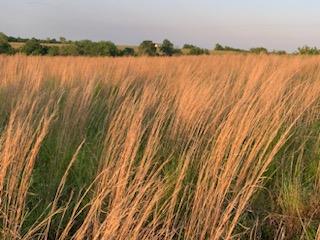
Enhance your prairie restoration efforts or cultivate beautiful pocket prairies with Big Bluestem, Little Blue, Switchgrass, and Side-oats Grama grasses. These majestic grasses can transform your landscape, with Sideoats Grama providing an outstanding border.
Tim Siegmund from TPWD has thoughtfully selected each seed variety, considering germination rates and ecoregions. NPAT-Fayette Prairie Chapter members have successfully planted these grasses in their restoration projects.
| |
BONUS OPPORTUNITY
We invite you to consider purchasing extra plants to donate to the Elder Prairie Preserve. Your contribution will be delivered directly to Elder Prairie, supporting vital restoration efforts. Additionally, we welcome you to Spring 2025 Planting Day, where you can learn essential planting techniques and gain hands-on experience while volunteering.
Every purchase will benefit NPAT’s prairie restoration mission. Bring home Big Four prairie grasses, play a crucial role in building your project, restore Elder Prairie, and revitalize prairies across Texas.
DETAILS
Cost: $10 per gallon, with a minimum order of 3 gallons and no maximum limit.
Payment: No payment is required now; please pay when you pick up.
Pickup: We will notify you when your order is ready for easy pickup in Brenham, Houston, or La Grange between late March and early April 2025.
If you have questions, please email NativePlantConnections@gmail.com
or text 713-419-8073.
| |
Invite your neighbors and friends to join us in this vital journey of spreading native plants and connecting our prairies!
| | | |
King Ranch ID & Management | |
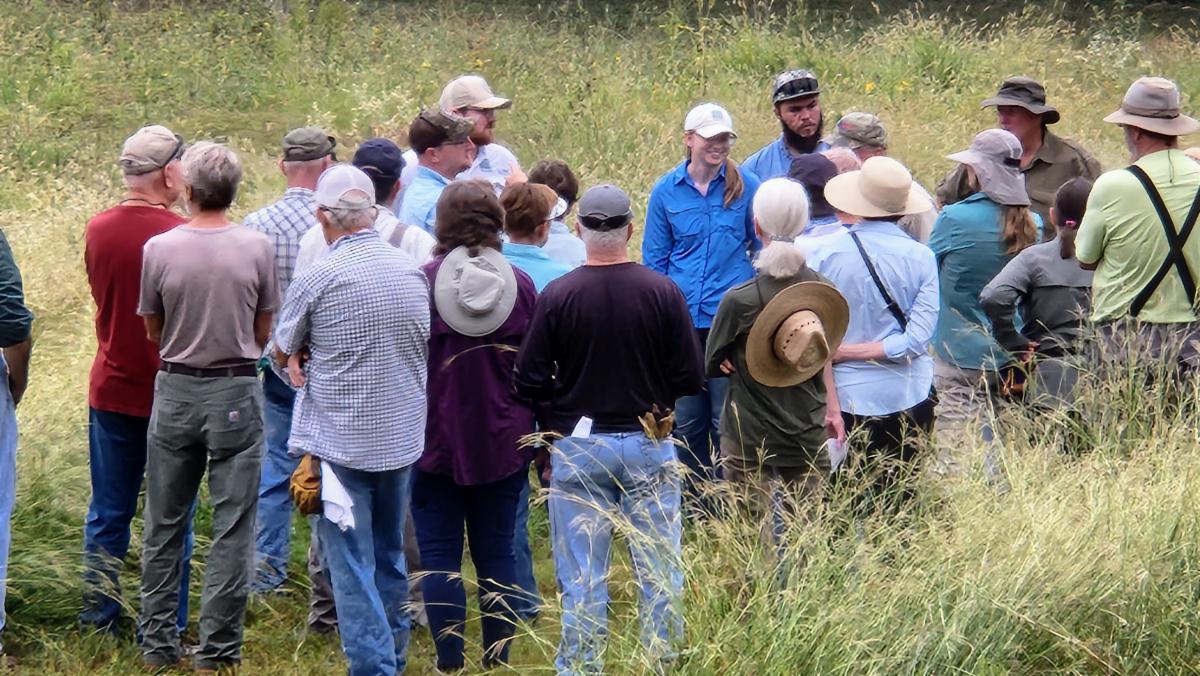
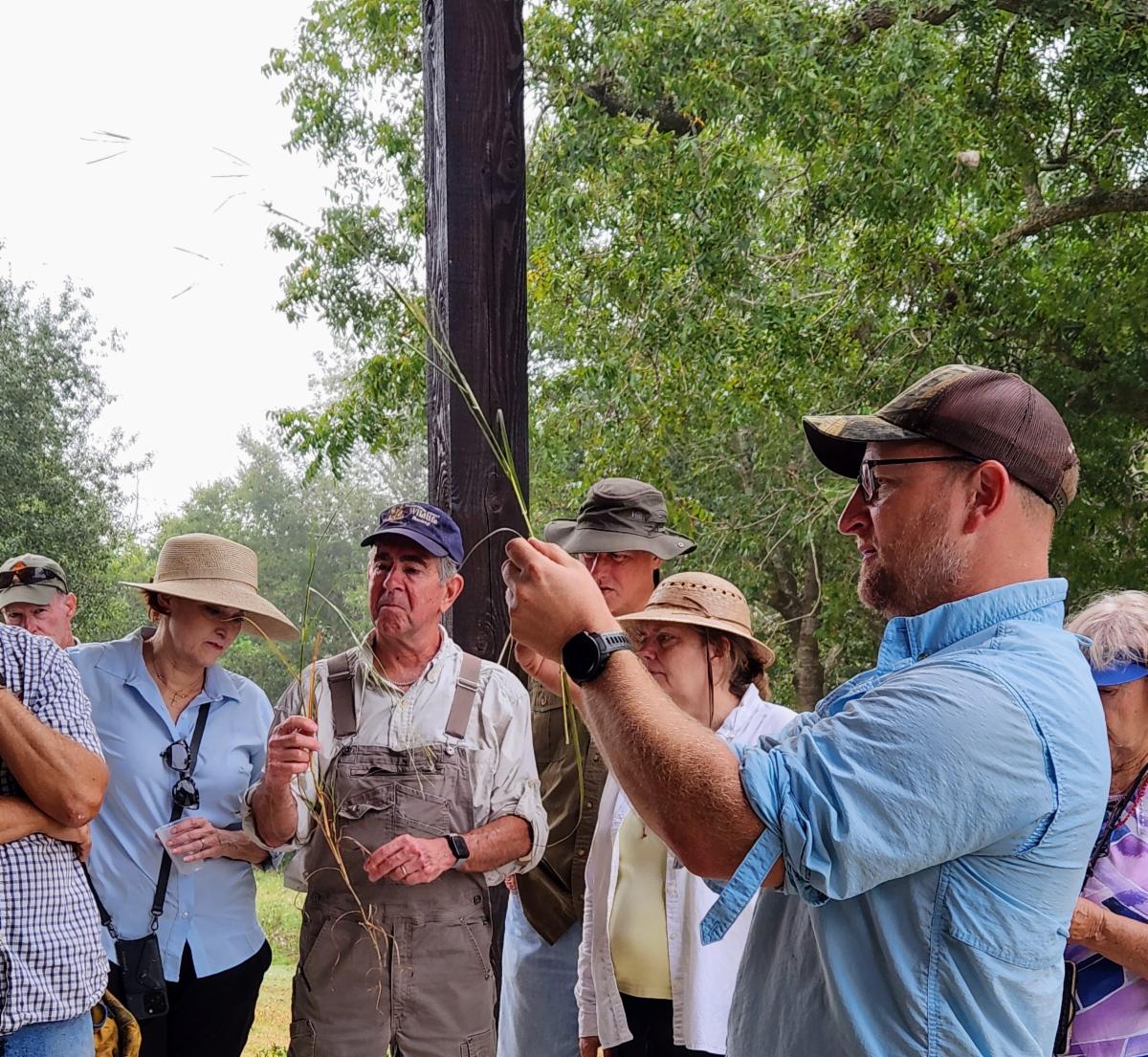
Tim Siegmund and Jon McLeod of TPWD led a workshop on identifying and managing King Ranch Bluestem in native prairie restorations.
| |
Thirty-four prairie conservationists improved their skills in confidently identifying King Ranch Bluestem, learned the correct application of herbicide individual plant treatment (IPT), and demonstrated their understanding under the guidance of field leaders. We are fortunate to have such committed members and partners! | | | |
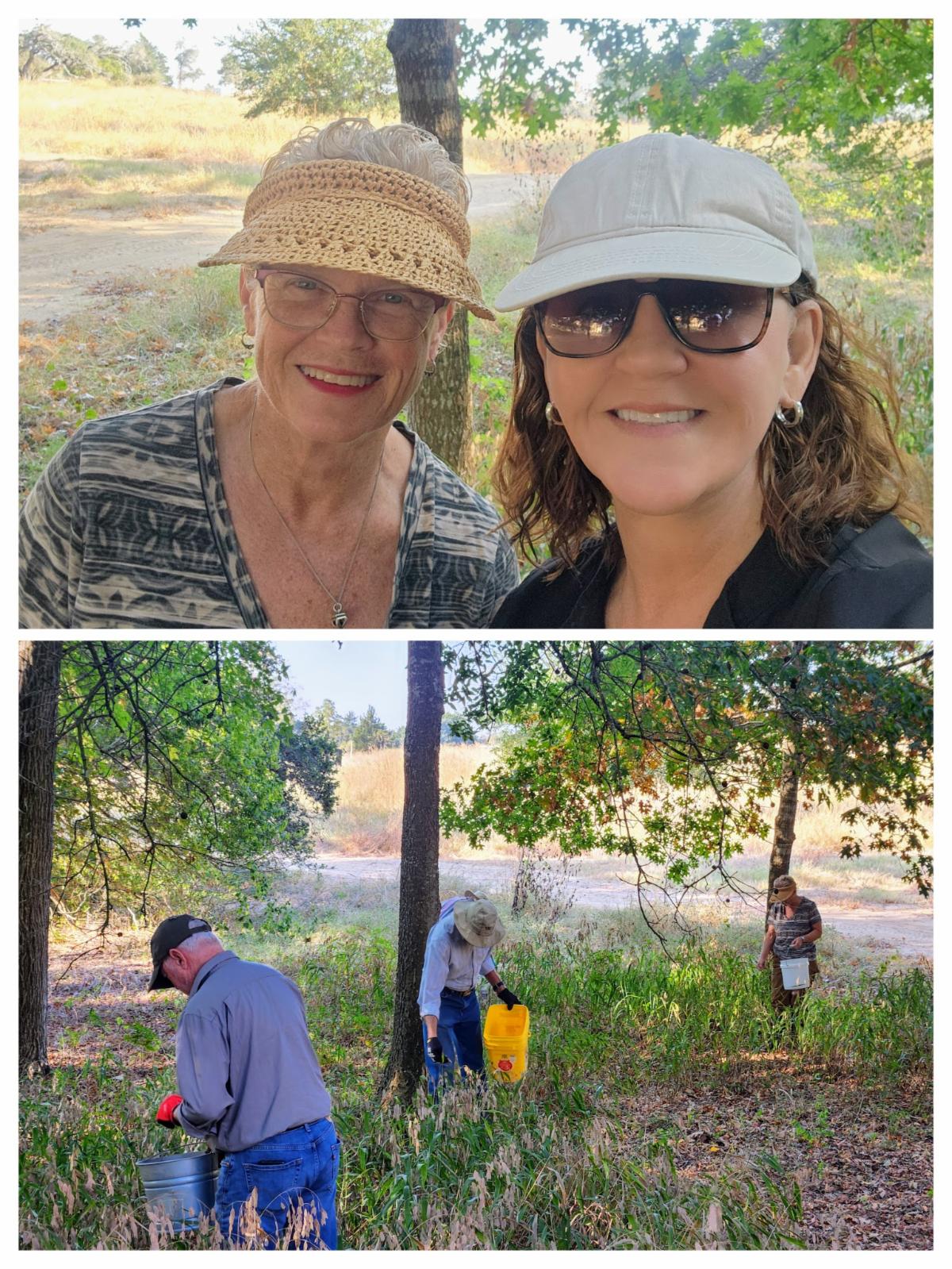
Inland Sea Oats are a vital component of a beautifully adorned prairie and are fun to share with friends. Fayette Prairie Chapter members gathered seeds in the refreshing shade at Kocurek Farm. | |
|
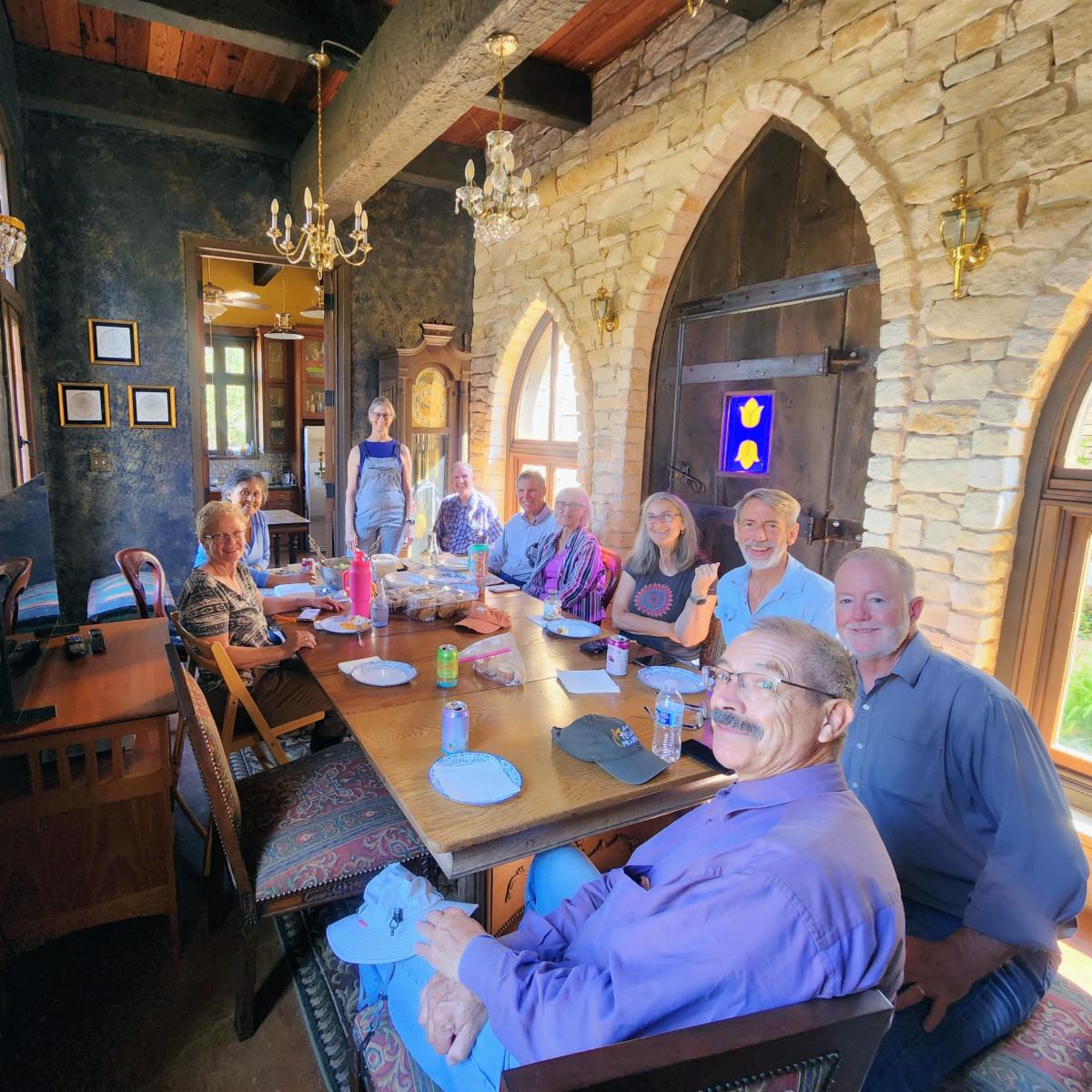
Engaging in conversations and a delightful lunch in a castle were highlights.
Thank you to Dianna Kocurek for her remarkable generosity and warm hospitality.
| | | |
Austin County Landowner Solutions | |
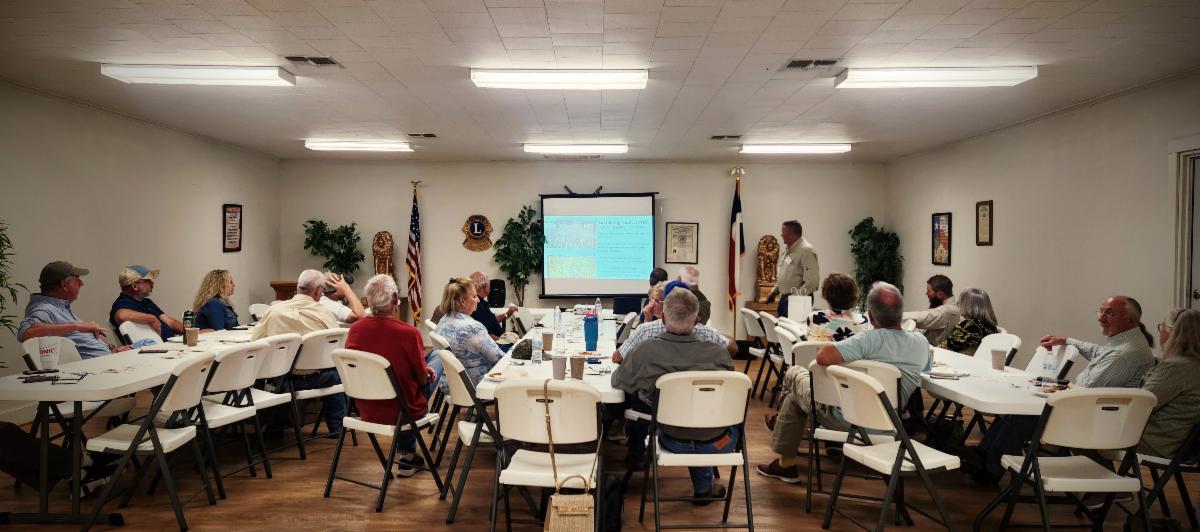
In collaboration with the Texas Parks and Wildlife Department (TPWD), the Wildlife Habitat Federation (WHF), and with support from Frank Monk Real Estate in Bellville, the Fayette Prairie chapter had the opportunity to share resources, guidance, and cost-sharing options available to landowners dedicated to creating optimal habitats for wildlife. We appreciate and value our partners.
We are spreading the word and are encouraged by the increasing number of wildlife habitats being established. The Fayette Prairie Chapter is grateful for our resource partners eager to collaborate and share their knowledge.
| | | |
What a fantastic turnout! Over 70 Fayette Prairie conservationists gathered at the Frisch Auf! Valley Country Club in La Grange, where we enjoyed good company, shared prairie stories and enjoyed a delicious dinner. Dr. Barron Rector encouraged, inspired, and brought us plenty of laughs, reminding us of the importance of prairie restoration. It was the perfect way to celebrate our accomplishments over the past year and warmly welcome new members to our community. Cheers!
| | | |
|
Our Volunteers
Our chapter thrives because of the outstanding dedication of our members and those who commit their land to native prairies!
Thanks to Pat Ricks and Susie Marten for warmly welcoming new members and greeting those attending events—you make such a difference!
If you’re new to our group, WELCOME! We’re so glad to have you with us!
| |
Have you appreciated your chapter friends and support?
Consider being a Prairie Pal
Connect with new members, build up fellow prairie enthusiasts, and share your passion and resources while learning from each other.
Connected People Connect Prairies
| | | |
|
Meet Cindy McMorran
Austin County
| |
Cindy and James McMorran are dedicated to restoring their Austin County property to its native prairie state. They have traveled to New Ulm to spend their weekends improving the soil, removing invasive species, learning from others, and sharing their experiences. Cindy describes how their love of nature transformed into a passion for prairies.
| |
BACKGROUND & MOTIVATION
Can you tell us about your background and what led you to focus on prairie restoration?
My husband, James, and I both enjoy nature and working outdoors. I am a member of the Fayetteville Chapter of NPAT and, due to Marvelyn Granger's enthusiastic encouragement, earned the Texas Master Naturalist designation in 2024 through the Gideon Lincecum Chapter. In 2016, we purchased our 68-acre parcel in New Ulm, Texas, in the Blackland Prairie eco-region. The previous owner had inherited part of a large acreage cattle ranch that had been in the family for generations.
| |
We weren't sure what we would do with the land and asked various agricultural experts to visit the parcel and advise us. They all described the land as overgrazed with depleted and compacted soil, which wouldn't support grazing cattle or producing hay. As you may imagine, we were very anxious upon hearing this. It was suggested that we should consider restoring the land to native grasses. We didn't know what this would involve, but our options were limited, and the project sounded interesting. After research, we partnered with the Wildlife Habitat Federation. What a relief this was! They devised a plan for the restoration and were even successful in securing a partnership with the U.S. Fish and Wildlife Service under the Partners for Fish and Wildlife Program, which substantially defrayed the project's costs. WHF implemented a 1.5-year restoration plan, which consisted of a process designed to begin healing the land and culminated in planting native grass and forb seeds.
What do you hope to achieve through your prairie restoration efforts?
What started as a project chosen due to the lack of other options became a passion project over time. It is so gratifying to feel like you are helping the land heal and creating a better habitat for wildlife. As the population of Texas grows and land is sold, subdivided, and developed, our prairie lands are decreasing, and wildlife continues losing its habitat. Prairie land leased out for renewable energy projects, such as wind turbines and solar panels, further endanger wildlife and disturb the ecosystem. Our prairie lands are endangered, with only 1% of the original prairie land remaining.
RESTORATION PROCESS
Can you describe the specific methods you use for restoring the prairie ecosystem?
In December 2016, after terminating the existing vegetation, the Wildlife Habitat Federation planted a fall cover crop. This winter mix included seeds for various plants, including turnips and Austrian winter peas. They used a no-till drill method, resulting in less soil disturbance, loosening the compaction, and introducing nitrogen into the soil. After that initial planting, we could see a difference as we started to see earthworm droppings, an early indicator of soil recovery. In the spring, the winter cover crop was terminated, and we planted a summer cover crop, which included millet, cowpea, sorghum, and wild game bird grain. In December 2017, the summer cover crop was terminated, and we repeated the winter cover crop planting. Then, in April 2018, we terminated the winter cover crop and planted native grass and forb seeds. After a year, seeds started sprouting but were lost to drought. It was about three years before we started to see the native grasses emerging as their root systems first developed underground before you saw anything above ground.
What native species are you focusing on, and why did you choose them?
Regarding grasses, we concentrate on the Big Four, which are Little Bluestem, Big Bluestem, Indiangrass, and Switchgrass. These grasses are heat and drought-tolerant and are known as the "four horsemen" of the tall grass prairie.
|
| |  | Together, they provide the foundation of a prairie ecosystem and food, shelter, and nesting sites for a wide range of wildlife species while improving the soil and reducing erosion. We also focus on forbs like Indian Blanket, Mexican Sunhat, and others. Regarding the most successful mix in the ratio of grasses and sedges to forbs and legumes, the USDA (NRSC) suggests a ratio of 75% grasses:25% forbs for dry soils, 50% grasses:50% forbs on soils with moderate amounts of moisture, and a ratio of 25% grasses:75% forbs for wetter soils. Another suggestion is that no single grass accounts for more than 20% of a seed mix, and no single forb accounts for more than 10% of a seed mix. Diversity is the key because it provides resilience. Bamert Seeds has an interesting tool on their website called Seed Spec, which they describe as a geo-spatially enabled web application that uses site-specific soil and plant information. This tool recommends a specific seed mix with the most significant potential for success at your location. Upon using Seed Spec for the first time recently, the seeds recommended for our specific property were actually for the grasses and forbs we are most successful with. Impressive.
CHALLENGES & SOLUTIONS
What are some of the biggest challenges you've faced in prairie restoration?
Prairie restoration projects are never "complete". It is a dynamic process that includes many ups and downs and is always challenging but rewarding. The biggest challenge is the wait. When we plant a tall grass seed in the ground, we don't expect to see it again for a couple of years when it hopefully finally emerges. The weather is also a challenge. Blackland prairie soils are known as "cracking clays" because of the large, deep cracks that form in drier weather. This fall, we had a bit of a drought. Taking a bag of seeds into the field, I had to chuckle. The ground was so hard that there was no loose dirt to cover the seeds, and it was apparent that if the seeds were just laid on that hard clay, they would fall into the cracks when it rains, never to be seen again.
How do you handle invasive species in the restoration area?
Invasive grasses are always a challenge. Our top two invasive introduced grasses are Johnson grass and KR Bluestem. Johnson grass is native to Asia and Northern Africa but is now found on every continent except Antarctica and is considered one of the ten worst weeds in the world. Johnson grass is hard to remove by hand due to its deep rhizome system, but it can be controlled through specific herbicide applications without harming the native grasses. KR Bluestem originated in China and has been in Texas for 100 years. It is drought-resistant and very invasive. Any herbicide that will kill KR Bluestem will also kill native grasses, so treatment has to be selective if you use herbicides.
Have you encountered any unexpected obstacles or surprises during your work?
Slow and steady does it. Nothing happens quickly. Droughts can be an obstacle when your native grasses are young. Erosion can be a problem during torrential rainstorms. Once the grasses are fully grown, they may have 3-15 feet deep root systems and can tolerate droughts better, which will help loosen the soil so water is absorbed better and hold the soil in place. Surprises? There are always many surprises, such as a beautiful butterfly, a flower, or grass I have not seen before. Not all surprises are nice. An interesting orange puffy seed ball appeared one day in the field and looked so pretty. By the next time I was in that field, the Balloon vine had smothered everything in that area. When you think of the "balloon" vine, it conjures up thoughts of parties and clowns. That vine was anything but fun!
Other surprises? Three copperheads and one beautiful bobcat so far. Upon returning home the day of the bobcat encounter, I read about what you should do if you come across one, and the literature advised . . . don't turn your back on them and don't run. Luckily, I got that one right instinctually.
IMPACT & FUTURE
What impact do you hope your work will have on local wildlife and plant biodiversity?
Our project is a tiny isolated patch of habitat improvement, so our impact won't be that great, but you have to start somewhere. There is strength in numbers, and the hope is that by providing an example, others may become more aware of the benefits of prairie restoration and try to restore their land or help the environment in some other way. For those who want to help but don't own land, there are a lot of prairie restoration volunteer opportunities out there.
How do you measure success in your restoration projects?
There are many technical methods of measuring success in restoration projects, but "success" can also depend on your personal goals for a property. Feeling successful may be standing in the field, watching the butterflies and bees gather nectar and pollinate the flowers, hearing the birds singing, and seeing deer running through the fields. We still have a long way to go, but we are realistic and know it can never be perfect.
PERSONAL INSIGHTS
What advice would you give someone interested in getting involved in prairie restoration?
We can share a wealth of knowledge in the prairie community. Organizations like the Native Prairie Association of Texas (NPAT) are gateways to technical information, networking, new friends, and moral support! Texas Parks and Wildlife Department (TPWD), Natural Resources Conservation Service (NRCS) branch of USDA, Texas Agri-Life, Texas Master Naturalist groups, and many private organizations like Wildlife Habitat Federation (WHF) are all invaluable resources.
Good things come to those who wait, and wait, and wait.
But it sure is worth it.
| | | |
Bird & Soundscape Monitor & Recording | |
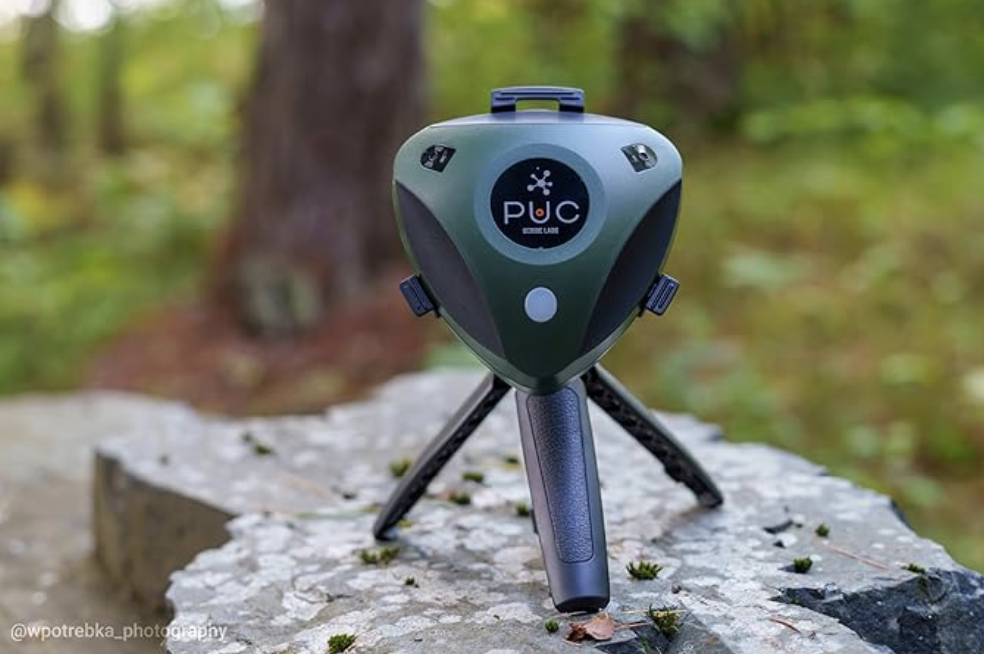
Apps are amazing! They make identifying bird calls exciting, even if you’re new to birdwatching or just a casual eavesdropper. But check out the Portable Universe Codec (PUC) – this gadget is a game-changer!
You can attach it to a tripod, leave it on your porch or in your prairie, or take it birdwatching, hiking, or biking. When you return to Wi-Fi, it will automatically upload all the recordings to BirdWeather for you. The digital recorder captures any bird sounds in the area and sends all the detections in real time.
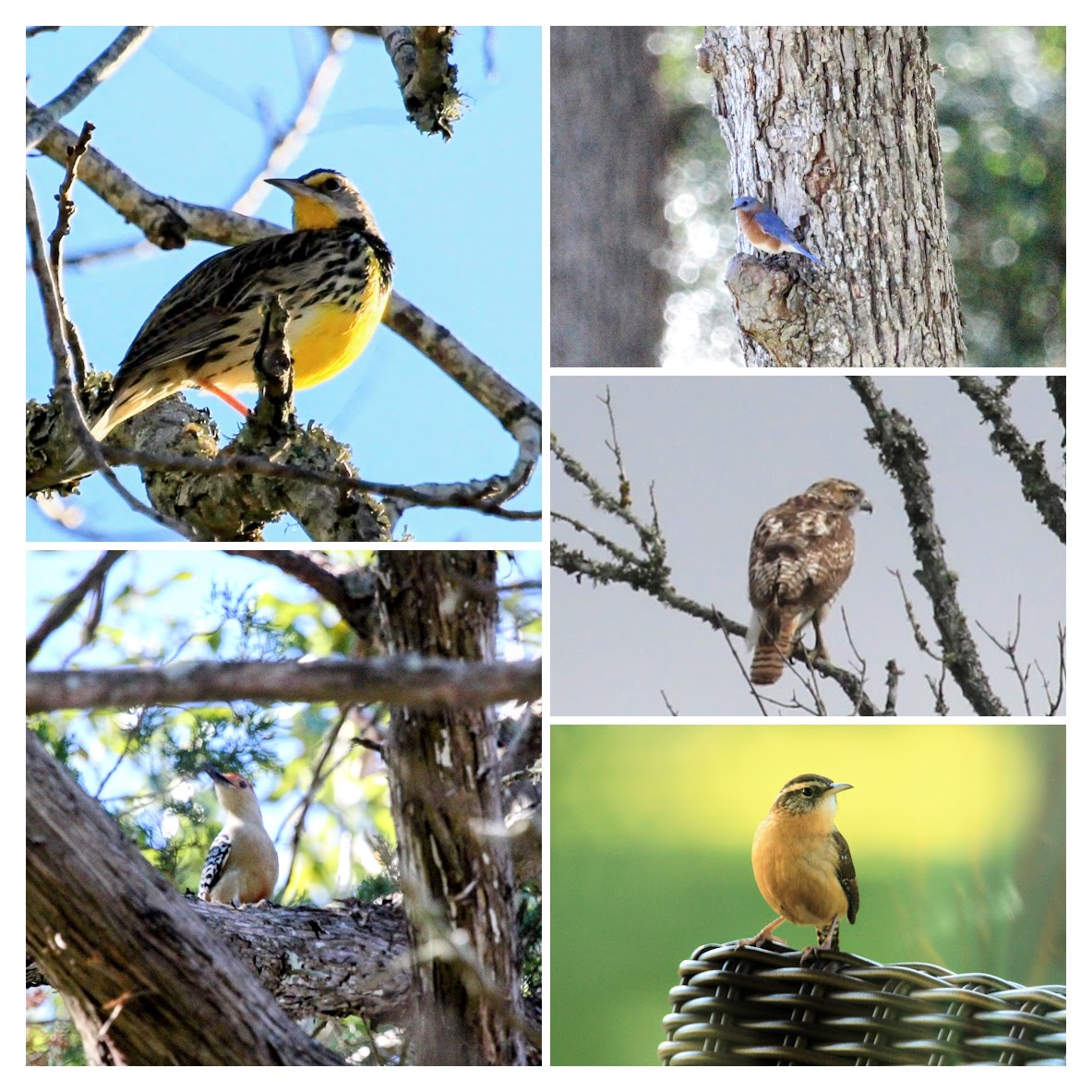
We've used the phone apps, but they are limited to when we can take time to run them. We thought our song list was complete, but the PUC doubled our bird list! It listens constantly, and the capture rate seems much more precise, even over other sounds, like traffic.
For anyone interested in citizen science, the PUC saves all the data on a built-in microSD card in an easy CSV format, which makes importing it into projects or documentation a breeze. It also works smoothly with the BirdWeather mobile and web apps.
Happy Birding!
Trey & Marvelyn Granger
Available through BirdWeather at
https://www.birdweather.com/shop-birdweather-puc
Do you have a favorite gadget or app that helps you on the prairie?
Could you be sure to share it with us?
| | | |
|
Your work is critical and appreciated.
We look forward to another year of protecting, restoring, and learning about Texas prairies with you.
We wish you and your family
the happiest of Holidays!
| | | | |