Article Heading
Government Reopens After 43 Day Shutdown
The government reopened on November 13 after a 43-day shutdown, the longest in U.S. history. The reopening was made possible by a continuing resolution and the passage of appropriations bills, including the Agriculture Appropriations bill. The agreement funds federal operations through January 30, 2026, for most agencies and provides full fiscal year 2026 funding for Agriculture, Veterans Affairs, and Military Construction. The deal also extends farm bill programs not included in the July reconciliation bill and extends the Grain Standards Act through January 30, 2026, to allow USDA to continue official inspection and weighing services.
The agreement ensures that federal employees who were laid off during the shutdown are rehired and receive back pay. Senate Republican leadership has committed to holding a vote in December to extend Affordable Care Act subsidies that are set to expire at the end of the year.
The Agriculture Appropriations bill provides 26.65 billion dollars for fiscal year 2026, roughly the same as fiscal year 2025 and significantly higher than the White House request of 21 billion dollars.
| | |
Clean Fuels Alliance America Holds Membership Meeting and D.C. Fly-in
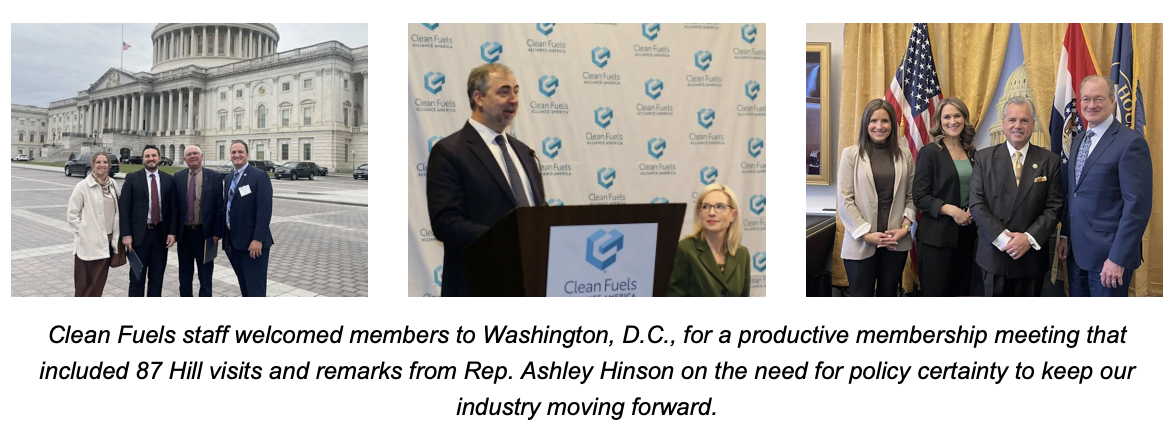
USCA staff participated in the Clean Fuels Alliance of America meeting in Washington, D.C., which included visits to congressional offices to reiterate the biofuels policy priorities. The focus was on the two significant pending issues for biofuels markets – the implementation of the 45Z biofuels tax credit and a final rule from EPA on the RFS volume requirements for 2026-2027, as well as if and how waived volumes will be reallocated and how imported feedstocks will be treated. The Department of Treasury is expected to release a Notice of Proposed Rulemaking on the 45Z tax credit implementation in December, and USCA is urging that values be available for canola biofuels to claim the credit effective January 1, 2026.
Also at the Clean Fuels meeting, former USCA President Ryan Pederson (North Dakota) was re-elected to the Clean Fuels Governing Board and was elected Vice Chairman. Kent Engelbrecht of ADM was re-elected as Chairman.
| |
Growers and Industry Leaders Convene in San Antonio for USCA Fall Board Meeting
The U.S. Canola Association held its Fall Board of Directors Meeting November 10–12, 2025, in San Antonio, Texas, bringing together growers, industry partners, researchers, and policy experts for two days of updates and strategic discussion.
The meeting opened with a full business agenda that included state and regional crop reports, industry updates, and a comprehensive policy outlook on the Farm Bill, trade, biofuels, and seed oil issues. Directors also received briefings from the Canadian canola sector, food industry representatives, and USCA communications, alongside presentations on canola meal markets, cattle nutrition research, and emerging issues like carbon intensity modeling and life-cycle analysis.
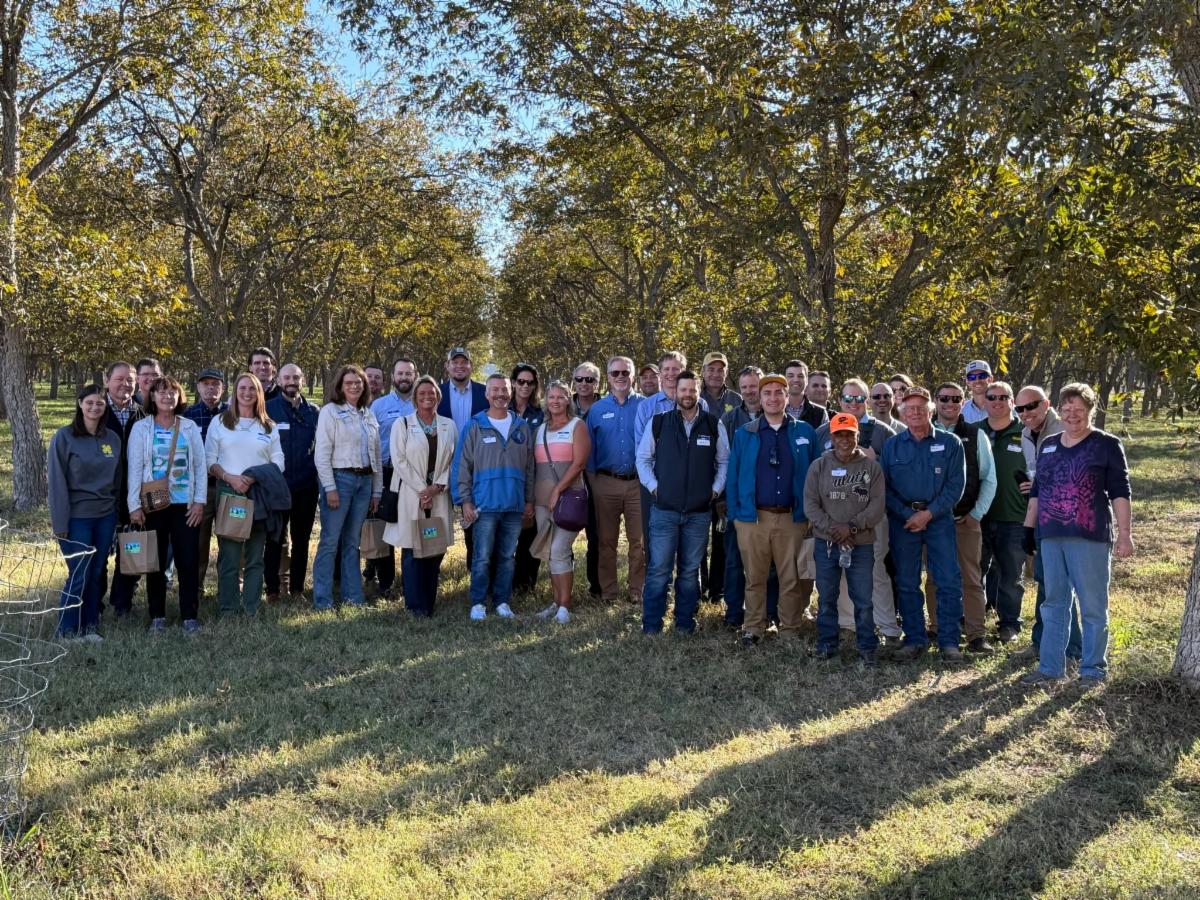
The board also participated in a farm tour at Comal Pecan Farm (pictured above), providing an opportunity for relationship-building and a firsthand look at regional agriculture. The meeting concluded with a review of USCA bylaws, discussion on grower engagement, and planning for future meetings, including the 2026 Washington, D.C., Spring Board Meeting. Throughout the sessions, members engaged in productive dialogue to align on priorities and continue strengthening the canola industry across the U.S.
| |
Administration Delivers Second Stage of Crop Disaster Assistance for Farmers
On Nov. 17, USDA opened enrollment for Phase Two of the Supplemental Disaster Relief Program (SDRP). The $16 billion program, authorized by Congress last December, provides assistance for producers whose losses did not exceed their crop insurance deductible. This marks the second round of SDRP implementation; Phase One began in July and focused on losses that were indemnified through crop insurance and the Noninsured Crop Disaster Assistance Program (NAP). Enrollment for both phases closes April 30, 2026.
Stage Two Coverage
Stage Two will assist producers with eligible crop, tree, bush and vine losses that were not covered under Stage One, including non-indemnified (shallow loss), uncovered and quality losses. FSA county offices will begin accepting Stage Two applications on Nov. 24, 2025.
The earlier Stage One announcement remains in effect for producers who received indemnities through crop insurance or NAP for qualifying 2023–2024 disaster-related losses.
Read the USDA Press Release: https://bit.ly/3LT1NYu
Program Details and Fact Sheets: https://bit.ly/4p8jj9U
| |
|
Trump Administration Unveils Waters of the US Proposal
On November 17, the U.S. Environmental Protection Agency (EPA) and Army Corps of Engineers issued a proposed regulation that would reduce the number of streams and wetlands that are covered by federal water pollution protection.
The proposal is another milestone in the ongoing back-and-forth over the Clean Water Act. It comes two years after the Supreme Court decision narrowed the decades-old provisions. The proposed regulation issued on November 17 is viewed as a win for industries that must obtain federal water permits to conduct construction or discharge pollution and have pushed to reduce the scope of the federal protections.
The Biden administration attempted to implement the Supreme Court’s 2023 Sackett v. EPA decision and now the Trump Administration is proposing a far narrower approach to determining which waters are regulated under the law.
The agencies will be accepting public comment on the rule for 45 days.
Key proposed revisions include:
-
Defining key terms like “relatively permanent,” “continuous surface connection,”
and “tributary” to appropriately delineate the scope of WOTUS consistent with the
Clean Water Act and Supreme Court precedent.
- Establishing that jurisdictional tributaries must connect to traditional navigable waters either directly or through other features that provide predictable and consistent flow.
- Reaffirming that wetlands must be indistinguishable from jurisdictional waters through a continuous surface connection, which means that they must touch a jurisdictional water and hold surface water for a requisite duration year after year.
- Strengthening state and tribal decision-making authority by providing clear regulatory guidelines while recognizing their expertise in local land and water resources.
Read the EPA's press release: https://bit.ly/3LYA8W1
| | |
Trade and Tariff Updates
The Supreme Court heard arguments in the IEEPA case on November 5, which considered whether the use of IEEPA tariffs was lawful. A ruling could come as early as the end of the year. If the Court limits the President’s authority, the administration is expected to rely on Section 122 of the Trade Act of 1974, which allows tariffs of up to 15 percent for 150 days.
This month, the White House released a fact sheet on the trade truce with China, outlining that China will increase purchases of U.S. soybeans, sorghum, and other agricultural goods while maintaining exports of critical minerals and magnets. In return, the United States will reduce Fentanyl tariffs to 10% and delay its Section 301 investigation into China’s maritime and shipbuilding sectors for one year.
Meanwhile, USDA Under Secretary Luke Lindberg, who was in Europe last week meeting with officials and U.S. ag cooperators, told Agri-Pulse that U.S. farmers could begin benefiting from the U.S.-EU trade pact early next year. However, USTR officials in Washington noted that EU negotiations have been slow.
President Trump also recently announced joint trade frameworks with Argentina, Guatemala, El Salvador, and Ecuador. These frameworks outline intentions to expand market access for U.S. agricultural products, including beef and poultry from Argentina, and address non-tariff barriers. While not formal agreements, they set the stage for potential future trade deals.
| | |
Experts Debunk Claims Against Seed Oils
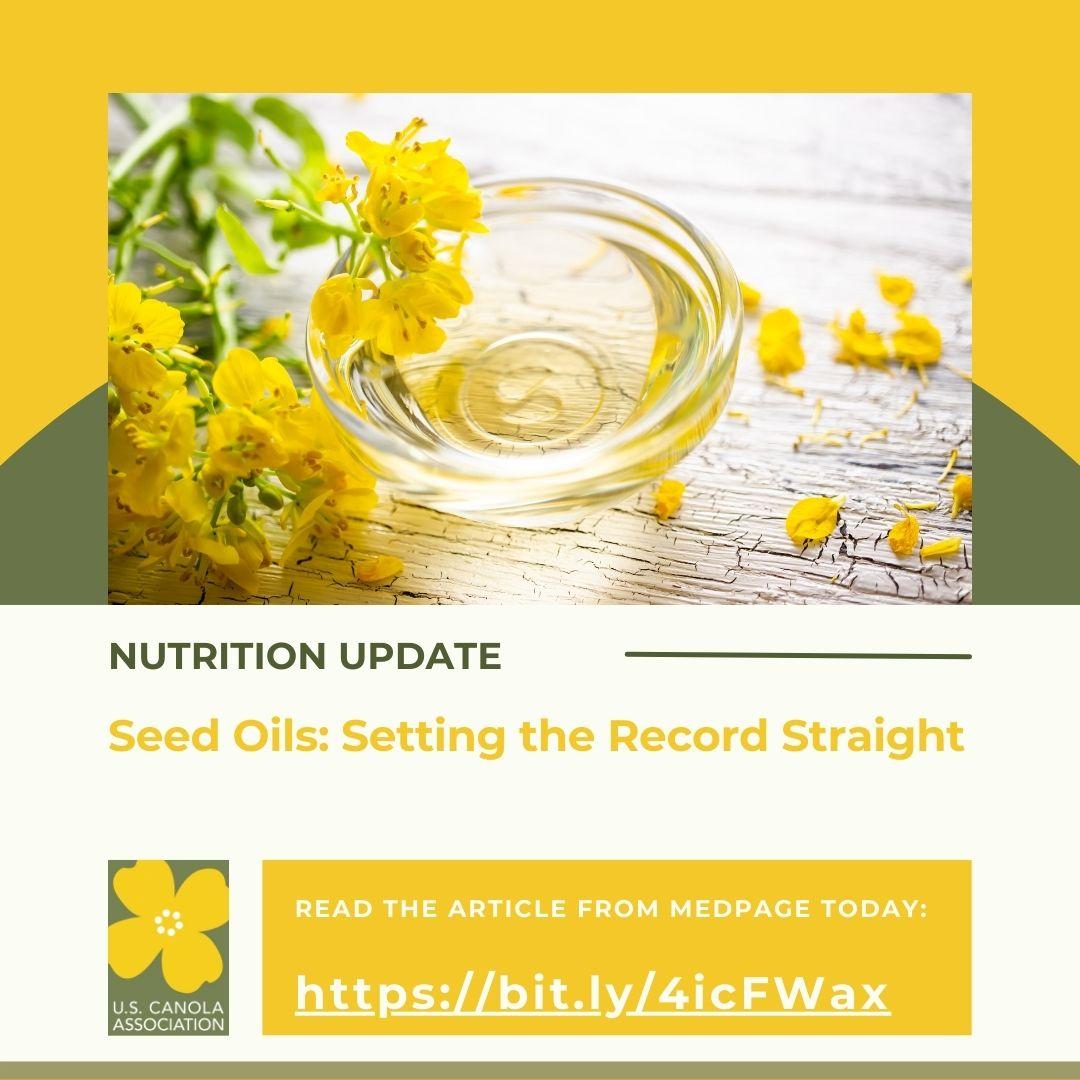
A recent MedPage Today report finds no scientific basis for the growing movement to ditch seed oils.
Nutrition experts say seed oils provide essential fats, including omega-3s and heart-healthy linoleic acid, and do not promote inflammation.
Researchers emphasize that the real health concern isn’t seed oils themselves, but the overall quality of highly processed foods. Seed oils are also affordable, neutral-tasting, and widely accessible—making them practical for healthy cooking.
Their takeaway: don’t blame one ingredient. A balanced diet matters more than the latest food trend.
Read the article from MedPage Today:
https://bit.ly/4icFWax
| | | | | |
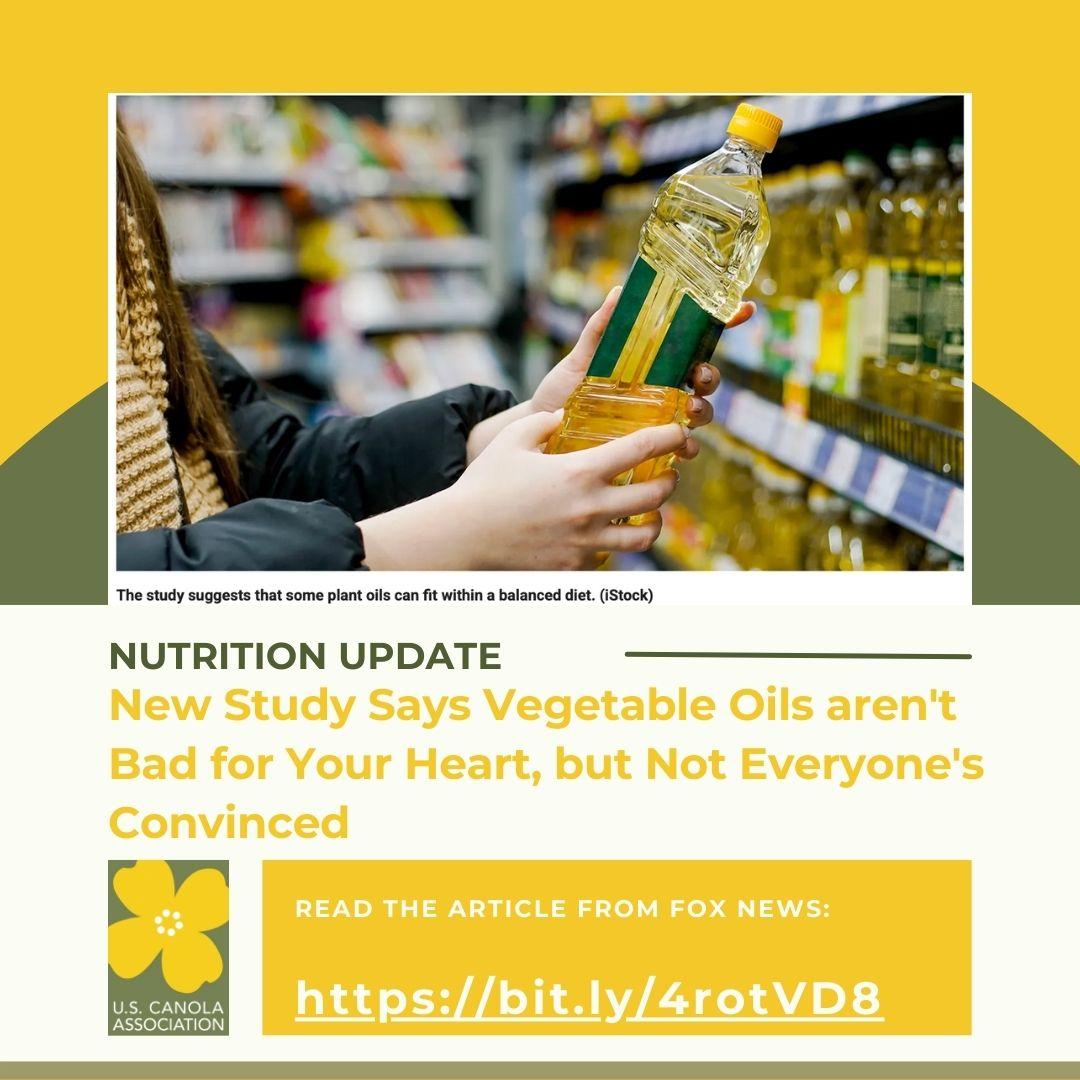
Study Finds Processed Seed Oils May Not Harm Heart Health
A new six-week clinical study published in the American Journal of Clinical Nutrition found that certain processed vegetable and seed oils used in foods like spreads and baked goods may have similar short-term effects on heart health as palm-based fats. Researchers from King’s College London and Maastricht University reported no significant differences in cholesterol, blood sugar, inflammation, or liver fat among healthy adults who consumed either palm-rich fats or fully hydrogenated seed-oil “interesterified” (IE) fats.
Experts say the findings suggest these modified seed oils can fit within a balanced diet and may offer a safer alternative to trans fats. However, scientists caution that the study was short and involved only healthy participants, so longer-term research is needed before drawing firm conclusions about long-term heart health impacts.
Read the article from Fox News:
https://bit.ly/4rotVD8
| | Upcoming Industry Meetings: | |
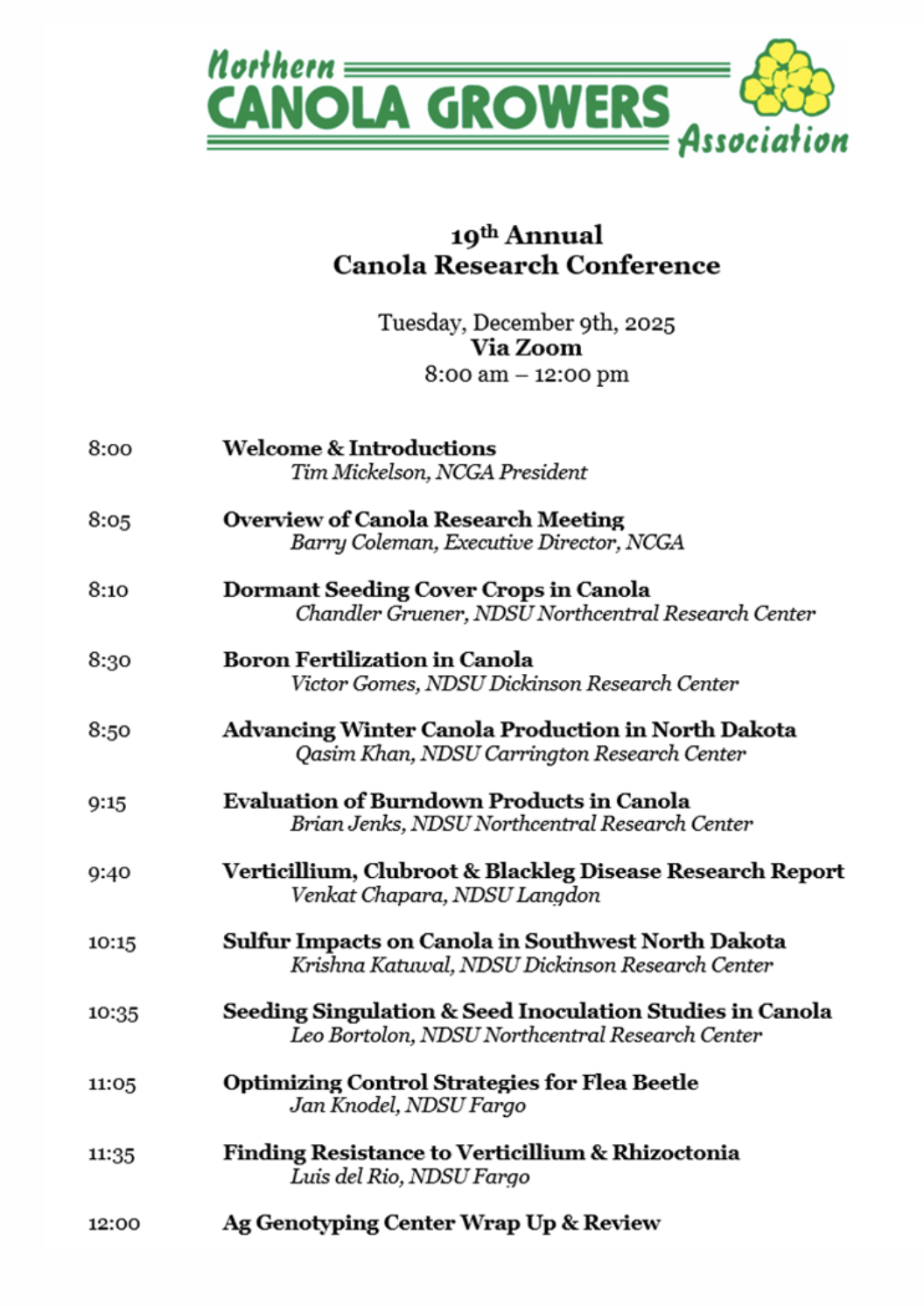
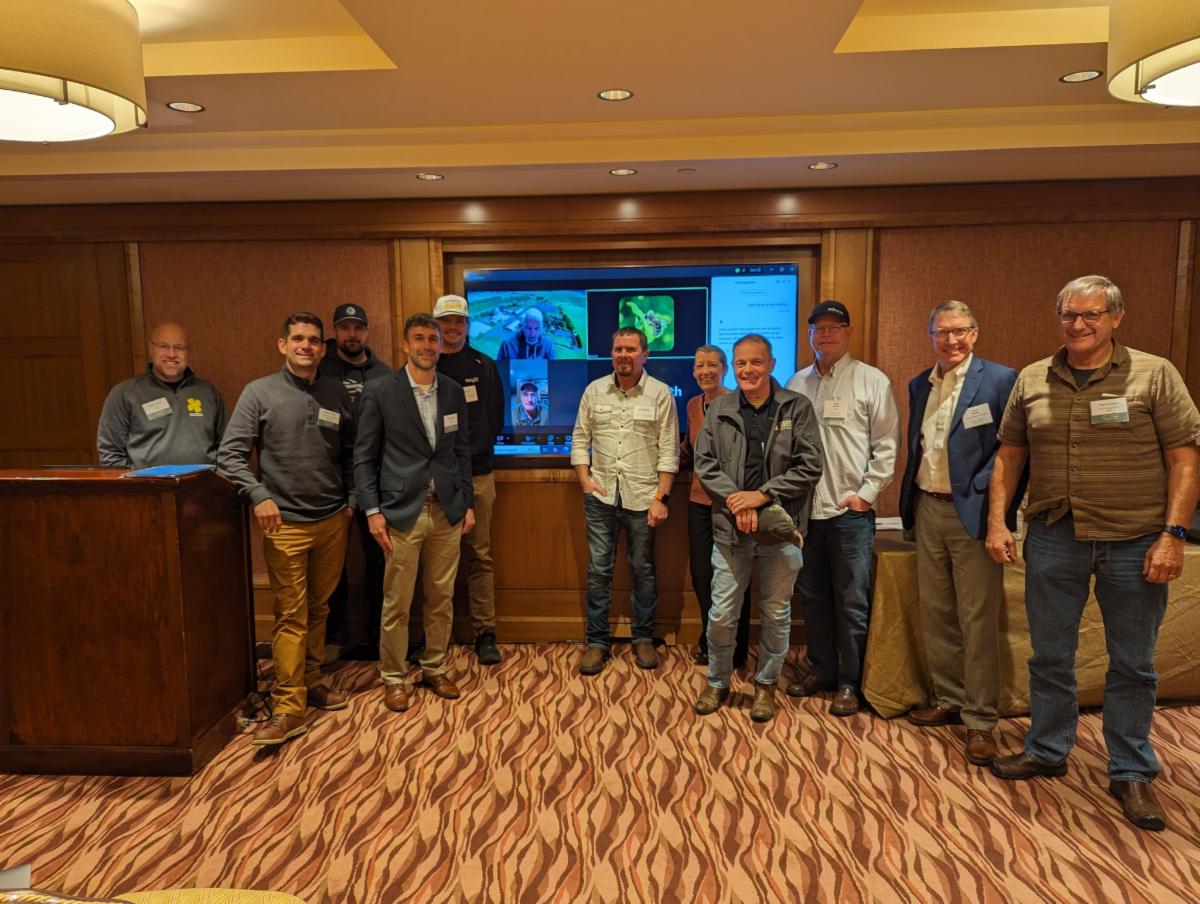
19th Annual Northern Canola Growers Association Canola Research Conference via Zoom
December 9, 2025 | https://us02web.zoom.us/j/83433027220 - Meeting ID: 834 3302 7220
The Northern Canola Growers Association will host its 19th Annual Canola Research Meeting virtually via Zoom on Tuesday, December 9, beginning at 8:00 a.m. The Northern Canola Growers Association would like to invite you to participate and welcome your input on research priorities that support and advance canola production.
Members of the NCGA Board of Directors, along with representatives from the seed, processing, and crop protection industries, will be in attendance.
For additional information or questions, please contact 701.223.4124 or email coleman@ndpci.com.
| | |
PNWCA Participates in ID-OR Grain & Oilseed Convention
PNWCA representatives gathered in Sun Valley, ID for the inaugural ID-OR Grain & Oilseed Convention, where nearly the full board of producer and industry directors attended in person. The association held its November board meeting, participated in the Idaho Oilseed Commission quarterly meeting, and engaged in productive discussions with growers and industry representatives in the exhibitor hall.
The program featured strong canola-focused presentations from Jamie Barker (Bunge), Megan Townsend (Crop Matters), David Brewer (PNWCA director, The Dalles, OR), Dan Lakey (PNWCA producer member, Soda Springs), and Albert Adjesiwor (University of Idaho Extension).
PNWCA extends appreciation to our board, members, and the planning committee for their contributions to a successful event.
| | |
WSU Receives USDA Grant to Improve Canola Oil Efficiency
Washington State University researchers are expanding a discovery that could make canola oil production more efficient and higher value. A recent USDA National Institute of Food and Agriculture grant will support work to investigate a newly identified process in plants that remodels seed oil after it has already been produced, a mechanism first found in Physaria fendleri, a plant related to canola.
The team will study whether canola and other major oilseed crops share this genetic process and whether it can be used to increase desirable monounsaturated fats while reducing less useful polyunsaturated components. Researchers will also apply gene-editing tools to test whether limiting oil remodeling can improve the final oil profile without affecting crop yield.
The project is advancing both science and careers: former WSU postdoctoral researcher Prasad Parchuri, a co-author on the original study, is collaborating as a new faculty member at Kansas State University. The WSU team aims to translate this work into real-world improvements for farmers, food, fuel and industrial markets.
Read the WSU Insider article: https://bit.ly/49J1Uj4
| | |
USCA works to support and advance U.S. canola production, marketing, processing, and use through government and industry relations. Since its establishment in 1989, the association has helped domestic canola acreage grow from virtually zero to about 2 million. To learn more about USCA, go to: www.UScanola.com
Want to promote your products or services to canola producers and industry members? Visit our advertising pages to find specs, deadlines and rates to advertise in the Canola Quick Bytes monthly e-newsletter.
| | | | |