Accessibility & Health

December 2025

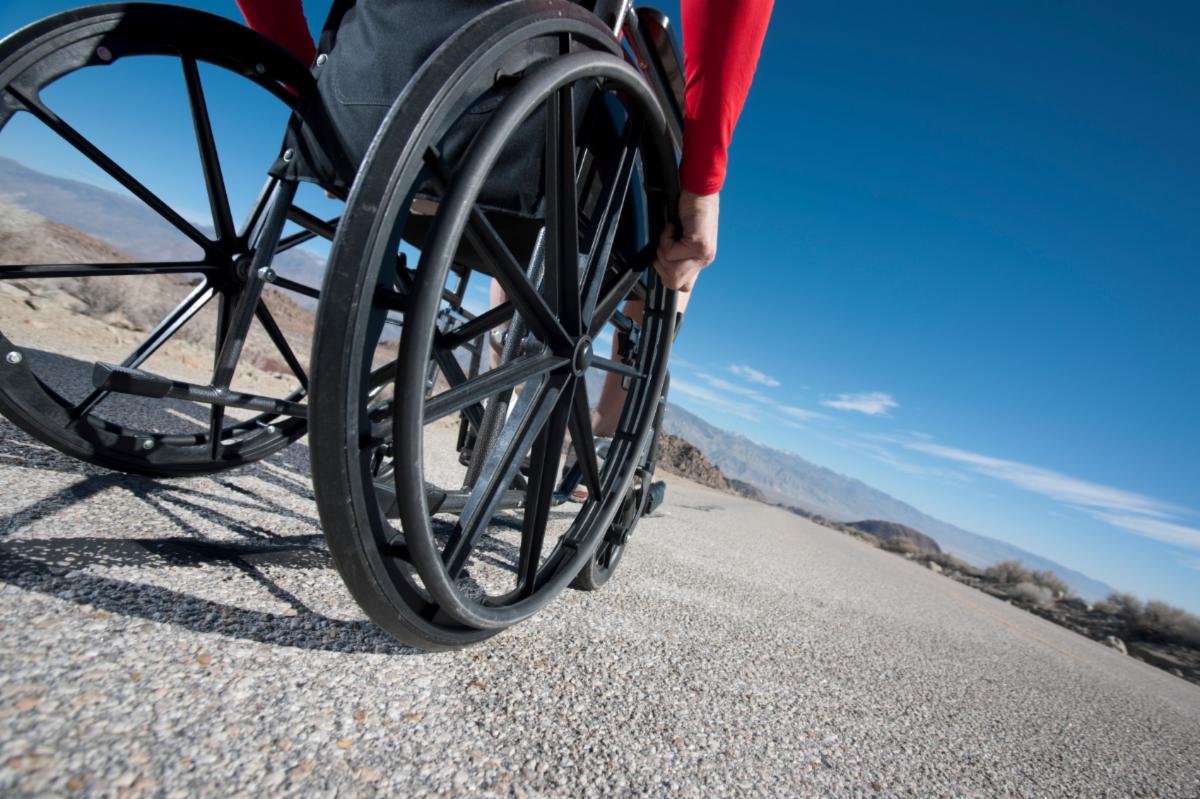
Image of a person propelling themselves in a wheelchair with wide space ahead of them.

Upcoming Training:

Physical Accessibility in Healthcare Settings 

Tuesday, January 20, 2025

11:00 AM - 12:30 PM


The Americans with Disabilities Act (ADA) opens the doors to participation in society by prohibiting discrimination against people with disabilities and mandating accessible healthcare environments.


This training explains how the Americans with Disabilities Act (ADA) applies to hospitals, clinics, and public health facilities. Participants will learn what physical access looks like in practice, including accessible parking, entrances, exam rooms, waiting areas, and medical equipment.


We will:

  • Review common barriers that people with disabilities face,
  • Discuss practical strategies for removing them, and
  • Help participants learn how to prioritize accessibility remediation. 
Emily Shuman

Presenter:

Emily Shuman

Director of the Rocky Mountain ADA Center

Previous Trainings

If you have missed any of our previous trainings, you can still catch them as Canvas courses listed on our website. Got some extra time? Check them out!

Jon Whiting

Preparing for ADA and Section 504 Updates


This webinar presented by Jon Whiting, from WebAIM, explores the big updates that are coming to digital accessibility requirements under ADA Title II and Section 504.

Hillary Hase

Workplace Supports


This webinar presented by Hillary Hase explores how organizations can foster a more inclusive and productive work environment through effective workplace accommodations and support systems.

Mindy Johnson

Five Easy Tips for Social Media Accessibility


In this session, you'll learn five easy tips for making your posts more accessible, you'll have an opportunity to try out these tips for yourself, and you'll discover how these tips apply across social media platforms.

ADA Highlight:

Physical Accessibility: Accessible Routes

An accessible route is the path a person with a disability uses to enter and move through a facility. This pathway must be at least three feet wide and kept free of obstacles. Items like vending or ice machines, newspaper racks, furniture, filing cabinets, display stands, or large plants should never block it.


The same rule applies to accessible toilet stalls and accessible service counters—these spaces should not be used for storage or clutter.


Accessible routes should follow the same path, or be in the same area, as the routes used by people without mobility disabilities. Keeping these pathways clear ensures everyone can move safely and independently through your facility.


What Makes a Building Entrance ADA Compliant?

Public Health Examples


Clinic Waiting Areas: Avoid placing extra chairs, vaccination supply boxes, or portable privacy screens in hallways that people use to reach exam rooms.


Front Desk: Keep accessible service counters free of clipboards, brochures, or stacks of forms so people using wheelchairs or with limited reach can check in easily.


Restroom Areas: Keep accessible stalls free of cleaning supplies, sharps containers awaiting pick-up, or boxed paper products.


Community Events: When hosting onsite classes or public health events, avoid arranging tables or equipment in ways that narrow the main path people use to enter or move through the building.


Display Tables: Make sure wellness posters, demonstration materials, or giveaway items don’t spill into walkways or block access to elevators or restrooms.

National Council on Aging logo

Tip Sheet: Engaging People with Disabilities In Evidence-Based Programs 


The purpose of this tip sheet is to provide basic guidance to those who are offering evidencebased programs to help them better serve people with disabilities so that the experience is a "win-win" for everyone.

Local Health Department Spotlight:

Utah County Health Department

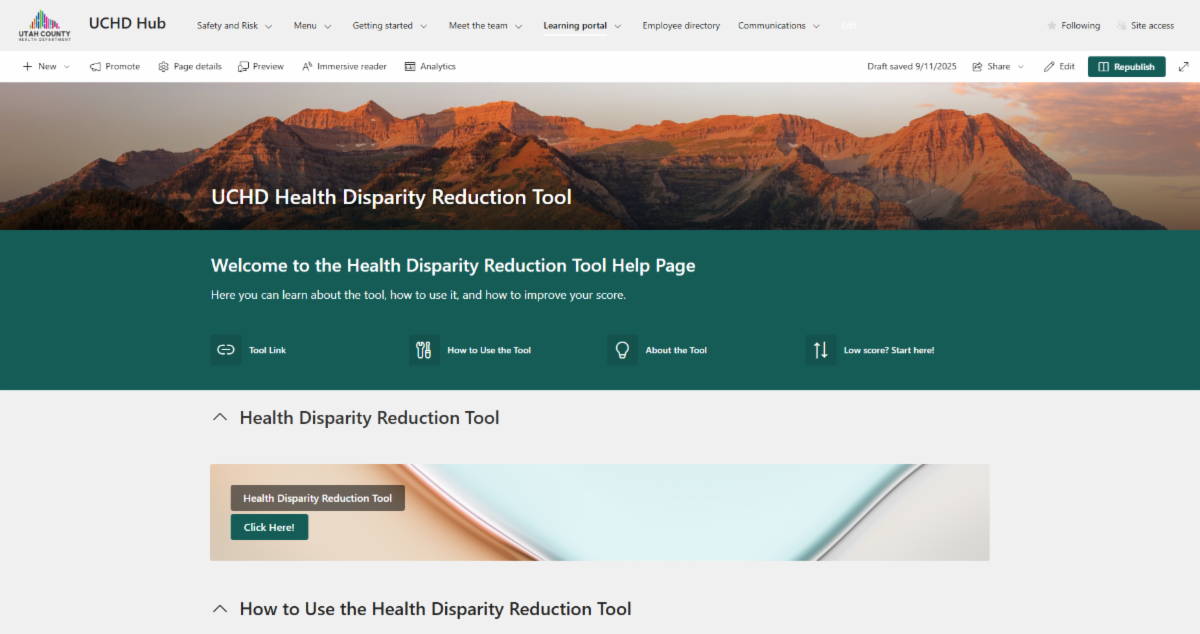
Health Disparity Reduction Tool screenshot

The Utah County Health Department's Health Disparity Reduction Tool was created as a simple yet effective way to analyze programs, plans, services, events, strategies, media, surveys, and trainings to consider health disparities during creation and execution. The tool guides UCHD employees through a series of reflective questions that help them consider health disparities. For example, employees rate the following statement on a scale from "Strongly Agree" to "Strongly Disagree": "Individuals, clients, or populations can access and benefit from the event without barriers related to physical disabilities."


After completing all of the questions in the tool, they receive a score. The goal of this tool is not to achieve a perfect score, but rather to see steady improvement in their score each time they use it. Employees can find ideas on how to improve their score by reviewing a list of strategies and ideas to reduce disparities in their programs and services. 


Check out this preview of the Health Disparity Reduction Tool!


Anytime it says $[q://QID7/ChoiceGroup/SelectedChoices], you can replace that with what you're evaluating (event, program/service, etc.). To score the assessment, each "strongly agree" is worth 4 points, "agree" is worth 3, and so on until "I don't know" equals 0 points.

Natalie Butler

Creator:

Natalie Butler, CHES

Share with your connections!


We encourage you to share these emails and Accessibility & Health content with other in your networks who may be interested to learn more with us!


We are always creating new learning opportunities for people working in public health settings to better serve people with disabilities in their communities.


If you haven't signed up to receive our monthly newsletter yet, do it now!


Woman typing on a computer

Training Topics?


We are working to provide trainings and learning resources that you will find valuable, but we would love to hear your insights.


Please let us know what you are interested in learning more about!

Institute for Disability Research, Policy & Practice logo

CONTACT US

(435) 797-1981

Facebook  X  Instagram  LinkedIn