| | If you’re one of the golden 1.5 million non-profit organizations, 13 million devoted staff, donors whose cumulative giving is $617 billion, 80 million volunteers and other champions of the vast and wondrous philanthropic enterprise, Andrea and I share a very personal, keen, and admiring perspective on your remarkable commitment to touch, improve and saved more lives, especially helping those who are struggling. In short, you are heroes. You inspire everything we do at Eskin Fundraising Training. National Philanthropy Day is an annual observance on November 15th that is designated by the Association of Fundraising Professionals (AFP) to celebrate charitable activities in the form of donated financial, in-kind, and volunteering support. It is celebrated with blog postings by AFP that highlight outstanding charitable activities, as well as luncheons and awards throughout the U.S., as well as other places in North and South America, by different AFP chapters. As way of background National Philanthropy Day was created in 1986 by philanthropist Douglas Freeman of Orange County, Calif. and formalized by then-U.S. President Ronald Reagan, who signed a proclamation recognizing November 15 as National Philanthropy Day in the US. Note that it is up to local AFP chapters and communities when to celebrate this special day throughout November and also other times of the year. In 2012, the Government of Canada signed the National Philanthropy Day Act into law, declaring November 15 as the annual celebration of National Philanthropy Day as well. From the bottom of our hearts thank you for living Abraham Lincoln’s “better angels of our nature” spirit 365 days a year. The world wouldn’t be the same without you all. You are powerful social change makers who deserve to take a bow every day of the year.
| | |
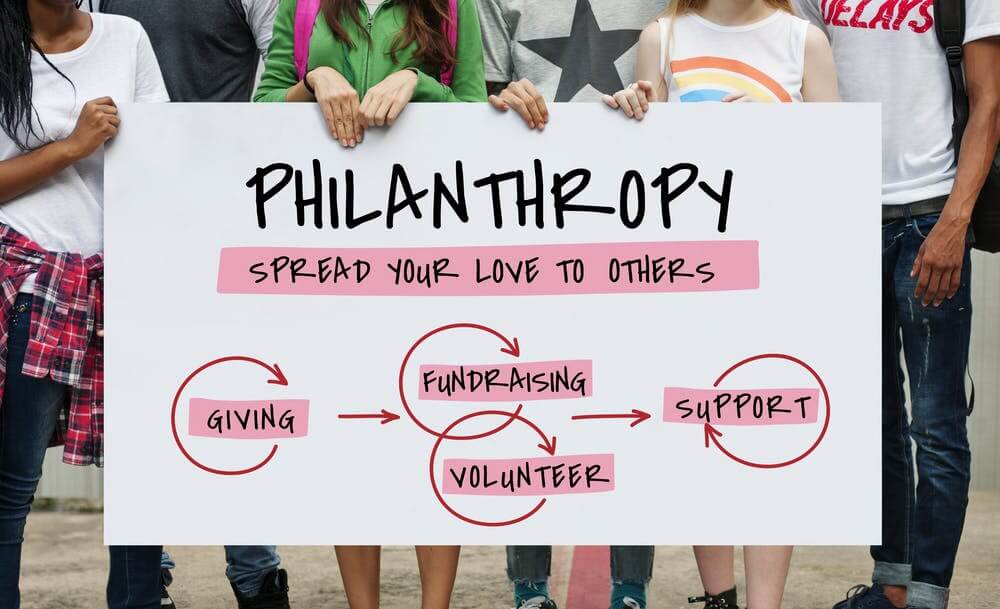
This is a fitting time for a refresher course on what is meant by philanthropy and its rich history. Philanthropy.org is an outstanding resource. Philanthropy is more than giving — it’s the art and act of improving the world with purpose. It is the thoughtful use of one’s resources — money, time, influence, or expertise — to strengthen communities, support shared values, solve problems, and build a legacy. From ancient civilizations to modern digital platforms, philanthropy has shaped societies across all political, cultural, and religious traditions.
• Philanthropy vs. Charity: Both charity and philanthropy are vital, serving different but complementary roles. When charity is essential: Natural disasters require immediate relief — food, water, shelter. A family facing eviction needs rent assistance today. These urgent needs can’t wait for long-term strategies. While philanthropy transforms: Funding job training programs strengthens the workforce. Supporting civics education and entrepreneurship fosters self-reliance. Investing in institutions — schools, libraries, churches — builds generational impact.
• The sweet spot: The most effective organizations blend both — meeting today’s needs while shaping tomorrow’s opportunities. A food bank that also teaches proper nutrition and helps neighbors gain employment demonstrates this approach.
• A Short History: The word philanthropy comes from the Greek philos (loving) and anthropos (humanity) — meaning “love of humankind.” But the practice transcends any single culture or era.
• Ancient Roots: In Greece, wealthy citizens funded public projects. In Rome, patrons supported civic life. In China, Confucianism promoted benevolence. Indigenous cultures practiced mutual aid long before formal systems.
• Faith Traditions: All major religions emphasize giving, often framing it as a duty.
• Industrial Age: The 19th and 20th centuries brought structured giving. Andrew Carnegie’s “Gospel of Wealth” advocated responsible stewardship by the wealthy. John D. Rockefeller, Madam C.J. Walker, and Julius Rosenwald created foundations that changed lives.
• Modern Era: Philanthropy now includes foundations, family trusts, donor-advised funds, faith-based giving, business-community partnerships, and everyday donors. Crowdfunding, giving circles, and mutual aid expand access.
| | How To Launch A Major Gifts Program | | |
No non-profit will reach its maximum gift income potential without committing commensurate with its available resources to the discovery, cultivation, solicitation and stewardship of major gifts. We are grateful to InsideCharity for featuring our latest how-to guide on the implementation and fine tuning of major gifts initiatives for non-profits of all different missions, sizes and parts of the country. We hope our learning community partners of professional and volunteer non-profit leaders find the contents of value as they continue to champion their noble missions that make a profound difference in so many profound ways.
| |
| | | Mark your calendar: GivingTuesday is on December 1, 2026. GivingTuesday is the day when millions of people around the world pause and ask, “What can I give?” and “How can I help?” — in hopes of turning those questions into action in the communities they care about. If you’ve heard of GivingTuesday but only think of it only as “a day of fundraising,” you’re not alone, but you’re missing out on the full picture. GivingTuesday isn’t a single 24-hour fundraising flash sale. It’s a year-round, worldwide movement built on the idea that generosity, whether that’s in the form of money, time, voice and goods or skill, can reshape communities when people show up and do something together. GivingTuesday started small. The idea of a day dedicated to giving back was all dreamt up at the 92nd Street Y in New York City in 2012. Initially, the hope was to counter a frenzy of holiday consumerism with something more generous. It didn’t stay small for long. Since becoming an independent organization in 2019, GivingTuesday has grown into a truly global movement, powered by five Global Hubs, a youth leadership initiative called GivingTuesday Spark, and a research arm, the GivingTuesday Data Commons, which tracks how generosity behaviors shift around the world and what they mean for communities and organizations. Today, more than 110 country leaders and thousands of community campaigns keep the momentum going all year long. Here’s your awesome opportunity to raise more money. In the U.S. alone, GivingTuesday 2025 generated $4 billion, with 38.1 million participants. That brought the total raised since 2012 past $22.5 billion. And there’s room to grow. And the impact isn’t limited to the U.S. The Online Giving Radar found that transaction volume on GivingTuesday in Latin America in 2024 was five times higher than on a typical day, with activity about 40% above the normal daily average. You can rally more support. Generosity isn’t all about money. In 2025, 11.1 million people in the U.S. volunteered their time, and 20.9 million used their voice by sharing causes on social media and beyond. GivingTuesday is as much a stage for advocacy as it is a fundraising and community engagement opportunity. In the U.S., counties with GivingTuesday community campaigns have 90% more dollars raised and 85% more donors per capita, showing just how powerful collective action can be when communities organize around a shared purpose.
| |
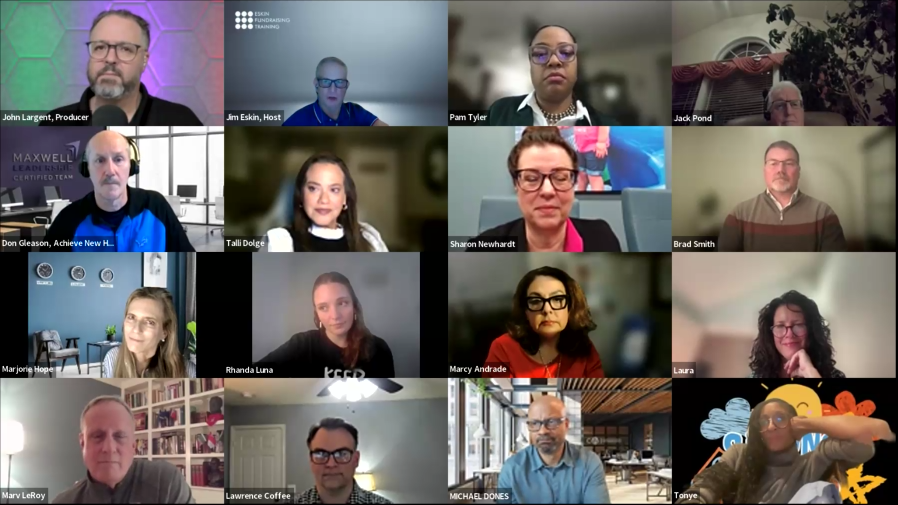
| | | There are two live interactive Zoom based forums to end the year. Since the topics are so timely, we strongly encourage all our Learning Community audience to make special efforts to be part of these conversations. When you add your voice, you enrich the learning experience for everyone in the audience. We’re trying something new in December. Learning Community partners who aren’t able to join us live are encouraged to send us two-minute or less videos with questions and comments they want to see addressed. Be sure to identify yourself with your organization and your location before sharing your question or comment. As we show your videos, our multidisciplinary panel of subject matter experts will respond to your messages. The goal is to bolster the dialogue and make it easy for our friends to be part of the discussions even if their schedules won’t allow them to join us live. Go ahead and register now, and by all means spread the word to colleagues, friends, family, neighbors and other kindred spirits.
• Wednesday, December 2nd, 4 to 5:00 PM Central Time: A Giving Thanks Forum.
• Wednesday, December 16th 4 to 5:00 PM Central Time: You Deserve A Healthy Workplace Forum.
| | Keep It Simple And Succeed | |
| | | We’ve all heard the expression Keep It Simple, Stupid more times than we can count. At Eskin Fundraising Training, we’ve modified it a bit to Keep It Simple And Succeed. More than that we’ve made it the entire basis of our fundraising/training consulting. After leading advancement operations for three institutions of higher education, we were stunned by how many business and community leaders are terrified of asking for gifts for their favorite non-profits and causes. More than anything else this can be linked to a fear of the unknown. As practitioners we just weren’t doing a good enough job of demystifying the art and science of fundraising. We are totally devoted to filling that critical void and are very proud of the results we’ve accomplished with our learning community partners of professional and volunteer non-profit leaders representing organizations of all different sizes, missions and parts of the country, and now even internationally. Keep It Simple And Succeed. Here’s our Substack article highlighting this theme.
| | |
The Indiana University Lilly Family School of Philanthropy at IU Indianapolis strengthens philanthropy by training and empowering students and professionals to be innovators and leaders who create positive and lasting change. Each year they examine how Americans understand philanthropy and the non-profit sector, including whether public debates within the field were reflected in broader public opinion. Key findings from the 2026 report:
1. Many Americans interact with non-profits without recognizing that they are doing so. While only 7.4% of respondents reported receiving or using non-profit services in the past year, 71.9% reported engaging in at least one activity typically provided by nonprofits. In other words, nearly 90% of those who use non-profit services did not initially identify themselves as having used nonprofit services.
2. Confidence in non-profits is higher than confidence in many other institutions but remains limited and malleable. Non-profits are among the groups with the highest levels of confidence, similar to individuals, religious institutions, and future or rising generations. Still, only 23.3% of respondents expressed high confidence in non-profits’ ability to solve societal or global problems. Additionally, 22.7% of respondents said their confidence in non-profits would decrease were a trusted political figure to express a lack of confidence in the sector.
3. While nearly one in five Americans expect to increase their giving in response to the universal charitable deduction, anticipated use of the provision appears more muted as an enacted policy rather than a hypothetical one. More than three-quarters of respondents said their giving would stay the same, while 19.0% said their giving would increase due to the universal charitable deduction. This is a decrease from 24.4% when compared to the 2023 report, showing that expected increases appear more subdued once a policy becomes reality.
4. Public views on the roles of non-profits and government remain mixed, with fewer Americans favoring non-profits as the better provider of basic needs. The largest share of respondents say non-profits and government are too different to compare or that it does not matter who provides basic services as long as they are available. Respondents were less likely than in 2023 to say non-profits are more effective than government at providing basic needs, declining from 24.6% to 18.9%.
| | Take Stock of Giving Stock | | |
Sam Riklin, the mentor who skillfully guided me into a development career, provided free office space when I was in between jobs in 1996. He also provided wisdom that was the equivalent of an MBA. He was enormously successful in the advertising field and then lost some of his biggest clients in 1987. He was forced to land on new sources of income, and that was through investing in the stock market. In conjunction with that transition he became a major philanthropist, especially to higher education. He had a visionary philosophy, “The more I donate the luckier I become in the stock market.” This fascinating FreeWill 2026 report looks at which organizations receive stock, how different sectors are performing, and where top-performing organizations are located. It now compares each organization to its own prior-year return, which we explain in the methodology. Key findings:
1. Stock giving rebounded. Stock gifts grew 27% in fiscal 2024 at organizations that filed in both fiscal years 2023 and 2024. That figure excludes the 16 organizations that received more than $100 million in stock in either year. Of the organizations that received stock in both years, 58% received more in fiscal 2024, with a median increase of 13%.
2. Most non-profits still receive no stock at all. Of the 40,920 public charities that raised at least $1 million from individuals, only about 18% (7,506) reported a stock gift. Even among organizations raising $25 million or more, 46% reported none.
3. Organizations that start can grow quickly. In fiscal 2024, 2,592 organizations reported a stock gift in fiscal 2024 after none in fiscal 2023, and organizations raising $1 million to $10 million grew stock revenue 23-31%.
4. Donor-Advised Funds took four times as much stock as charities did. DAF sponsors reported $48.6 billion in publicly traded stock gifts, up 71%, against $12.2 billion given directly to public charities.
5. The growth is continuing. Organizations that have already filed for fiscal 2025 are up another 18% on the same basis. Those raising $1 million to $5 million are growing fastest in that early data.
Don’t overlook this eye-opener: Donors who make gifts through stocks tend to give six times more than donors using other financial sources.
| | Reach Out And Call A Donor | |
| | | Technology keeps on giving us more and more ways to communicate. A smart fundraiser finds out how the donor prefers to communicate and when. This is to reinforce the power of simple cell phone calls. Talk about being ubiquitous, Pew Research Center indicates the vast majority of U.S. adults (98%) own a cellphone of some kind. About nine-in-ten (91%) own a smartphone, up from just 35% in the Center’s first survey of smartphone ownership conducted in 2011. We love its power of instantaneous communication. Especially when you reach the donor prospect at the right time. Make no mistake about it donor prospects are being bombarded with all sorts of appeals through all sorts of media. We highly recommend making year-end check-ins with mid-level donors who have the capacity to give more. Ask for their candid insights on how the organization is carrying out its mission and returning value on their philanthropic investment. Ask both what they like and don’t like about what the organization has been doing over the last year. Refrain from asking for money — ask for advice and counsel. Offer to e-mail a brief impact video describing what’s been achieved with their dollars. Don’t ask for a gift in that video either. This is a numbers game. The goal is to continuously nurture a genuine connection. You’ll be pleasantly surprised by how many donors will appreciate not being pushed and make a year-end gift completely on their own. All this reinforces that you care about the donor and how you can work together to best achieve their philanthropic vision.
| |
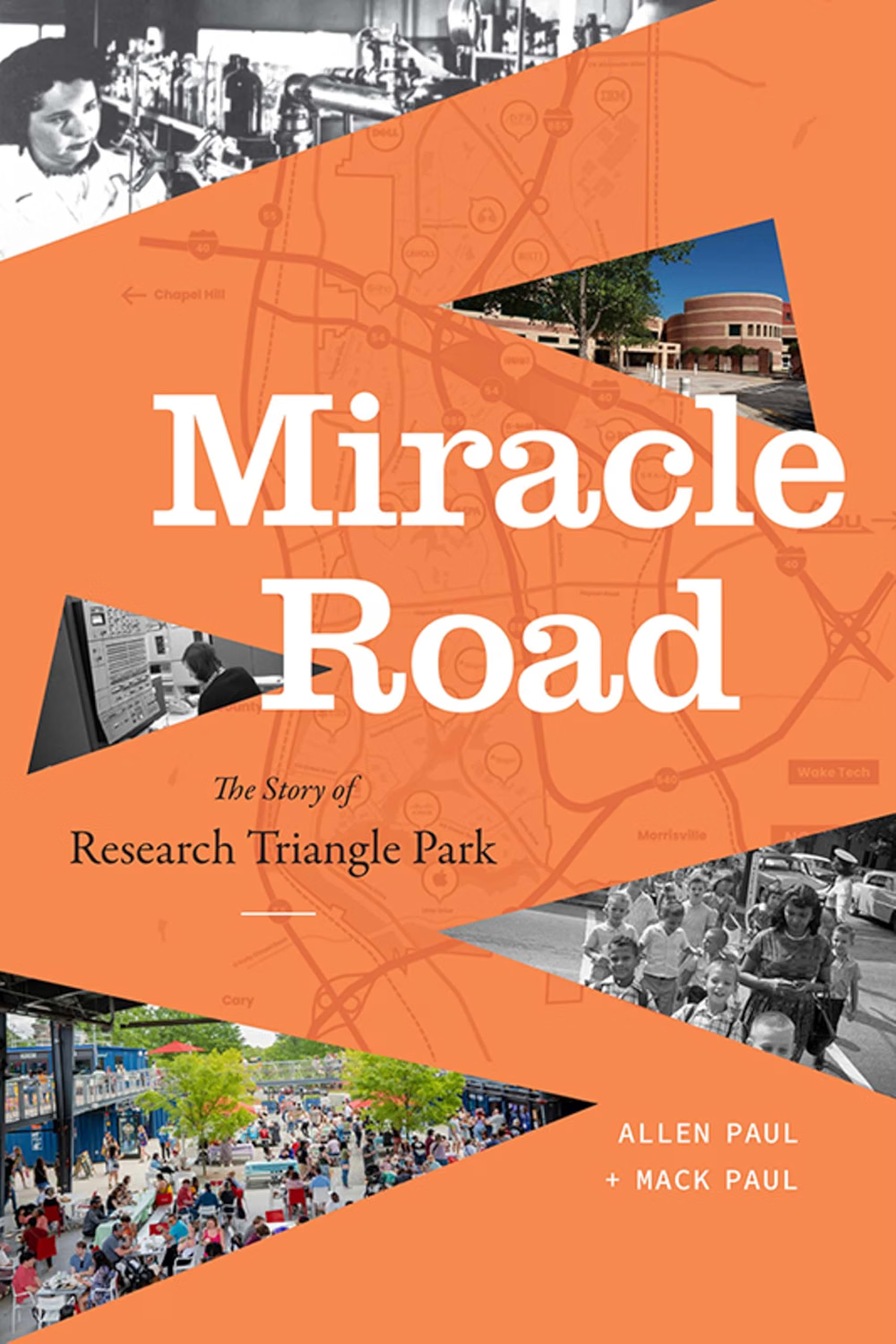
| | | There couldn’t be a book more personal to me because it was authored by my first mentor who taught and inspired me about the craft of writing and effective communications. We kept in touch for 45 years and collaborated on several of our learning community projects featuring his brilliant grasp of the written word. Allen Paul authored five different books on an amazingly diverse range of topics. He passed away on May 25, 2026, at the age of 86. A day doesn’t go by in which I don’t think about how lucky I was to be mentored by him in my first full-time job out of college. His last book co-authored with son Mack is now out and represents his last labor of love and countless hours of research and interviews. Miracle Road is a comprehensive account of the origins and rise of Research Triangle Park, which has transformed one of the poorest states in the nation into an economic powerhouse, detailing a fascinating and important case study of urban development in the twenty-first century. Research Triangle Park in North Carolina (RTP) emerged under the unique circumstances of a poor Southern state that needed to find a way to offset the declining industries of tobacco, furniture, and textiles in the 1950s. Through the sustained commitment of nearby universities, business leaders, and local and state officials, state leaders established the largest science and research park in the United States in an area that was nothing but “possums and pines.” Miracle Road tells this story through the eyes of those at the center of it, like the local black leaders who convinced white officials to desegregate public schools with the justification that it would make the area more appealing to tech companies, or how a chance meeting between the governor and a Danish executive led to North Carolina becoming an epicenter for weight loss drugmakers decades later. The story is organized around major periods in RTP’s growth, showing how RTP came to define the region and the state by the 1990s as well as the major setbacks it encountered in the early 2000s. Breaking down the strategies that led to RTP’s success, like creating new institutions in targeted tech areas to spur activity and factoring quality of life into the regional planning of the area, Miracle Road demonstrates how the story of Research Triangle Park is a fascinating and important case study of urban development in the twenty-first century.
| | |
From the Harris Poll, charitable giving in the U.S. is declining as rising cost‑of‑living pressures limit donations, but most adults still give, often opting for smaller, recurring contributions. Key points:
• More than 4 out of 5 U.S. adults said at least one cost‑of‑living pressure prevented them from donating or increasing donations in the past six months.
• One in 7 respondents cited unexpected expenses as a barrier to donating.
• 77% of U.S. adults surveyed gave money in some form during the past six months.
• Overall donation rates fell from 80% to 64% over the same period.
• 72% of donors said smaller, recurring contributions of $25 or less feel more sustainable than large one‑off checks.
| | |
The Speaker of the House of Representatives can be one of the chief figures in the U.S. government if the holder of the office wields all available authority. The Speaker sets the legislative agenda for the House each year, assigns membership to congressional committees, and oversees business on a day-to-day basis. By convention, they are also the leader of their party and responsible for advancing that party's agenda to the presidential desk. And after the vice president, the House speaker is next in line for the White House, should something happen to the president. Match the following speakers with the number of terms that they served in the office, not necessarily consecutively.
1. Carl Albert a. 2
2. Newt Gingrich b.3
3. Nancy Pelosi c. 4
4. Tip O’Neill d.5
5. Sam Rayburn e.10
| | |
|
Jim Eskin
Founder
Cell: 210-415-3748
jeskin@aol.com
| | |
Stratagems is published monthly by Jim Eskin, Founder of Eskin Fundraising Training, LLC. We offer workshops, webinars and customized training sessions for board members, staff and volunteers of non-profit organizations of all kinds and sizes. For details about our services and information, or to find out how to schedule a training session for your organization, visit our website. Follow our events on Facebook, and read more articles about philanthropy on our LinkedIn page.
TO ORDER A COPY OF JIM ESKIN'S NEW BOOK, HOW TO SCORE YOUR FIRST OR NEXT MILLION-DOLLAR BOOK CLICK HERE.
| | ANSWERS TO THIS MONTH'S QUIZ: 1=b, 2=a 3=c, 4=d, 5=e | | | | |