OHE Newsletter
December / 7 / 2016
What's New at OHE

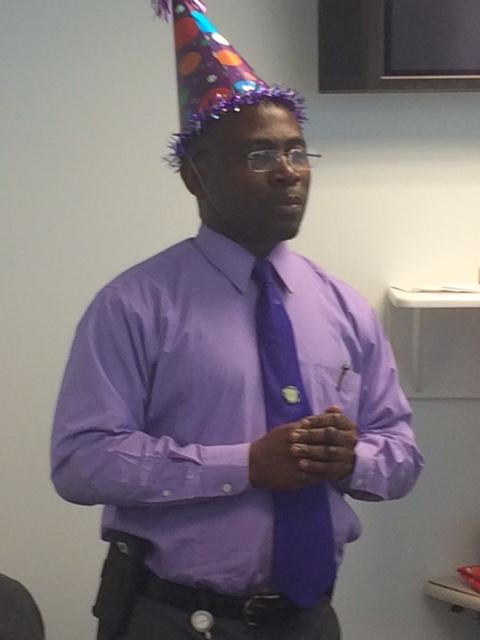
Congratulations to Augustine Doe for being the Enthusiastic Employee of the Month! Augustine is the Health Equity Specialist at OHE and is pictured to the left giving a motivational speech during his birthday celebration.


In This Issue
CDC News & Tips
Your recipe for staying on track no matter what' s cooking.

Diabetes is a common disease that is on the rise in America. Having diabetes raises your risk for developing other dangerous conditions, especially heart disease and stroke. November is National Diabetes Month, a time to raise awareness about preventing and managing diabetes and protecting yourself from its complications.


reaching_hands.jpg
Partners in Prayer and Prevention

Faith-based coalitions are central to community organizing efforts and trusted resources of information to both their membership and the larger community.  VDH recognizes the importance of continuous engagement between the VDH central office, local health districts, community partners and partnering congregations. The  Virginia Partners in Prayer & Prevention (Virginia P3) program is the evolution and rebranding of Virginia's Congregations for Million Hearts program. The newly branded initiative facilitates partnerships between marginalized communities, faith and interfaith organizations and the state public health agency. 
 
P3's pilot outreach effort has focused on Zika prevention through the targeted distribution of VDH approved Zika Prevention "around your home and in your community" messages.  Future efforts of P3 will broaden the scope of prevention to several key public health issues disproportionately impacting underserved and marginalized communities.  


Did You Know...?

Think Cultural Health offers an e-learning program for promotores de salud and community health workers, Promoting Healthy Choices and Community Changes. Available in English and Spanish, the e-learning program provides information about how to motivate behavioral changes among community members and empower them to promote changes in their communities. The Think Cultural Health team recently surveyed over 200 individuals taking this e-learning program and found that the program is well received. More specifically:
  • Approximately 8 in 10 individuals agreed that completing a Unit improved their skills and attitudes related to that Unit's topic.
  • Nearly 8 in 10 also found the Unit topic to be applicable to their work.
OMH Compendium of Publicly Available Datasets and Other Data-Related Resources

The Office of Minority Health (OMH) at the U.S. Department of Health and Human Services (HHS) announced the release of a new resource to aid researchers, public health practitioners and policymakers with data on health and health care disparities and social determinants of health. The Compendium of Publicly Available Datasets and Other Data-Related Resources (Compendium) is a free resource that compiles in one place descriptions of and links to 132 public datasets and resources that include information about health conditions and other factors that impact the health of minority populations.
The Compendium provides a one-stop shop for researchers, public policymakers and staff, the general public and all who are interested in the intersection of health, health care, health disparities and social determinants of health - the conditions that impact the environment in which individuals live, learn, work and play.
The Compendium was created by the Federal Interagency Health Equity Team of the National Partnership for Action to End Health Disparities (NPA) to advance research, public policy and the public's knowledge of issues related to health equity. The compendium fills a gap that researchers and practitioners frequently face in locating federal datasets in one place, with information that is vital to conduct research on various topics. It is a valuable, time-saving resource that reduces the significant amount of time and work of identifying and sorting through datasets for pertinent variables of study.
The datasets provided in the Compendium can serve a variety of purposes. Researchers who are interested in studying the specific health services that Americans frequently use and the cost of and payment methods for those health services may access the Medical Expenditure Panel Survey (MEPS) data source available from AHRQ found in the Compendium. Organizations interested in program and policy development for children and families served by Head Start and Early Head Start programs may access the Head Start Program Information Report from ACF.
The Compendium of Publicly Available Datasets and Other Data-Related Resources is available on the NPA website.
House Passes The ECHO Act

The House passed via voice vote this afternoon a bill that seeks to expand technology-enabled learning by health care providers.  The ECHO Act (H.R. 5395) calls for an HHS report on how to expand the University of New Mexico's Project ECHO, which connects urban doctors with rural providers to teach them how to better treat complex diseases.  "In Sacramento, we've seen how the Project ECHO model can harness the power of technology to bring specialty expertise to community health centers and other providers in underserved areas," Rep. Doris Matsui , a House sponsor along with Rep. Michael Burgess , said in a statement.  The bill passed 97-0 in the Senate last week after being backed by Sens. Orrin Hatch and Brian Schatz there. It now heads to the president's desk where it's expected to be signed into law. 

Population Health Training Committee Progress
The Population Health training committee was established in June, 2016 with representation from local health districts and central offices to develop a curriculum for VDH staff.  The workgroup has been developing a video training about Population Health that will be placed on TRAIN upon completion. The first of two videos has been developed and can be viewed here. The videos will be accompanied with a facilitator guide to help lead discussion surrounding VDH and its support in population health throughout the Commonwealth.   The committee has created a very brief survey for LHD Health Director's to respond to with their  population health in action contributions for the second training video.   Please respond to the survey by November 30, 2016!
Public Health 3.0
The Public Health 3.0 initiative is led by the U.S. Department of Health and Human Services Office of the Assistant Secretary for Health and builds on the work of Healthy People 2020, which encourages collaborations across communities and sectors. Last month, they issued a white paper titled "Public Health 3.0: A Call to Action to Create a 21st Century Public Health Infrastructure." This white paper provides recommendations for advancing public health to meet today's challenges and opportunities.

Commissioner Levine's letter:

Surgeon General's Report on Alcohol, Drugs, and Health:

News from the Governor and the Commissioner:

State Health Commissioner Comments on Opioid Addiction Declaration
Department of Homeland Security Active Shooter Preparedness Workshop for Faith Based Organizations
 
December 15, 2016
 
THIS IS NOT A TACTICAL TRAINING COURSE
This workshop is presented in coordination with the Jewish Community Federation of Richmond.
The workshop will take place at the Weinstein JCC, 5403 Monument Ave., Richmond, VA 23226

Smiles Across America Webinar Series
 
Oral Health America's Smiles Across America (SAA) Webinar Series consist of monthly webinars to provide technical assistance and a forum for programs to share information about promising practices and innovative projects. Marshall University School of Medicine (MUSOM) is enabling OHA to now offer CE credits for our webinars!

Oral Health and Poverty: Addressing Racial and Socioeconomic Disparities in Pediatric Dental Caries
Date: Monday, December 12th, 2016 @ 2 pm CST

Are you curious about the intersection of pediatric oral health, race and socioeconomic status? Tune in on December 12th at 2pm to learn more.

Presenter: Qadira Ali Huff, MD, MPH
Continuing Education Credit: 1