|
|
|
IN THIS ISSUE
RETIREMENT PLAN UPDATE
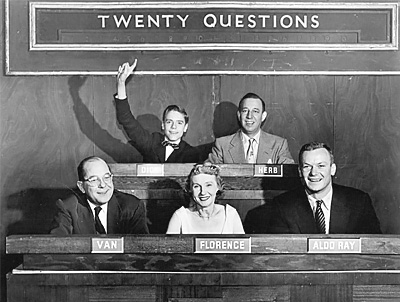
20 QUESTIONS FOR
YEAR-END TAX PLANNING
SOLO AGERS
ARTICLES OF INTEREST
|
| |
A Season of Gratitude
As the year draws to a close, the holiday season offers a perfect moment to reflect on the relationships and responsibilities that shape our work at Garden State Trust Company. December invites gratitude, and this year we are especially thankful--for our clients, for the professionals who entrust their clients to us through referrals, and for the opportunity to provide trusted guidance that brings comfort and clarity to families across generations.
The financial landscape continues to evolve, often rapidly. Markets are dynamic, tax laws shift, and family planning needs often grow more complex. Given these changes, the purpose of trust services remains constant: to provide stability, stewardship, and continuity.
At Garden State Trust Company, our mission is rooted in that tradition. Whether we are serving as trustee or co-trustee, providing investment management, settling an estate, or administering special needs trusts, we approach each responsibility with a combination of practical expertise and personal commitment.
Serving as trustee is not a one-time engagement; it is a long-term relationship. We often work with families across multiple generations, guiding them through life transitions, honoring the intentions of grantors, and ensuring that assets are protected and managed prudently. Our clients rely on us not only for our abilities but for our reliability, accessibility, and care.
To our clients, we extend our warmest thanks. You place significant trust in us when you appoint us as trustee, to oversee investments, or to help carry out your estate planning wishes. These decisions often reflect deeply personal goals--protecting loved ones, caring for a family member with special needs, planning for retirement security, or ensuring the orderly transfer of your estate.
We recognize the weight of that responsibility. Every client relationship reminds us that our work centers on more than accounts and documents; it centers on people. We take pride in offering attentive service, clear communication, and the reassurance that comes from knowing your interests are being cared for with diligence and integrity.
Your confidence in Garden State Trust Company is the cornerstone of our success, and we are profoundly grateful.
We also wish to express our appreciation to the many attorneys, accountants, financial planners, and other professionals who recommend our services. A professional referral is far more than an introduction--it is a meaningful vote of confidence. When you refer a client to us, you are placing your reputation alongside ours, and we work every day to honor that trust.
We value this collaborative relationship. Effective trust and estate administration often depends on seamless cooperation among professionals, and we are proud of the partnerships that allow us to deliver coordinated, high-quality service. Together, we help families achieve thoughtful planning, smooth administration, and confidence in their long-term financial and personal goals.
As we enter a new year, our focus remains clear: to continue providing personalized, responsive, trusted trust services. We will adapt to the changes that inevitably come--from market developments to evolving regulations--but our commitment to sensible administration and dedicated client service remains unchanged.
The holiday season reminds us that what we do extends beyond financial responsibility. It includes the relationships we cultivate, the values we uphold, and the trust we earn through responsive service.
| | MONTHLY QUESTION & ANSWER | | |
Q. Are seniors getting a $6,000 bonus next year in their Social Security benefits?
A. No, there is no benefit bonus next year. We've had this question a few times, and the confusion apparently comes from a new senior deduction that is in place for this tax year. The extra deduction for each taxpayer over age 65 is $6,000, so a married couple gets an added deduction of $12,000. The extra deduction replaced the president's proposal to make Social Security benefits tax free again, and for some taxpayers this will be the exact result.
However, higher-income taxpayers may not enjoy the new extra deduction, as it begins phasing out at modified adjusted gross income of $75,000, or $150,000 for married couples filing jointly. Reminder: If you are 73 or older this year, you will need to take Required Minimum Distributions from your IRAs and employer retirement plans. These distributions will count toward the phase-out of the new senior deduction.
(December 2025)
© 2025 M.A. Co. All rights reserved.
HAVE A QUESTION ON TRUSTS, WILLS, OR INVESTMENT MANAGEMENT?
| | For general informational purposes only. This information does not constitute legal advice. | | |
The 401(k)-plan contribution limit will increase to $24,500 in 2026, up from $23,500 for 2025. Read our Informational Article, Retirement Plan Update to see more changes. In another article, 20 Questions for Year-End Tax Planning, learn about the twenty questions that may help you with your year-end tax planning in light of the latest tax legislation.
December brings the observance of many major holiday celebrations around the world. The major global holidays most familiar to us are Christmas, Hanukkah, and Kwanzaa.
To our clients and professional colleagues: thank you for the opportunity to serve you. We wish you and your families a warm, joyful, and peaceful holiday season and we look forward to continuing our work together in the year ahead.
| | |
The 401(k) plan contribution limit will increase to $24,500 in 2026, up from $23,500 for 2025. The change was announced in November by the IRS, along with other inflation adjustments noted below.
Retirement Plan Inflation Adjustments
| | |
Source: Notice 2025-67
(December 2025)
© 2025 M.A. Co. All rights reserved.
| | 20 Questions for Year-End Tax Planning | | |
The One Big Beautiful Bill Act has added several wrinkles to tax planning. Here are some basic questions to get you started.
-
What will be your estimated 2025 income? This will determine whether you qualify for several tax breaks.
-
Did you pay more than $10,000 in state and local taxes this year? The cap for the deduction has been lifted to $40,000.
-
Should you itemize or use the standard deduction? More than 90% of taxpayers have been using the expanded standard deduction, but lifting the cap on the SALT deduction could affect that calculation.
-
Should you bunch your deductions? If you are near the boundary for the standard deduction, it may be profitable to accelerate some charitable contributions or medical expenses into one year, itemize deductions that year, and take the standard deduction the next year.
-
Did you have tip income in 2025? Up to $25,000 of tip income may be tax free, but the benefit phases out at higher income levels.
-
Did you have overtime pay in 2025? Up to $12,500 of overtime pay ($25,000 for marrieds filing jointly) may be tax free, but again, the benefit phases out at higher income levels.
-
Have you purchased an American-made new car this year? The interest on a loan for such a purchase may be deductible.
-
Is the asset allocation in your investment portfolio still consistent with your goals? Strong stock market performance this year may have pushed some portfolios out of balance.
-
Should you harvest some capital losses to offset realized gains? Up to $3,000 of realized capital losses may offset ordinary income.
-
Are you 65 or older this year? You may be eligible for an additional $6,000 deduction from income, but this benefit phases out for higher-income retirees.
-
Have you maximized your 401(k) deferral? One should defer at least enough to secure an employer match in a qualified retirement plan.
-
Have you made a maximum IRA contribution? Up to $7,000 may be contribution to a traditional IRA, a Roth IRA, or a combination of the two.
-
Are you eligible for catch-up contributions? For those 50 and older, an additional $1,000 may be contributed to an IRA. An additional $7,500 may be contributed to a 401(k), 403(b), or 457 plan.
-
Are you eligible for a super catch-up contribution? Beginning in 2025, those who are 60, 61, 62, or 63 have a larger catch-up contribution, $11,250. At age 64 and up, the limit falls back to $7,500.
-
If you are 73 or older, have you taken your Required Minimum Distributions (RMDs) for the year? RMDs are required from IRAs and from employer retirement plan accounts, such as 401(k) plans.
-
Should you consider a Qualified Charitable Distribution from your IRA? A direct transfer from an IRA to a charity will satisfy RMD requirements without boosting ordinary income.
-
Should you consider conversion to a Roth IRA? The conversion is subject to ordinary income tax the year that it is made, but future distributions may be tax-free, and the Roth IRA does not have Required Minimum Distributions.
-
Have you taken advantage of the annual gift tax exclusion? Up to $19,000 may be gifted to as many beneficiaries as you wish without the necessity of filing a federal gift tax return. A grandparent with four children and six grandchildren could make gifts to each of them, which removes $190,000 from a future taxable estate. Married couples may "split" their gifts, for a total of $38,000 per done. No gift tax will be due, but a gift tax return must be filed in that event.
-
Has education funding been taken care of? Tax-deferred savings opportunities include the Coverdell Education Savings Account and the 529 plan.
-
Have you reviewed your will this year? Next year, the amount exempt from federal estate and gift tax goes to $15 million, and this change has no expiration date, unlike earlier increases in this threshold. The exemption is per person, so a married couple has $30 million of tax shelter, and the exemption will be indexed for future inflation. The permanence of this change could have significant ramifications for your estate plan.
(December 2025)
© 2025 M.A. Co. All rights reserved.
| | |
According to a recent item in The Wall Street Journal, there are more than 16 million Americans over age 65 who are living alone. That's about 28% of that age group, which is triple the rate in 1950, thanks to greater longevity and higher divorce rates among older adults. Financial planning for singles differs from planning for couples. Obviously, there is only a single set of assets to work with, and no surviving spouse to plan for. Less obviously, taxes are higher for singles, and they have no partner to fall back upon in case of adversity.
These differences become especially acute for single seniors, as they have less room for error in their financial management. When the single senior is a widow or widower, it often is the case that the deceased spouse was the financial manager for the couple, making singlehood doubly difficult.
Get Started
Putting one's financial house in order is generally the first order of business. One must determine financial needs for the balance of retirement and assess the resources available to meet those needs. Tax planning and investment strategies will need to be reviewed and monitored.
According to a recent item in The Wall Street Journal, there are more than 16 million Americans over age 65 who are living alone. That's about 28% of that age group, which is triple the rate in 1950, thanks to greater longevity and higher divorce rates among older adults. Financial planning for singles differs from planning for couples. Obviously, there is only a single set of assets to work with, and no surviving spouse to plan for. Less obviously, taxes are higher for singles, and they have no partner to fall back upon in case of adversity.
These differences become especially acute for single seniors, as they have less room for error in their financial management. When the single senior is a widow or widower, it often is the case that the deceased spouse was the financial manager for the couple, making singlehood doubly difficult.
Critical Questions
For single seniors, the most vexing problems are associated with incapacity. Should you become incapacitated, temporarily by illness or permanently through aging:
- Who will pay the bills?
- Who will track the investments?
- Who will make decisions about real estate?
- Who will make certain that the taxes are paid?
- Who will balance the checkbook?
The first solution that comes to mind for these questions is the financial durable power of attorney. This document allows another person to step into your shoes, financially speaking, and make binding decisions on your behalf. A durable power of attorney may be as broad or as limited in scope as needed to make you comfortable. You'll need to see your lawyer to have the power of attorney drafted and executed.
Another axis of anxiety concerns health care. In this area, you may need:
- a health care power of attorney, with medical instructions to be followed if you are incapacitated;
- a Health Information Portability and Accountability Act (HIPAA) authorization, so that your agent has full rights to your medical records;
- a living will that outlines your expectations for medical care near the end of your life.
The Benefit of a Living Trust
Individuals often rely upon a living trust for financial management in retirement. A living trust can provide financial protection in the event of disability or incapacity, as a durable power of attorney does. However, a living trust offers additional advantages, such as financial privacy at death and probate avoidance. If a corporate trustee is named as the trustee, there will be the advantages that come with working with an institution compared to an individual.
A living trust is not a panacea; it doesn't solve every financial or investment problem. Still, a trust can be the cornerstone for successful financial and estate planning.
(December 2025)
© 2025 M.A. Co. All rights reserved.
| | |
WALL - MAIN OFFICE
732-255-5000
SOUTH JERSEY / PHILADELPHIA REGION
856-281-1300
| | |
LEBANON REGION
908-287-7188
LINWOOD / SOUTH JERSEY REGION
856-281-1300
| | Because of the rapidly changing nature of tax, legal or accounting rules and our reliance on outside sources, Garden State Trust Company makes no warranty or guarantee of the accuracy or reliability of information contained herein nor do we take responsibility for any decision made or action taken by you in reliance upon information provided here or at other sites to which we link. ©2025. All rights reserved. | | | | |