|
A Year in Review: Advancing Rural Community Colleges Together
As we prepare to close the year and embrace the opportunities ahead, it’s important to reflect on the challenges, accomplishments, and insights that have shaped our work at the Rural Community College Alliance (RCCA). This year brought significant developments in the landscape of higher education, with several key stories and research findings impacting community colleges, especially in rural areas.
1. The Continued Enrollment Recovery Post-Pandemic
Enrollment trends at community colleges have been a focal point throughout 2024. After years of declines spurred by the pandemic, we’ve finally seen stabilization—and even growth—in key areas. Rural colleges have played a vital role in this rebound by focusing on career-aligned programs, offering flexible learning options, and strengthening local partnerships. However, disparities remain, with some regions and student demographics still lagging. As we move into 2025, we must double down on efforts to meet students where they are and continue rebuilding stronger, more resilient institutions.
2. Federal Focus on Workforce Development
In 2024, workforce development and skills-based training took center stage in federal education policy. Investments in short-term credential programs and sector partnerships are helping rural colleges address local workforce needs. At RCCA, we’ve seen innovative examples of colleges leveraging these opportunities to expand training in high-demand areas like healthcare, advanced manufacturing, and renewable energy. These programs not only create pathways to sustainable employment but also reinforce the critical role community colleges play in driving rural economic development. To that end, our Alliance Learning series will offer a webinar on January 15th, “Converting Short-Term Course Takers to Graduates with Living-Wage Jobs”. Put this on your calendar and learn more about how community colleges ensure that more students benefit from short-term training options and encourage students to continue taking courses that lead to industry-recognized credentials and living wage jobs.
3. The Push for Digital Equity
Digital inclusion remains a significant challenge for rural colleges and their students. This year, research underscored how limited broadband access continues to hinder educational attainment in many rural communities. Federal and state initiatives have aimed to bridge this divide by funding infrastructure and providing resources for digital literacy programs. Community colleges are uniquely positioned to lead in this effort, equipping students and communities with the tools they need to thrive in an increasingly digital world.
Looking Ahead: Embracing the AI-Powered Era
As we reflect on the successes and challenges of the past year, it’s clear that innovation will continue to shape the future of rural education. One of the most exciting opportunities ahead lies in harnessing the power of AI to elevate productivity and empower rural communities.
To help lead this effort, RCCA is hosting a special webinar on January 16, 2025, titled “Embracing the AI-Powered Era: Unlocking Rural Potential.” I encourage you to join us for this transformative session and become part of a movement to make rural America a model for thriving in the AI age. Let’s seize this moment to shape the future of our communities and ensure we’re not left behind in this new landscape.
Join us on January 16, 2025, at Noon EST. Go to our events page for more information.
| |
College Spotlight: Bay College Escanaba, MI
| |
|
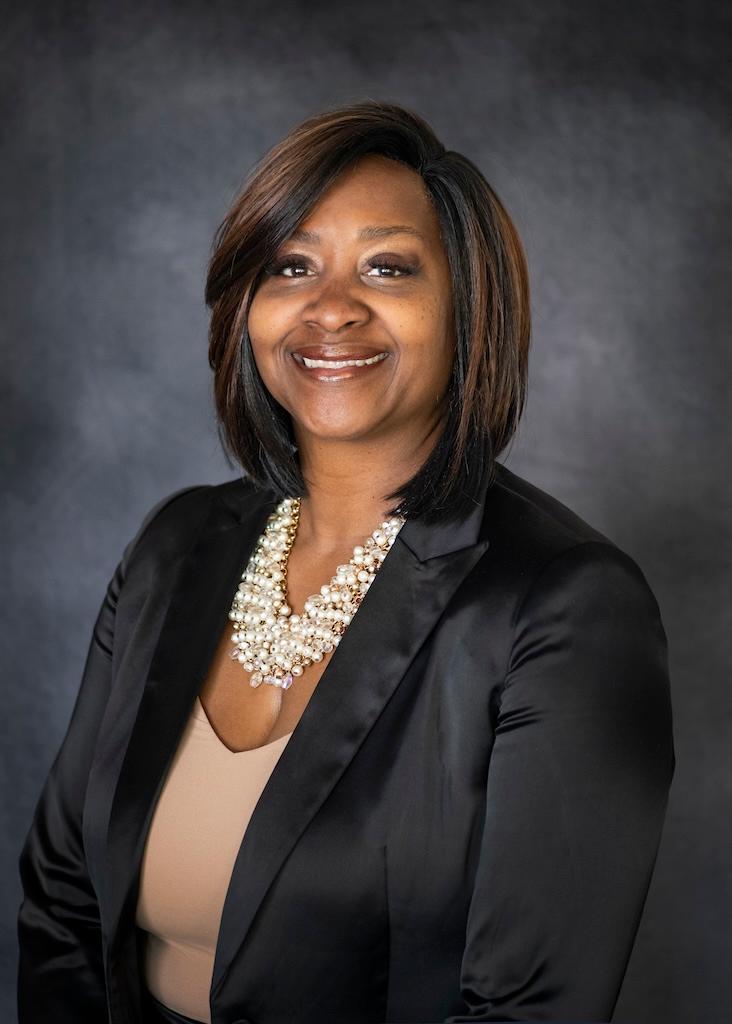
At Bay College, located in Michigan’s Upper Peninsula, leadership and community are deeply intertwined. In her role as President, Dr. Nerita Hughes, an African American woman stepping into rural leadership, emphasizes fostering student success, community engagement, and a culture of transparency and accountability.
Under her guidance, Bay College has developed a comprehensive five-year strategic plan rooted in diversity, equity, inclusion, and belonging (DEIB). The plan focuses on key pillars, such as:
- Amplifying institutional value and brand identity
- Designing a holistic student experience
- Cultivating a culture of care and well-being
- Building industry-responsive partnerships
- Adopting future-ready technology
With a commitment to transparency, data-driven decisions, and innovative enrollment strategies, Bay College continues to grow and serve its community with purpose and vision.
Read the full article to learn more about Bay College's transformation and dedication to community success!
| |
|
Join us for the third installment of the RCCA Alliance Learning Series: How to Engage Students, Faculty, and Staff with Library Literacy
Date & Time: Wednesday, December 18, 1–2 PM EST
Presenter: Dan McClure, Library Director at Clatsop Community College
About the Webinar:
Academic libraries in rural settings play a pivotal role in fostering student success. By prioritizing student-centered programming, libraries can deliver engaging events that support retention, persistence, and institutional goals. Dan McClure will share practical strategies and lessons learned from his extensive experience designing impactful library initiatives tailored to student engagement and institutional alignment.
Meet the Presenter:
Dan McClure, with over 20 years in academic, public, and legal libraries—including 15 as a college library director—has pioneered innovative programming and led significant projects like designing a new library facility for the Pacific Northwest College of Art. A leader in Oregon’s library community, Dan’s dedication to library literacy makes this webinar an invaluable opportunity to gain actionable insights.
To RSVP, email the RCCA President at president@ruralccalliance.org.
This free webinar is open to all RCCA members—please share widely with your colleagues!
We can’t wait to see you there!
| |
From our friends at Rural Together | | |
|
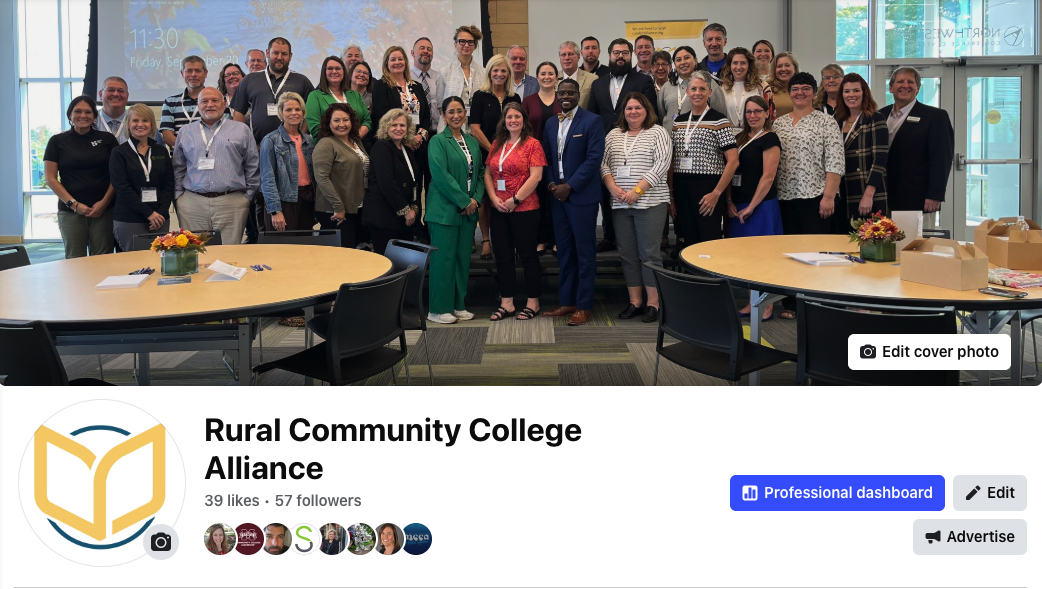
Stay Connected with RCCA on Facebook!
Join the conversation and stay up-to-date on everything happening in the Rural Community College Alliance community by following us on Facebook! From exciting conference updates and educational webinars to success stories and resources tailored for rural colleges, our page is your go-to place for staying informed and engaged.
Follow us at @RuralCommunityCollegeAlliance and be part of our growing network of educators, leaders, and advocates committed to rural student success!
| | | |
Preparing for the 2025 NLS Webinar
As we prepare for the start of the 119th Congress in 2025 and the start of the second Trump Administration, ACCT encourages all community college leaders and stakeholders to join us in Washington DC for the National Legislative Summit. With a new administration, new committee leadership in both chambers, and so many new elected officials, it is a great opportunity to show federal stakeholders the importance of community colleges.
In an effort to help prepare attendees for the NLS, ACCT staff will host a webinar on Tuesday December 10, 2024, at 2 PM ET. During this webinar, we will provide an update on the current federal lay of the land going into the 119th Congress, share best practices and discuss the timelines your college should use as a guide to ensure you maximize your advocacy on behalf of your college while in DC.
You can register for the webinar here.
| | |
|
Rural on the Rocks Event to be Held During ACCT's National Legislative Summit
February 10, 2025 @ 4:00 pm - 5:30 pm
In concert with ACCT, RCCA invites community college leaders to a dynamic event that combines networking and policy discussions with government officials and rural-serving programs. Think of it as a college fair meets networking reception—attendees will have the chance to connect with federal program officials, legislators, rural-focused organizations, and fellow college leaders, all while enjoying drinks and appetizers.
For more information, visit the RCCA events page.
| | | |
|
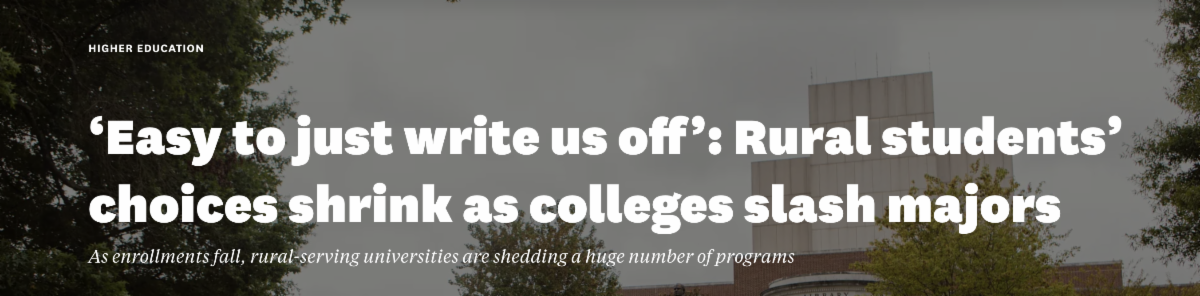
Rural Students Face Fewer Options as Universities Cut Majors
Across rural America, universities are slashing degree programs and majors, leaving students with limited educational choices. With enrollment declines and budget shortfalls, institutions like Delta State University and West Virginia University are cutting programs in fields like history, chemistry, and the humanities. These reductions disproportionately affect rural communities, often leaving students without viable alternatives. Explore how these changes impact access to higher education and the futures of rural students in this detailed report by The Hechinger Report.
🔗 Read the full article
| | | |
Articles from Inside Higher Ed
| |
|
The Value of Asynchronous Learning in Today’s Higher Education
A recent opinion piece critiqued asynchronous online courses, but educators Mary Nestor, Millie Tullis, and James Butler present a counterargument, emphasizing the potential of well-designed asynchronous learning. They highlight how intentional course design and modern tools can foster meaningful student-instructor connections, active learning, and accessibility for diverse learners. Read their defense of asynchronous education and its transformative possibilities in the digital era.
Read the full article on Inside Higher Ed
| |  |
|
How the Class of 2028 Differs: A New Report on First-Year Students
The Class of 2028 represents the first group of college students whose entire high school experience was shaped by the disruptions of the COVID-19 pandemic. Inside Higher Ed explores a comprehensive new study revealing shifts in mental health needs, social engagement, and perspectives on diversity among these learners. While they are less likely to seek mental health support than previous cohorts, concerns about inclusivity and peer engagement persist.
Dive deeper into these findings and their implications for campus culture and student success in Ashley Mowreader’s article. Read the full report on Inside Higher Ed.
| |
|
Have States Disinvested in Higher Education? The Debate Continues
A new report from the Cato Institute reignites a nuanced debate about state funding for higher education. Is disinvestment a myth, or does the data reveal deeper systemic challenges? Experts weigh in on funding trends, tuition costs, and the complex dynamics shaping public support for colleges.
Read more: States Disinvesting in Higher Ed: Fact or Myth?
| | |
|
High Schools and Four-Year Colleges: A Growing Dual-Enrollment Trend
Four-year colleges are increasingly offering dual-enrollment courses, traditionally a domain of community colleges, to attract high school students. This article explores how institutions like Moravian University and Eastern Connecticut State University are navigating challenges and opportunities in converting dually enrolled students into full-time enrollees. As states invest in dual enrollment as a pathway to higher education, colleges are balancing equity, access, and recruitment goals.
Read the full article on Inside Higher Ed: 4-Year Colleges Ride the Dual-Enrollment Wave
| |
Resources and Opportunities | | |
Save the Date:
RCCA 2025 National Conference
East Central College, Union, Missouri
September 17-19, 2025
| |
Follow the RCCA Facebook Page | | | | |