|
In this newsletter:
- Year-end note
- Research Feature
- Prescribed Burning at Sedgwick
- Announcement
- Join our Docent Community in 2023
- Events
- Thank you for 25 wonderful years
- S.C.A.P.E and the UCSB Natural Reserve System
-
Double your Impact
- An Opportunity to support our wildfire preparedness efforts
| |
|
Dear Friends of Sedgwick,
It has been an exciting year at Sedgwick Reserve. In 2022, we celebrated our 25th anniversary, heralded the return of the Barn Dance, and facilitated a robust array of new and continuing research with nearly forty active research projects.
Research highlights in 2022 include collaborations with NASA's Jet Propulsion Laboratory on the Surface Biology and Geology High-Frequency Time Series (SHIFT) Campaign, with UCSB, the National Center for Atmospheric Research (NCAR), Jackson State University, and the University of Notre Dame on the Sundowner Wind Experiments (SWEX) project, and collaboration with Santa Barbara County Fire Department and a long list of science partners and educators in support of a Sedgwick Reserve prescribed burn research program. Long-term Sedgwick researchers also published an important paper on climate change and plant communities at Sedgwick. These ongoing projects have been years in the making and carry the potential for significant advances in understandings of our environment.
Sedgwick docents and volunteers continue to provide critical support in outreach, citizen science, and land stewardship. Docents led spring public hikes for the first time since COVID-19, bringing more than 200 members of the public onto Sedgwick's trails, and provided hikes for groups such as the Santa Ynez Valley Women Hikers, Pioneer High School's Trailblazer and Hiking Environmental Club, and Dunn School. Together, volunteers and staff put in hundreds of hours to help keep roads and trails clear, maintain the native landscaping around the field station, and support vegetation management projects. In 2023, we are excited to be recruiting a new cohort of docents to join this community. Maybe that will include you!
This year Sedgwick Reserve also welcomed 400 university students as part of classes from the University of California's Bren School, the Department of Ecology, Evolution and Marine Biology (EEMB), and the Department of Military Science, as well as classes from Allan Hancock College, the University of Southern California, and the University of California, Santa Cruz. In addition to college classes, our partners, NatureTrack, continue to bring K-12 students from all around the county to Sedgwick to teach them about the wonders of wild nature.
Over 25 years ago a community of supporters formed the Save the Sedgwick campaign to ensure the permanent protection of the reserve. Sedgwick Reserve could not be what it is today without yesterday's and today's community of supporters, volunteers, and partners. As we look back on the year, we are grateful for each and every one of you. As we look ahead to 2023, we are looking forward to another landmark year of research, education, outreach, and stewardship.
Happy Holidays,
Sedgwick Staff
| |
|
Research Feature
Prescribed Burning at Sedgwick Integrates Community Objectives and Research Advances
| |
TREX participants during a prescribed burn at Sedgwick | |
|
In November, Sedgwick Reserve hosted a Prescribed Burning Training Exchange (TREX). TREX programs provide hands-on training in fire management through involvement in fire preparedness projects that achieve community objectives. First arriving in Northern California in 2013, this was the first of its kind in Southern California. In addition to hands-on training, participants were engaged in lectures and discussions on topics related to local fire ecology, tribal burning, and burn planning. The program culminated in prescribed burns at Sedgwick Reserve and The Nature Conservancy's Dangermond Preserve.
The 20 acres burned at Sedgwick Reserve included oak woodlands, annual grasslands, and coastal sage scrub, a community of aromatic shrubs that are often dominated by California sagebrush (Artemisia californica) and sages (Salvia). Locations within the nearly 6,000-acre reserve were chosen to achieve the community objective of managing vegetation closest to neighboring properties that have also conducted prescribed burns, to be representative of the vegetation at the reserve, and because they are readily accessible, and encompass whole small watersheds.
Participants came from all around California, other states, and Canada. Involvement included members of the Santa Barbara County Fire Department, The Nature Conservancy, the University of California Natural Reserve System, the University of California Agriculture and Natural Resources (ANR), Santa Ynez Band of Chumash Indians, researchers, land managers, and other partners interested in learning about fire management that incorporates the use of "good fire" for the reduction of wildfire risk. Sedgwick Reserve's Director of Operations, Lyza Johnsen, participated in the TREX program as part of her training to become a Prescribed Fire Burn Boss.
As many around the state, country, and world learn to co-exist with fire, the bottom-up model of TREX is an example of how to increase local knowledge and give communities the tools needed to adapt to our changing environment.
| |
Fire severity during the prescribed burns at Sedgwick were assessed using data loggers and pyrometers, which in this case are metal tags painted with temperature-sensitive paints that melt at different temperatures | |
Prescribed Burning: A Unique Opportunity to Study Fire
While TREX participants became adept at fire management and the Reserve achieved organizational and community objectives, researchers maximized on the opportunity to advance understanding of the impact of prescribed fire on the local ecology. Read on to learn about some of the research being conducted on the prescribed burn areas at Sedgwick.
| |
Understanding Effects of Prescribed Burns in Oak Woodlands
Kaili Brande, PhD candidate in the Bren School of Environmental Science and Management at the University of California Santa Barbara, is working to understand the effects of prescribed burns in oak woodlands. She has been collecting pre and post-burn data that includes recording which species make up her plots (generally known in the sciences as composition) and how her plots' vegetation is arranged in space (generally known in the sciences as structure), along with measures of fire behavior and fire severity. Fire severity in this case is assessed using data loggers and pyrometers, metal tags painted with temperature-sensitive paints that melt at different maximum temperature thresholds. Using these data points, Kaili will be able to better understand the relationships between vegetation composition and structure and fire behavior and severity. Her work has implications on the long-term health, management, and recovery of California's oak woodlands as we learn to live with "good fire."
| |
Visiting scholar from Australia, Hannah Etchells, and her research assistants, Emily Chen and Shaghig Terzian, preparing sites for research | |
Understanding Fire Intervals for Coastal Sage Scrub and Chaparral
Dr. Hannah Etchells, a Fulbright Scholar from the University of Western Australia, is looking across Australia and the United States to better understand ideal minimum and maximum fire intervals for chaparral and coastal sage scrub. Fire intervals are the amount of time between two fire events in a given area. It is well known that different natural communities need different fire intervals to maintain their structure and composition. Burn too frequently, or too infrequently, and the entire natural community may shift. The ideal fire intervals for coastal sage scrub and chaparral are not fully understood, but Hannah suspects that fire intensity plays a role in the answer. Prescribed fires tend to be lower heat and flame height compared to wildfires which can become so hot that they literally scorch the soil, affecting the seedbank, the chemical makeup of the soil, and ultimately vegetation regrowth. Dr. Etchells' results will have implications for how prescribed fire is applied to chaparral and coastal sage scrub in the US and Australia.
| |
While prescribed burns, like all fires, generate smoke, they are carefully regulated and public health and safety are taken into consideration as part of deciding when and where to burn. | |
|
Understanding Air Quality During Prescribed Burns
Researchers from Lawrence Livermore National Laboratory, Michael Morrison and Nancy Merino, looked at the microbial composition of prescribed fire smoke, collecting air samples through a dry air sampler, a device that uses filters to capture microbes. They share that "a largely ignored air pollutant in wildfire smoke are bioaerosols, such as fungi and bacteria, which are present in both ambient and air-smoke mixtures. In particular, smoke plumes contain higher microbial cell concentrations and viable microbes, but the microbial composition and its functions remains understudied and largely unknown." This work will help increase knowledge of smoke-related health issues.
| |
Frank Davis, Kristen Zumdahl, and Kaili Brande collect data on vegetation structure and composition using a simple grid placed over their study plots. | |
La Kretz Research Center at Sedgwick Reserve
In addition to supporting these projects in the field, affiliates with the La Kretz Research Center at Sedgwick Reserve, Frank Davis and Kristen Zumdahl, are looking at effects on local wildlife, with trail cameras strategically placed around the burn area. They are also working to link pre- and post-burn vegetation structure, composition and condition to fire behavior and severity.
| |
Three coyotes captured on a trail camera during pre-burn monitoring. Researchers and the public have long wondered how burning affects local wildlife. | |
|
Other Projects
Sedgwick Reserve also hosted individuals from BurnBot, a company that uses drone technology to safely and precisely apply prescribed burn, and the Burn Cycle Project a nonprofit that uses fireproof boxes to capture footage of fire for educational installations.
| |
Preparing the BurnBot to take to the air to assist in the careful application of fire | |
|
A Community of "Good Fire" stewards, scientists, and supporters
No one really knows when and where wildfire will strike. This means most field research conducted on fire ecology contains measures taken only after an area has burned. Prescribed fire presents the opportunity for researchers to collect data before, during, and after a burn, expanding the questions that can be asked and answered.
Taken together, these projects represent significant advancements in our understanding of fire and the application of "good fire" on the landscape. We are proud to be at the forefront of using a holistic approach to fire management that incorporates science, community, and wise stewardship of the land.
The future looks bright.
| |
TREX participants during a prescribed burn at Sedgwick | |
|
Sedgwick News
Become a Sedgwick Reserve Docent
| |
Join a great community of nature enthusiasts!
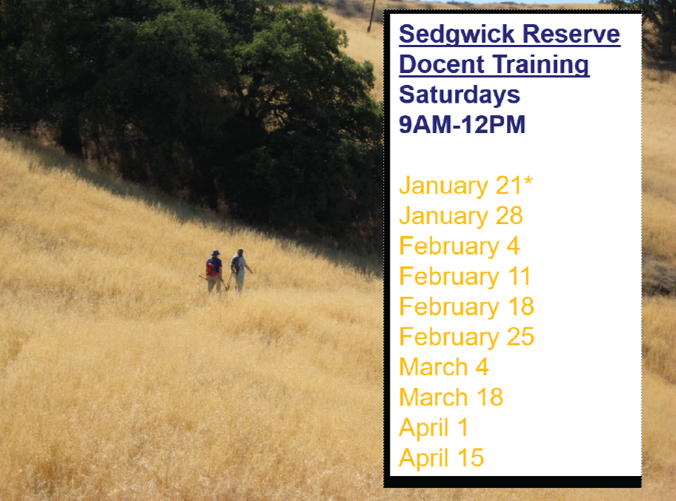
In 2023, Sedgwick Reserve will once again offer a training program to become a docent. Tell your friends and join us for this winter-spring program. Trainees learn from local experts on the natural, cultural, and scientific history of the Reserve and gain the tools needed to engage with the public. No prior experience is necessary.
| |
*January 21st will be the welcome session for the incoming class and the information session for those who would like to learn more about the training program | |
|
Events
Sedgwick Reserve Celebrated its 25th Anniversary in 2022
| |
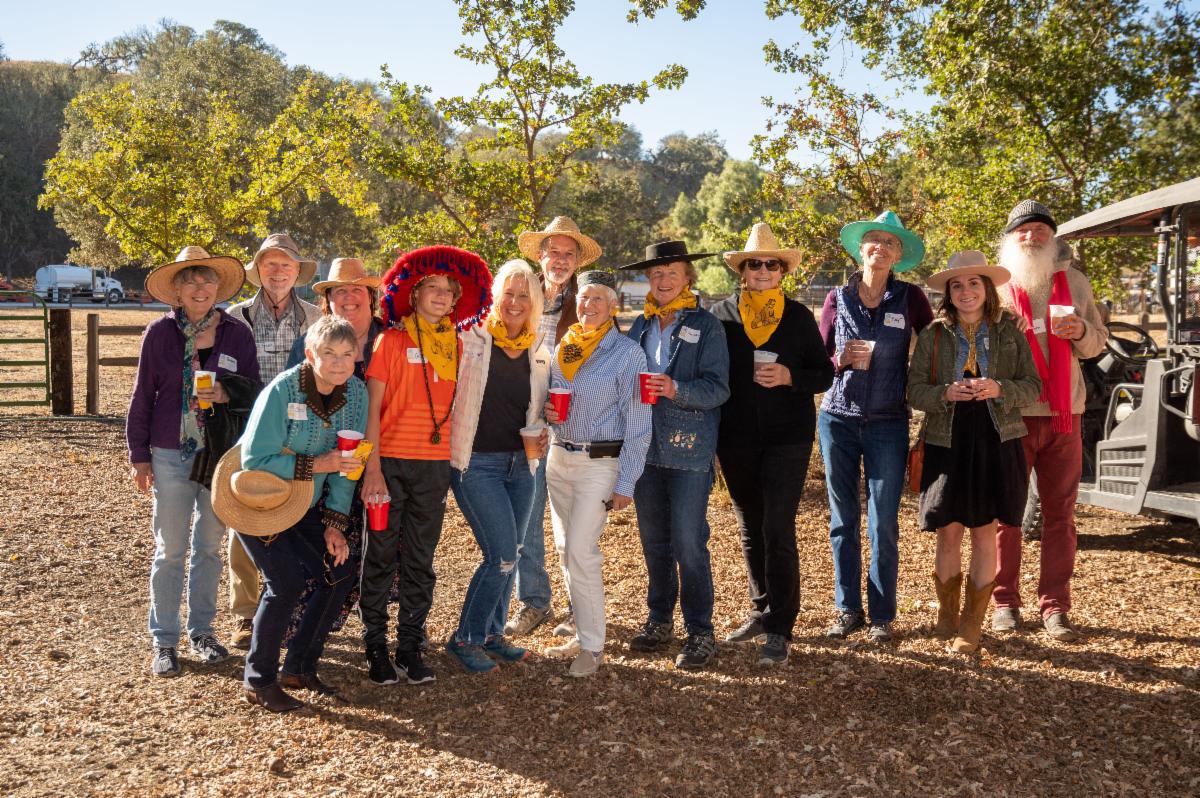
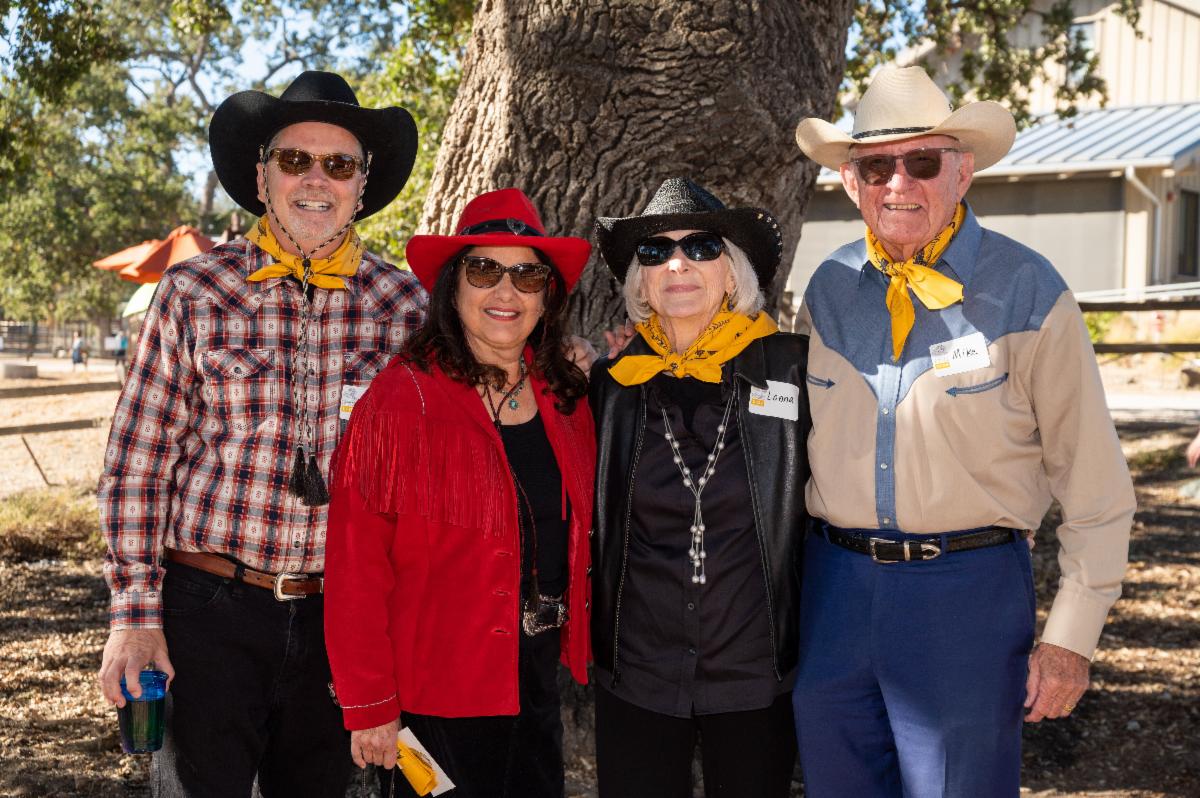
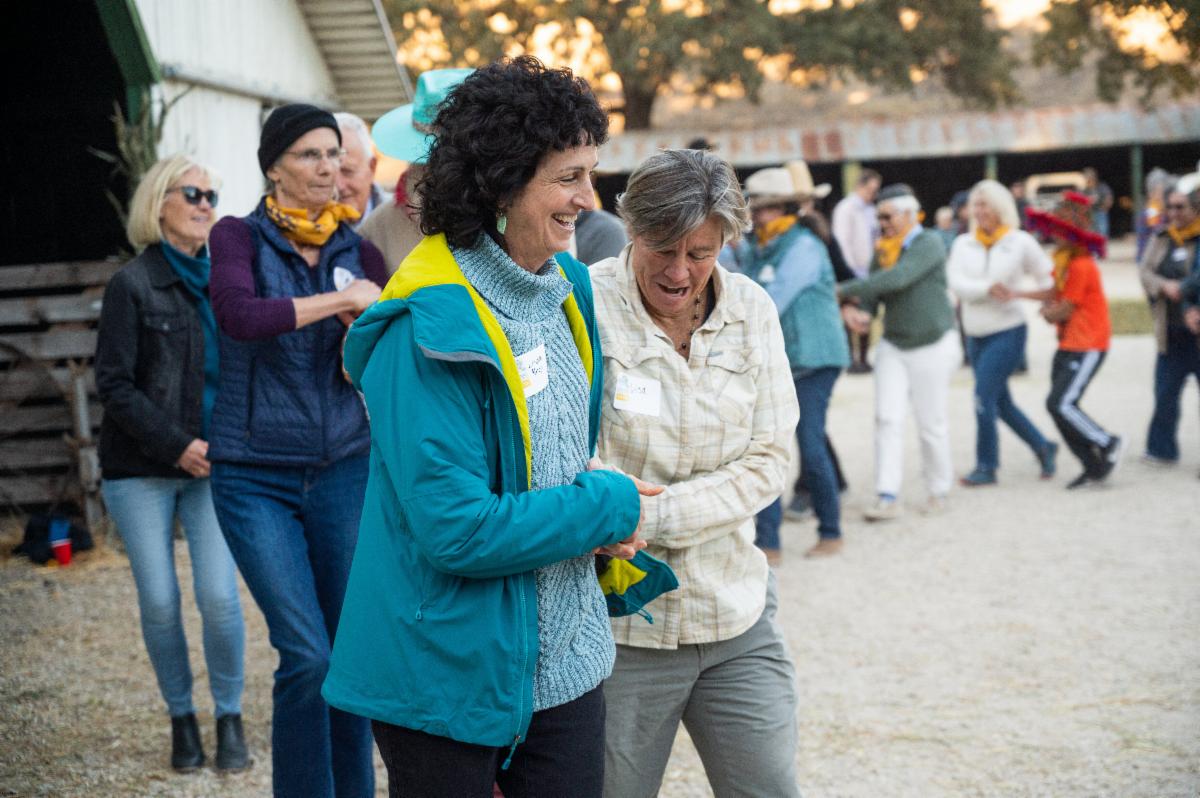
We would like to thank everyone who helped us celebrate Sedgwick Reserve's 25th Anniversary by attending the Barn Dance! It was a wonderful time to come together and appreciate the formation of Sedgwick Reserve as part of the University of California's Natural Reserve System. We wouldn't be here without you! | |
To learn more about the first 25 years as Sedgwick Reserve read the recent UCSB article by Keith Hamm, published in Edhat, and watch the 25th anniversary video, created by UCSB, using the links below. | |
|
Events
A Celebration of Art and Nature with S.C.A.P.E and the UCSB Natural Reserve System
| |
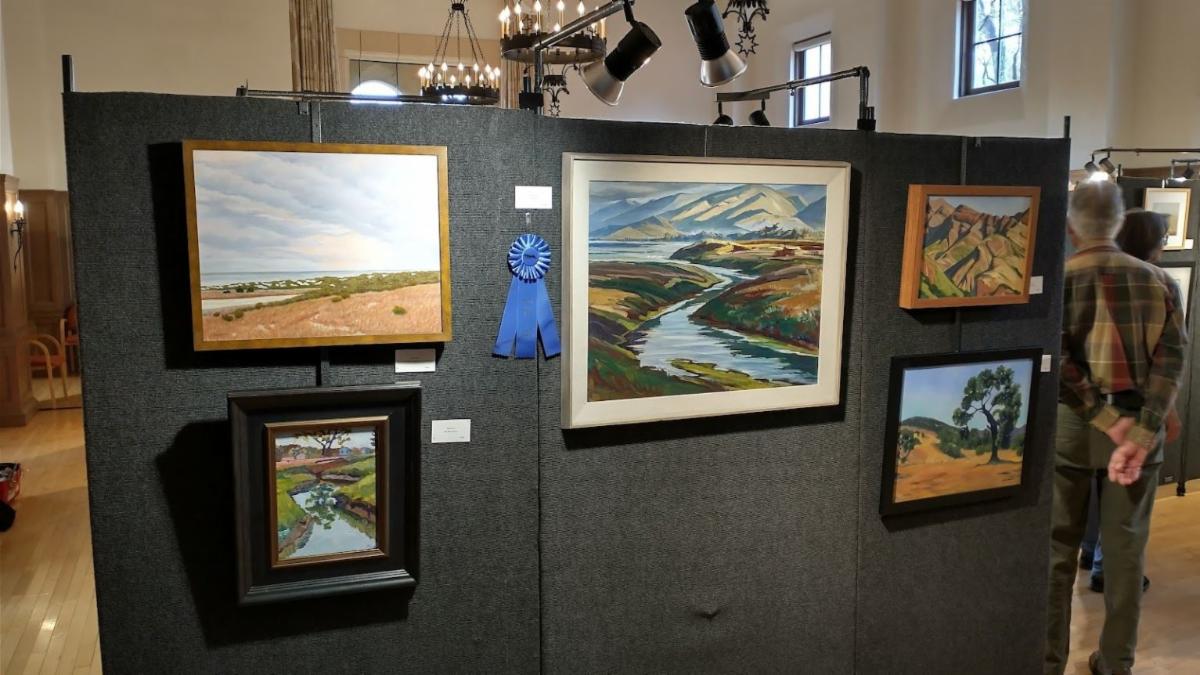
Art from the December show featuring UCSB's Natural Reserves | |
Southern California Artists Painting for the Environment (SCAPE) celebrated its 20th anniversary the weekend of December 3rd with an art show benefitting the UC Santa Barbara Natural Reserve System. This event, held at the Music Academy of the West, highlighted paintings featuring the diverse and beautiful landscapes of the seven UCSB reserves. Thank you to all of the artists who helped share the wonders of our natural reserves! | |
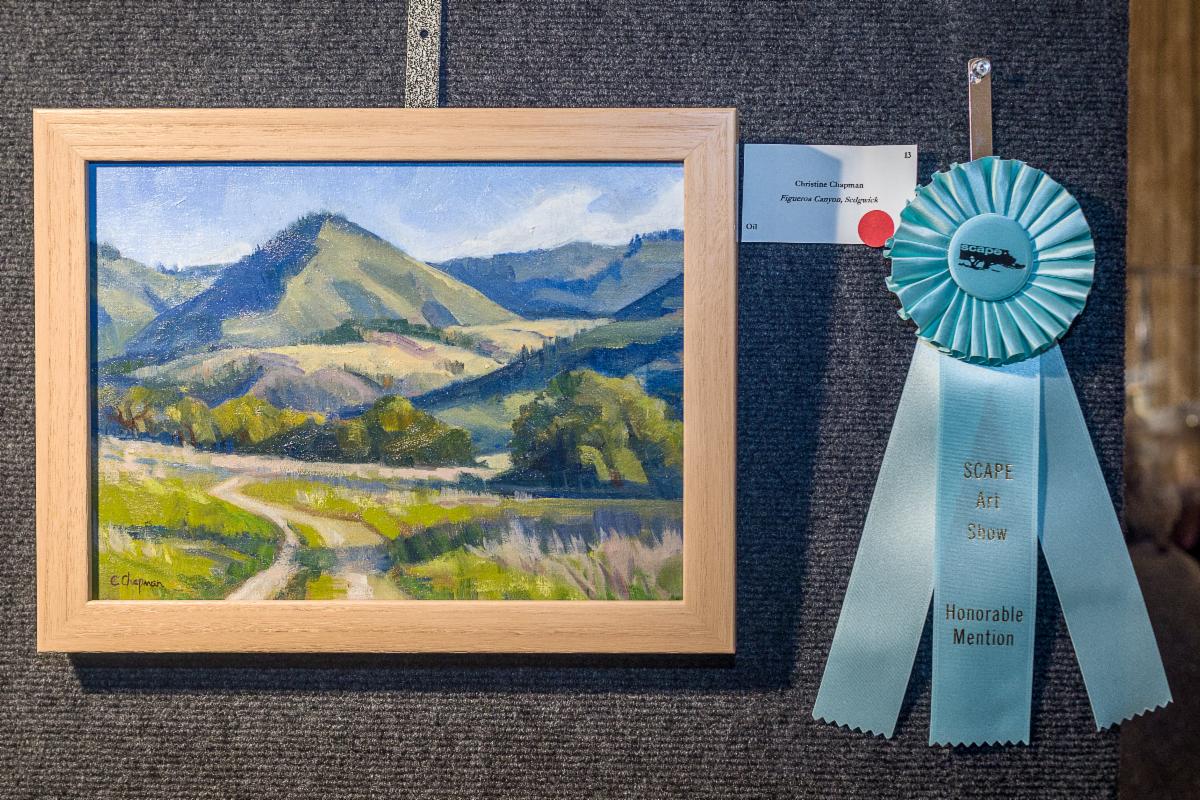
Chris Chapman's oil painting of Figueroa Canyon at Sedgwick Reserve. Photo Credit: Ken Pfeiffer | |
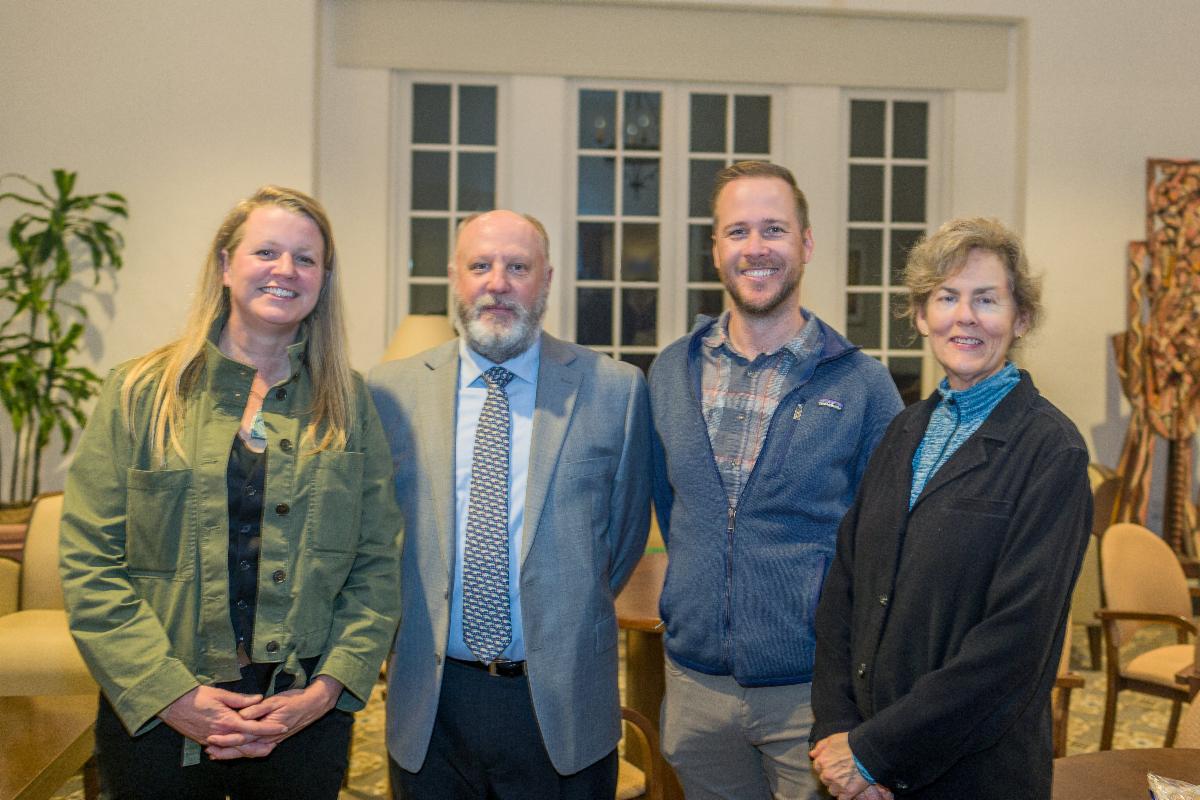
Left to right: UCSB NRS Executive Director, Marion Wittmann. Carpinteria Salt Marsh Director, Andy Brooks. Santa Cruz Island Reserve Director, Jay Reti. UCSB NRS Director, Trish Holden. Photo Credit: Ken Pfeiffer | |
|
An Opportunity to Support Research, Education, and Community Wildfire Preparedness
| |
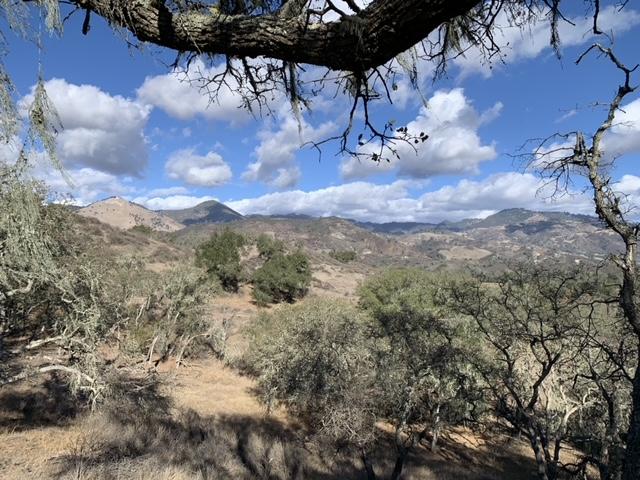 | |
We need your help to raise $50,000 to support Sedgwick Reserve!
A generous supporter has offered a matching challenge of $25,000 that will be unlocked if we raise an additional $25,000. These funds will be used to install an ALERTWildfire station at Sedgwick and to support wildfire preparedness, research, and education.
Sedgwick is collaborating with ALERTWildfire — a wildfire surveillance and monitoring program that helps firefighters and first responders enhance situational awareness and proactively detect potential fires in western states.
With your help, an ALERTWildfire station at Sedgwick will consist of a tower with a mounted camera that will continuously monitor the horizon for smoke and fires in the immediate surrounding areas. The Sedgwick system will be part of the broader ALERTWildfire network in western states, greatly enhancing firefighters' and first responders' monitoring and decision-making capabilities. In other areas of the state, ALERTWildfire has already provided critical information for over 1,000 fires and has been used to spot fires when they start, monitor fire behavior during containment, and observe contained fires for flare-ups.
Please consider making a gift and doubling your impact today. Donations will support the purchase and assembly of the camera monitoring system, installation, and operations costs, as well as fire preparedness efforts at the Reserve.
Your generosity will help ensure Sedgwick Reserve continues to be a landscape of excellence in science, education, and land stewardship. We extend our heartfelt thanks if you have already made your year-end gift.
| |
Sedgwick Reserve depends on the support of our donors to fund our docent program, support researchers, and offer community-focused public events. Your gift ensures our ability to continue supporting world-class research and education with global impact. Click here to support Sedgwick today!
| | | | |