Facebook  Twitter  Instagram  Youtube  
 

Monthly Newsletter

NBPTS has released results for all 2023-24 candidates, both initial and Maintenance of Certification (MOC), on December 7, 2024!


The National Board has some useful resources on the Score Release page for those receiving scores: 

CSTP Events at a Glance

CSTP News

WERD Book Studies: Registration is Still Open

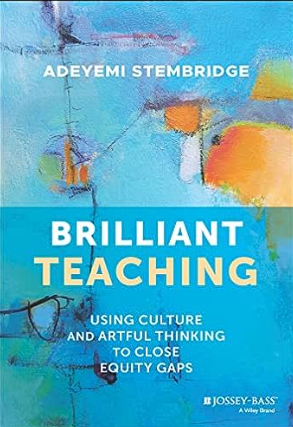
We're excited for you to join us as Dr. Adeyemi Stembridge facilitates studies of his book Brilliant Teaching.


We will be joined by the author at each weekly meeting, who will help facilitate learning and large-group discussions on this equity-based education book. In addition, participants will connect, discuss and reflect upon the book in small groups.These free book studies are open to all Washington paraeducators, teachers, principals, administrators, and ESAs. Registration is free, and each book study offers clock hours. See our website for more information.


Brilliant Teaching

  • January 9th: Preface & Chapter 1
  • January 16th: Chapter 2
  • January 23rd: Chapter 3 & 4
  • January 30th: Chapter 5, 6, 7 & 8
  • February 6th: Chapter 9 & Afterword


Register and learn more here.

CSTP's National Board Component 1 Support is Open for Registration

Registration is still open for Component 1 of our online cohort, which begins March 26, 2025


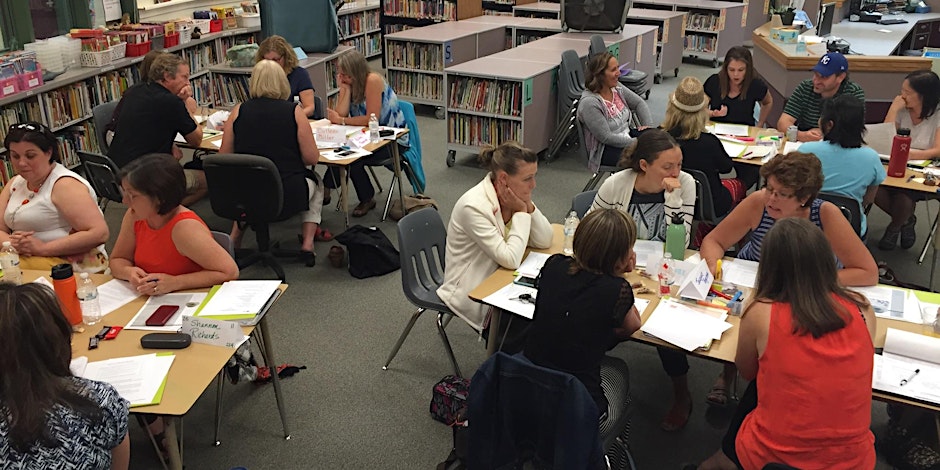
Online cohort: Facilitated by Ranice Innocent. This will be Ranice's 6th year facilitating and supporting National Board Candidates/Cohorts. Foundations and all four components will be offered, with 12 clock hours available for each section. Read more and register here.

Partner with CSTP to Offer Clock Hours at Your Next Training

Are you running a course, professional development or book study and want to offer Washington State clock hours? CSTP is an approved Washington State clock hour provider and can approve your courses for clock hours. It is free for the instructor to apply for the course with participants paying a nominal fee.


Learn More and Apply for Clock Hours

Career Connect WA

Career Connected Learning with CSTP

CCW is a statewide network of business, labor, education, and community leaders creating work-based and academic programs for young people in Washington to explore, prepare, and launch themselves into college and careers. CSTP is the designated Sector Lead for Education supporting this work at the state level. Here are our monthly updates.

Program Builder Application Updates


After the close of Round 13 for Career Connect Washington, we were thrilled to see that the Education Sector made up 10% of the applications for program builder funding this round, which is reflective of our growing momentum as a sector. This came as a result of collaboration with CCLCs and Regional Networks knowledge for programs to reach out to and invite to our series of Regional Gatherings, continued conversations with programs that are greatly suited to program builder goals, collecting data and feedback from the planning stages of our series of Regional Gatherings about leads and opportunities to make connections, and supporting prospective program builders by taking 1:1 meetings to hear about their programs and discuss where there is potential alignment in their mission and vision to the state sector strategy.


Here is a list of the programs that have continued into the next round of consideration for funding within the Education Sector! We are excited to support these programs and the impact that they could have for more accessible and equitable pathways to careers in education!


  • Washington Education Association Apprenticeship Teaching in Residency (Launch Expansion)
  • The Alliance for Education
  • Washington Education Association Apprenticeship Teaching in Residency (Launch New)
  • Educational Service District 123 (ELAP)
  • Washington Education Association Apprenticeship Teaching in Residency (Nakia Academy)
  • Washington Education Association Apprenticeship Teaching in Residency (CAMI)
  • Northwest Education Service District 189
  • Foundation for Academic Endeavors


If you are interested in learning more or have questions, please reach out directly to Saara Kamal at saara@cstp-wa.org.

National Board Updates

WEA National Board Certification Resources

National Board Information Session Series: Registration Now Open!


Audience: Certificated Educators. Our Certification Trainings are conducted online through Zoom, as a Member Benefit, free of charge to WEA Members only.


National Board Certification — Overview: Session 1 (2 Clock Hours)


National Board Certification — Standards & Process: Session 2  (2 Clock Hours)


National Board Certification — Support & Next Steps: Session 3 (2 Clock Hours)


See here for more trainings and details from WEA!

National Board Writing Webinars

Who: Any National Board candidate working toward National Board Certification in 2024-2025


What: These one-hour webinars are designed to support writing for the National Board portfolio. Candidates should expect to examine their own writing and work with peers on the selected topic. These sessions DO NOT replace cohorts nor conditional loan requirements.


When: Twice monthly, always Tuesdays, 4:30 PM-5:30 PM (choose Series B for upcoming dates).


See here for 2024-25 dates and registration.

Other News and Resources

Educator of the Year Update

As December is coming to a close, our cohort of the 2024-2025 Educators of the Year is finishing their participation in our Educator of the Year Leadership Series. The series offered our cohort the chance to engage more deeply with the constructs of CSTP's Teacher Leadership Framework and grow in their professional development as educational leaders.


The culminating artifact for this experience for our educators is the opportunity to share their expertise, amplify the stories of themselves and their students and communities, and shed light on things that folks who aren’t in education might not be aware of or to help others working within the education system to have a deeper understanding. These stories are also meant to be a source of inspiration for other educators and educational leaders to try things for themselves with their students and communities and advocate for our K-12 scholars and educators.


We'll be sharing our first story in the new year so make sure to keep an eye out. We'll leave you with this quote from Kim Broomer, Washington's 2025 Teacher of the Year: "Humanity is feeling and being moved to change, to question, to want to do better."


Hats off to these amazing educators!

WEA Professional Learning on Certification

Keep up-to-date with the latest educator certification changes in our state. Attend WEA Certification 101! Come find out the latest: Register for a WEA Educator Certification 101 course. 


Consider the next certification steps you will need to take. Learn about what you need to do for the new equity-based school practices certificate renewal requirement, STEM requirement, and suicide prevention training. Find out how to add an endorsement. Explore the basics of Professional Growth Plans (PGPs) for all educator roles. Review OSPI eCertification. WEA certification courses meet the Washington state certificate renewal requirement for leadership. 


Find out more: 

  • Questions on your individual certificate? Contact the OSPI Certification Office at (360) 725-6400 or cert@k12.wa.us 
  • Questions on WEA course registration and clock hours? Contact weapd@washingtonea.org
  • Questions on certification policy and practice? Contact WEA Certification Specialist Maren Johnson.

Share with Your Students

ReadyWA Student Storytellers: High School Summers

In her first story as a Ready WA Storyteller, Betül Demir shares how high school summers helped her discover passions, build skills, and connect with transformative opportunities. From flying high in aviation programs to balancing work, volunteering, and career exploration, she highlights the many ways a productive summer can pave the way for future success. Read the story here!

C-Step into Knowledge!

Join us for fun facts, obscure knowledge, and exploration of physics, genetics, etymology, art, and more!

Hues, Linguistically

When we make sets of things–a trilogy of books, or a collection of movies, or fun board game pieces–contrast is important. You may have noticed that some colors are more present in our entertainment goods than others–like red, or green, or blue, or white. It’s not impossible to have a game where everything is orange and purple–but why the discrepancy?


Objects appear to be certain colors because they reflect light of the corresponding wavelength into our eyes. But wavelength is just part of the story of how our brains interpret colors. Languages we speak and words we use can condition us to be quicker at differentiating colors.


The English language has one overarching word “blue” that encapsulates a large section of the visible spectrum. A color like cyan lies between green and blue. But to a brain that grew up with the rainbow of “red orange yellow green blue purple,” (give or take an indigo) “cyan” is often flattened as a concept into another shade of light blue.


Native speakers of several other European languages have more common words for very blue-blues and the lighter shades. Studies have shown that people who primarily speak Russian or Greek, for example, are faster at identifying similar shades of cyans than people who primarily speak languages like English and Spanish.


This advantage can be tenuous and disappear in people who move to countries where they flatten the blue concepts. In addition, anyone can train themselves to pick out minute details in color. An artist using paints every day, no matter the language they speak at home, will naturally be more practiced with picking out shades of all kinds. We have many words for colors–but your speed in identifying them comes partially from how commonly you use those words.


Linguists have identified a natural hierarchy of color words that arise in most languages. The first words that develop are those for black and white, the highest contrast; red follows that, then yellow, green, and blue. Languages further diverge from there, with different colors being added, emphasized, or lumped together.


This is why, in contexts where contrast is important, we instinctively fall towards those more linguistically basic colors. The more universal the building block of color concepts, the more likely it will work cross-culturally. If you were playing a game where all your pieces were different shades of teal and cyan and blue and you spoke English, you would have to work harder to differentiate all those blue hues. But with pieces that are blue and yellow and white, for example, that friction is much less likely.


All this to say, I will continue working on my cerulean/aquamarine/sapphire board game that I’m sure everyone in my life will love to play with me. Wait, no! Come back, everyone! It’s fun, and helps you develop your concepts of non-basic color ideas!


Support CSTP
Your gift ensures that CSTP continues to support student achievement through a focus on teaching excellence. With you as a partner in CSTP’s mission, you directly make a difference in the lives of youth across Washington State schools. Donations are tax deductible and essential as CSTP works to support educators navigate unique models of student engagement and teacher leadership.
Donate to CSTP
Follow Us
Facebook  Twitter  Instagram  Youtube  
Liking and sharing our posts on social media is another way you can support CSTP during these times. Thank you for sharing our message.
https://cstp-wa.org/ ● (253) 752-2082