CONGRATULATIONS, GRADUATES!
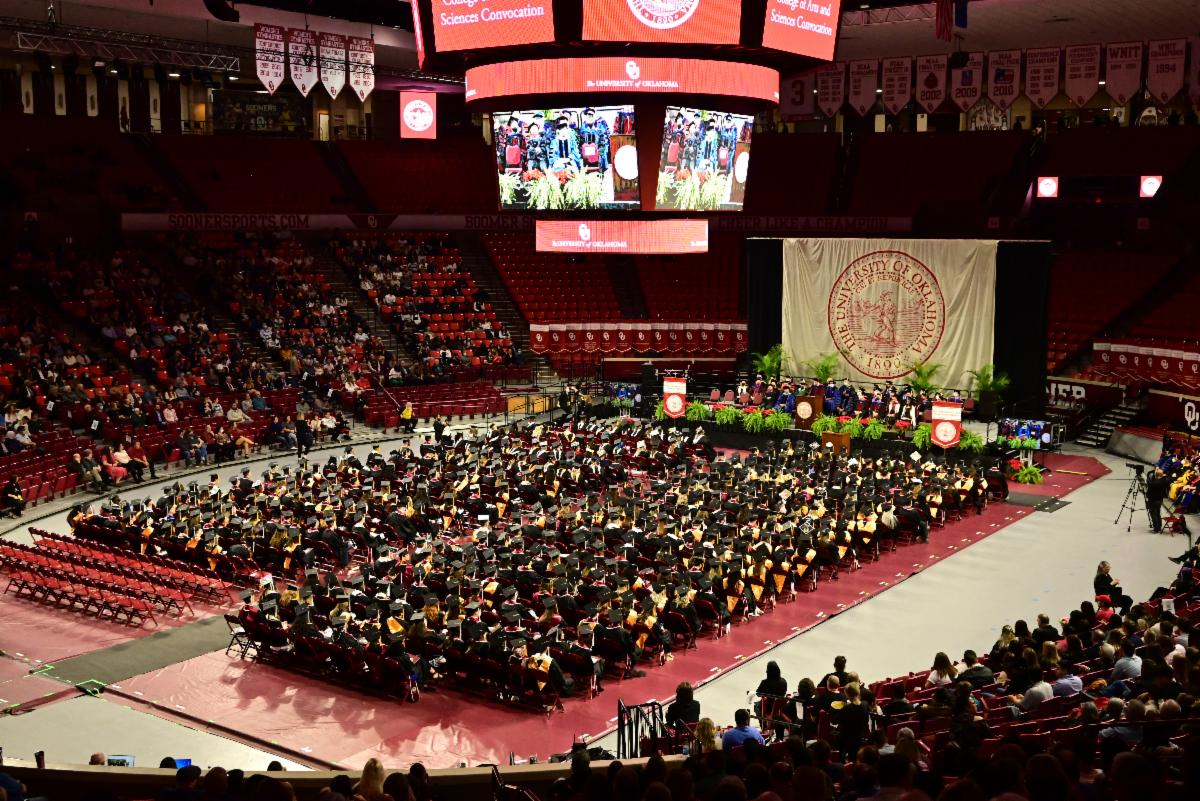
The University of Oklahoma Dodge Family College of Arts and Sciences celebrated the achievements of our graduating students at our winter convocation on Dec. 17. We appreciate all of those who attended our event and joined us online to joyfully acknowledge the accomplishments of our students. We also appreciate the time and efforts of our faculty and staff who were dedicated to creating a monumental event. A record 28% of our students graduated with distinction, special distinction or a 4.0 GPA. The college congratulates all our 2021 fall graduates on reaching this milestone in their lives. To see more photos from our ceremonies, visit the college Facebook page.
|
|
|
|
ETHAN MADDY AND KAMRYN YANCHICK HONORED AS OUTSTANDING SENIORS
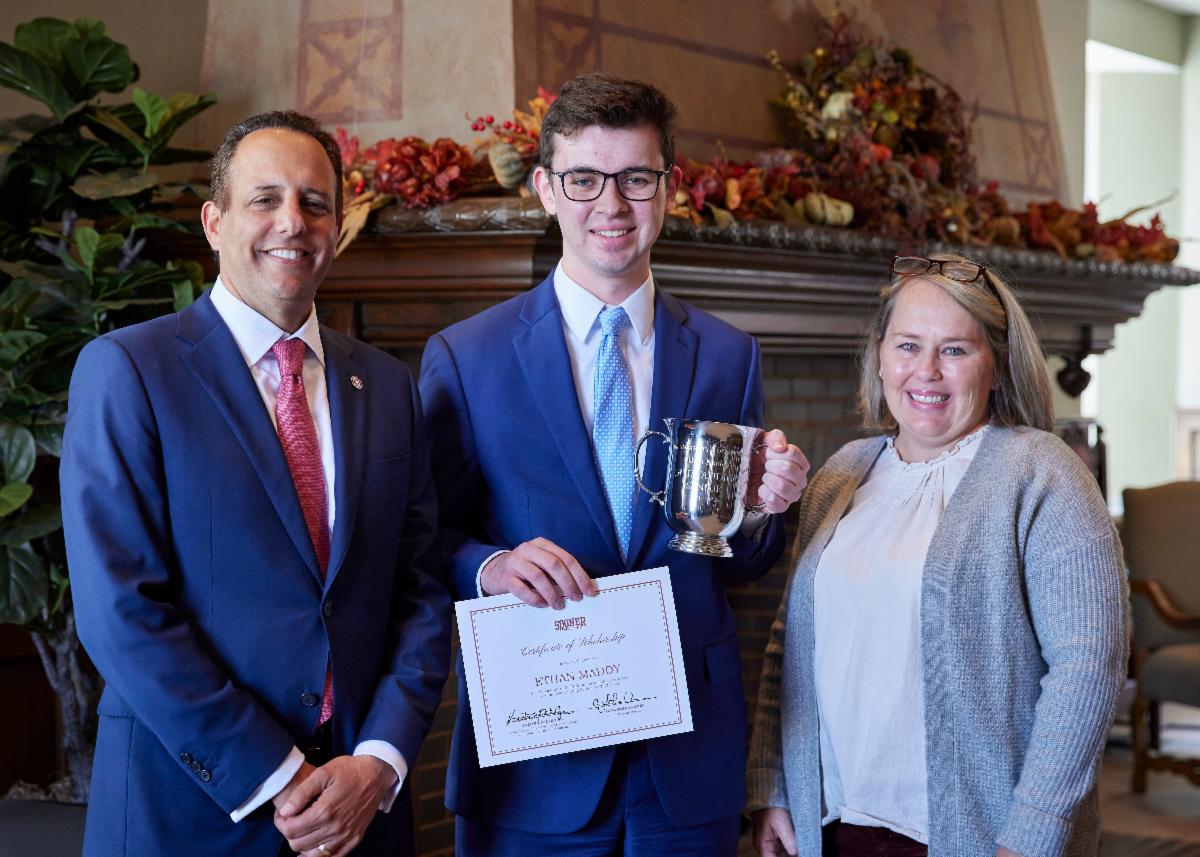
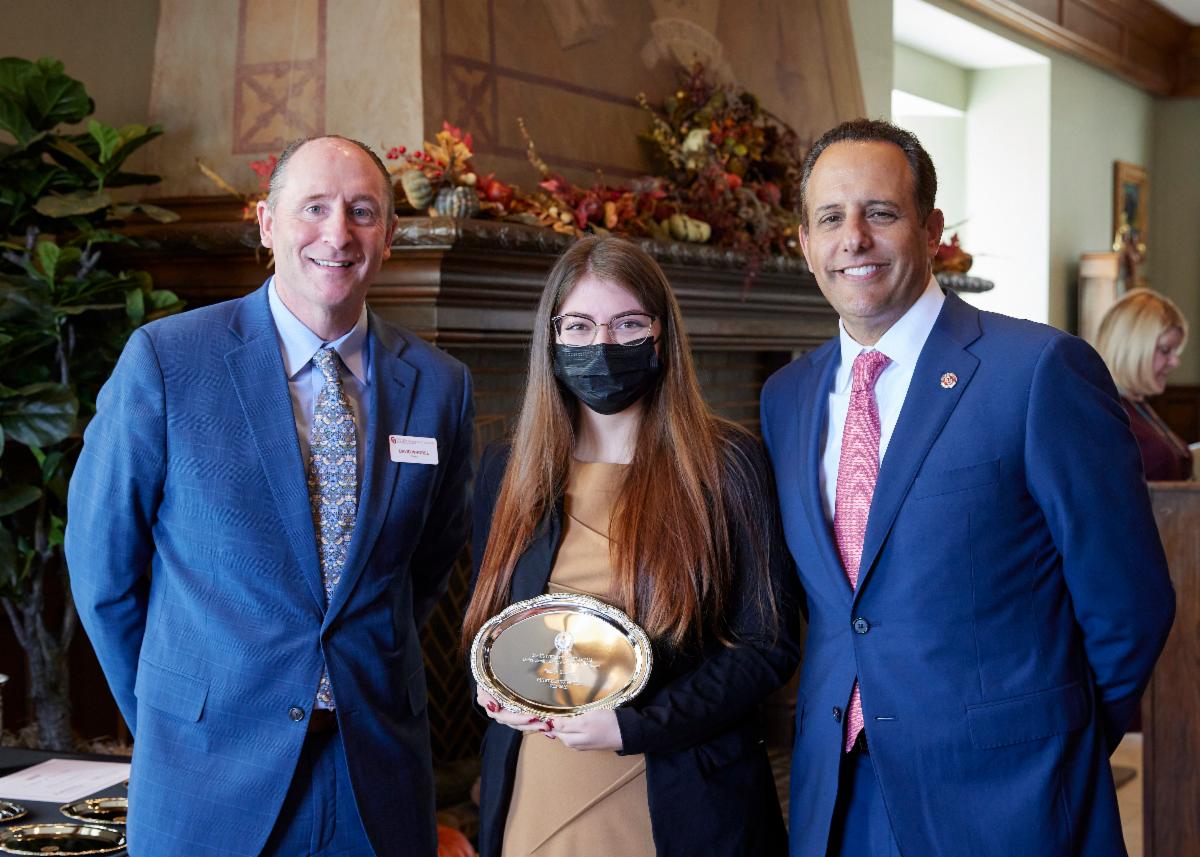
Sixteen students at the University of Oklahoma were recently honored as Outstanding Seniors for their achievements in scholarship, honors, awards, leadership and service. The college is proud to announce that this year we had the rare distinction of having the Overall Outstanding Senior for the university in addition to the Outstanding Senior in our college. The awards are presented each fall by Sooner Parents, and the group was recognized at an awards ceremony during which OU President Joseph Harroz Jr. and representatives from OU colleges presented each recipient their award. This year, Ethan Maddy (Oklahoma City) was named the Overall Outstanding Senior and Kamryn Yanchick (Edmond) was selected as the Outstanding Senior in the College of Arts and Sciences. READ MORE
|
|
FACULTY AND DEPARTMENT NEWS |
|
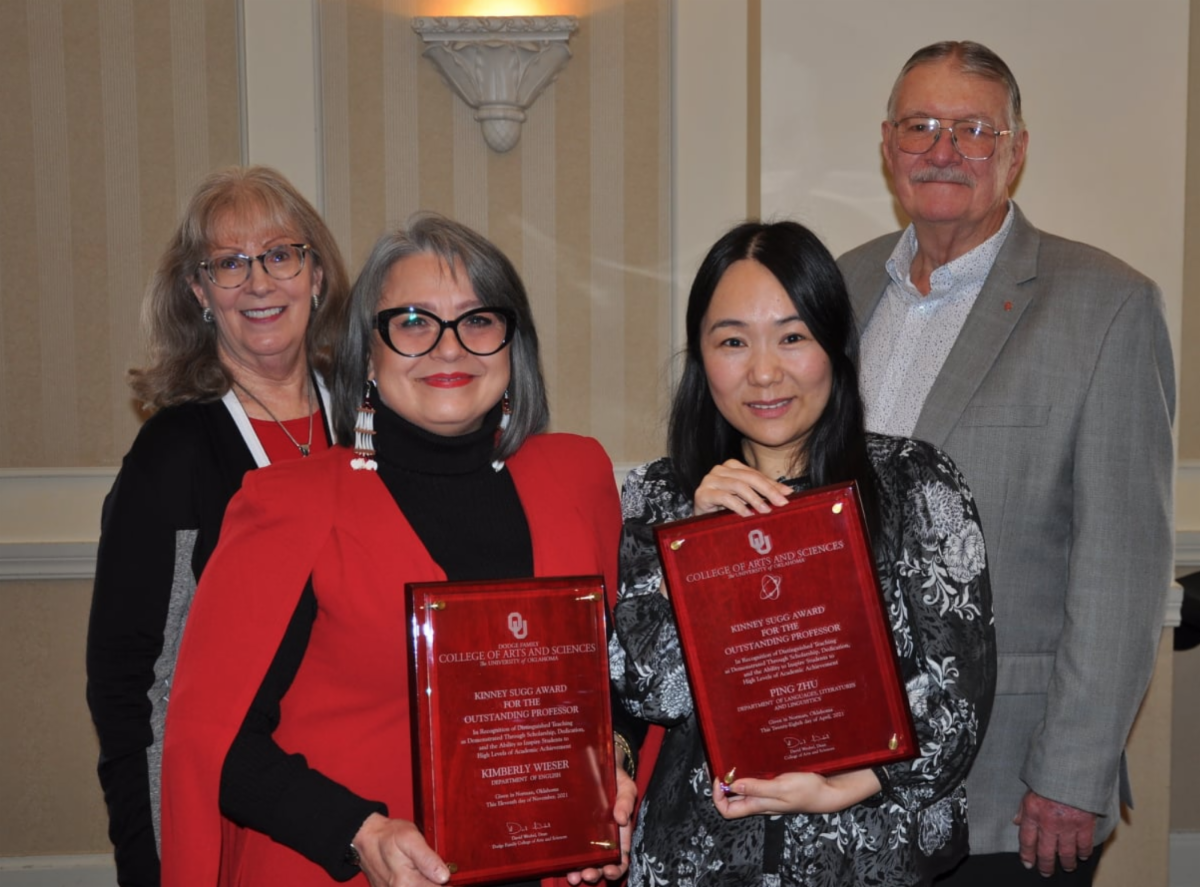
The Dodge Family College of Arts and Sciences congratulates the 19th and 20th recipients of the Kinney-Sugg Outstanding Professor Award. Ping Zhu (2020-21, Modern Languages, Literatures and Linguistics) and Kimberly Wieser (2021-22, English) were honored in November at a luncheon attended by Sandy Kinney, Mike Sugg and former award winners. Presented to model teachers, the award recognizes dedication, effectiveness and the ability to inspire students to high levels of achievement.
|
|
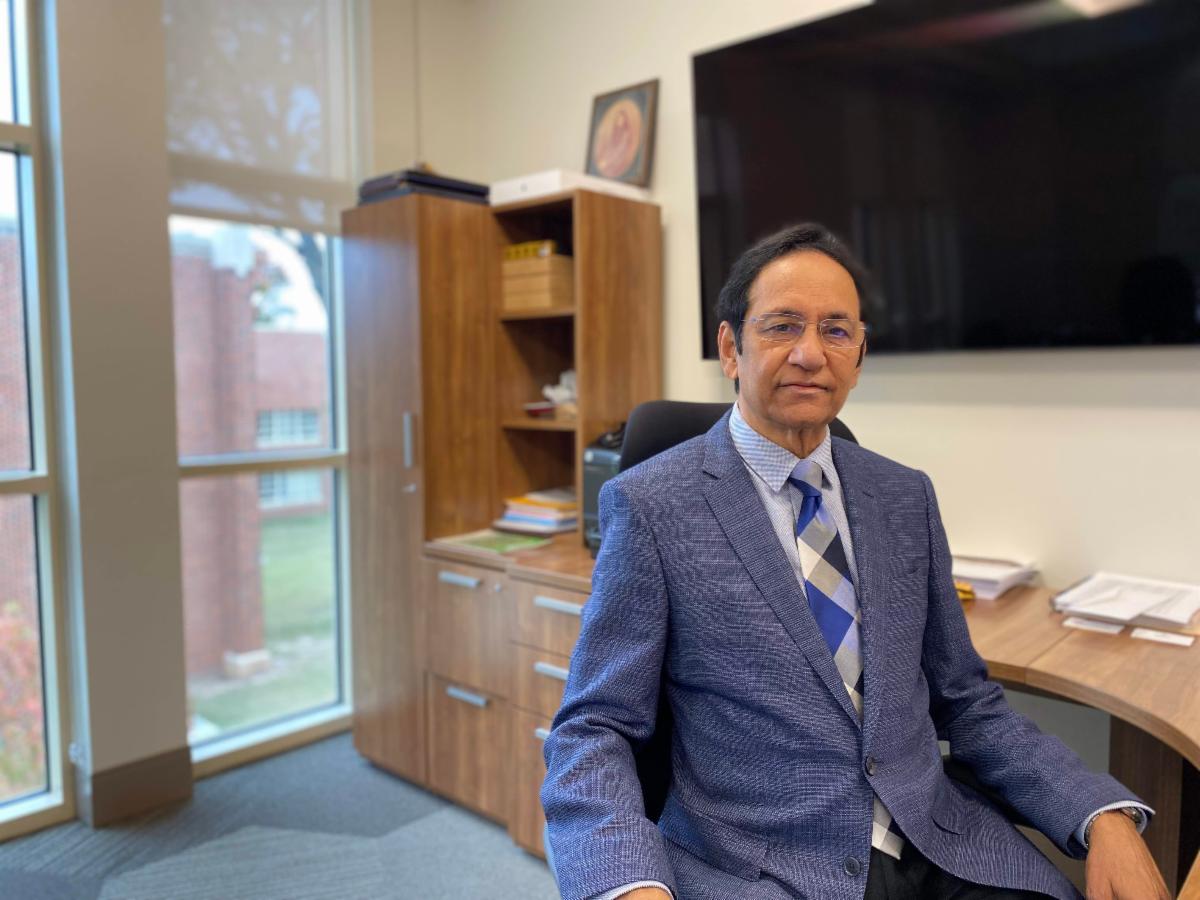
Thirumalai “Venky” Venkatesan has been named a fellow of the National Academy of Inventors. He is the director of the OU Center for Quantum Research and Technology. He also holds positions as a professor of physics and astronomy in the Homer L. Dodge Department of Astronomy and Astrophysics and as a professor of electrical and computer engineering in the Gallogly College of Engineering. Venkatesan, an internationally noted researcher in advanced technology innovation, joined OU in 2021. The inventor of the pulsed laser deposition process, he has filed for 46 patents and been issued 33. He has over 800 publications and has mentored hundreds of students. READ MORE
|
|
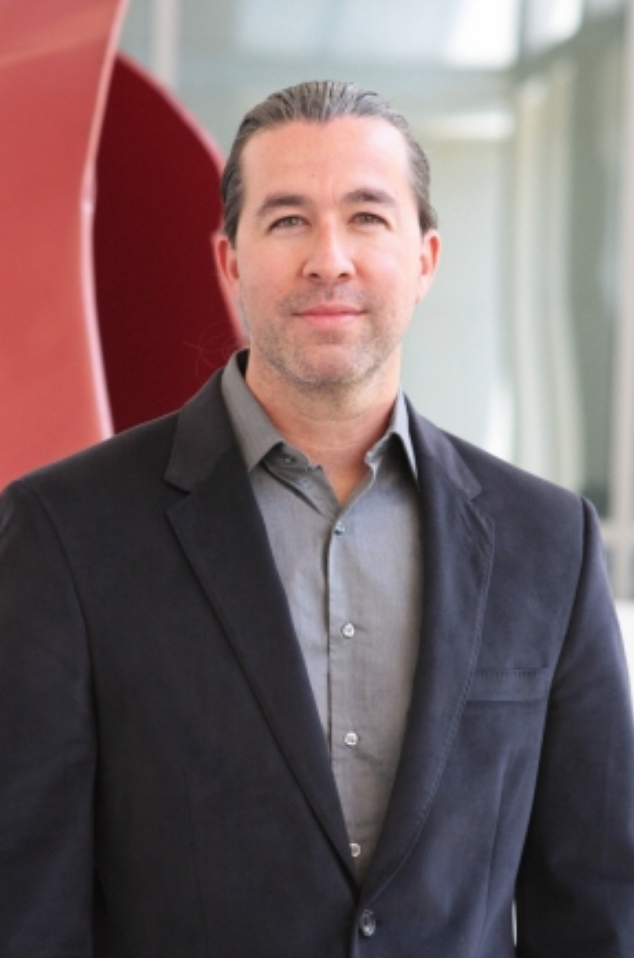
Dustin Tahmahkera, associate professor in the Department of Native American Studies, has won two awards for his short film 9-1-1 Comanchería: the Thomas Studi Award and the Playwriting in Excellence Award for best play at the Native Voices at the Autry’s 11th annual play festival in Los Angeles in November. 9-1-1 Comanchería is part of Tahmahkera's new
series-in-progress of what he calls "Comanche-[ec]Centric" plays for theatre and radio. Set in the 1970s on the night of a west Texas town's centennial celebration, the play stars a Comanche who calls 911 to report a robbery of his home. The operator was prepared to be one of the settler reenactors in the pageant, but the Comanche shares both a heartfelt and comedic story of commemoration over celebration that prompts the operator to reconsider her complicity, and performance, in colonialism. Through the proactive agency of the Comanche caller, 9-1-1 Comanchería challenges the audience to rethink history and to reconsider what constitutes an emergency on Indigenous homelands. Tahmahkera, who joined the OU faculty this summer, hopes to get more students and colleagues throughout the college and OU campus involved in the production of live Native Theatre as well as old-school radio theatre to perform for the community and across the airwaves. Click here to view the play, which begins at the 44:50 mark of the video.
|
|
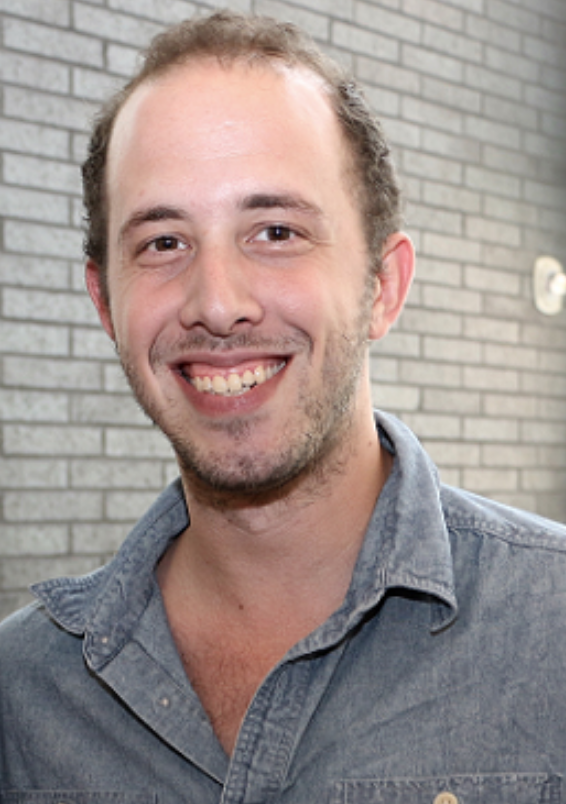
The college congratulates Daniel Becker, assistant professor of biology, who was among the group of researchers awarded $50,000 by the Research Corporation for Science Advancement and the U.S. Department of Agriculture in the first year of the Scialog Mitigating Zoonotic Threats initiative. The funded project will launch new research in the detection and mitigation of emerging animal-borne infectious diseases. Becker is a member of a team researching Zoonotic Implications of Host Genetics, Immunity, and Virome in Bats. READ MORE
|
|
Joseph M. Suflita, George Lynn Cross Research Professor Emeritus in the Department of Microbiology and Plant Biology, gave the prestigious 34th Annual Oliver H. Smith Lecture virtually on November 5. Each year, a professor is selected to give an annual memorial lecture to honor Oliver Smith’s memory. Suflita’s lecture recognized his long and productive career and was titled Contamination of the Environment and Advances in Microbial Ecology: It’s Like Déjà vu All Over Again. Suflita is recognized internationally for his research in biodegradation and bioremediation of important environmental pollutants. His work provided an understanding of the role of anaerobic microorganisms in the degradation of halogenated compounds and the anaerobic bioremediation of hydrocarbons. This research led to the recognition that complex anaerobic consortia that mineralize hydrocarbons can result in the formation of quantities of methane, something that is important for clean energy recovery and addressing global atmospheric emission issues. Smith started as a faculty member of the biology department at Marquette University in 1963 and continued there until his unexpected death in 1985. His research of Escherichia coli gained him international reputation as a productive scholar of first rank. He was appointed to national scientific committees and was a visiting scientist at the National Institutes of Health and the Pasteur Institute of Paris. He’s remembered as an excellent scientist and teacher and gave much of himself to the department of biology at Marquette.
|
|
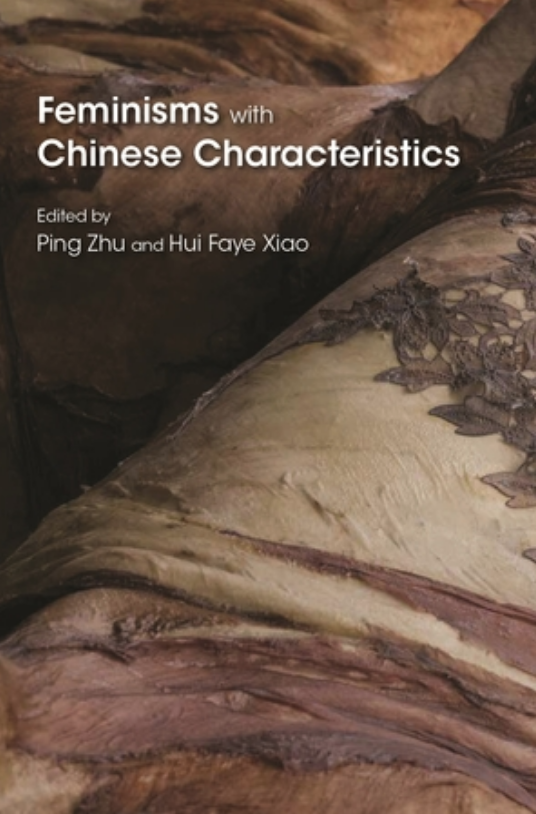
Associate professor of Chinese Literature Ping Zhu and her coauthor Hui Faye Xiao have just published their book, Feminisms with Chinese Characteristics. It includes 10 essays and two interviews that offer an examination of the ways in which Chinese feminist ideas have developed since the mid-1990s. The year 1995, when the Fourth World Conference on Women was held in Beijing, marks a historical milestone in the development of the Chinese feminist movement. In the decades that followed, three distinct trends emerged: first, there was a rise in feminist NGOs in mainland China and a surfacing of LGBTQ movements; second, social and economic developments nurtured new female agency, creating a vibrant, women-oriented cultural milieu in China; third, in response to ethnocentric Western feminism, some Chinese feminist scholars and activists recuperated the legacies of socialist China’s state feminism and gender policies in a new millennium. These trends have brought Chinese women unprecedented choices, resources, opportunities, pitfalls, challenges and even crises.
|
|
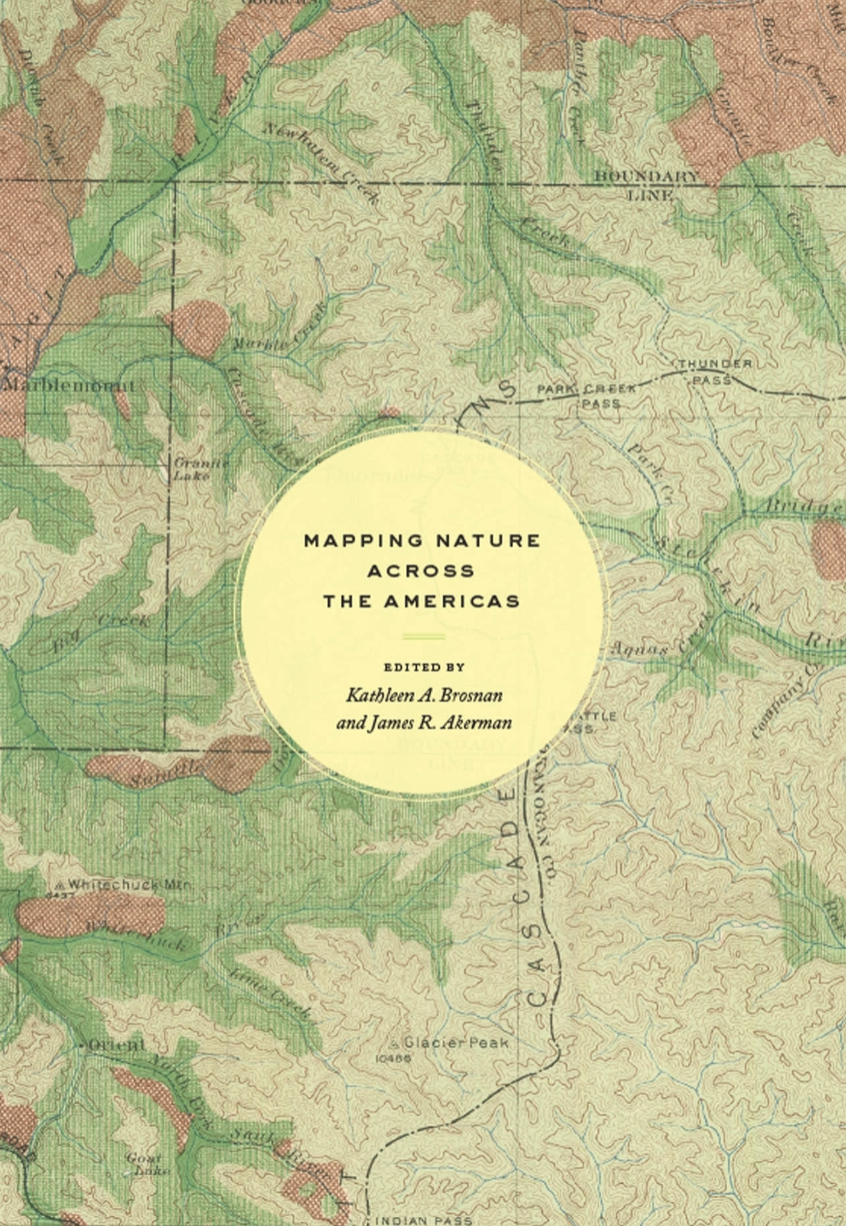
Associate professor of history Kathleen Brosnan has published Mapping Nature Across the Americas (University of Chicago Press). Maps are inherently unnatural. Projecting three-dimensional realities onto two-dimensional surfaces, they are abstractions that capture someone’s idea of what matters within a particular place; they require selections and omissions. These very characteristics, however, give maps their importance for understanding how humans have interacted with the natural world, and give historical maps, especially, the power to provide rich insights into the relationship between humans and nature over time. That is just what is achieved in Mapping Nature Across the Americas. Illustrated throughout, the essays in this book argue for greater analysis of historical maps in the field of environmental history, and for greater attention within the field of the history of cartography to the cultural constructions of nature contained within maps. This volume thus provides the first in-depth and interdisciplinary investigation of the relationship between maps and environmental knowledge in the Americas—including, for example, stories of indigenous cartography in Mexico, the allegorical presence of palm trees in maps of Argentina, the systemic mapping of U.S. forests and the scientific platting of Canada’s remote lands.
|
|
The college congratulates Jennifer Holland, associate professor in the Department of History, who has been honored with three prestigious awards from the Western History Association for her book, Tiny You: A Western History of the Anti-Abortion Movement. The book won the Armitage-Jameson Prize for best scholarly book in western women’s and gender history; the David J. Weber prize for the best non-fiction book in southwestern history; and the W. Turrentine Jackson Award for the best first book in the history of American West. Holland's work was recently the focus of an author spotlight by the University of California Press.
|
|
The Department of Human Relations was recently honored by Best Accredited Colleges in its 2021 rankings. OU was ranked second on the list of Best Master's Degrees in Human Resources. Developed with practicality in mind, the Master of Human Resources Studies not only focuses on assisting students in acquiring a comprehensive knowledge and understanding of HR – its breadth and depth, but also on fostering a learning experience that promotes critical application of the acquired knowledge to realworld HR scenarios.
|
|
STAFF SPOTLIGHT: MEET ANNETTE MEYERS
Annette Meyers is a new member of the OU family who joined the chemistry and biochemistry department as a financial coordinator and assistant to the chair in late October. Prior to coming to OU, Meyers spent 32 years at the Oklahoma Department of Transportation and three years in the private engineering sector and she owns her own business focusing on contract auditing. When COVID hit, she saw a decrease in her workload and began looking for new opportunities, which led her to OU
What attracted you to come work at OU?
Several things kept me coming to the OU website to check on employment opportunities. The openings for positions that dealt with numbers were always high on my list to apply for. As a construction project auditor for the state, my career in engineering was surrounded by numbers, and auditing numbers is my passion. I continually looked for those open positions and would apply. Another attraction was this university provided degrees for two of my children. One of them also played football for four years and was given the opportunity to work as a graduate assistant for football while he worked on his master’s degree. So, for me, it was an opportunity to give back to the university that gave so much to my children, and I can’t deny I highly enjoy the eight-minute commute.
Describe your day-to-day duties in your role.
My first day was Oct. 26, so my days have been filled with Zoom meetings, online training for various programs that I have oversight of, university guidelines, as well as safety for the research center. I am the financial coordinator and assistant to the chair for the chemistry and biochemistry department, so my responsibilities are providing administrative and financial support to the chair and the department; creating and managing budgets, including grants and endowments; approving research fund expenditures and purchases; and serving as the departmental liaison to the college dean’s office, shared business and other departments across the campus.
What is your favorite place on campus?
Oklahoma Memorial Stadium.
What are some hobbies you enjoy outside of working?
Taking cruises and travel in general. I enjoy trying new recipes in my kitchen and on the grill and I have a new passion of cooking with a sous vide. I try to spend as much time as I can with my grandchildren. I love to throw parties and entertain family and friends. I also enjoy decorating our home during various seasons of the year. I’m active in my church and sing in the choir.
What is something that you’d like for faculty, staff and students to know about you?
I love getting to know people and what you are passionate about. I love to laugh and share stories of experiences. I look forward to getting to know you!
|
|
OU RESEARCHERS TO LEAD PUBLIC-PRIVATE PARTNERSHIP AIDING OKLAHOMA MOTHERS STRUGGLING WITH SUBSTANCE USE DISORDERS
Researchers at the University of Oklahoma are leading an effort to strengthen families in Oklahoma by implementing the Parent-Child Assistance Program, an award-winning, evidence-informed program developed at the University of Washington School of Medicine that provides assistance to pregnant and parenting mothers struggling with addiction. Supporting the effort is a consortium of public and private funders, including the Arnall Community Fund at the Oklahoma City Community Foundation – which has awarded a $1.5 million gift to the OU Foundation to launch this project – along with additional support from Casey Family Programs, the Oklahoma Department of Human Services and the Oklahoma Department of Mental Health and Substance Abuse Services. Erin Maher, Ph.D., OU associate professor of sociology and associate research director for OU’s Data Institute for Societal Challenges, is the principal investigator and will lead the project. READ MORE
|
|
$88,354 — SPACE TELESCOPE SCIENCE INSTITUTE
GO-16263 DIAGNOSING A NEW SPECIES OF DUSTY DEBRIS: THE CHAMELEON DEBRIS DISK
Two new, potentially causally correlated, observational phenomena have recently been discovered in spatially resolved imagery of debris disks: outward moving features traveling at super-Keplerian velocities and changes in the color of the AU Mic debris disk. To date, these are the only moving structures and the only observed color change seen in spatially resolved debris disks! We will use the only observational facility capable of yielding high-fidelity optical coronagraphic spectroscopy of AU Mic’s disk, the Hubble Space Telescope, to: a) quantify color changes in the disk over a 2x greater time baseline (16 years) than previously achieved; b) determine whether the disk’s color continues to change as additional fast-moving features pass by; c) better quantify the size of dust grains whose spatial distribution has changed; and d) confirm and better quantify whether small grains populate small stellocentric distances.
$70,000 — NASA HEADQUARTERS
PULSATION AND DISKS OF BE STARS AS TRACERS OF STELLAR STRUCTURE, EVOLUTION, PULSATION-DRIVEN MASS LOSS, AND DISK PHYSICS
Classical Be stars are near-critically rotating massive stars that shed material from their photosphere into a circumstellar disk. Researchers will use high-precision photometric data from NASA's TESS mission, along with supporting ground-based spectroscopic observations, to quantify non-radial pulsations in a large sample of classical Be stars. By combining spectroscopic and photometric datasets, researchers aim to elucidate how pulsations influence disk-building mass-loss events in classical Be stars.
|
|
QINGGONG TANG – GALLOGLY COLLEGE OF ENGINEERING
$45,000 – STATE OF OKLAHOMA, CENTER FOR THE ADVANCEMENT OF SCIENCE AND TECHNOLOGY
CALCIUM IMAGING OF MULTIFUNCTIONAL AND BEHAVIORALLY SPECIALIZED SPINAL INTERNEURONS DURING SWIM, SCRATCH, AND FLEXION REFLEX MOTOR PATTERNS
The central nervous system — the brain and spinal cord — selects and generates movements without our even being aware of it. How does this happen? Researchers address this question using the turtle spinal cord, which can appropriately generate several kinds of coordinated leg movements even without input from the brain. In the past, we have monitored electrical signals of spinal cord nerve cells (neurons) one at a time and found that most neurons are multifunctional — activated during swimming and three types of scratching, and often during leg withdrawal as well. Some neurons, however, are behaviorally specialized — activated only during scratching or only during limb withdrawal. How do all these neurons work together to produce the right movement at the right time? In the new project, researchers will inject into the spinal cord a virus that contains the gene for a fluorescent indicator of calcium, which increases in neurons when they are activated, then view fluorescence of tens of neurons simultaneously while the spinal cord generates different behavioral outputs. This will show when and where spinal neurons are activated and how multifunctional and behaviorally specialized neurons combine to appropriately generate several kinds of natural, coordinated leg movements. Such insights are not yet available for any limbed vertebrate.
|
|
$64,602 – JOHN TEMPLETON FOUNDATION
ACADEMIC CROSS-TRAINING FELLOWSHIP: DIVINE HIDDENNESS IN CROSS-CULTURAL PERSPECTIVE
This is a continuation of a larger $212,000 grant that Professor Adam Green received before coming to the University of Oklahoma for interdisciplinary research in anthropology and the cognitive science of religion. This work examines the experience of religious disappointment and in particular divine absence and how such experiences may vary depending on the sociocultural context. In so doing, the project will make it possible to evolve the conversation about one of the most discussed topics in contemporary philosophy of religion, divine hiddenness, in a more global and empirically informed way.
|
|
Among the students graduating from the Dodge Family College of Arts and Sciences last week was Te’a Williams. Williams graduated with a dual degree in sociology with applied criminology and international studies and a minor in Spanish. She reflected on her path to graduation with Inside OU.
|
|
Thanks to efforts from the Carl Albert Congressional Research and Studies Center, the student-led coalition Oklahoma Votes, and the office of Student Affairs, the University of Oklahoma has won the ALL IN Campus Democracy Challenge's 2021 Best Action Plan Award for the Big 12. OU is a Presidential Signatory Campus for the ALL IN Campus Democracy Challenge and was awarded a silver seal for a student turnout rate of 63.5% in the 2020 presidential election. The university has also been named one of America’s Best Colleges for Student Voting and a Voter Friendly Campus. READ MORE
|
|
OU undergraduate history major Marley Lunsfield has been selected to be part of a panel titled Make Way for the Next Gen: Public History in Youth-Led Public Spaces, which has been accepted by the National Council on Public History annual conference programming committee for its May 2022 conference taking place in Montreal. The panel will focus on how young people today lead a dynamic conversation about history in new spaces, at the crossroads of consuming and creating information. Many of these creators have thousands of followers, conduct original research and tackle controversial topics, leading the public history field into new formats and audiences – often without the support of academic or cultural institutions. How might we all share this space, widen the orbit of public history to include this new generation of historians, and learn from their successes and ideas as a field?
|
|
Jan. 14
Deadline for academic units to submit to the dean’s office recommendations for reappointment or non-reappointment to a second year for tenure-track and ranked-renewable term faculty.
Jan. 17
Deadline to submit new undergraduate minors and changes to existing minors (using State Regent forms) to the dean’s office.
Jan. 18
Spring 2022 semester classes begin.
Jan. 25
Chairs and Directors meeting, 9 a.m.
Jan. 26
CASFAM Staff meeting, 9 a.m.
Jan. 28
Sabbatical leave applications for fall 2022 and spring 2023 (two-semester sabbatical) or fall 2022 only are due to the dean’s office.
|
|
If you have information or announcements for News & Updates, please submit to the College communication office.
|
|
|
|
|
|
|