|
What I Am Most Grateful For this Season – Turning Complexity to Clarity in the Healthcare System
I have been reflecting over the past years and history of HealthAdvocateX and the field of health advocacy as my term as Board Chair comes to a close at the end of the December. It has been nearly 15 years since Beth Droppert and I decided to start an organization to help support health advocates, patients, families and allied professions understand and practice health advocacy skills. During that time we have hosted conferences, Community Conversations, Webinars, Professional Case Reviews, Professional Networking, Movie Screenings live, in-person and virtually as we navigated unprecedented times with Covid-19, among other health system challenges. We developed and licensed public-facing presentations on medication management, how to be more effective in visiting the doctor, the difference between a patient and a participant and how to set up a volunteer health advocate program in senior communities.
HealthAdvocateX has grown over the years and Beth and I are so grateful to the HealthAdvocateX Board Members who stepping into lead in the New Year, including:
Malynnda Stewart, Board Chair
Amy Calder, Treasurer
Megan Landry, Secretary and Education Committee Chair
With the evolution of our organization, what I am most proud of is all the people who have known what to say, or what to ask and for all the advocates who have helped turn the confusion and complexity of the healthcare system into clarity. For all the advocates and families sharing their personal stories about how to turn what they didn’t know into what EVERYONE should know – thank you! I am so grateful to the HealthAdvocateX Community for developing Resources (including identifying advocates who specialize in different aspects of advocacy) so that our friends, loved ones and neighbors know who they can call on.
I am not a professional advocate, but I know from my work with HealthAdvocateX what questions to ask, how to feel more confident and when to find an advocate to help ME, my family or my friends. In the last two months I have used all this knowledge for friends, family and myself as I prepare for my own upcoming surgery. We can’t control everything, but knowledge (and connections to resources) is power.
This December, I am grateful to every advocate who turns complexity into compassion….who tirelessly work to help people make better choices and who pave the way for individuals to get the care they want and deserve.
Wishing you and your family a joyous, healthy holiday season!
And Here’s to YOUR good health,
Robin and the HealthAdvocateX Team
P.S. Our offices will be closed for the holidays while our Board and staff enjoy the season: December 23, 2025 – January 2, 2026.
| |
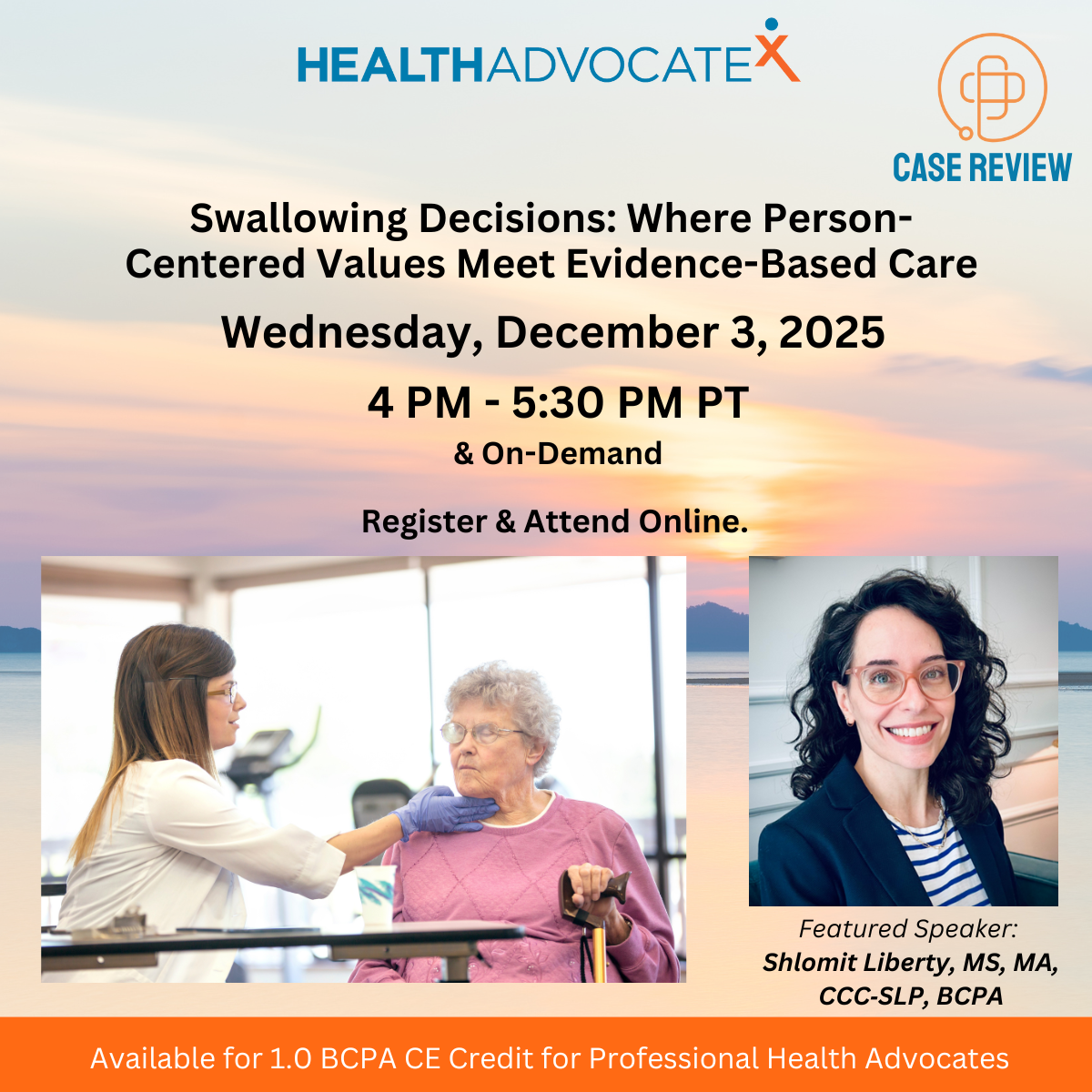
December 3 - Case Review - Swallowing Decisions: Where Person-Centered Values Meet Evidence-Based Care
REGISTER HERE
When: Dec 03, 2025 | 4 - 5:30 pm (PT)
Where: Online via Zoom
Cost: FREE to HealthAdvocateX Professional Members to attend. $15 for HealthAdvocateX Professional Members earning CE Credit; $40 for Professional Non-Members earning credit
Through real-life case studies, we will discuss the risks associated with common interventions for swallowing disorders. These include long term feeding tubes in the dementia population and use of thickened liquids without instrumental assessment. We will examine how to apply evidence and empathy while supporting others to make informed decisions around swallowing management.
Learning Objectives:
- Identify the limitations and potential risks of PEG tube placement and NPO orders in individuals with advanced dementia, and apply evidence-based guidelines to support advocacy for comfort-focused, person-centered care.
- Examine the clinical risks and common misconceptions surrounding the routine use of thickened liquids without instrumental swallowing assessments, and utilize current research to promote individualized, evidence-based dysphagia management.
- Demonstrate the ability to apply patient advocacy strategies (e.g., including shared decision-making, teach-back, and motivational interviewing) in simulated or real-world scenarios to improve communication with care teams and families, ensuring patient values and quality of life are prioritized in dysphagia-related decisions.
About The Speaker –
Shlomit Liberty, MS, MA, CCC‑SLP, BCPA owner of Patient Path NYC
Shlomit Liberty is a medical Speech-Language Pathologist turned Board-Certified Independent Patient Advocate. During her years as a healthcare provider, Shlomit specialized in the diagnosis and treatment of swallowing disorders. Her clinical expertise includes conducting instrumental swallowing evaluations using fluoroscopy and transnasal endoscopy to inform accurate diagnosis and guide treatment planning. She also co-created and presented a foundational training program on Fiberoptic Endoscopic Evaluation of Swallowing (FEES) with Dysphagia Evaluation Specialists. Today, Shlomit is the founder of Patient Path NYC, a service dedicated to managing inpatient hospital stays and discharge planning for clients. She is an avid public speaker and offers community education on topics related to navigating hospital stays as well as clinical topics in the field of Speech-Language Pathology.
| |
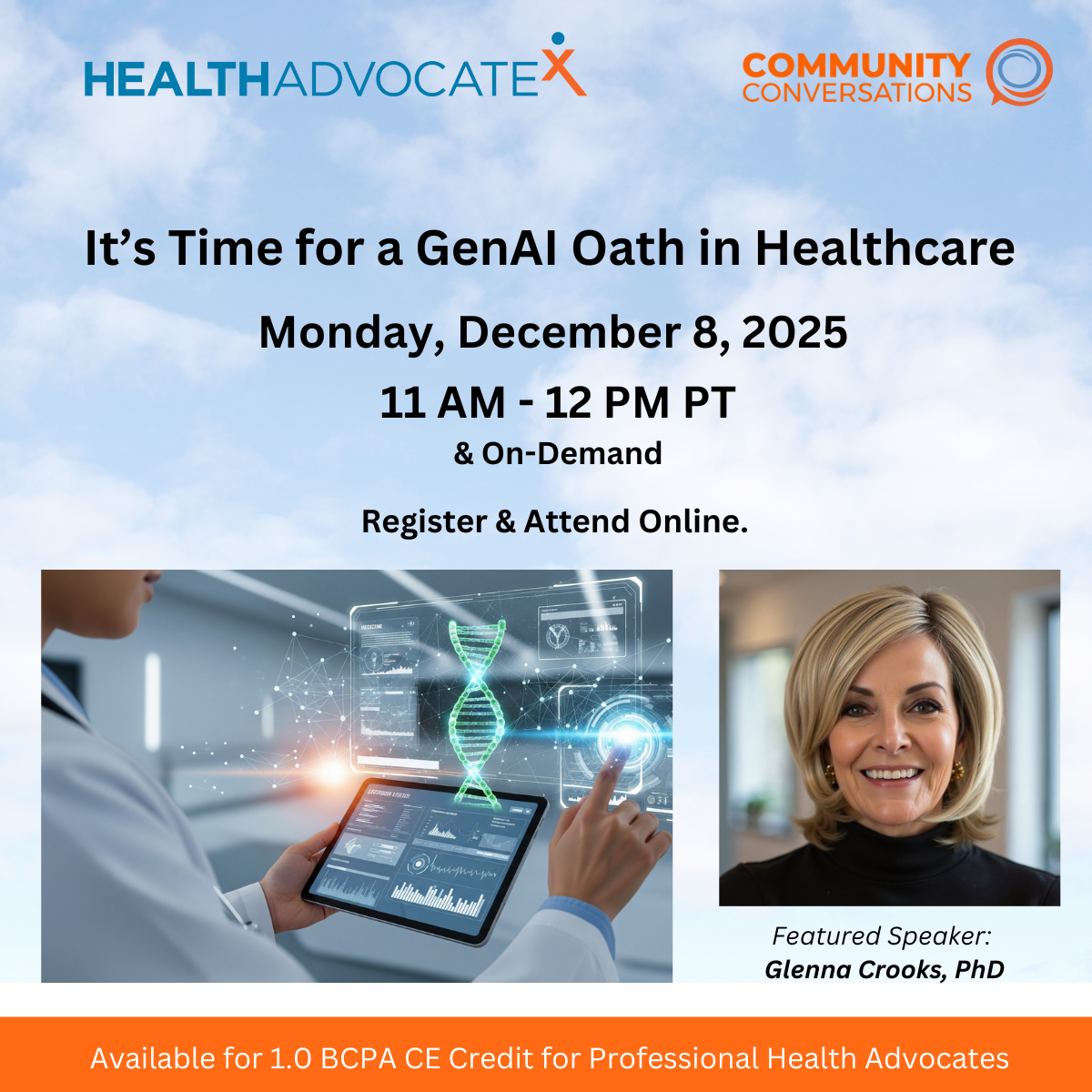
December 8 – Community Conversation - It’s Time for a GenAI Oath in Healthcare
REGISTER HERE
When: Dec 08, 2025 | 11am-12pm (PT)
Where: Online via Zoom
Cost: Free to the general public. Purchase 1.0 CE Credit for $10 for HealthAdvocateX Members; $30 for Non-Members.
This session provides an overview of the issues involved in integrating GenAI into healthcare. Because of its importance and the possibility of risks to patients, it argues that developers and users should take an oath similar to those taken by physicians. These issues are essential for advocates to understand and contemplate because GenAI is rapidly becoming ubiquitous in every aspect of healthcare.
Learning Objectives:
- Identify and describe at least three specific risks that GenAI poses to patients and explain how an oath-based approach addresses each risk.
- State the three essential components of an oath and the key difference between oaths and ethics statements.
- Assume your organization decides to draft an Oath tailored to its mission. List the elements you believe should be included.
About The Speaker –
Glenna Crooks, Ph.D., is a strategist, innovator, and trusted counsel to government and business leaders known for organizing chaos and solving complex problems. She was a government official, the global vice president of Merck’s Vaccine Business, and the founder of an international strategy firm. A graduate of Indiana University, she is a Fellow of the University of Pennsylvania Center for Neuroscience and Society and the Drexel University Center for Population Health and Community Involvement. She was Chairman of the National Commission on Rare Diseases, a member of the National Council of the Institute for Child Health and Human Development, and the Institute of Medicine Committee to advise the Department of Defense on bioterrorism/biowarfare countermeasures. She received the Congressional Exemplary Service Award for Orphan Products Development, the Surgeon General’s Medallion, the Marie Curie Award, and was named a Disruptive Woman to Watch. The Oath for GenAI in Healthcare is her third exploration of healthcare oaths. It follows two books and an Oath for Digital Health Games.
| | IN CASE YOU MISSED IT – FABULOUS CONTENT STILL AVAILABLE THROUGH OUR ON-DEMAND/ CLASSROOM | |
|
Community Conversation: Principal Illness Navigation & Principal Care Management Codes 101
ACCESS HERE
Discover the new Principal Illness Navigation (PIN) and Principal Care Management (PCM) codes, which now enable reimbursement for patient navigation services under Medicare. Dr. Morris will explain how these codes enhance care coordination for patients with serious or complex conditions, including cancer, and how community-based organizations and non-clinical navigators can participate through partnerships with billing providers. This session will also highlight training requirements, billing structures, and the broader movement toward equitable access to navigation services.
Learning Objectives:
- Understand the structure and purpose of PIN and PCM codes as tools for reimbursing patient navigation and care management services under Medicare and other payers.
- Learn how community-based organizations and non-clinical navigators can participate in delivering reimbursable services through partnerships with qualified billing providers.
- Identify the training, supervision, and documentation requirements necessary to implement these codes effectively and ensure compliance with CMS and AMA guidelines.
| | |
Explore Our Online Classroom
Did you miss one of our past events? Our online classroom is always open! Browse all courses, available for free viewing and for purchase with BCPA CE credit.
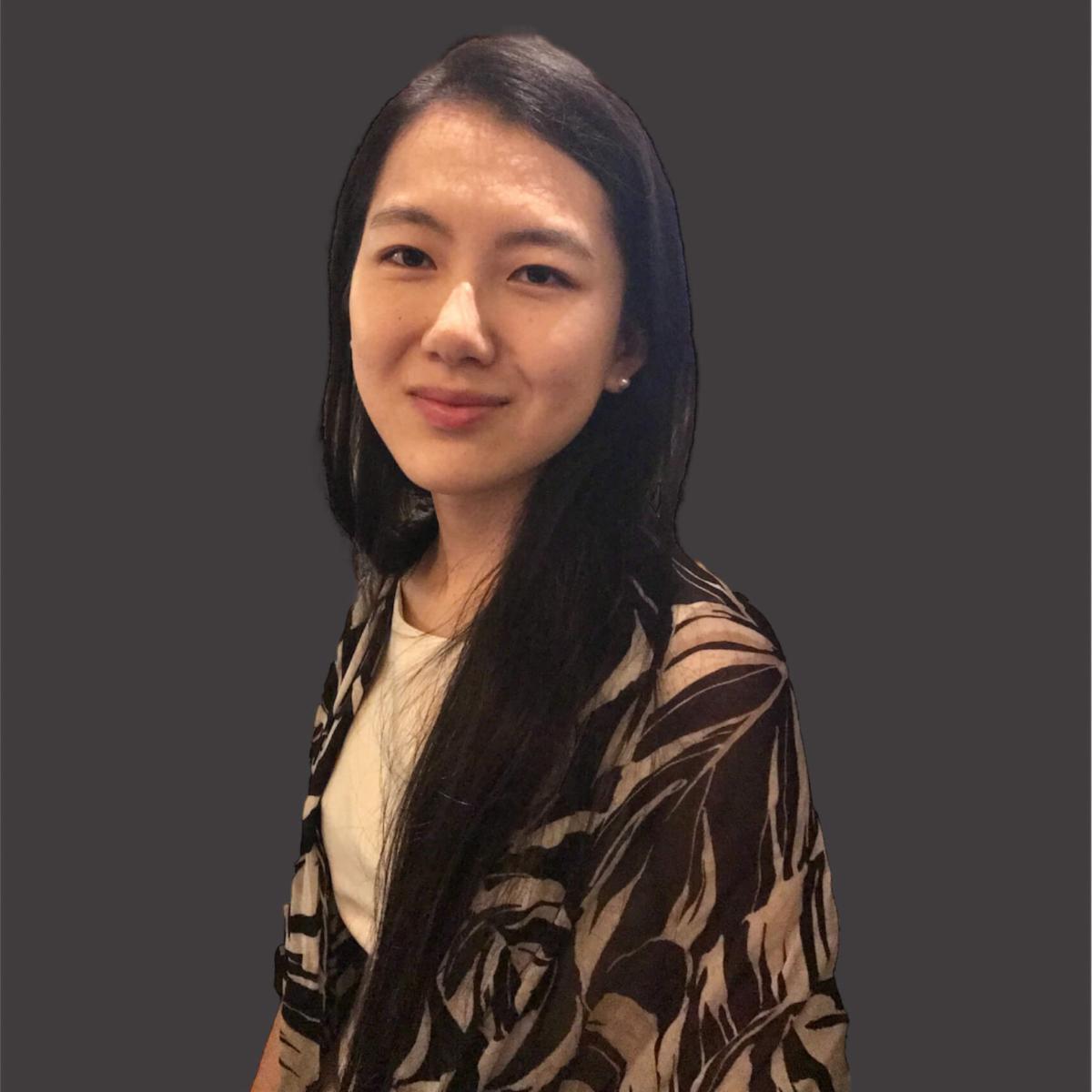
| | Honoring Our Retiring Board Members | | Thank you to Nick Iannarino and Ivy Sun, Our Retiring Board Members! We are so appreciative to Nick and Ivy, each who have served three years on our Board. Nick Iannarino, Associate Professor of Health Communications at University of Michigan-Dearborn, has led our intern program, contributed to our Education Committee and has participated by providing feedback and ideas to our Board. Ivy Sun, Product Manager at Meta, has served as our Treasurer and has been lead on our financial and operations functions overseen by the Board. As a working Board, our Directors are vital to the success of our organization. Please join us in thanking these outstanding individuals. | | Inclusion, Diversity, Equity and Access (IDEA) Statement | | |
OUR COMMITMENT
Approved by the Board September 21, 2022
Inclusion, Diversity, Equity and Access (IDEA) Statement
Our mission is to help people transform into active participants and partners in their own health care. To make this possible, we must advocate for inclusion, diversity, equity, and access (IDEA) for all individuals.
We recognize that:
- Racism is a public health issue that impacts various intersections and communities differently.
- Each person is unique and therefore experiences health care differently.
- Every individual deserves health advocacy regardless of their race, ethnicity, language, nationality, gender, sexual orientation, gender identity and expression, spiritual practice, financial status, education, geography, disability, mental and physical status, age, weight, substance use disorder or other factors.
- Our organization is uniquely positioned to raise awareness on IDEA in health and health care.
We are committed to:
- Raising awareness about the importance of IDEA in health and health advocacy in all aspects of care.
- Expanding diverse representation within our organization, expert presenters, and educational offerings.
- Intentionally messaging our values, sharing IDEA expectations for ourselves, affiliated advocates, and partnering groups.
- Creating space for respectful dialogue about representation, equitable access, and inclusive practices in health care and health advocacy.
- Educating our community and participating in opportunities about IDEA events and exercises to keep these issues in the forefront of our work.
- Implementing systems to ensure IDEA is pervasive in our organization.
We will reflect on our accomplishments with humility and grace. We will recognize our limitations and remain open to what we may not see or realize so that we can improve and or repair any harm.
| | |
HealthAdvocateX is headquartered in Seattle, Washington. We acknowledge that we are on the traditional land of the first people of Seattle, the Duwamish, Suquamish, Stillaguamish, and Muckleshoot People past and present, and honor with gratitude the land itself and each tribe. We invite you to join us in acknowledging and thanking indigenous people for their ongoing stewardship wherever you are located.
| |
Do you have something you would like to share with the HealthAdvocateX community?
| | | | |