|
The Association of American Cancer Institutes (AACI) connects over 100 academic cancer centers through collaboration and communication. There is strength in numbers, and we are better together.
Through the Defending Cancer Research Digest, AACI is keeping members informed and educating the public on the tangible benefits of research funded by the National Institutes of Health and National Cancer Institute.
Please read through these stories and share them widely on social media, through your institutions' communication channels, and in your communities. And continue to send us stories and videos from your cancer centers and local media, especially those featuring patients.
Follow AACI on social media and tag us in your posts. Please our hashtags, #DefendingCancerResearch and #CancerResearchSavesLives to help amplify our messages.
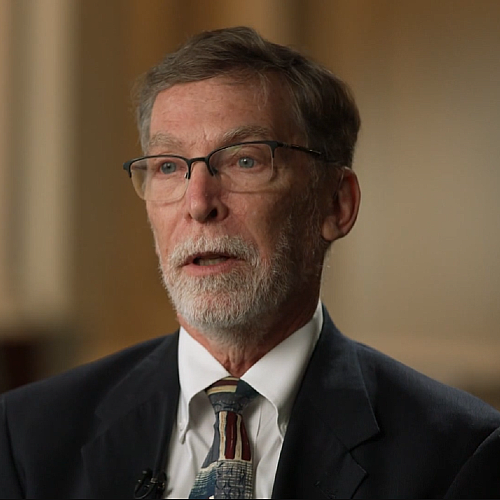
| | DEFENDING CANCER RESEARCH DIGEST | | Dr. George J. Weiner, filmed during the annual AACI/AACR visit to Capitol Hill, discusses cancer research funding with Ted Koppel on CBS Sunday Morning. | | |
CBS Sunday Morning Highlights 'Existential Crisis' for Cancer Research Funding
CBS News
In a June 29 segment, CBS Sunday Morning highlighted the devastating impacts of cancer research funding cuts. AACI Past President Dr. George J. Weiner, former director of the Holden Comprehensive Cancer Center, University of Iowa, and Dr. Elizabeth M. Jaffee, Sidney Kimmel Comprehensive Cancer Center at Johns Hopkins University, were interviewed. Read More
| | |
For Cancer Patients Like Lafayette Man With Thinning Options, Research Cuts Could Stunt Hope
Lafayette Journal and Courier
The White House’s 2026 budget proposal, released in full May 30 and undergoing deliberation ahead of an October 1 deadline, recommends a nearly $3 billion cut from the National Cancer Institute, 37 percent of its budget. “If that funding went away,” says Dr. Kelvin Lee, director of Indiana University's Simon Comprehensive Cancer Center, “we are very concerned that the long-term impact would be that we lose a complete generation of scientists.” Read More
| |
Kentucky's Campaign to Improve Rural Cancer Care is a National Model. Federal Cuts Threaten its Progress
STAT
There are vast and growing disparities in cancer care between urban and rural areas. Since 2006, as part of Kentucky's efforts to reduce cancer disparities, the UK Markey Cancer Center has been recruiting hospitals into an affiliate network. That work, and the state's success in improving rural cancer care, could be jeopardized by massive, impending cuts to the social safety net. Read More
| | Dr. Mark Evers, director of the UK Markey Cancer Center. Photo credit: Lee P. Thomas | | |
Today's Interview: Dr. Mark Evers on Federal Cuts and Kentucky Cancer Research
WEKU
The National Cancer Institute, under the Trump Administration, has terminated funds nationwide for research to fight cancer, expand care, and train new oncologists.
Dr. Mark Evers said the funding cuts would limit some of UK Markey Cancer Center's capabilities.
“Our ability to do cutting-edge clinical trials here at the Markey Cancer Center would be impacted, screening efforts that have been very effective over the past decade would be impacted as well.”
Listen to the Interview
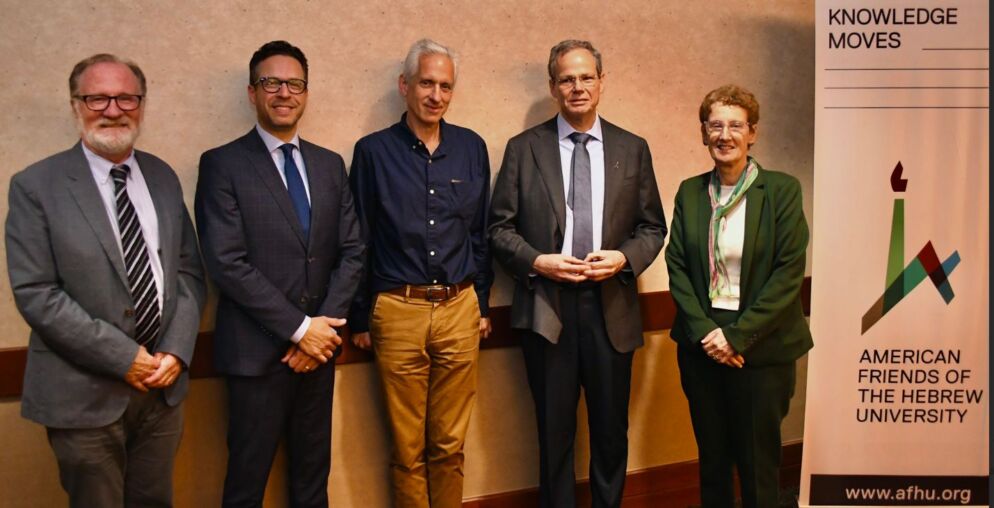
| | Members of Hebrew University of Jerusalem and Georgetown Lombardi Comprehensive Cancer Center. (Courtesy of Ari Packer, AJ Photography.) | | |
Georgetown, Hebrew Universities Partner to Fight Cancer
Washington Jewish Weekly
“Science and medicine and improvement of the human condition should not be influenced by geopolitical concerns,” Dr. Louis Weiner, director of Georgetown’s Lombardi Comprehensive Cancer Center, told Washington Jewish Week. “Cancer’s our common enemy.” Read More
| | |
The Association of American Cancer Institutes (AACI) commends U.S. Senator Katie Britt (R-AL), for
galvanizing the support of 13 Senate Republicans to advocate for the disbursement of appropriated
funds for the National Institutes of Health (NIH).
AACI also applauds Senators John Boozman (R-AR), Shelley Moore Capito (R-WV), Bill Cassidy (R-LA), Susan Collins (R-ME), Lindsey Graham (R-SC), Mitch McConnell (R-KY), Dave McCormick (R-PA), Jerry Moran (R-KS), Lisa Murkowski (R-AK), Tim Scott (R-SC), Dan Sullivan (R-AK), Thom Tillis (R-NC), and Todd Young (R-IN), who cosigned Senator Britt’s letter to the director of the White House Office of
Management and Budget.
In the letter, the senators requested the implementation of the Fiscal Year (FY) 2025 Full-Year
Continuing Appropriations and Extensions Act, signed into law earlier this year by President Trump,
which contains critical funding to support NIH initiatives across research areas, including cancer. Read the Full Statement
| | |
Since the passage of the National Cancer Act in 1971, Congress has demonstrated unwavering bipartisan support for cancer research. Americans have seen significant returns on these investments, including a reduction in deaths from cancer by 34 percent over the past 30 years. But the Fiscal Year 2026 federal budget proposal could erase decades of progress with the stroke of a pen.
The proposed budget would slash funding for the National Institutes of Health (NIH) by over 40 percent – from $47 billion to $26.7 billion. Continued reductions in force and the termination of numerous grants and contracts also threaten the National Cancer Institute (NCI) and the Cancer Centers Program, which have driven major advances in cancer screening, prevention, and treatment for over 50 years. These cuts will have disastrous consequences for the future of biomedical research, and for patients with cancer.
| | |
About AACI
The Association of American Cancer Institutes (AACI) represents over 100 premier academic and freestanding cancer centers in the United States and Canada. AACI is accelerating progress against cancer by enhancing the impact of academic cancer centers and promoting cancer health equity.
| | | | | |
PO Box 7317
Pittsburgh, PA 15213
412-647-6111
| | | | | |