|
Daily Transportation News
July 9, 2026
| | | Defending Innovation: The Future of Infrastructure at CCNY | |
|
Last week, the City College of New York (CCNY) Civil Engineering Department, along with Professor Camille Kamga, Director of the University Transportation Research Center (UTRC), highlighted the importance of sustained research funding for engineering education and infrastructure innovation. The department noted that students bring “unparalleled talent, drive, and a desire to build a better society,” but warned that when “critical research funding is abruptly halted, it is the students who feel it first.” Students lose access to the world-class, hands-on laboratory experiences they need to succeed.
The University emphasizes that investing in CCNY supports social mobility, prepares the future workforce, and helps shape the future of infrastructure. The engineering department encourages private donors and corporate partners to help bridge the funding gap and ensure students continue to lead.
Echoing that message, Matt Daus, IATR President and Transportation Technology Chair at the UTRC, stated, “The professors, students and our public and private institutional partners do not want to fall behind, and we will NOT let that happen. This is the time now for the private sector to support our research while we get through this rough funding patch we now temporarily face.”
Click Here to Support the Mission
| | The Real Impact of Autonomy Will Come from Buses | |
|
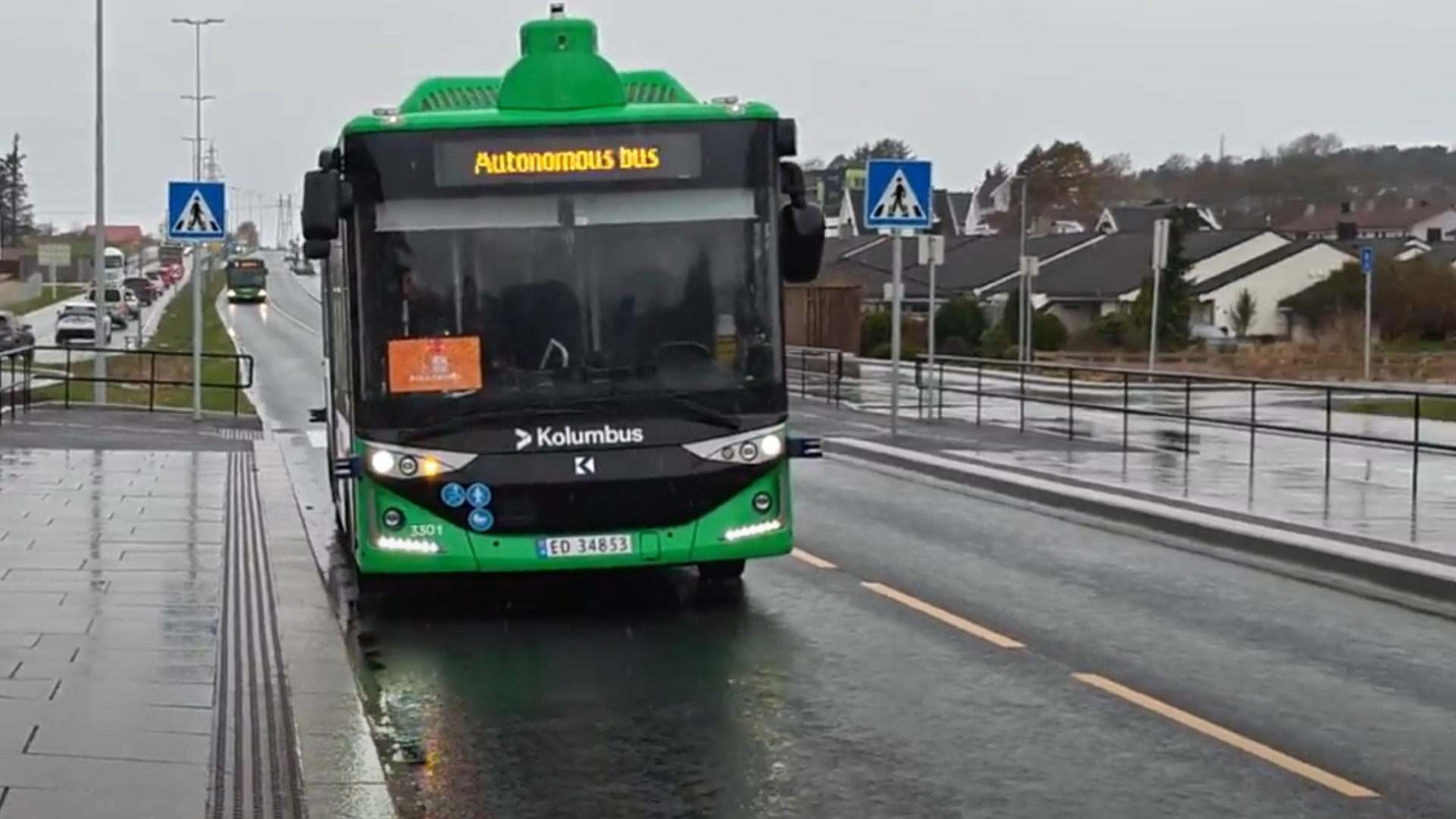
Public transit is the backbone of cities. In New York, buses carry around 1.3 million trips a day, more than ride-hailing and taxis combined at roughly one million. In London, the gap is even wider: about five million bus journeys versus approximately 0.6 million taxi and ride-hailing trips.
Yet most of the autonomous conversation still centers on cars. Partly because the commercial upside is obvious and near-term, and partly because cars are sexier. But it is buses that carry far more people, and that’s where autonomy will have the real impact.
Turning buses autonomous holds real advantages. The first is solving the driver shortage. In 2023, the Geneva-based International Road Transport Union (IRU) estimated that Europe was missing around 100,000 bus and coach drivers, equivalent to 10% of the total workforce. By 2028, that number could more than double.
Then comes the business case. Removing the driver changes the economics: lower operating costs; longer service hours, including extended nights and weekends, which raise vehicle utilisation; and smoother, more consistent driving, which can cut fuel and maintenance costs by at least 7%.
Source: The Driverless Digest
| | |
U.S. Border Patrol Warns Rideshare Drivers of Human Smuggling Risks
The U.S. Border Patrol El Paso Sector is warning rideshare drivers about the severe legal and physical dangers of being manipulated by transnational criminal organizations. Criminal smugglers utilize legitimate mobile apps to insulate themselves from law enforcement. They frequently use third-party accounts to arrange pickups in secluded desert locations, remote highway shoulders near the border wall, or commercial staging lots. The U.S. Border Patrol is urging rideshare drivers to look out for indicators of smuggling, including passengers wearing heavily soiled clothing, groups attempting to exceed vehicle occupant limits, third-party bookings where the account holder is absent, or passengers who appear visually stressed and unaware of their current location.
Click Here to Read More
Transportation Department Announces $1.73B Investment in Roads, Rail, Ports, and Transit Projects
U.S. Transportation Secretary Sean P. Duffy has announced an investment of $1.73 billion into 127 projects in 52 states, territories and the District of Columbia. From Alaska to Florida and Maine to Hawaii, the Trump Administration is delivering critical roadway, transit, rail, maritime, and aviation infrastructure improvements for American families and businesses.
Click Here to Read More
DOT Warns Autonomous Vehicles Must Safely Interact with First Responders
U.S. Department of Transportation’s National Highway Traffic Safety Administration (NHTSA) Administrator Jonathan Morrison has issued a public call to action to automated vehicle developers regarding a pattern of interference with first responders. The call to action builds on NHTSA’s continuing efforts to ensure safety while removing barriers to American innovation. In the last few months, the agency has slashed redundant red tape, hosted the first-ever National AV Safety Forum, and announced efforts to create safety standards for AVs.
Click Here to Read More
| |
Trans Mountain Reaches Toll Settlement with Oil Shippers after Prolonged Negotiations
Trans Mountain Corp. says it has reached a settlement agreement on tolls customers pay to use the Trans Mountain Pipeline. The Crown corporation said Tuesday it had filed a negotiated settlement with the Canada Energy Regulator that, if approved, would establish a long-term framework for tolls and services and more. It said the settlement would also increase the level of firm capacity on the system from 80 per cent to 90 per cent of nominal pipeline capacity. Trans Mountain said the settlement came after 18 months of extensive engagement and negotiations with shippers.
Click Here to Read More
World Cup Surge on the TTC: A Glimpse of How Much Busier Toronto Transit Got during Match Days
Toronto’s public transit recorded more than 1.1 million trips during the six days the city welcomed some of the world’s best soccer teams, the TTC posted on X on Tuesday. The 42 per cent increase from the same dates last year included trips on streetcars and buses along King, Dufferin, Bathurst, Ossington and the Harbourfront corridors to transport people to and from the major FIFA festivities downtown.
Click Here to Read More
Operators: Transport Canada Updates 5G Interference Risk Mitigations
Transport Canada (TC) recently issued new guidance on managing interference risk between 5G signals and aircraft radio altimeters (RadAlt). The update, published in Civil Aviation Safety Alert (CASA) No. 2026-08, follows a new, voluntary agreement between Canada’s major telecom service providers. Certain regulatory 5G spectrum mitigations – including reduced fundamental emissions power levels based on antenna uptilt above the horizon nationwide and exclusion/protection zones at 35 initially protected airports – were planned to sunset in January 2026.
Click Here to Read More
| |
Lyft to Acquire Serveo’s Bike Share Unit in Spain
Lyft Urban Solutions has announced plans to acquire Serveo’s bike share business in Spain this year in a deal that would majorly deepen the micromobility operator’s presence across the Atlantic. Subject to customary closing conditions, the deal would mark the first time that Lyft Urban Solutions operates bike share on both sides of the Atlantic, while taking its existing relationship with Serveo to the next level.
Click Here to Read More
Pikyrent and Invers Team Up on a Turnkey Car-Sharing Platform
Pikyrent has partnered with technology provider Invers to expand its B2B offering with a more comprehensive car-sharing platform for operators. A subsidiary of the Italian IT company Auriga, Pikyrent operates car-sharing and moped-sharing services across Bari, Turin and Milan. The company manages these shared services with its own platform called B2-Ride which can also be licensed by vehicle rental companies, municipalities, operators and other organisations to manage their own shared services.
Click Here to Read More
Port of Dover Faces ‘Utter Chaos’ under Struggling EU Entry System, MPs Say
Cross-Channel ferry passengers and the port of Dover face “utter chaos and miles of tailbacks” under the EU’s entry/exit system (EES) unless the technology is fixed or checks are suspended by next week, MPs have said. The home affairs select committee chair, Karen Bradley, urged the government to “apply maximum pressure” on the French authorities to act on the EES before peak holiday traffic arrives at the port. A minister said UK officials were pressing France to “prioritise flow” during the peak summer holiday period.
Click Here to Read More
| |
World’s First Commercial Vertiport Approved for Air Taxi Operations in Dubai
The world’s first commercial vertiport has been approved for eVTOL operations in Dubai. Officially registered as ‘VDX’, the vertiport has received regulatory certification from the General Civil Aviation Authority (GCAA) making it ready to host air taxis as soon as the aircraft themselves have regulatory approval to fly. Adjacent to Dubai International Airport, the vertiport includes two take-off and landing areas and is reported to accommodate 115 landings per day and up to 170,000 passengers annually once commercial operations begin.
Click Here to Read More
How AI Could Help Hong Kong Taxi Drivers Find Customers on the Streets
Hong Kong taxi drivers will be able to identify streets with high rider demand using a big data prediction model powered by artificial intelligence (AI) as soon as mid-2027, according to a cab payment start-up and a university that developed the system. The StreetSights system is the result of a collaboration between Dash and the Hong Kong University of Science and Technology, which said on Thursday that their interim research results were up to 90 per cent accurate in forecasting demand and supply.
Click Here to Read More
Cathay Pacific Aircraft’s Tail Hit Runway at Hong Kong Airport, Airline Confirms
Cathay Pacific Airways has confirmed that the tail of a passenger aircraft struck the runway at Hong Kong airport last week, prompting the city’s aviation regulator to order the airline to submit a report.
Click Here to Read More
| | Nexar and Nauto to Merge, Creating the Independent Infrastructure Platform for Physical AI | |
|
Nexar, the real-world intelligence platform for the Physical AI era, and Nauto, the leader in AI-powered safety and vehicle intelligence, today announced they have entered into a definitive agreement to merge. The transaction brings together two leaders in real-world driving intelligence, combining complementary AI models, datasets, technologies, and customer relationships. The result is the leading independent intelligence platform of record for how the physical world actually behaves while ensuring full privacy protection by anonymizing and de-identifying data. Zach Greenberger, Nexar's CEO, will be CEO of the combined company. Stefan Heck, Nauto's founder and CEO, will chair the combined board. Financial terms were not disclosed.
"By bringing together Nexar and Nauto, we are building the world's largest and most diverse independent foundation for real-world intelligence," said Greenberger. "For the first time, the organizations that build, deploy, and operate intelligent systems have a trusted, independent record of how the world actually behaves, not just how it has been simulated. That is what lets organizations ask the physical world questions and act on the answers."
Upon closing, the combined company will establish the industry's most reliable foundation for Physical AI. Its intelligence engine will be fueled by more than 300 million real-world miles captured every month across 50+ countries, representing over 10 billion miles of driving history. That scale, independent of any single manufacturer, powers intelligence that no simulation and no single company's dataset can match.
Every organization asks different questions of the physical world. Until now, they've had to answer many of them with incomplete information. For the developers building autonomous and intelligent systems, it now provides the independent real-world record their models depend on: the edge cases no lab has replicated and the ground truth no single manufacturer can supply. For the safety and operations leaders running fleets, cities, and infrastructure, it predicts and prevents what matters most before it becomes an incident and turns what happened into intelligence that improves every decision that follows. For insurers, it prices risk on what roads and drivers actually do, not on averages.
Existing customers will continue working with the teams, products, and support organizations they rely on today. What changes is the foundation underneath them. By bringing Nexar and Nauto together, customers gain access to deeper intelligence, more predictive AI, and a broader understanding of how the physical world behaves.
Source: TMCNet
| |
|
Message from IATR President Matthew W. Daus
At the International Association of Transportation Regulators (IATR), our regulators are at the forefront of addressing both the challenges and opportunities facing the mobility paradigm. Our IATR members, partner organizations, and regulated industries will continue on our shared quest to fulfill the mission of our non-profit educational organization - to bring about Multi-Modal Mobility Innovation for All! This mission can best be accomplished through information sharing, collaboration, identifying and promoting best practices, and educating our membership. These educational updates and electronic media clips are affectionately known as “IATR snips” and endeavor to cover all aspects of mobility around the globe - especially news and developments involving safety, technology innovation, multi-modal integration, automation, sustainability, electrification, accessibility, regulatory modernization, and equity.
If you would like more information about the IATR, you can visit our website at www.iatr.global. Current members can renew their memberships when you log in to your IATR portal on the top right-hand side of our website, or click here. If you forgot your membership password, please email our Membership Director, Eric Richardson, at erichardson@iatr.global.
| | | | | |
|
RENEW YOUR MEMBERSHIP FOR 2026:
Weekly news snippets
Access to the membership database
Videos and files from recent conferences
Discounted rates for future conferences, and more!
Renew your membership at http://www.iatr.global or email info@iatr.global for any questions!
| | | | |