|
FROM THE ARTIST DIRECTORY
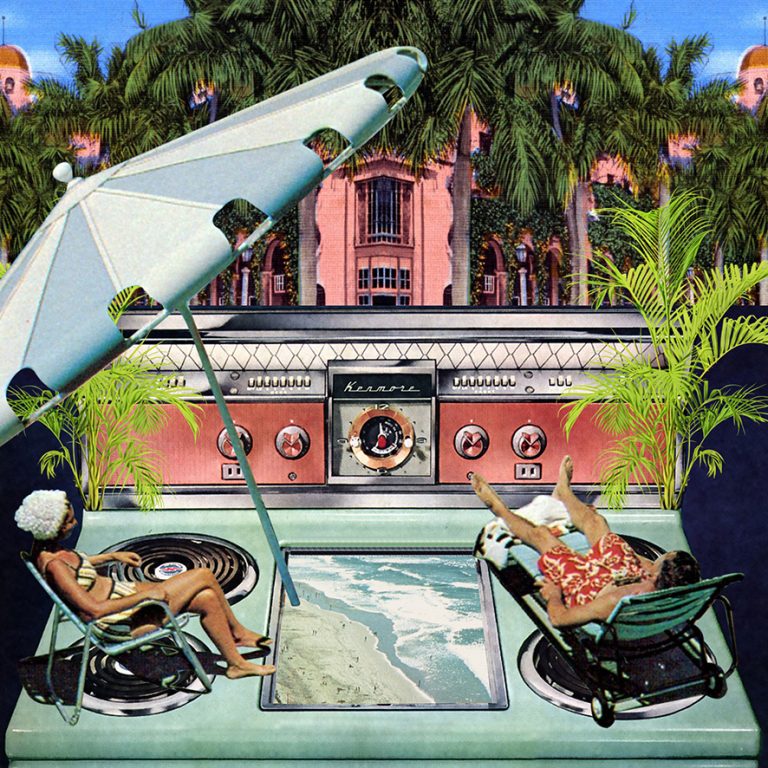
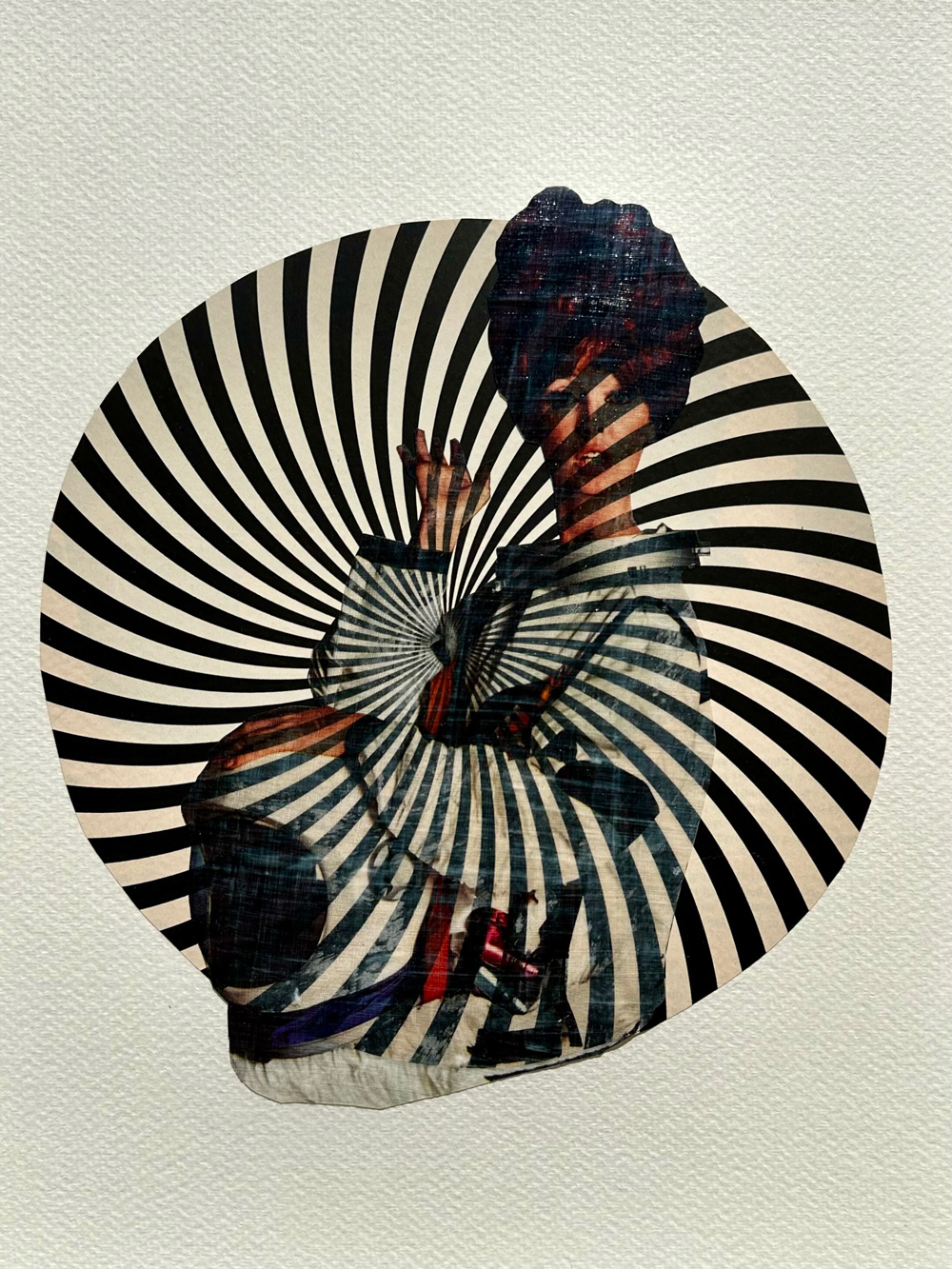
Fayetteville, Arkansas, USA. Gaby Hernández’s creative activity is located at the crossroads of various themes and formats. The artist researches decolonial design with a focus on the spontaneous and unmediated production of visual storytelling. They argue that each individual carries an often undiscovered visual language that may easily challenge canonical notions of design and art if it is developed outside of the restrictions imposed by traditional and hegemonic stylistic theories and practices. Their creative activities (in particular, collage, poster, and book arts) allows them to explore issues related to marginalization, identity, and the environmental impact of design and modernity. MORE
| | |
KOLAJ LIVE ONLINE
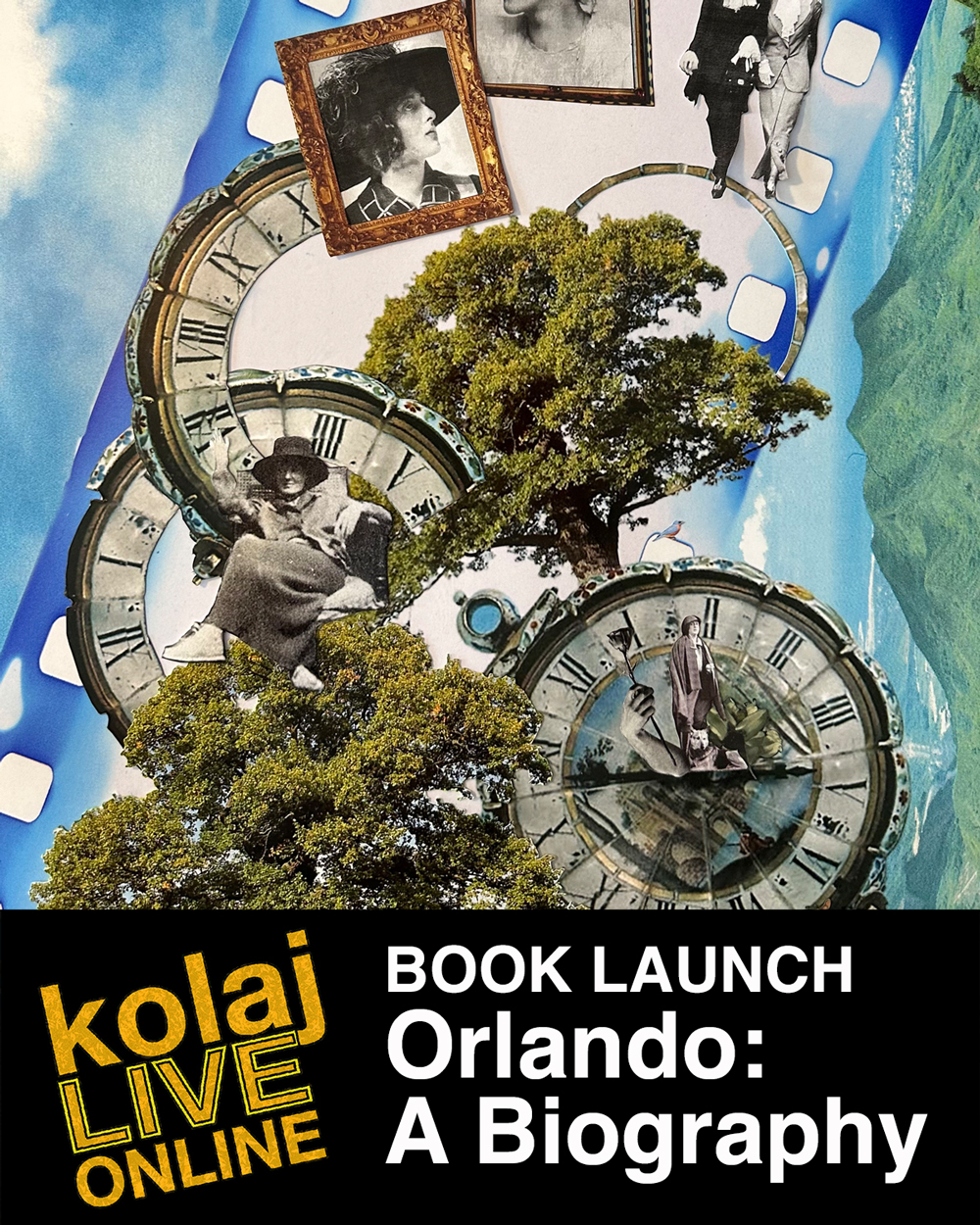
Sunday, 6 December 2026, 2-4PM EST. Online. Free. Kolaj Institute celebrates the launch of a new illustrated edition of Orlando: A Biography and an accompanying folio of collage prints. During the Collage & Illustration Residency, held 9 February-1 March 2024, artists embarked on a creative exploration of Virginia Woolf’s groundbreaking 1928 work, examining themes of identity, transformation, and the fluidity of time. The resulting illustrations bring a fresh, contemporary perspective to this timeless narrative.
At this Kolaj LIVE Online event, we will hear from contributing artists about their experience illustrating Virginia Woolf’s novel. Artists will discuss the project and the collaborative process behind the artwork in the book and folio. MORE
| | |
CALL TO ARTISTS (ADVERTISEMENT)
Deadline for Submission: Tuesday, 15 December 2026 at midnight AEDT. TODO LOCO (‘ALL CRAZY’) is an international exhibition of analog collage that aims to capture the zeitgeist, presenting artworks that reflect upon themes that resonate with inhabitants of a modern world gone crazy. The sixth edition, “Wish you were here,” celebrates analog collage making and nostalgia for the tradition of sending and receiving souvenir postcards. Works by 27 artists from around the world will be reproduced as postcards and distributed across Sydney, Australia. A second exhibition of the postcard series will take place at the independent art space La Casa Verde in Barranquilla, Colombia in April 2027. The project expands upon the traditions of mail art through a unique and experimental format. MORE
| | |
COLLAGE ON VIEW
at Hopkins Hall Gallery, Columbus, Ohio, USA through 11 December 2026. This is not a nice exhibition. It is not going to tell you what you want to hear or show you what you want to see. Eighty artists sent ninety-two works about what resistance looks like, and they are full of grief, humor, illness, joy, fear, togetherness, and loneliness. What you see in it might be something else entirely. Both are true at once, and neither cancels the other. This exhibition is asking you to see how resistance translates across time, space, and experience, and maybe you will see yourself somewhere in it, too. MORE
| | |
COLLAGE ON VIEW
at Rose City Coffee Co., Portland, Oregon, USA through 27 December 2026. In her first solo show, Cathy Aster explores the public and private layers worn by women at different life stages. Using image transfer and cut collage techniques, she creates formal and metaphorical transparencies in a series of 14 images. She bathes the scenes in the autumnal glow provided by vintage magazines, then excavates the images for tenderness, risk, and danger. She hooks the viewer with nostalgic images, then transforms the image by revealing unseen psychic realms. The women in Aster’s work look away even as they look directly at you; they look directly at you even as they look away. MORE
| | |
FROM THE ARTIST DIRECTORY
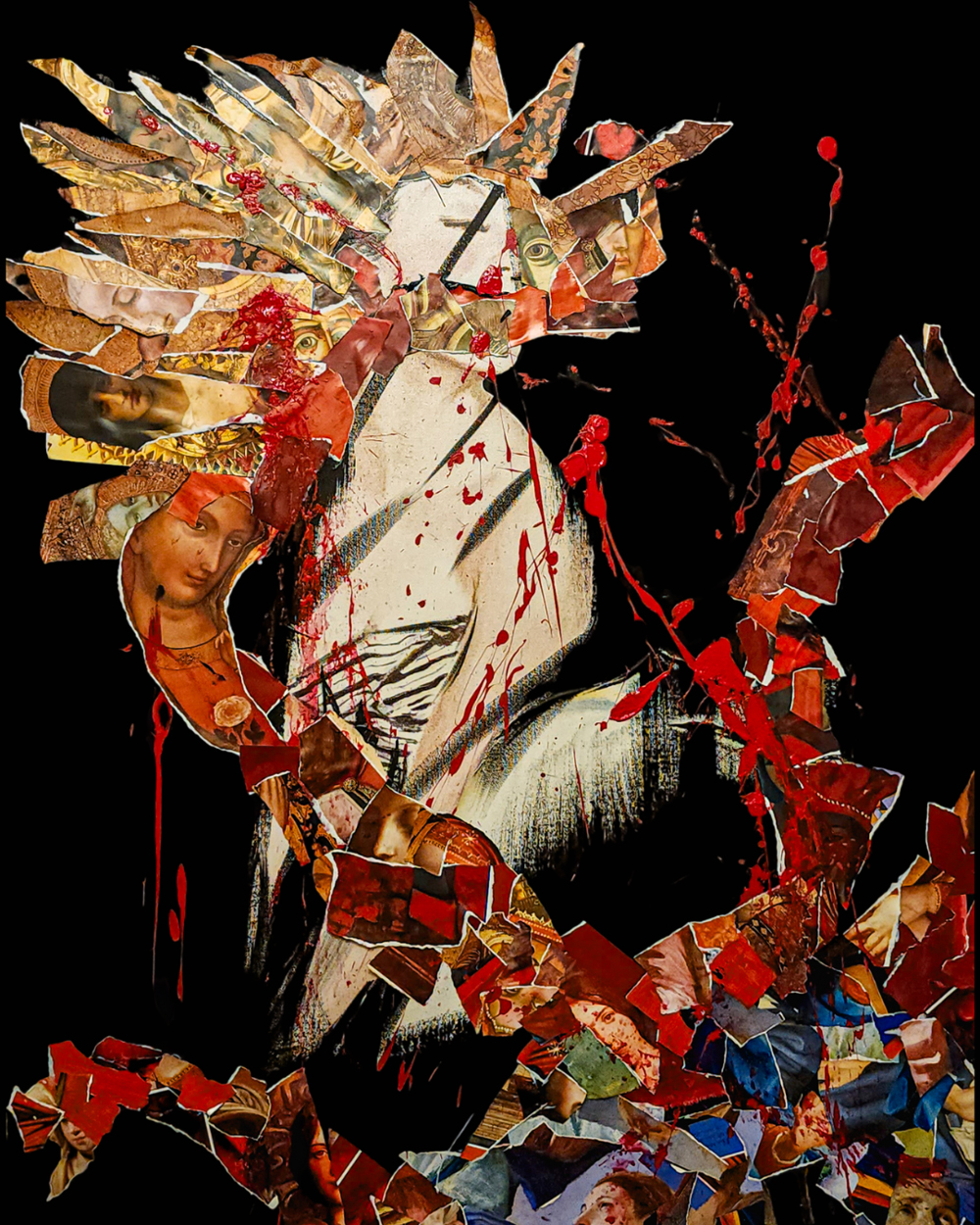
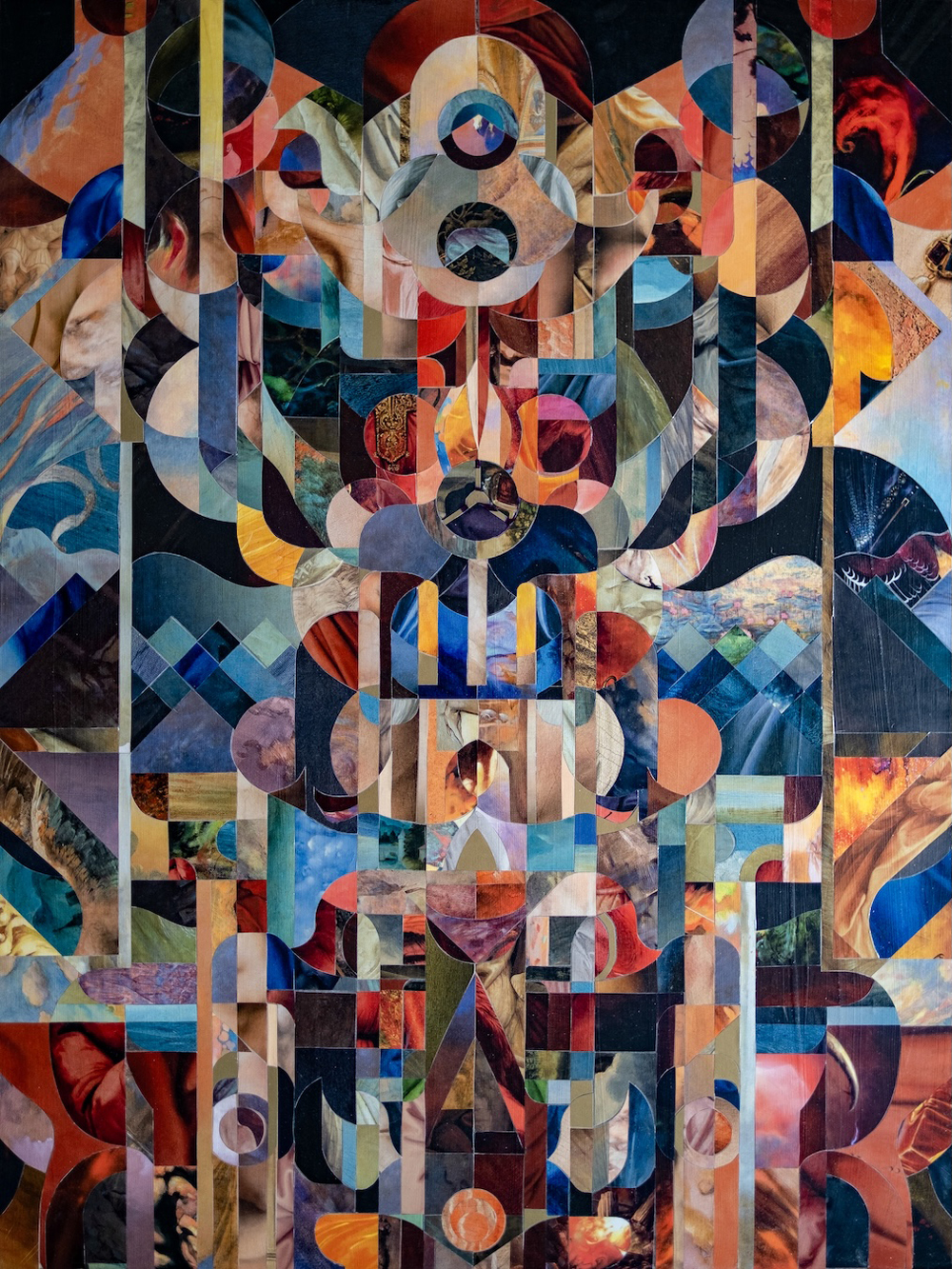
Charleroi, Belgium. David Terrazzano's process is based exclusively on the assembly of torn paper: fragments of magazines, posters, prints, various textures…Each piece is chosen, adjusted, and layered to reveal shapes, volumes, and emotions. Through each work, he seeks to reconstruct the visible from the scattered, to restore meaning to fragments, to make matter speak. The paper becomes skin, fur, light, or gaze—it tells a story through its rips and tears. MORE
| | |
COLLAGE ON VIEW
at Zedes Art Gallery, Brussels, Belgium through 18 December 2026. When our democracies show clear signs of decay, when they elect as their leaders the very people least likely to save them, when innovation means inventing new consumer needs rather than new forms of expression and collective life, when our societies are bent on destroying the very conditions of their survival, when, to put it simply, the situation is degenerating, it is important to lose oneself in art. MORE
| | |
SUBSCRIBE TO KOLAJ MAGAZINE TODAY
Kolaj Magazine exists to show how the world of collage is rich, layered, and thick with complexity. By remixing history and culture, collage artists forge new thinking. To understand collage is to reshape one's thinking of art history and redefine the canon of visual culture that informs the present. Your support of this magazine keeps us going and makes it possible for us to investigate and document collage and to promote a deeper, more complex understanding of the medium and its role in art history and contemporary art.
DON'T MISS OUT!
| | |
CALL TO ARTISTS
Early Deadline to Apply: 29 November 2026.
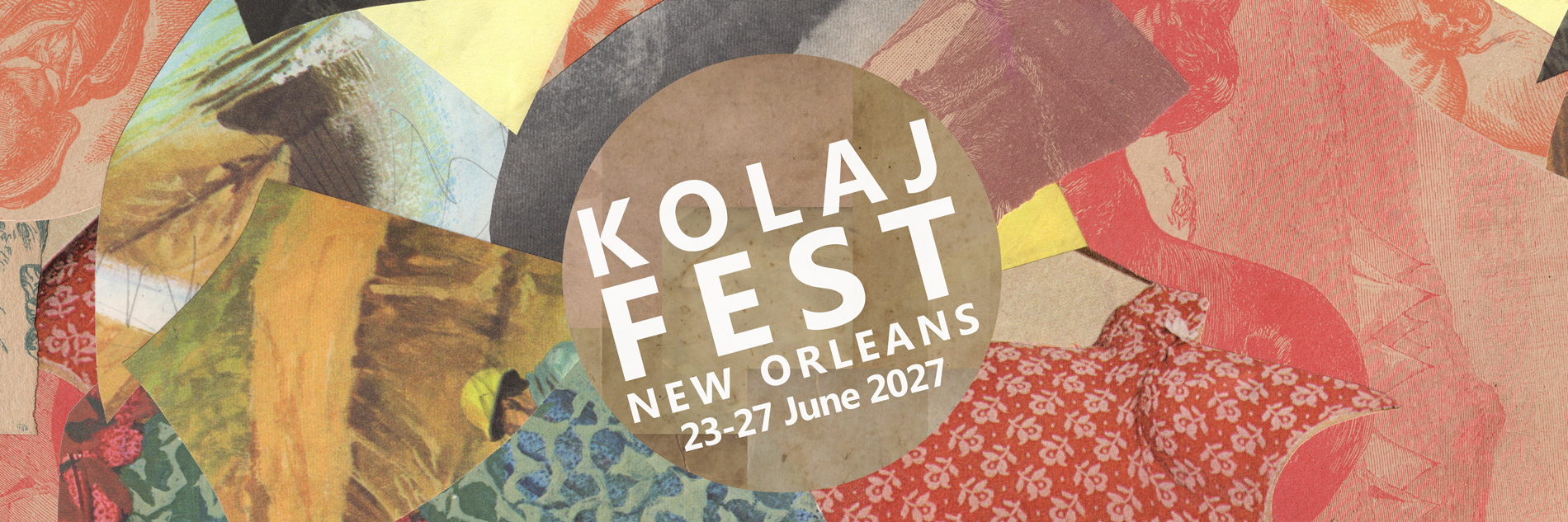
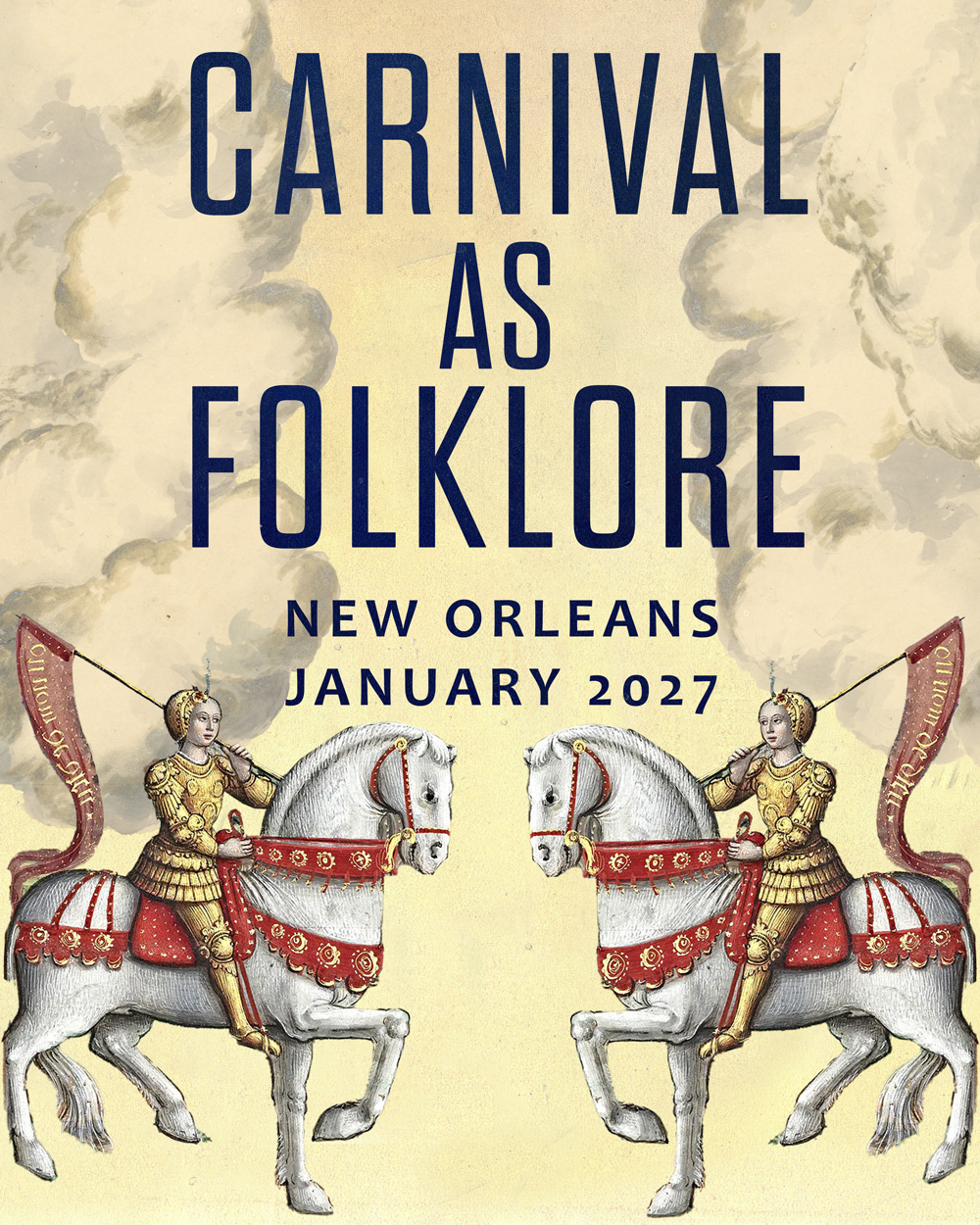
4-8 January 2027 in New Orleans, Louisiana, USA.
Folklore & Collage considers the role artists play in activating, transmitting, and celebrating folklore in communities as a form of cultural expression and a strategy for community resilience. Artists consider how, during a time when folklore is devalued by economic systems and dismissed by political power, artists play an important role in calling attention to and celebrating these important elements that shape community identity and reinforce communal ties. In times of crisis and collective trauma, these stories can be key to a community’s sense of resilience and ultimate survival. LEARN MORE
| | |
CALL TO ARTISTS
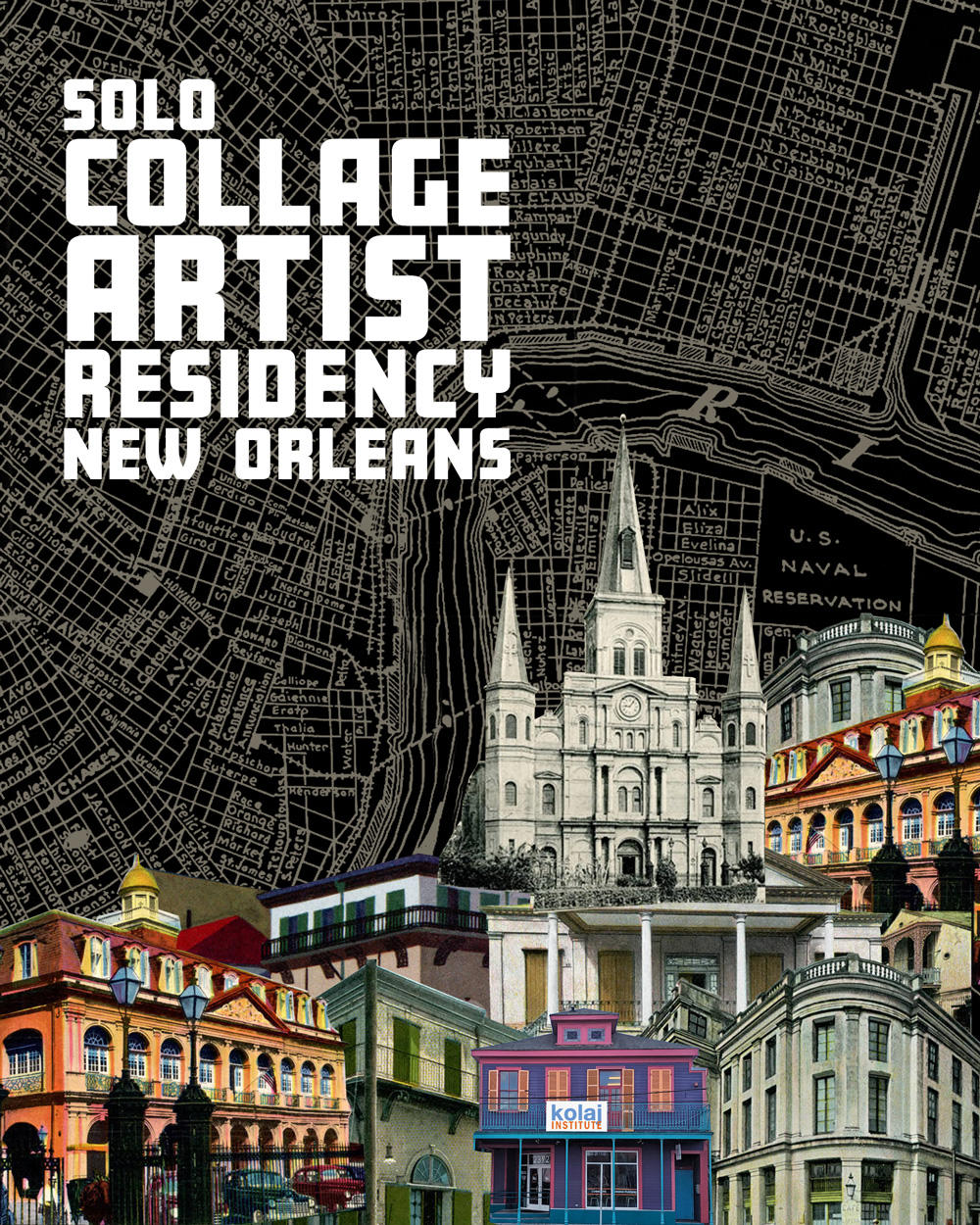
Next Deadline to Apply: 30 November 2026. Kolaj Institute’s solo residencies in New Orleans are designed to provide artists, curators, and writers with dedicated time and space to work on a project. We are open to your ideas. We are looking for artists with an articulated goal for their time in New Orleans. That goal need not to be explicitly related to New Orleans, though priority will be given to those artists whose projects need time in New Orleans. These Solo Residencies are taking place at Kolaj Institute’s home in the New Orleans Healing Center and help further Kolaj Institute's mission to support artists, curators, and writers who seek to study, document, and disseminate ideas that deepen our understanding of collage as a medium, a genre, a community, and a 21st century movement. LEARN MORE
| | |
CALL TO ARTISTS
Final Deadline to Apply: Monday, 23 November 2026. A four-week, virtual/online workshop with Kolaj Institute.
Next Session: Sundays, 27 December 2026-17 January 2027, 1-3PM EST.
At Kolaj Institute, we see the book, not just the gallery, as a place to experience collage. In this four-week workshop, artists will turn a body of work or a project into a zine, art catalog, monograph, or book. We will explore different models of publishing and types of book projects. We will walk through the steps and support one another as we create publishing projects and prepare to put them out into the world. Participants will present and receive feedback on page spreads. Presentations will speak to issues around copyright and appropriation, getting the book printed, and launching and marketing the book. They will finish the workshop with a publishing project or create a detailed plan for one. LEARN MORE
| | |
CALL TO ARTISTS
At Kolaj Institute, our philosophy is that if we bring artists together, explore ideas and concepts, share knowledge, we can stretch and develop as artists. When we bring that knowledge and skill into our communities, we raise the standing of collage and contribute to the civic discourse. Kolaj Institute's Artist Development Program is a collection of three core workshops for self-motivated artists, at any stage in their career, who want to develop and expand their collage-based artist practice and work towards professional goals, particularly in the areas of exhibitions and publishing. LEARN MORE
| | |
NEW PUBLICATION
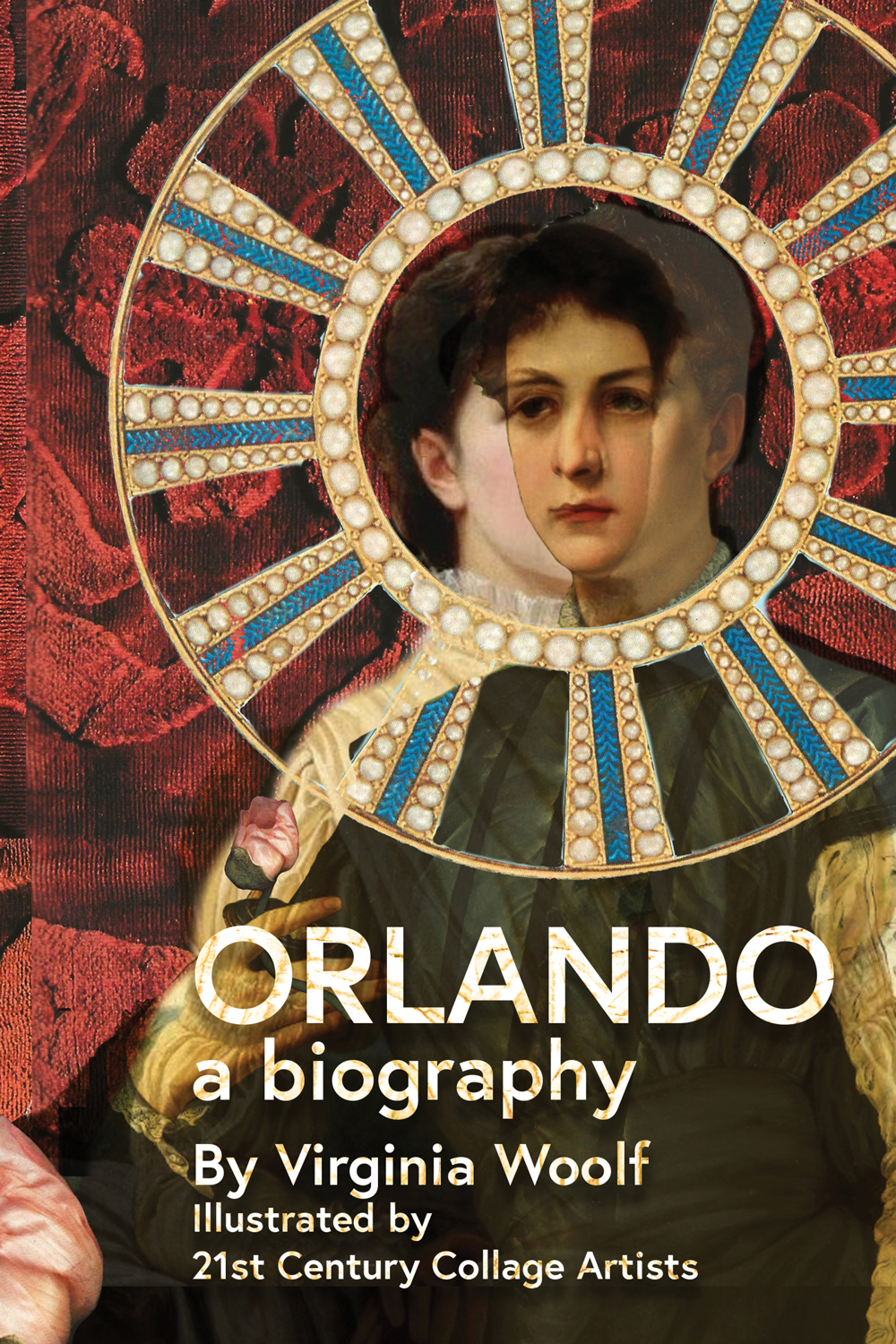
Orlando: A Biography by Virginia Woolf helped introduce Modernist thinking into human consciousness and, as it has been read by subsequent generations, has been a source of feminist, gender, race, and class theory. As we approach the book’s centennial, this unique edition of Orlando: A Biography was illustrated & interpreted by contemporary collage artists under the art direction of Nancy Bernardo and Christopher Kurts.
Contributing Artists: Jean Dobbs Fonvielle (Wilmington, North Carolina, USA), M. M. Dupay (Bowling Green, Ohio, USA), Rowan Ericksson (Seattle, Washington, USA), Kathryn Geismar (Somerville, Massachusetts, USA), Maryam Hosseinnia (Kuwait), Whitney Humphries (San Francisco, California, USA), Mercedes Jones (Toledo, Spain), Christopher Kurts (New Orleans, Louisiana, USA), Seoryung Park (Pullman, Washington, USA), Rebecca Steiner (Lyme, Connecticut, USA), and Justyna Tuchorska (Prague, Czech Republic). MORE
| | |
NEW PUBLICATION
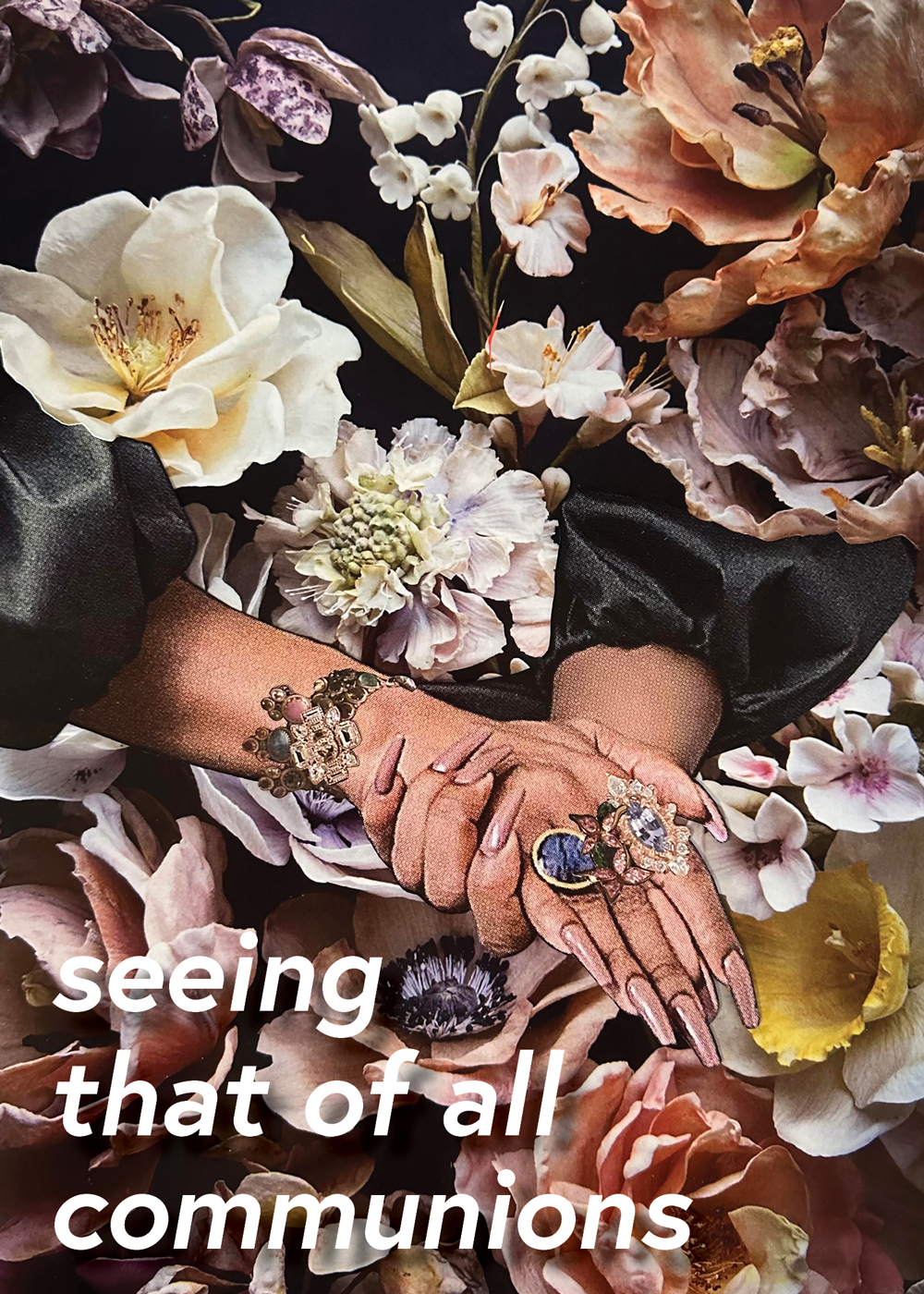
The book features twenty-four artworks in the limited-edition folio, "Orlando in the 21st Century." In the Winter of 2024, Kolaj Institute assembled a group of collage artists and set them on a creative exploration of Woolf's novel. Approaching the text as citizens of a 21st humanity, the artists read and discussed the book and collaborated digitally, sometimes adapting their own analog process to the project. They brought their own personal histories into the project. Rebecca Steiner wrote, "All this richness in storyline and complexity of the characters provided a perfect canvas for experimentation, for collaboration and for shared interpretation in building layered, multi-dimensional meaning through collage." Seeing That of All Communions is a 56-page companion to the print folio that pairs the artwork with passages from the book and artist statements. MORE
| | |
NEW PUBLICATION
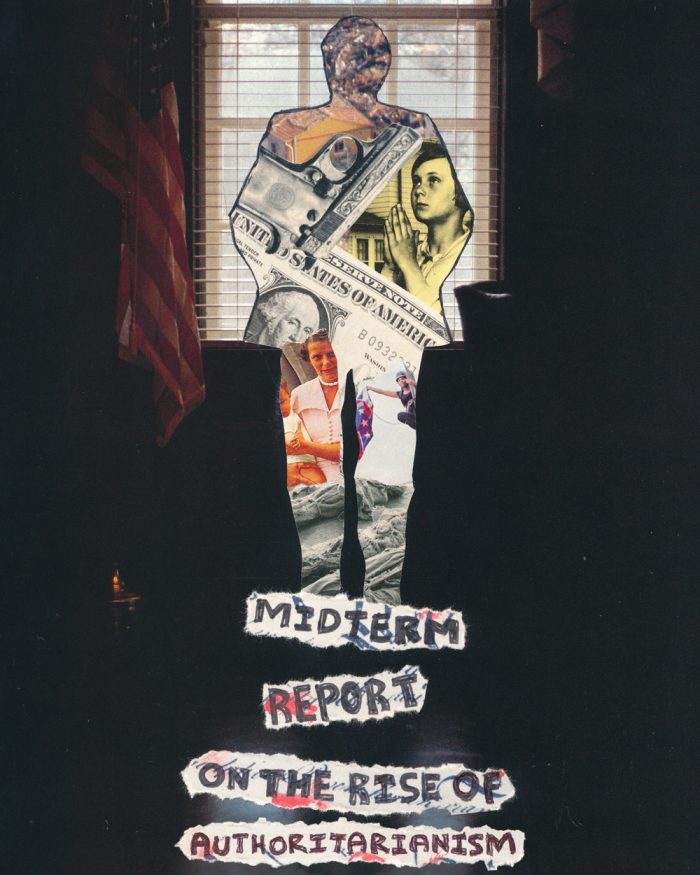
How do we visualize the contemporary political moment? How do collage artists speak to rising authoritarianism? Midterm Report on the Rise of Authoritarianism shares the work of five contemporary collage artists who came together for a month to make art about contemporary politics. Their work speaks to a range of topics from economics, the environment, and militarization to religion, gender, and international relations. The artwork is contextualized with quotes, news reports, artist statements, and reading suggestions. We hope this zine will inspire others to draw upon their strength and to use their voice and their creative skills to resist authoritarianism. MORE
| | |
NEW PUBLICATION
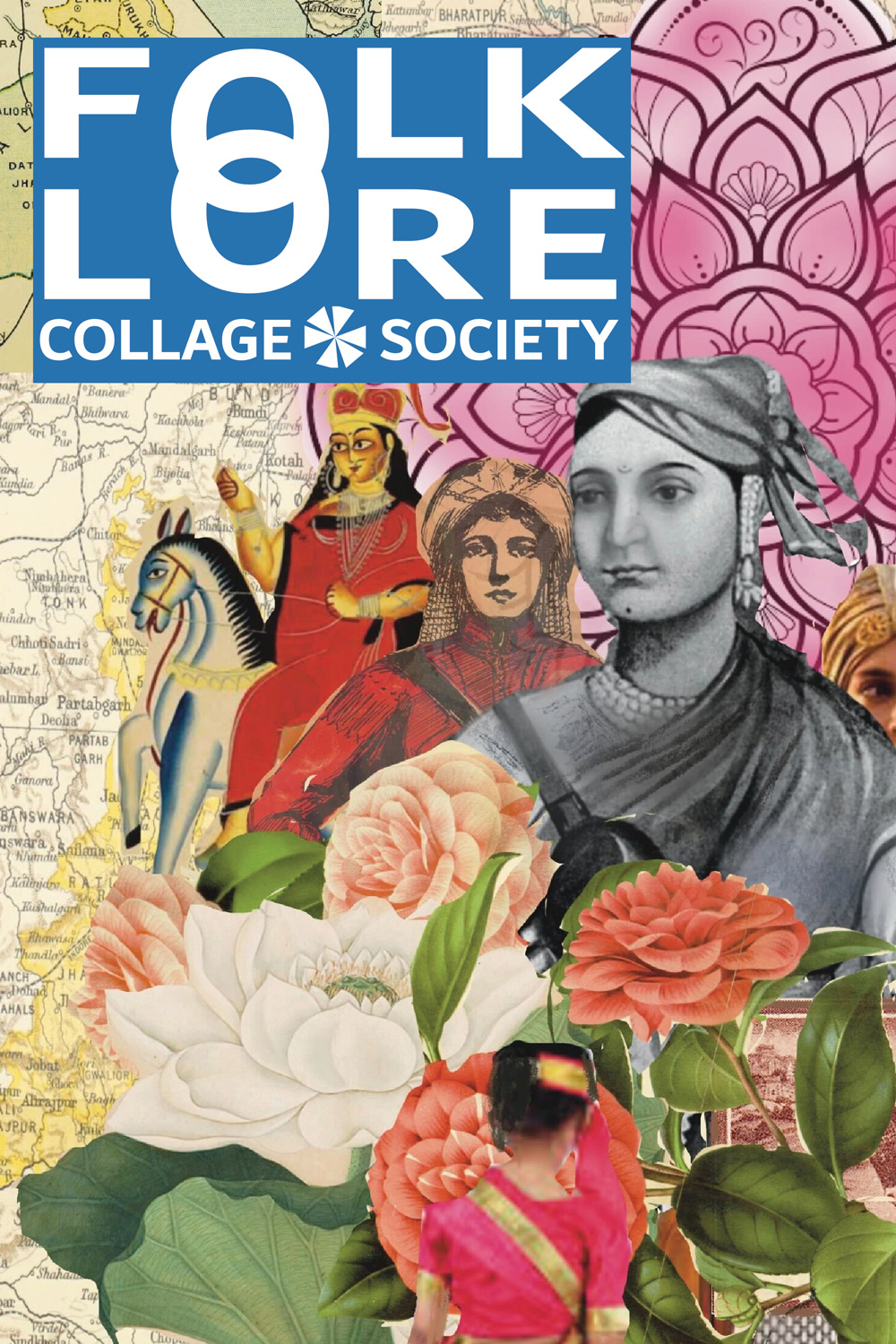
Folklore Collage Society is a printed journal dedicated to artwork and artists who activate, transmit, and celebrate folklore as a form of cultural expression and a strategy for community resilience. In its pages, stories, statements, essays, field notes, poetry, and song lyrics mingle with collage art that shows how collage artists are thinking about the folklore. In Folklore Collage Society, Volume 1, editor Ric Kasini Kadour lays out the inspiration behind the project. Kate Sutherland and Bella LaMontagne share Irish and Celtic folklore. Indira Govindan considers the story of Lakshmibai. Jennifer Lentfer offers an example of counter folklore. Jacoub Reyes explores Taíno oral histories. We share Field Notes about crows and witches turning into hares. Sarah Cowling and Eli Craven makes art of their own family folklore Leanne Poellinger explores the symbolism and community of apple pie. Dean Reynolds offers us photographic evidence of gateways between realms. Natalie Vestin shares stories of Swedish smallfolk. And Verónica Poblete Villanueva takes us to Algeria and shows us the dance of Ouled Nail Tribe. MORE
| | |
SPECIAL EDITION
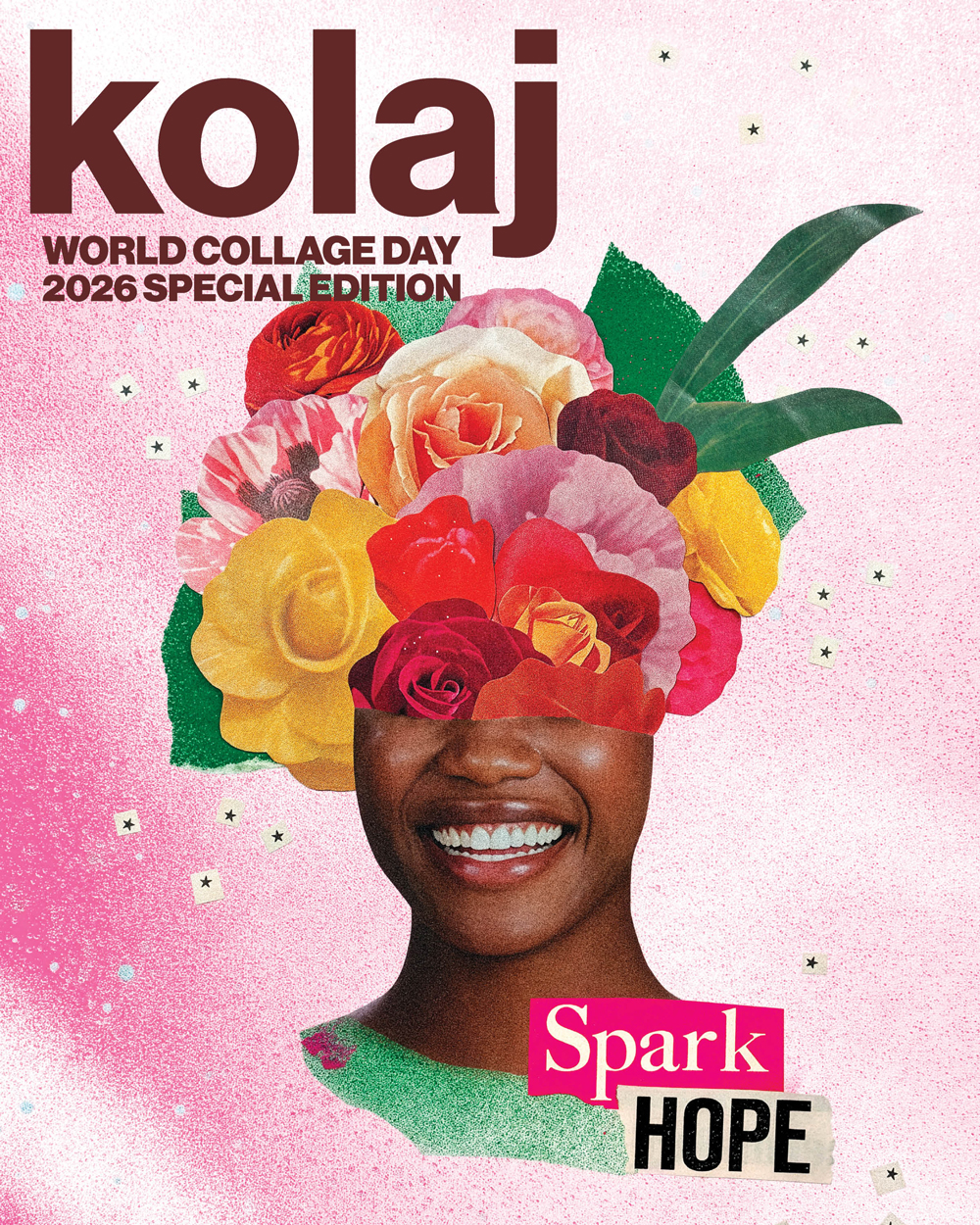
In honor of World Collage Day, 9 May 2026, Kolaj Institute released a special edition of Kolaj Magazine. Highlights include a profile of World Collage Day 2026 Poster Artist Jessa Dupuis, an Editorial by Ric Kasini Kadour about technologies of the self on World Collage Day, the story of the Eclectic Collage Collective in London, Ontario by Sarah Cowling, Jerome Bertrand shares his experience creating a Living Collage in a day-long performance at Atelier Galerie 2112 in Montreal, Quebec, Canada and Cut-Out Pages from inspiring collage artists. MORE
| | |
PRINT MAGAZINE
Since 2011, Kolaj Magazine has documented, reported on, and explored the amazing artists who make up the international collage community.
In Kolaj #43, you’ll discover “The Fluctuation of Likeness” by Portland, Oregon collagist Clive Knights; Irish collagist Anthony D Kelly on basic income for the arts in Ireland; an interview with photomontagist Mark Rappaport about images, art, and cinema; Ric Kasini Kadour’s editorial, “Blank Cartridge Pistol”; a report on The Rose, an exhibition and book exploring female narrative through archival and embodied collage practices; Anthony Michael Ryder on collage and trauma; Emily Denlinger on bringing “Gain of Function” to Carnival in New Orleans; “Selections from the Collection” featuring Meikel Church’s Self-Inflicted Regret, curated by Susan Simpson; and collage news from Montreal, Paris, Germany, Kolaj Institute, World Collage Day, PoetryXCollage, and more.
Our goal with every issue is that Kolaj Magazine is essential reading for anyone interested in the role of contemporary collage in art, culture, and society. MORE
| | |
NEW PUBLICATION
Authoritarian Regime Survival Guide
Authoritarian Regime Survival Guide is a collage. The book combines the text of a Polish human rights activist Martin Mycielski with the artwork of seven collage artists to create a space in which we can think about the rise of authoritarianism and how to navigate the troubling, difficult times in which we find ourselves. Organized as a series of lists, the book illustrates what to expect under authoritarianism and offers rules for surviving authoritarian regimes and engaging their supporters. The introduction traces how the text came into existence and how the artists came together to make collage about it. Ric Kasini Kadour shares historical examples of artists responding to authoritarianism; John Heartfield’s anti-fascist collage and a 1979 exhibition in East Germany that was described as a “victory over false consciousness.” Authoritarian Regime Survival Guide is a testament to the role art can play in our communities.
| | |
NEW PUBLICATION
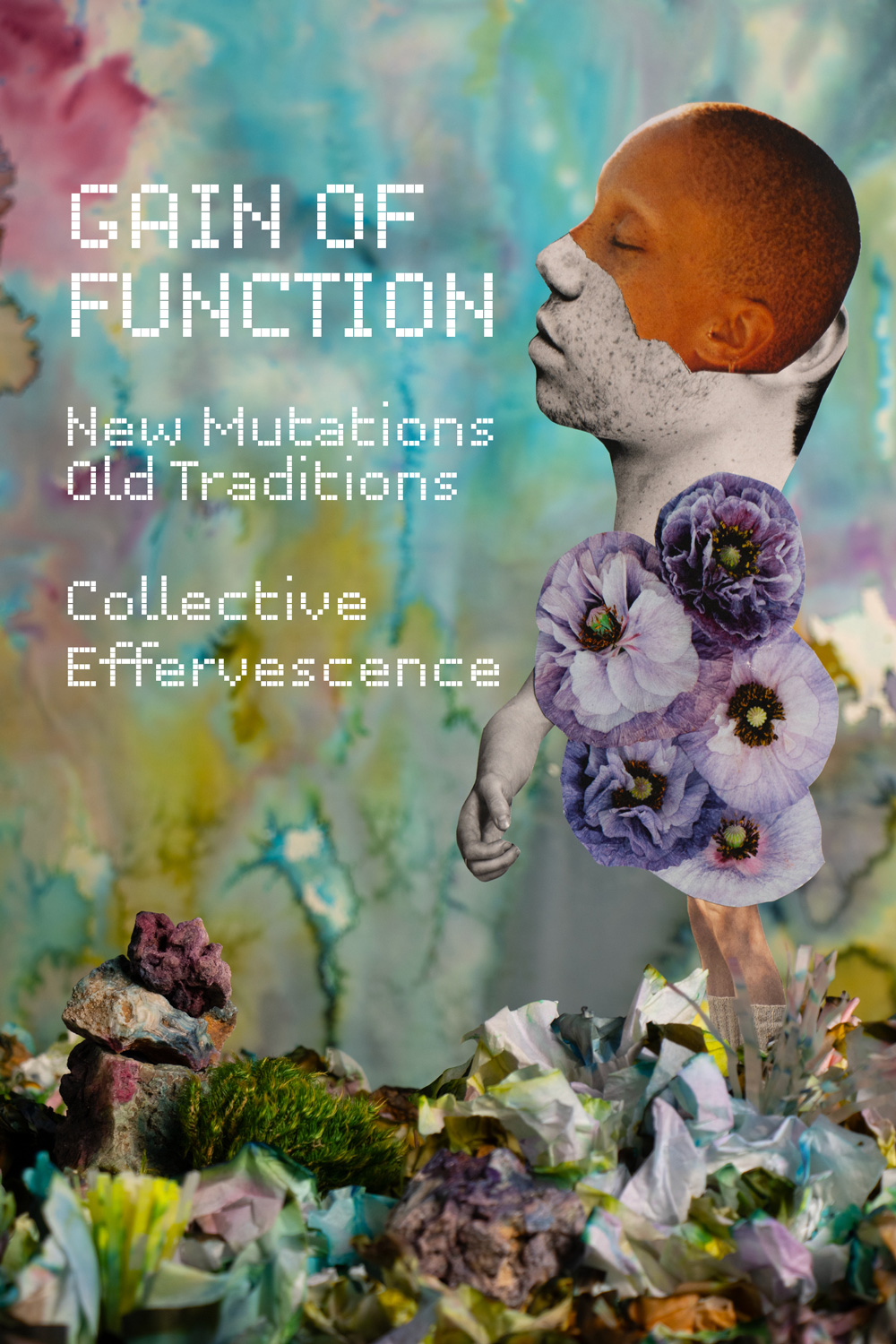
This project led by Cape Girardeau, Missouri, USA-based artist Emily Denlinger speaks to the role of art, ritual, and resilience. Building on her own work, Denlinger engaged with thirty-nine artists at the 2025 edition of Kolaj Fest New Orleans to make locative collage photographs in an artist-created landscape inspired by global masking traditions. The resulting artworks are presented in this zine published by Kolaj Institute. "The project functions as 21st century folklore with each character potentially representing a magical creature or masked performer in some yet-to-be-imagined ritual," wrote Kolaj Institute Director Ric Kasini Kadour. "Like the odd, creature-like figures of early 20th century Surrealists, they, too, are a response to deeply troubled times and offer us the opportunity to find a collective effervescence to see us through them."
| |
|
NEW PUBLICATION
Frankenstein
| |
This new version of Mary Wollstonecraft Shelley’s classic 19th century novel Frankenstein; or, the Modern Prometheus features seventy-six illustrations by International Collage Artists who delved into the novel’s rich narrative and visual potential and created thought-provoking artworks that reflect the essence of Frankenstein in a 21st century context.
| | | |  | |
NEW PUBLICATION
Magic in the Modern World
Taking a broad view of magic and drawing from multiple histories, the book, Magic in the Modern World, proposes a way to think about magic in the 21st century, what it means to communities, and how it negotiates itself in systems of power. Generously illustrated, the book features the artwork of fifteen collage artists and dozens of historical images.
| | | |
ARTSHOP
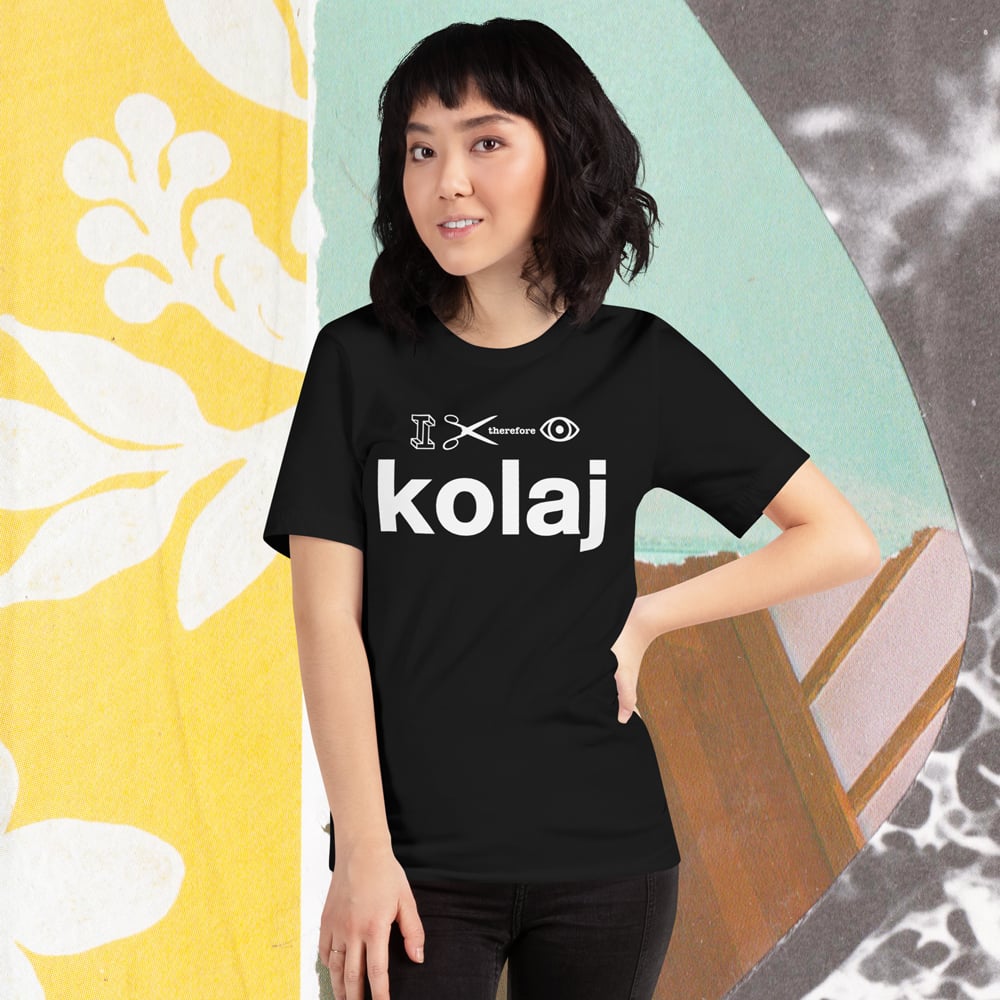
"I Cut Therefore I Kolaj" T-shirt
Since we started Kolaj Magazine in 2011, people have been asking about t-shirts. Well, we finally made one. We are pleased to announce the "I Cut Therefore I Kolaj" T-shirt. We hope you like it and wear it with pride.
| | |
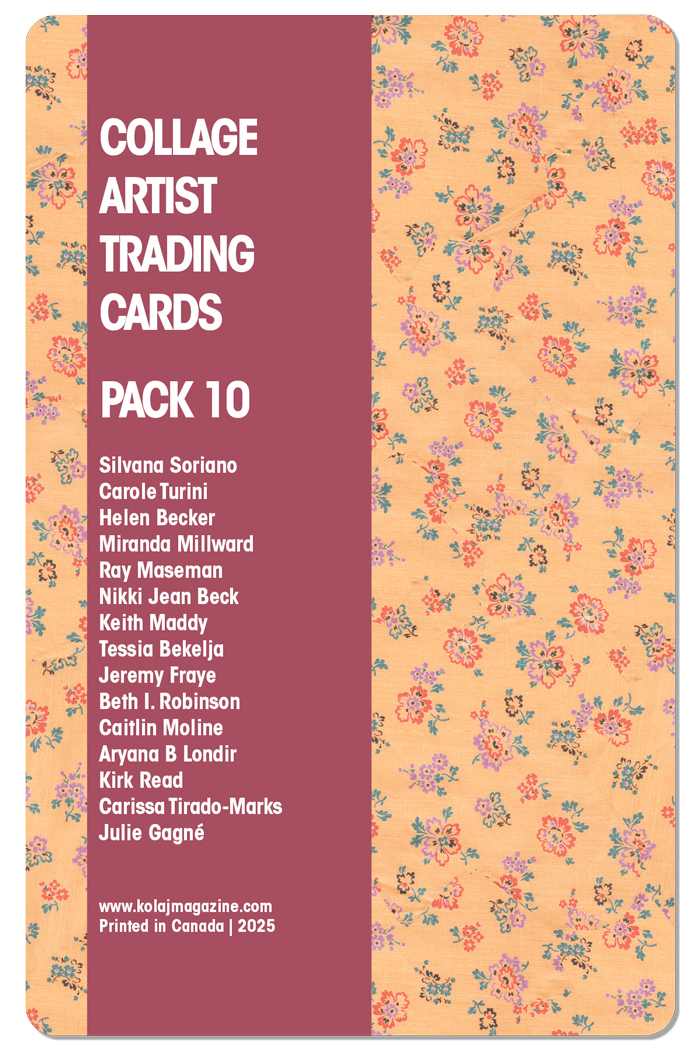
TRADING CARDS
Kasini House Artshop works with the Kolaj Magazine Artist Directory to produce curated packs of the Collage Artist Trading Cards. Each card is a full color, 5.5” x 3.5” postcard with rounded corners. An example of an artist’s work is on the front of the card and the artist’s public contact information is on the back. Collage Artist Trading Cards come in packs of 15.
| |
About Kolaj Magazine
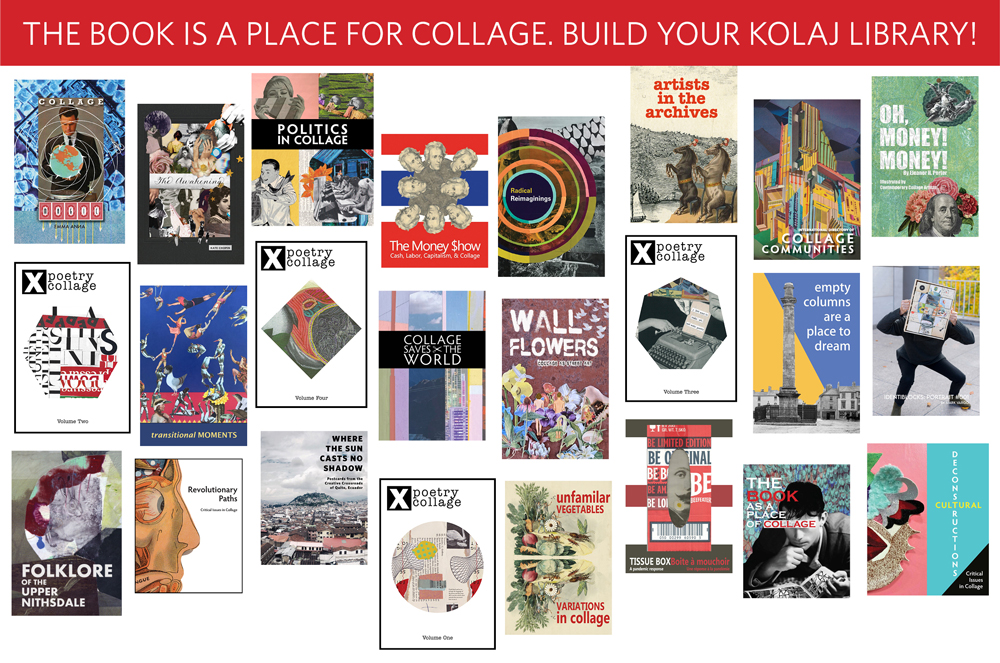
Kolaj Magazine is a quarterly, printed, art magazine reviewing and surveying contemporary collage with an international perspective. We are interested in collage as a medium, a genre, a community, and a 21st century art movement. Kolaj is published in Montreal, Quebec by Maison Kasini. Visit Kolaj Magazine online.
WEBSITE | ARTIST DIRECTORY | SHOP
About Kolaj Institute
The mission of Kolaj Institute is to support artists, curators, and writers who seek to study, document, & disseminate ideas that deepen our understanding of collage as a medium, a genre, a community, and a 21st century movement. We operate a number of initiatives meant to bring together community, investigate critical issues, and raise collage’s standing in the art world.
WEBSITE | CALLS TO ARTISTS | SUPPORT
| | | | |