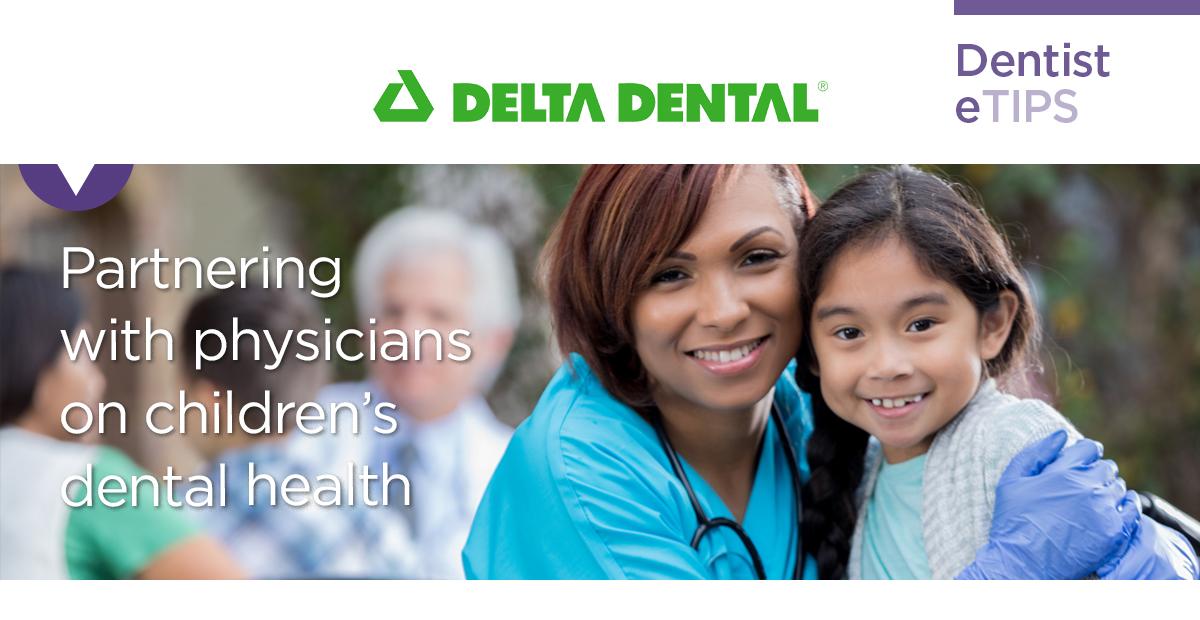
Physicians are often the first to spot dental problems in children. February is Children’s Dental Health Month, which is a good time to look for opportunities to expand our partnership with physicians and to include them on the larger oral health team.
Current recommendations are for children to have their first dental exam between the time the first tooth erupts and their first birthday, but too often children are not seen by a dentist until they are older. This could be because parents are not aware of the recommendation or they may not have access to a pediatric dentist, as not all general dentists are comfortable seeing very small children.
The Physician's Role in Children's Dental Health
Because physicians, particularly pediatricians and family physicians, often see children starting at birth, they are in an important position to identify dental risk factors associated with poor oral health. Physicians can spot signs of early childhood caries and, through discussions with parents, identify potential risk factors, such as poor hygiene, diet or lack of access to fluoride. Increasingly, physicians are also being trained to provide fluoride varnish. With training, performing a knee-knee screening (or alternatively on an examination table), applying fluoride varnish and offering some anticipatory guidance, including a dentist referral, takes only a few additional minutes and, in most cases, is reimbursed above and beyond a well-child exam.
Physicians treating pregnant patients, obstetrician/gynecologists and, again, family physicians, are also in a position to identify oral pathology common to pregnancy, such as gingival inflammation and so-called “pregnancy tumors." With growing evidence of links between periodontal pathology and pregnancy complications, identifying dental disease early in pregnant patients can have a positive impact on an infant’s overall health. Evidence further shows that a mom with high levels of decay causing bacteria can pass that bacteria on to her baby, seeding her child for future caries activity.
Partnering with Local Physicians
You may already have established relationships with physician colleagues. If not, consider reaching out to pediatricians and family physicians in your area. Offer to teach them how to do a dental screening and/or apply fluoride varnish. Perhaps provide continuing education or a “lunch and learn” to pediatricians or family physicians through their local societies, or to medical students/residents at the nearest medical school or hospital residency program. Some practices are also considering creative solutions such as co-locating a hygienist inside a medical practice to provide a dental screening and preventive services as part of well-child care, referring any needed follow-up care to a dentist.
Working with physicians can have a positive impact on children’s oral health, something to celebrate this Children’s Dental Health Month. It could also result in more referrals for your practice, not only for children, but their parents, as well.