“We Are the Land” project to receive DRCOG Metro Vision Award | |
Landmarks in danger under Section 106 changes
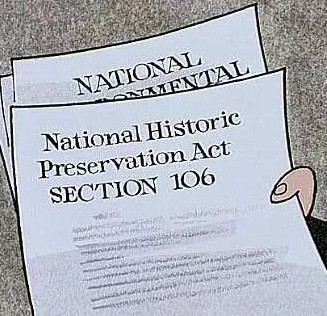
Last month, the Advisory Council for Historic Preservation (ACHP), a federal agency that oversees historic preservation regulations, voted to eliminate key public and community processes that help guide federal impacts to historic properties. These processes and historic preservation protections are laid out in the regulations of Section 106 of the National Historic Preservation Act (36CFR800).
The proposed revisions exclude the voices of most local, state and tribal communities as well as the general public. They also eliminate the current requirement that the federal government, or private work that entails federal permits or federal funding, avoid or minimize work that would impact historic properties. The regulations are currently being reviewed by the federal Office of Information and Regulatory Affairs (OIRA), which will be followed by a 30-day public comment period. For more information, we encourage you to visit the National Trust for Historic Preservation webpage about the proposed changes to Section 106.
Next Monday, Aug. 31, Denver City Council will issue a proclamation against these actions at their weekly meeting, which begins at 3:30 p.m. Members of the public may attend the meeting virtually or in person to express support for the proclamation. Visit the City Council website for information on how to join the meeting.
| | Landmark staff at the National Alliance of Preservation Commissions conference | | |
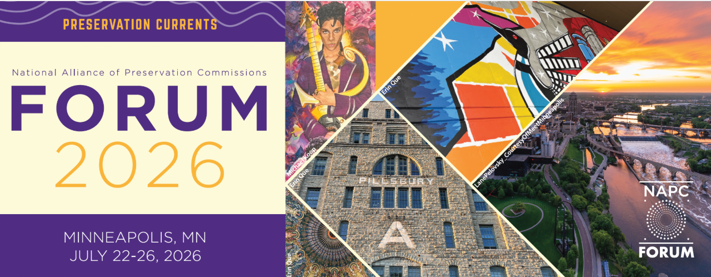
Three Landmark staff members presented at the National Alliance of Preservation Commissions (NAPC) conference held in Minneapolis at the end of July.
-
Principal City Planner Abigail Christman, the current chair of the NAPC Board of Directors, presented on the significance of buildings beyond their architectural style, the We Are the Land project, and the significance of main streets in American communities.
-
Design Review Supervisor Amy Amidon presented on our team’s efforts to ensure projects are completed according to approvals, with colleagues from San Francisco and Nashville.
-
Principal City Planner Brittany Bryant served on a design review roundtable focused on alternative building materials, alongside colleagues from Palm Beach, Florida; Louisville, Kentucky; Madison, Wisconsin; Portland, Maine; and Decatur, Alabama.
| |
Welcome two new LPC commissioners!
Two new commissioners joined the Landmark Preservation Commission (LPC) this summer: Jane Crisler (left) and Kelly Ream (right). Jane is a principal with EUA and has an extensive background designing historic preservation projects. Kelly is an Associate Principal and Senior Planner at Mundus Bishop, with over 18 years of experience in public space planning. Welcome Jane and Kelly!
| | | |
Beware: Don’t paint masonry! | |
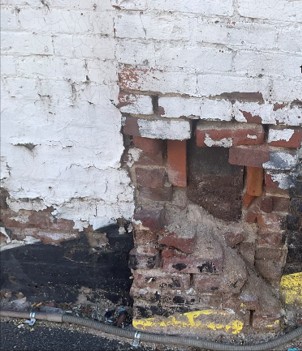
Brick and stone are porous materials that easily absorb moisture. Exterior moisture may enter masonry through cracks, leaky gutters, open mortar joints or from damp soil next to foundation walls. Masonry also absorbs interior moisture emitted by bathing, cooking and cleaning. Normally, moisture within a masonry wall evaporates through the mortar joints, brick or stone. However, when masonry is painted, the paint seals the outside of the wall preventing moisture from escaping. During Denver’s wide daily temperature swings in the winter, trapped moisture will freeze and thaw, breaking apart the interior of the masonry. While a uniform look or color may be desirable, painting masonry causes it to deteriorate from the inside out. It becomes a regular, long-term maintenance expense for the property owner and causes irreparable harm to the building.
| | |
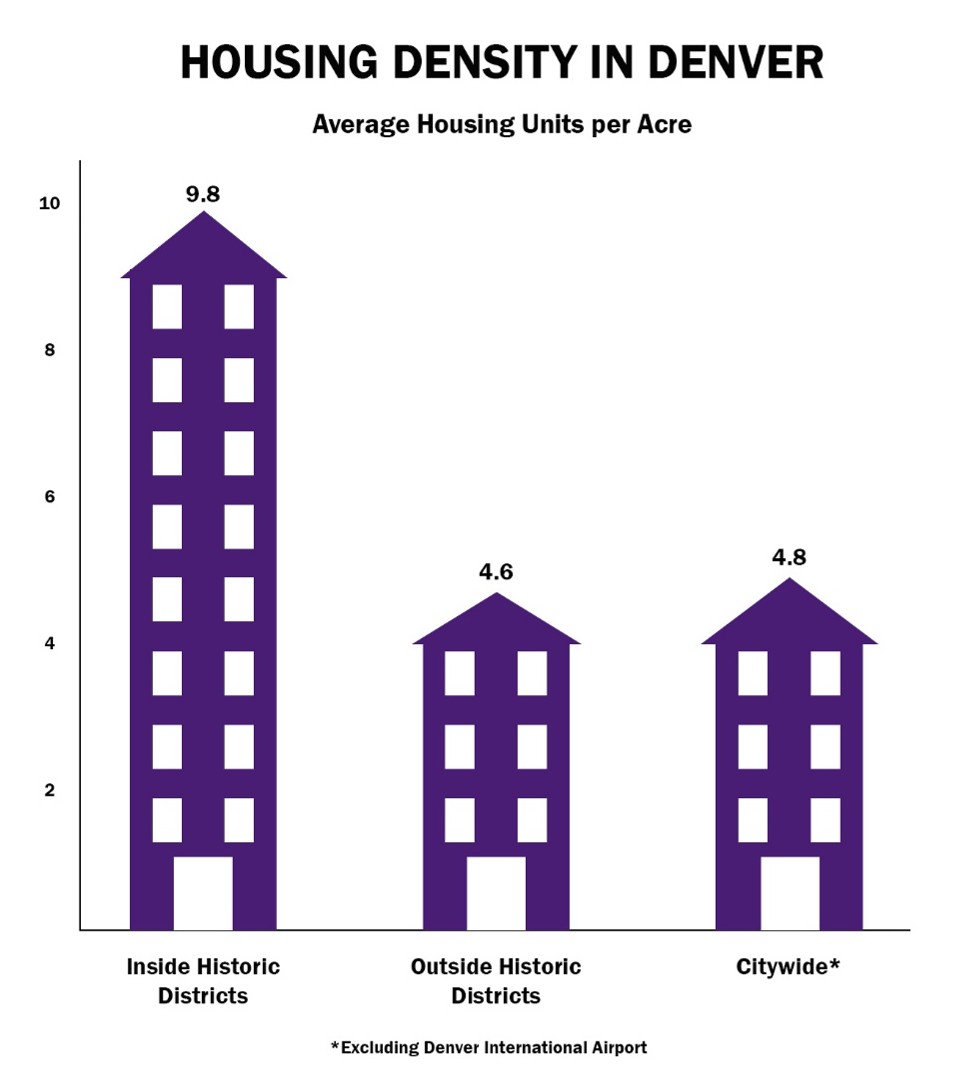
Denver’s historic districts have twice the housing density per acre than properties outside of historic districts! In 2023, CPD found Denver’s historic districts had 9.8 housing units per acre, compared to 4.6 housing units per acre in the rest of Denver (with the exclusion of DEN Airport land, which would otherwise skew the number even lower). Many of our residential historic districts have large houses that have been converted to multi-family housing, or traditionally single-family houses with attached or detached accessory dwelling units. Many commercial historic districts, such as Lower Downtown, have commercial buildings that were adaptively reused for housing and retained commercial ground floor uses.
| |
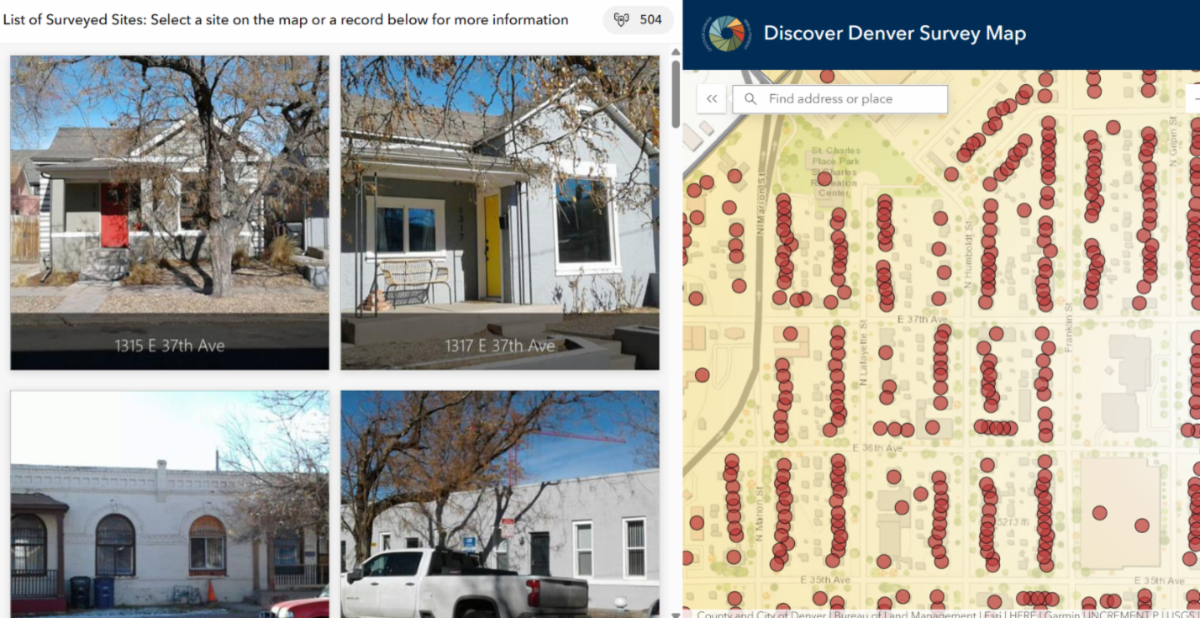
Find your property on the Discover Denver findings map | |
Haven’t checked out the Discover Denver findings map yet? This informative tool allows you to search for a Denver building by address or explore buildings in a specific neighborhood. The map provides a photo of the property taken during the survey, information about the estimated year the building was built, its original and current use, the number of stories, its form or architectural style, its roof form, and its primary cladding material. Several addresses in each survey area will include detailed information about the building’s history. You will also find a link to the neighborhood history from the survey report listed under each property. It’s a great way to learn more about your city and your neighborhood!
| |
Landmark and CPD Instagram are back!
We are back! After a period of dormancy, Denver Community Planning and Development (CPD) and Landmark are combining and relaunching their Instagram page. Recent Landmark posts feature information about modernist landmarks in Denver and the Discover Denver findings map. Please follow us at @DenverCPD on Instagram and share our great landmark content with your friends!
| | | |
|
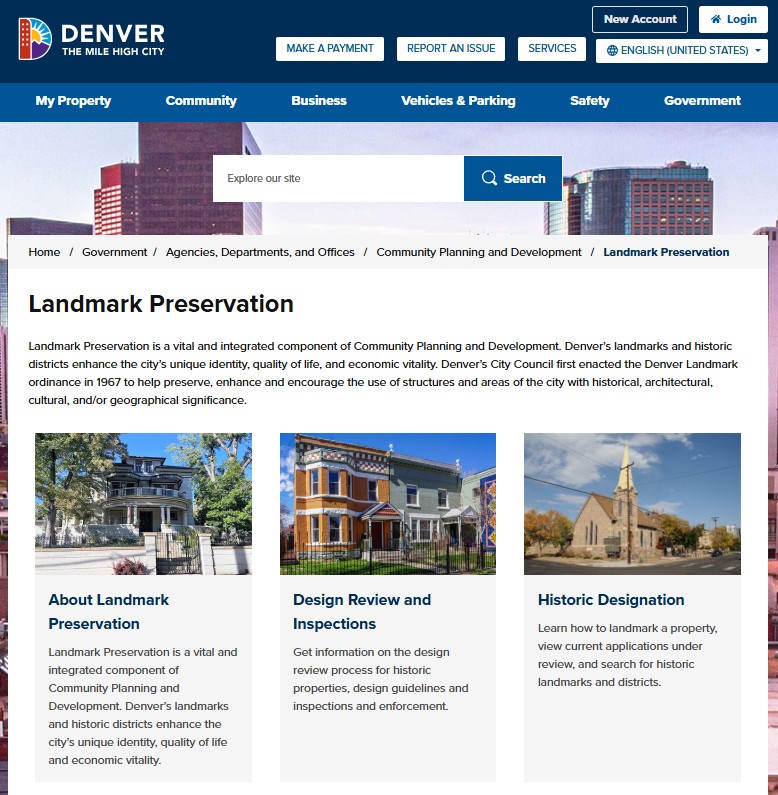
The Landmark Preservation website
has a new look
| |
We have been making changes to the Landmark Preservation website to provide clearer guidance and information about our work. On the About Landmark Preservation page, you will now find general facts, specific information about design review and inspections and more. We also updated the Resources for Property Owners to include information about how to best maintain your historic property, how to select a contractor, etc. If you have suggestions for additional helpful content, please let us know!
| | About Landmark Preservation | | |
Landmark preservation is an important function of Denver Community Planning and Development. Denver City Council enacted the Denver Landmark Ordinance in 1967 to foster the protection, enhancement, perpetuation and use of structures and districts of historical, architectural, geographic and/or cultural significance.
Staff in our Landmark Preservation office and two landmark commissions carry out that mission through design review, historic surveys and landmark designations. Staff also assists owners of historic properties by providing guidance and resources for preserving, maintaining and rehabilitating historic buildings and properties.
Learn more about Denver's preservation efforts at denvergov.org/landmark.
| | Denver’s Department of Community Planning and Development (CPD) complies with applicable federal civil rights laws and does not discriminate on the basis of race, color, national origin, age, disability, or gender to include language. It is your right to request oral or written language assistance services in your primary language, sign language interpretation, real-time captioning via CART, or disability-related accommodations, if needed. Please fill out our language services request form, and these services will be provided free of charge. If you have any questions, contact CPD’s Operations Team at cpdoperations@denvergov.org. |
| | | |