|
Phoenix Perennials E-News
Sept 2022
| |
|
Fall is here and with it a new season in the garden and new possibilities for making your personal outdoor spaces more beautiful, more interesting, and more diverse.
This is a big e-news with lots of interesting articles so grab your favourite beverage and get comfortable!
Bulb season is starting. Some bulbs have already arrived and are now available for in-store shopping. Though we are still waiting for many other shipments to come at which time we’ll start filling our pre-orders for pick-up and shipping. Ordering in advance is the best way to plan your bulb plantings from the comfort of your own computer and to secure your favourite cultivars.
In this issue we bring you a comprehensive article on Designing with Bulbs which outlines many tips and tricks for using bulbs in the garden to maximum effect. Bulbs offer all kinds of possibilities that other plants can’t and a truly successful garden will make good use of these treasures.
We also bring you a new article on Oriental Poppies and reprint two articles from the Bulb Alert on Daffodils and Bearded Iris and one article from the Edible Alert on pineapple guava. We hope you enjoy them.
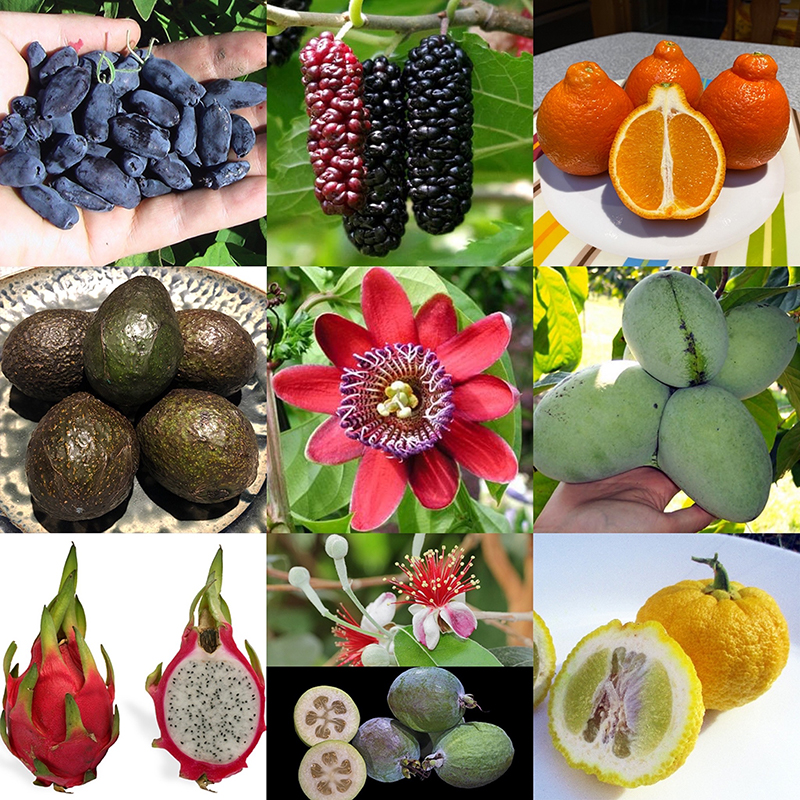
We have recently launched our Fall Citrus & Rare Fruit Pre-Order filled with 109 rare and unusual fruiting shrubs and other plants including hardy and non-hardy citrus, persimmon, paw paws, passionfruit, pineapple guava, Chilean guava, olives, avocados, and much more. Shipping and pick-ups will take place in early to mid October. Many plants are available only in limited quantities so please order as soon as possible.
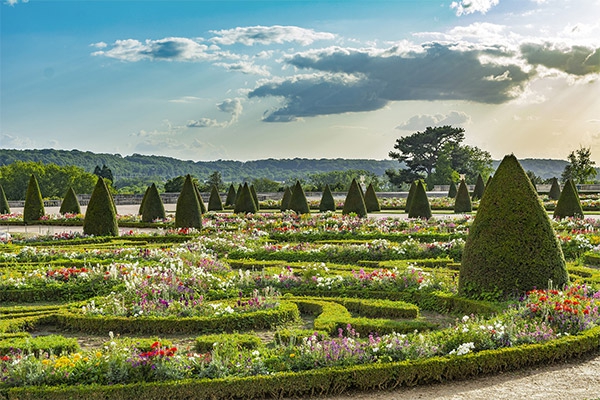
And for further inspiration, how about France? The itinerary is now available for my garden tour to see the Great Gardens of France at the end of June 2023. Would you like to join me? Details of the tour are below.
Enjoy!
Cheers, Gary and the Phoenicians
| |
|
Fall Citrus & Rare Fruit
Pre-Order
109 Amazing Edibles
| |
The Great Rose
Pre-Order will launch this fall!
| Sign up for the Rose Alert to be the first to know! Click "Update Profile" at the bottom of this email to add it to your subscriptions. | |
|
We are open February 25th to November 13th, 2022.
Seven days a week 10am-5pm including all holidays.
| |
|
Upcoming Garden and Botanical Tours
With the end of Covid in sight, we are working on new dates and tours. Here's your up to date information.
Great Gardens of France
June 24-July 3, 2023
Explore the Tour Itinerary
South Africa: The Cape Floristic Province
and the Bulb Capital of the World
New Date! Fall 2024
To receive information on these tours once the itineraries and details are ready, please email Worldwide Quest at travel@worldwidequest.com. Mention the name of the tour and the tour guide, Gary Lewis.
| |
Pre-Order Your Signed Copy of Gary’s New Encyclopedia
The Complete Book
of Ground Covers
4000 Plants That Reduce Maintenance, Control Erosion, and Beautify the Landscape
In this meticulously researched reference, Phoenix Perennials owner Gary Lewis profiles more than 4000 ground covers for zones 1-8. No matter your conditions —shade, dry soil, heavy clay, excess moisture—there’s a ground cover that will thrive and beautify your garden. Comprehensive, practical, and copiously illustrated, this indispensable volume belongs on the shelf of every designer, landscape architect, and serious gardener.
| |
|
|
Now booking speaking engagements for November onwards
The Complete Talk on Ground Covers
Plants that reduce maintenance, control erosion, improve the environment, and beautify the landscape
Have Gary speak at your garden club meeting or conference in this companion talk to his encyclopedia The Complete Book of Ground Covers.
| | | |
Workshops 2022 Postponed Until Further Notice | |
|
|
|
In this Issue
- Designing with Bulbs in the Garden
- Oriental Poppies
- Discover Pineapple Guava
- Cutting Edge Bearded Iris
- Beautiful, Dependable Daffodils
- Fall Citrus and Rare Fruit Pre-Order
- Spring Bulbs & Bare Root 2022
- Great Gardens of France: Join the tour!
- Fab at Phoenix
| |
Designing with Bulbs in the Garden
Bulbs offer many unique and valuable design opportunities
Bulbs are beautiful things that should be included in every garden. They come all wrapped up in their little packages in fall ready to easily plant. Then, in spring, they unwrap themselves for a beautiful display that will lift your spirits and inspire you at the start of a new gardening season.
Here are some tips and tricks for designing with bulbs.
Plant in Quantity – Every gardener needs to work within their budget but, when it comes to bulbs, it’s important to emphasize that more is usually better. A few bulbs can get lost in the landscape or in a container and might not make much of an impact. A large cluster of bulbs, however, can’t be missed. If you’re bulb budget is large, then buy lots and plant lots. If you’re bulb budget is smaller, then still plant in ample clumps, but choose wisely where to plant them. Essentially, keep the bulbs close to you. A beautiful patch of tulips or daffodils will be much more impressive planted in a container at your front door or in the garden bed outside your patio window than way out in the garden where you can barely see them.
| |
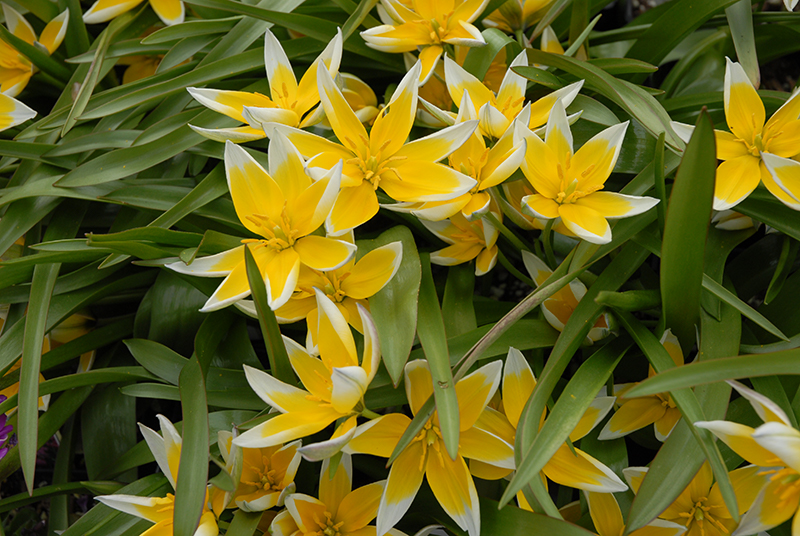
A dense planting of Tulipa dasystemon 'Tarda' makes an impression. | Colours – Bulbs are available in every colour of the rainbow which offers diverse design options when it comes to colour. Choose a pallet of reds, oranges and yellows for a hot look or cool it down with pinks, blues, and purples. Go red and white and patriotic or blue and yellow if you’re a patriotic Swede. Go all white for an elegant display. Go all purple and burgundy for a dark, lusty look. Or plant a multicolour extravaganza in your spring garden by selecting all the colours! | |
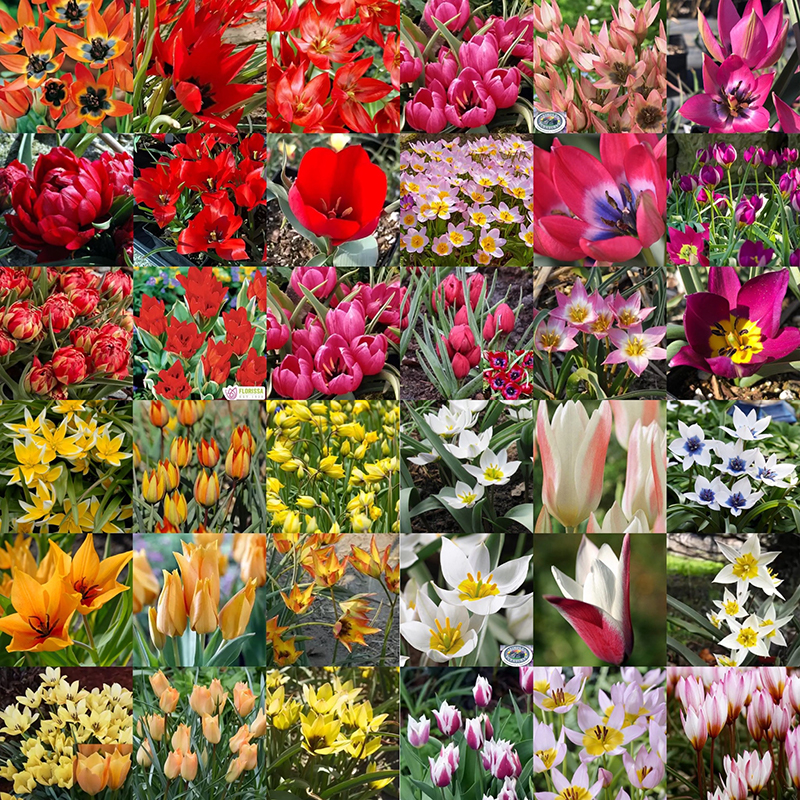
Bulbs offer almost every colour of the rainbow. Even within tulips most colours are available. | |
Bloom Time and Bloom Succession – The bulbs available for fall planting offer a very long season of interest. Most will bloom from late winter to late spring but some can bloom in fall and early winter (fall Crocus, Colchicum, Cyclamen, Nerine, Amaryllis belladonna, and Amarine) and others won’t hit full colour until early summer such as some ornamental onions (Allium spp.) and Amarcinum. In all, you’re looking at a smorgasbord of beauty that can cover about 9-10 months.
When purchasing bulbs, look for information on when the bulb blooms and then choose bulbs strategically to give you colour and interest in the garden when you want it. Plan for colour nearly all year long or plan for big displays at certain times of the year when you are most likely to enjoy them. This might mean planting a diverse display that will cover many months or planting certain areas to look great at certain times of the year. You might plant winter and early spring bulbs where you will see them from your kitchen or patio window. Plant many months of interest where you always park your car and enter your house for a little inspiration each morning when you go to work and every evening when you come home. Or, in the backyard, plant mainly late spring and early summer bulbs to give you colour when you are most likely to be out there in the warmer months.
Layering or Lasagna Planting – You can increase your colour per square foot of garden or container space by planting in layers, a strategy often called “lasagna” planting”. Essentially this means planting bulbs on top of each other. Small, early spring bulbs go on top, mid season medium sized bulbs go in the middle layer, and large, late season bulbs go on the bottom. This works because these types of bulbs all prefer to be planted at different depths and will bloom at different times through the season. Just remember to provide a good amount of bulb fertilizer.
Underplant All Your Ground Covers with Bulbs
Another kind of layered planting is to plant bulbs under ground covers. Ground covers and bulbs make natural companions. In fact, every drift of ground covers should be under-planted with bulbs. Bulbs are easy to plant and care for, cost effective, and long-lived. They can also share space with ground covers doubling the floral display when they rise up through mats or mounds during their season of growth and bloom. In small city gardens, this strategy is all the more valuable.
| 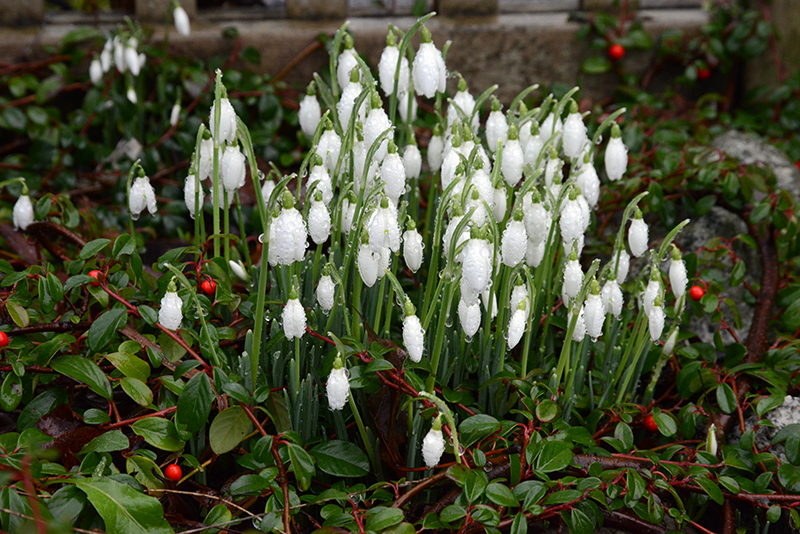 | Snowdrops (Galanthus nivalis), covered in raindrops, rise through a mat of Cotoneaster in late winter. | |
This combination is also practical since bulbs are hard to keep track of when dormant. Planted under ground covers, their place is easily marked and protected from marauding shovels attempting to shoehorn yet another treasure into the border. Bulbs can be selected to bloom at the same time as ground covers making a floral combination or to bloom at a different time creating multiple seasons of interest from the same patch of ground.
Practically any small to medium sized bulb makes a suitable companion for ground covers and even large bulbs can be used. Spring bulbs could include windflowers (Anemone blanda and A. coronaria De Caen), glory-of-the-snow (Chionodoxa spp.), snowdrops (Galanthus spp.), daffodils (Narcissus spp.), botanical and hybrid tulips (Tulipaspp.), English and Spanish bluebells (Hyacinthoides non-scripta and H. hispanica), hyacinths (Hyacinthus spp.), summer snowflake (Leucojum aestivum), Crocus, grape hyacinth (Muscari spp.), striped squill (Puschkinia scilloides), Triteleia spp., Brodiaea spp., Siberian squill (Scilla siberica), winter aconite (Eranthis hyemalis), reticulated iris (Iris reticulata), and Fritillaria.
| 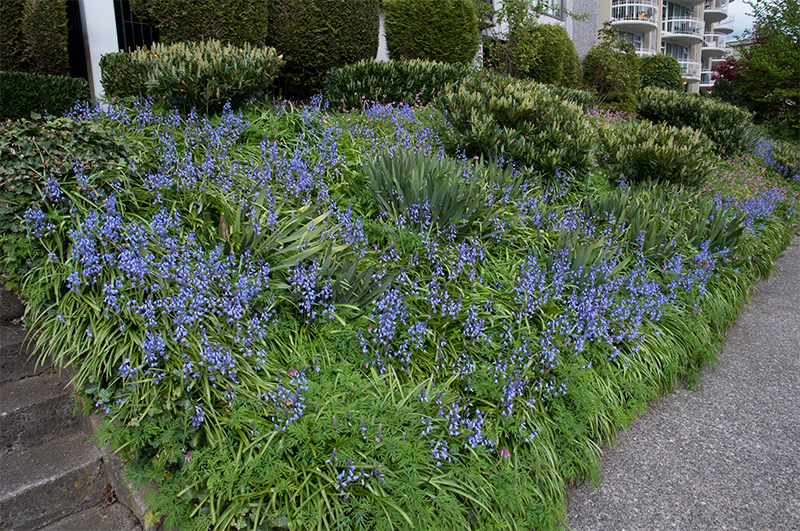 | |
A slope of English ivy (Hedera helix) is almost completely obscured by Spanish bluebells (Hyacinthoides hispanica) in spring. | |
|
Pair with Early Perennials and Shrubs – Bulbs are also natural companions for early season perennials like hellebores, Italian arum, Forsythia, Azalea, Daphne, primroses, Bergenia, and bleeding hearts. When these perennials or shrubs bloom, you can have them accented with beautiful bulbs flowering all around them.
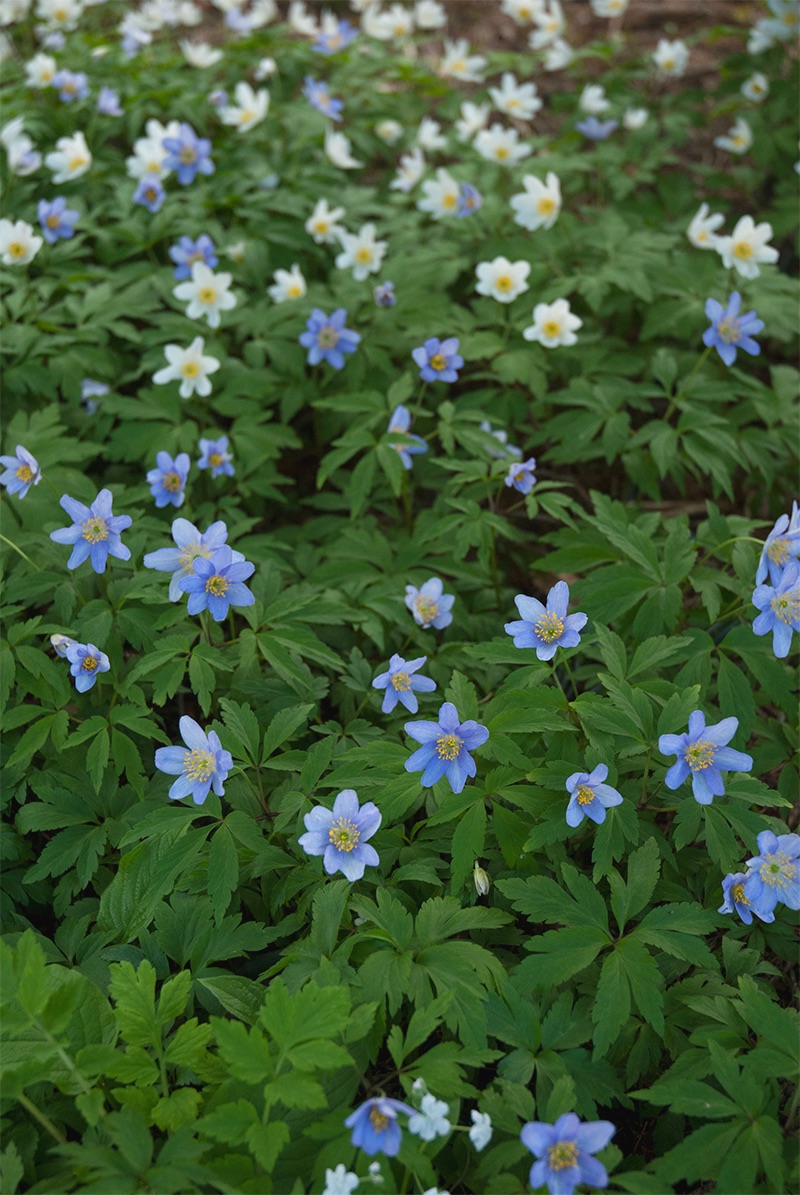
Plant Early Bulbs under Deciduous Shrubs and Trees – The thing about areas beneath deciduous shrubs and trees is that they experience full sun conditions in winter and spring when the branches are bare. These are the perfect conditions for winter and early spring blooming bulbs especially Cyclamen, snowdrops, Scilla, early daffodils, early Crocus, Eranthis, Chionodoxa, grape hyacinths, and windflowers (Anemone nemorosa and A. blanda). These bulbs will emerge and bloom in the full winter and spring sun and then go dormant as the shrubs and trees above them begin to leaf out later in the spring.
| Anemone nemorosa blooming beneath deciduous branches. | |
|
Plant with Late Emerging Perennials – Planting bulbs with late emerging perennials has many benefits. For one, the spring bulbs can help mark the locations of dormant perennials so that you can keep track of their locations and not accidentally dig them up during spring garden clean up and planting. Bulbs can also be planted in between the perennials in your border giving an extra season of interest in a space that won’t have colour until later in the spring or summer. And, just as the perennials emerge, they will help disguise the fading foliage of the bulbs making for a more attractive display all around.
Plant in Containers – You can plant containers full of bulbs, especially if you use the “lasagna method”, but don’t forget to tuck bulbs in to all your other containers. You may have mixed perennial and shrub containers throughout your garden. Bulbs are easy to insert into these containers where they will pop up through the other foliage in the spring giving you extra colour in the same space.
| |
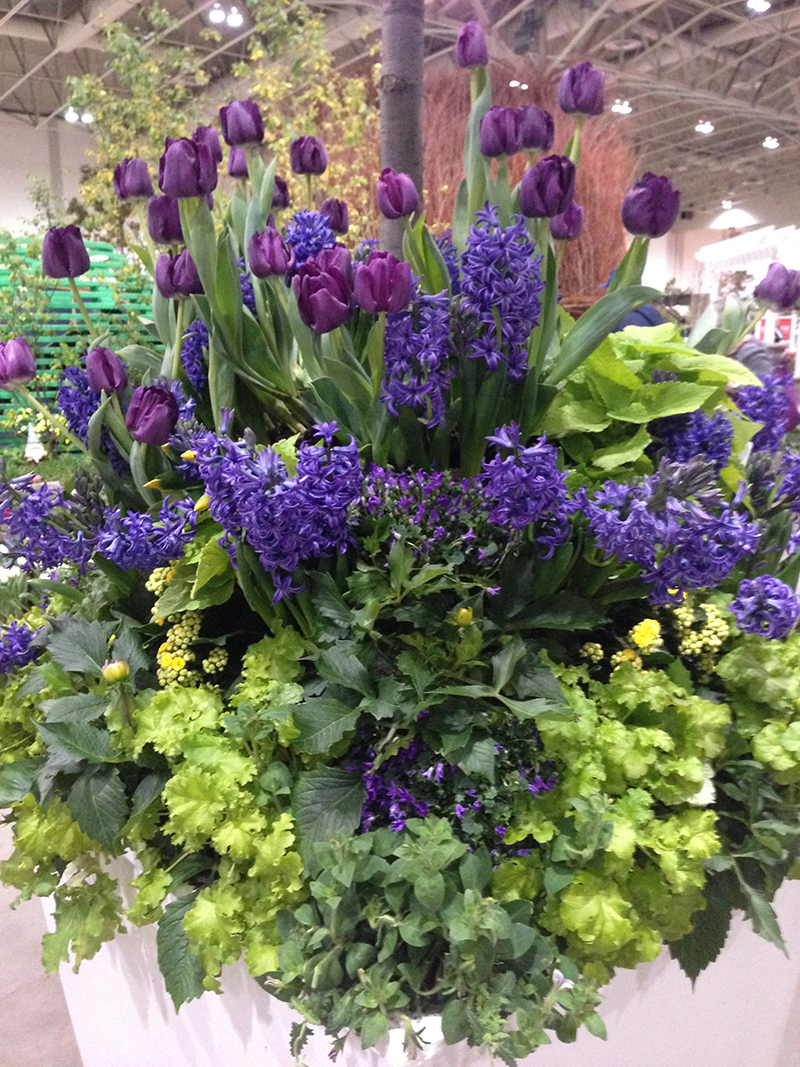
A container of tulips and hyacinths blooms through evergreen foliage. | |
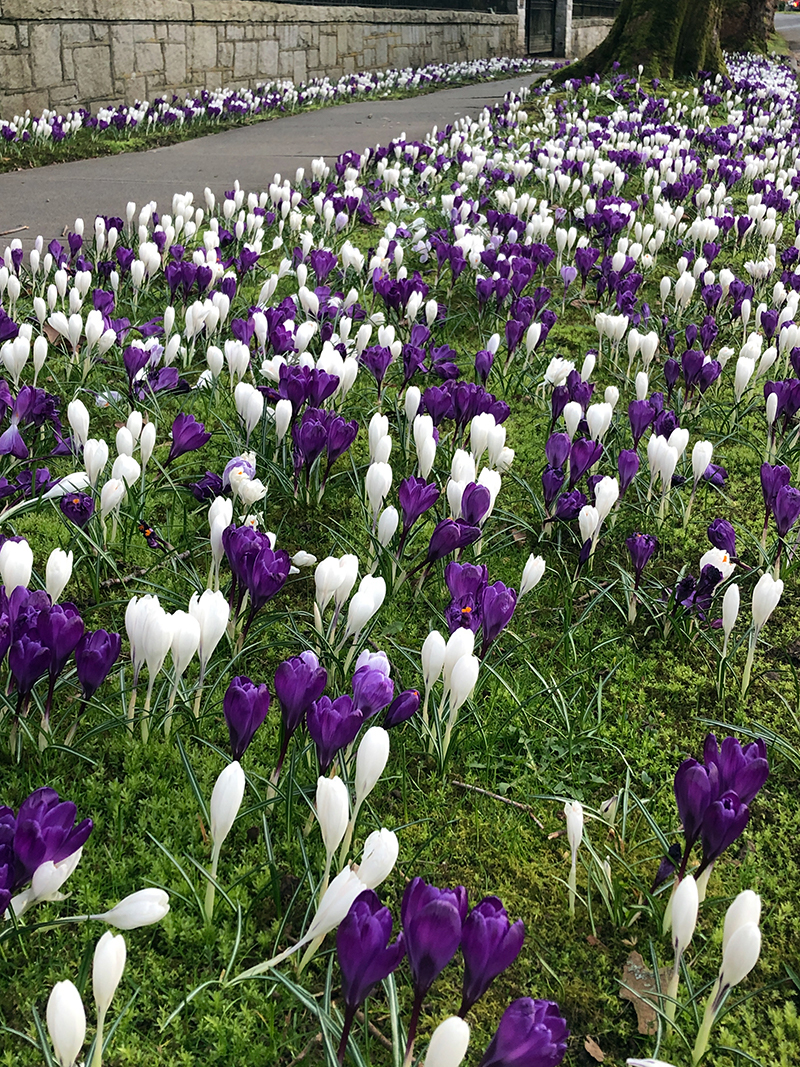
Plant Small Bulbs in Surprising Places – Small bulbs are quite versatile. In the wild, bulbs often grow through other plants and in rocky sites including cracks and crevices where other plants wouldn’t fit. Look for the small nooks and crannies in your garden such as between stepping stones, in the spaces in walls or between other hardscape. You can also look to what is likely the largest space in your garden: the lawn. You can plant early spring bulbs like Crocus, snowdrops, and Scilla in your lawn. By the time you need to cut the grass for the first time in the spring, these bulbs will already be done flowering and won’t mind having the tips of their leaves trimmed off. | Crocus rise through a lawn in early spring before the grass starts growing. | |
Bulbs can be magical in the garden. A little creativity with bulbs can go a long way to adding whimsy, surprise, and tons of beauty to your patio, balcony, or garden. | |
|
Oriental Poppies
The large dramatic flowers are sure to stand out in any border
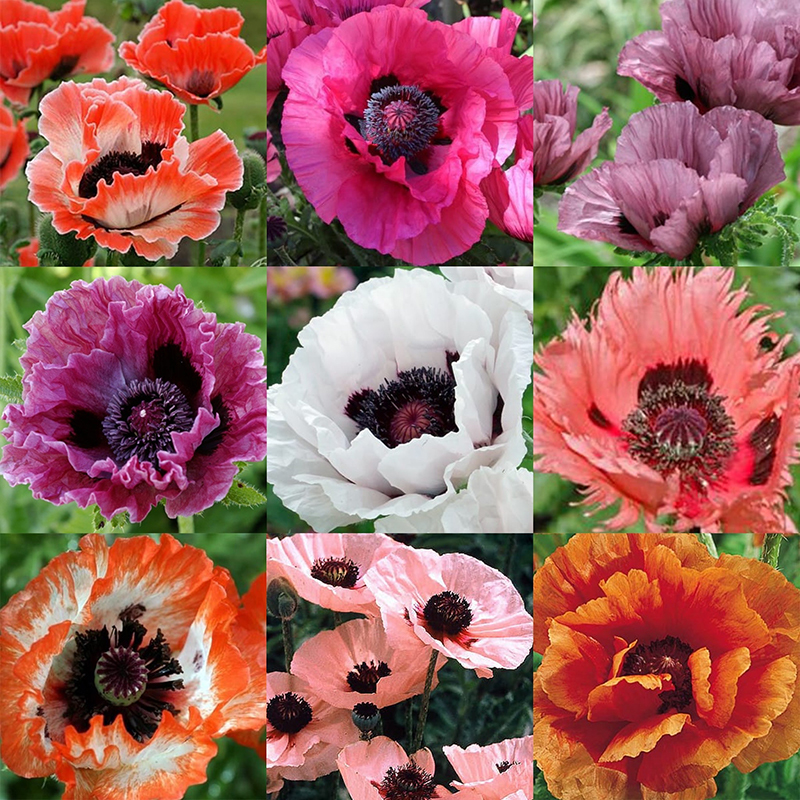
Oriental poppies (Papaver orientale) are a classic border perennial and the most popular and best-known of the genus with their large, dramatic, boldly-coloured flowers with their crepe paper-like quality and black central stamens. They are native to the Caucasus and parts of Turkey and Iran where their flowers are mostly brilliant orange-red. Breeding work has led to many different colours available to us in horticulture including reds, purples, pinks, salmon, orange, and white. Some cultivars have fringed petals like ‘Forncett Summer’ and ‘Turkenlouis’, some have extra ruffled petal edges like ‘Central Park’, some offer bicolours like ‘Carnival’ and ‘Picotee’, and many cultivars also have dark black thumb prints at the base of each petal.
| |
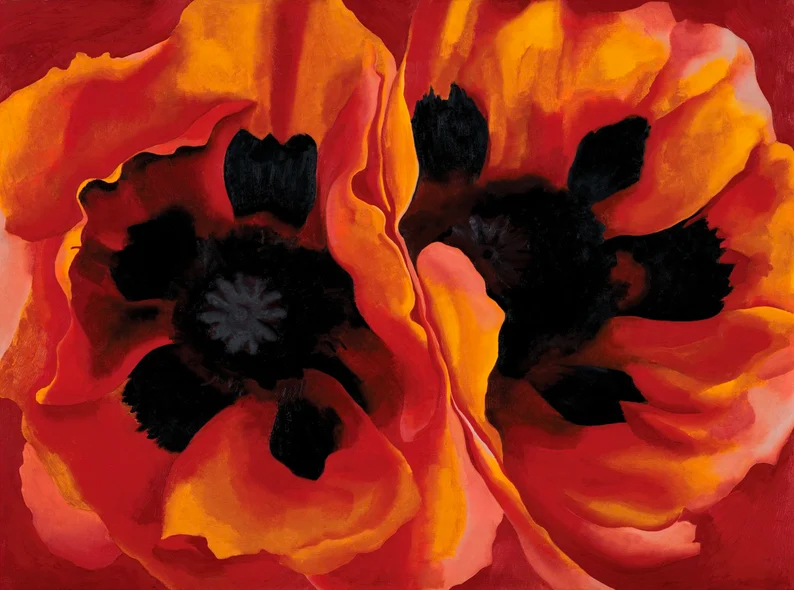
The beauty and drama of oriental poppies inspired the famous painter Georgia O'Keefe to immortalize them in her work. | |
Oriental poppies are herbaceous perennials that are fully dormant in winter and begin to grow in early spring with large, dissected, fuzzy leaves. The flowers rise through the foliage and bloom in late spring to early summer on stems 1-3 feet high, depending on the cultivar. After blooming, poppies will go into semi-dormancy where most or all of the foliage will dry up and disappear. Your oriental poppies are not dying but going through their normal seasonal cycle. In the hot, dry summers of their native habitats in Central Asia, going summer dormant is a survival strategy. As our summers cool towards fall, oriental poppies will often sprout new foliage that could remain through winter in mild winter climates.
This summer dormancy presents a challenge for designing a garden bed with oriental poppies but any number of summer blooming perennials can be planted nearby to fill the gap such as black-eyed-Susans (Rudbeckia), hummingbird mint (Agastache), catmint (Nepeta), cranesbill (Geranium), and ornamental sages (Salvia), particularly ‘Hot Lips’ and similar cultivars.
| |
|
Oriental poppies grow best in full to part sun and enjoy average to rich, well-drained soils. They are easy to grow, bulk up quickly into large clumps, and are hardy to at least zone 3 making them a dramatic border perennial for most Canadian gardeners.
This year we are pleased to offer our largest selection ever with 16 different cultivars available this fall as bare root for immediate planting into the garden. Oriental poppies establish very well this way.
| |
Discover Pineapple Guava
These intriguing and beautiful shrubs have edible flowers and fruit!
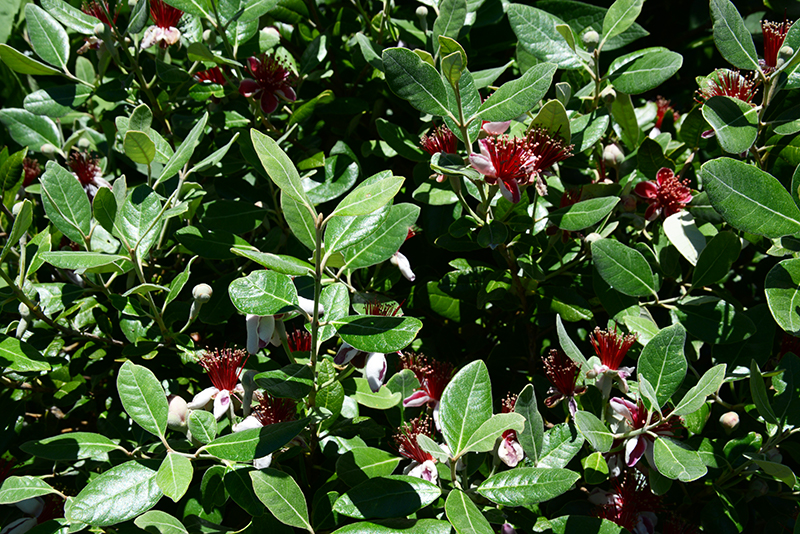
Feijoa (Acca) sellowiana is native to South America and is known as pineapple guava. It is an attractive, small, multi-branched shrub or small tree in the Myrtaceae or Myrtle family and is related to Eucalyptus, guava, and Chilean guava. It is highly ornamental with beautiful gray green, evergreen foliage with white undersides. Plants can be allowed to grow as they want or are quite amenable to pruning. You can shape into a standard tree form, keep narrow and columnar, of espaliered against a wall or railing for privacy.
| |
|
Its showy, tropical-looking flowers have white petals often flushed with pink and dramatic red stamens with yellow tips. The petals are edible and taste like cotton candy making them an unusual and exotic addition to salads or as a garnish for desserts. The delicious fruits that follow are green and oblong and about the size of a chicken egg. The fruit are sweet and aromatic with a perfumy smell. They taste like an exotic combination of mint, apple, and pineapple. Plants will bloom in the summer and fruit will ripen in November. The fruit is ripe and the most flavourful at the point that it is ready to fall from the plant.
In the wild most Feijoa are not self-fertile and seedling-grown plants will require two different plants to pollinate each other to get fruit on both plants. However, numerous cultivars have been selected to be partially or fully self-fertile. However, even with these plants the presence of a different cultivar for cross pollination will improve the quantity of fruit produced.
Pineapple guava are hardy to zone 7 but should be grown in protected situations within gardens and covered in extreme cold snaps to protect developing flower buds and fruit and minimize leaf damage. They can also be grown in greenhouses or sunrooms in colder climates and are quite amenable to container growing. Some of our customers have had some success growing them as houseplants but Feijoa need a cool winter chill period in order to flower and fruit. This could be achieved by growing them indoors in winter and outdoors in summer allowing them to experience cool nights and frost before bringing them indoors.
Pineapple guava have been widely grown in New Zealand since the 1920s and most of the breeding work of new cultivars has taken place there. We are pleased to offer many new cultivars from Roy Hart and Nigel Ritson who have been breeding for large fruit, thin, edible skin, sweet and flavourful flesh, and early ripening, which is very important in cool summer climates such as the West Coast.
Have fun exploring our selection of pineapple guava and choosing some to grow in your garden or on your patio.
|  | |
Cutting Edge Bearded Iris
29 Amazing Cultivars in Every Shade of the Rainbow
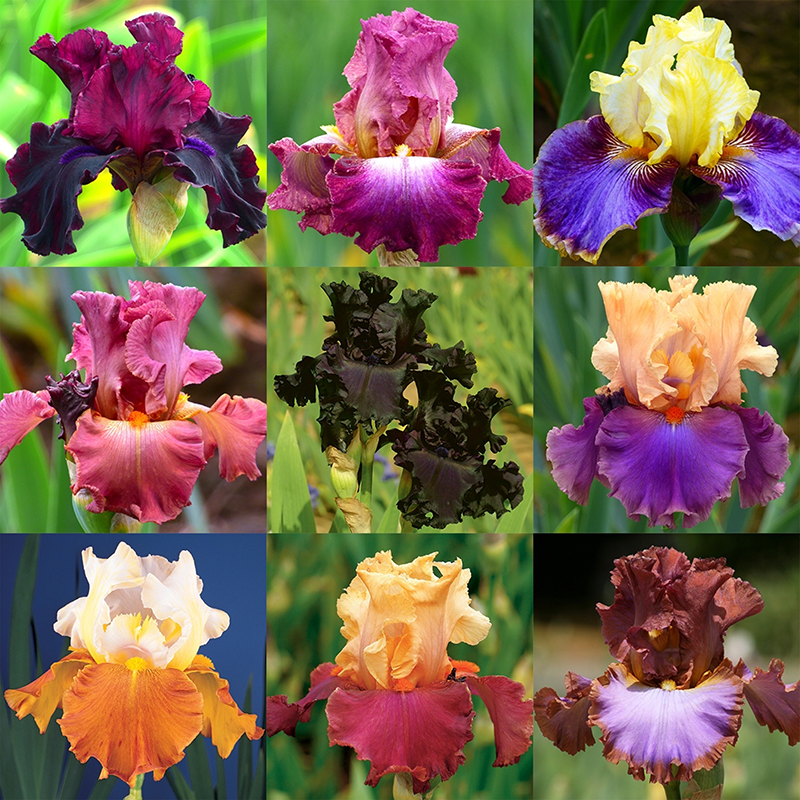
Bearded or German Bearded Iris are classic perennials that have proven themselves time and time again in temperate gardens the world over. Van Gogh and Georgia O’Keeffe painted them. The Brits and French have planted them for hundreds of years. And plant breeders have created thousands of cultivars over the centuries. Their upright fans of pointed, grey-green, sword-like leaves strike a contrasting pose amongst other garden plants and their gorgeous flowers – which come in every shade of the rainbow – offer beauty and, often, fragrance from mid spring to early summer, sometimes reblooming later in the season. Bearded iris are also incredibly hardy and grow well at least to zone 3, perhaps colder, making them available to most temperate gardeners.
| |
We are pleased to have a magnificent selection of rare and cutting edge cultivars this year. | |
|
Bearded irises have large flowers consisting of three upright standards and three downward arching falls each of which sports a beard at its base which is a row of coloured hairs that look a bit like a fuzzy caterpillar. Contained within the standards are the smaller style arms which look like small petals and sometimes contribute to the show.
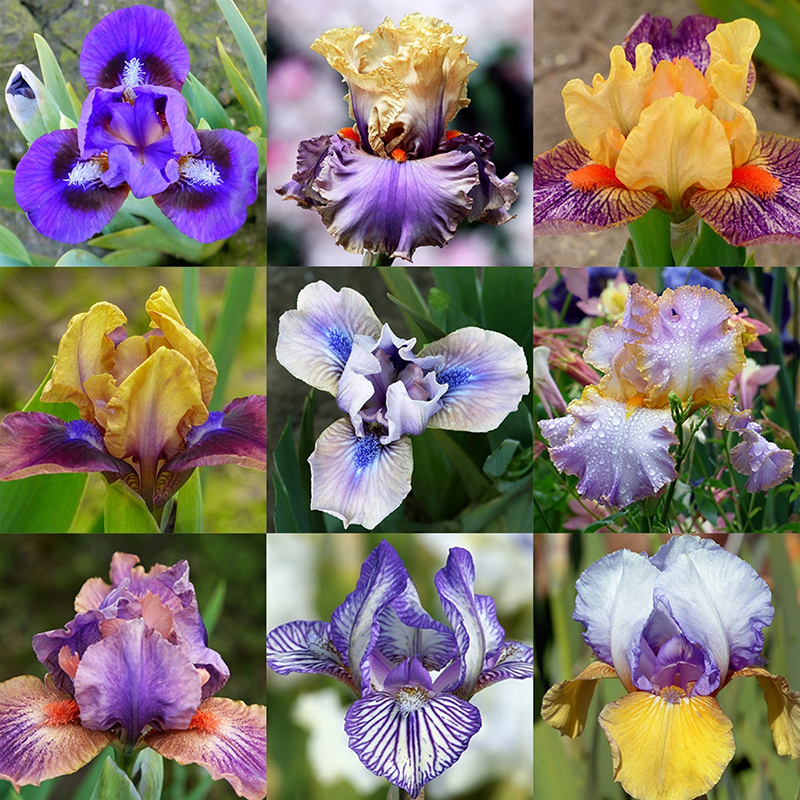
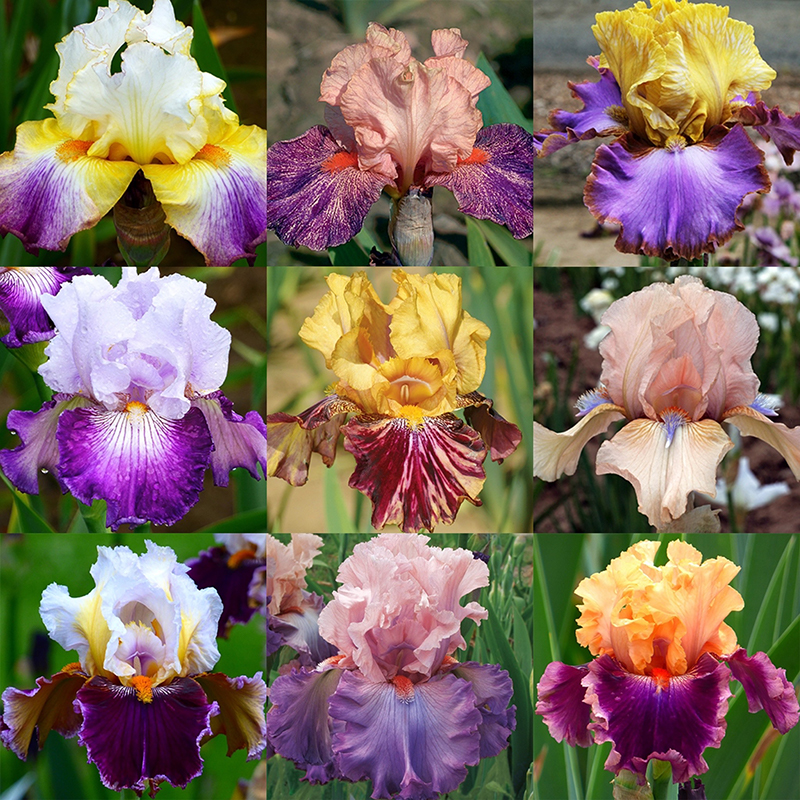
Iris flowers are incredibly diverse in their colours and patterns. Some flowers are uniformly monochrome. Others may offer a similar range of colours and patterning from top to bottom. Still others may bloom with completely different shades and patterns on the standards as compared to the falls. The flowers may have delicate veining in contrasting colours, or picotee edges to the petals, or glows and flushes of varied colours on different parts of the petals. The beards also range in colour from white to yellow to orange to red to blue.
| |
Bearded irises are among the most colourful of flowers and offer every colour of the rainbow. | Bearded irises are complex hybrids of a variety of wild iris species and the crossing of these species and their hybrids over time has lead to the wide range of cultivars available today. While flower colour and patterns are the main focus of breeding efforts, height is also an important characteristic of bearded irises so much so that they have been divided into different size categories: Tall Bearded (TB) irises grow to 27 inches or more tall, Intermediate Bearded (IB) irises grow to 15-25 inches tall, Standard Dwarf Bearded (SDB) irises grow to 9-15 inches tall, and Miniature Dwarf Bearded (MDB) irises grow to 2-8 inches tall. | |
Bearded irises offer so much colour and beauty and are so easy to grow. | |
|
Bearded iris are among the easiest of perennials to grow and are perfect for all levels of gardeners from beginners to experts. They prefer full sun with at least 6 hours of direct light a day. They are drought tolerant owing to their thick underground rhizomes and can grow in soils of poor to average fertility though they will grow best in average to rich soils with reasonable soil moisture. They require very little other care. However, if you notice that clumps are becoming quite large and the number of flower stems are decreasing each year, irises will benefit from being divided. You can move them around your garden and give pieces away to friends.
This year we are very pleased to have secured a selection of cutting edge and rare cultivars – many of them award-winning – with particularly beautiful and notable colour patterns. These very special iris are worth collecting and deserve a special place in your sunny border or large pots.
| |
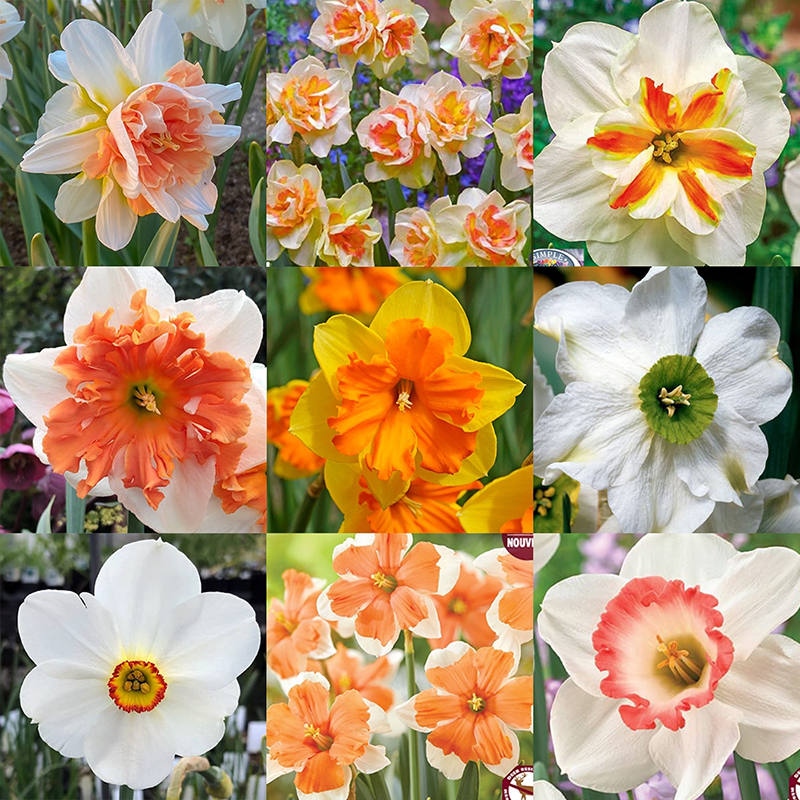
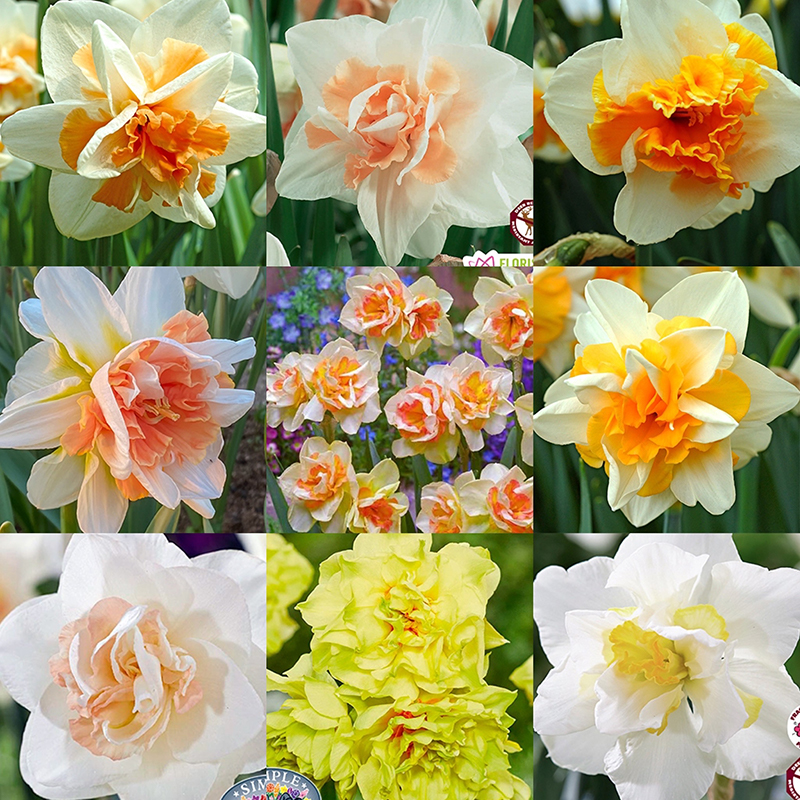
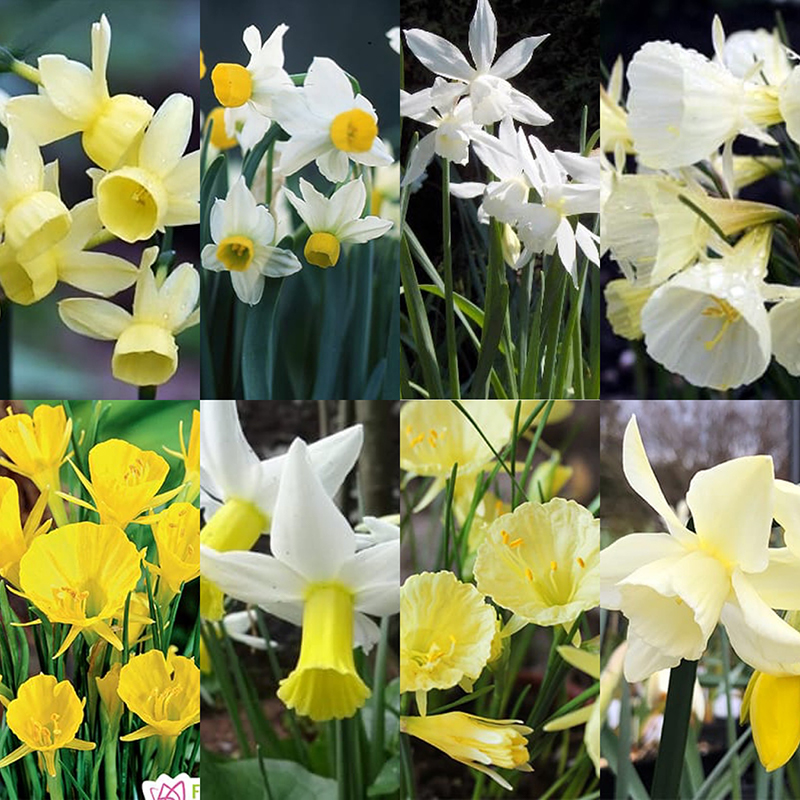
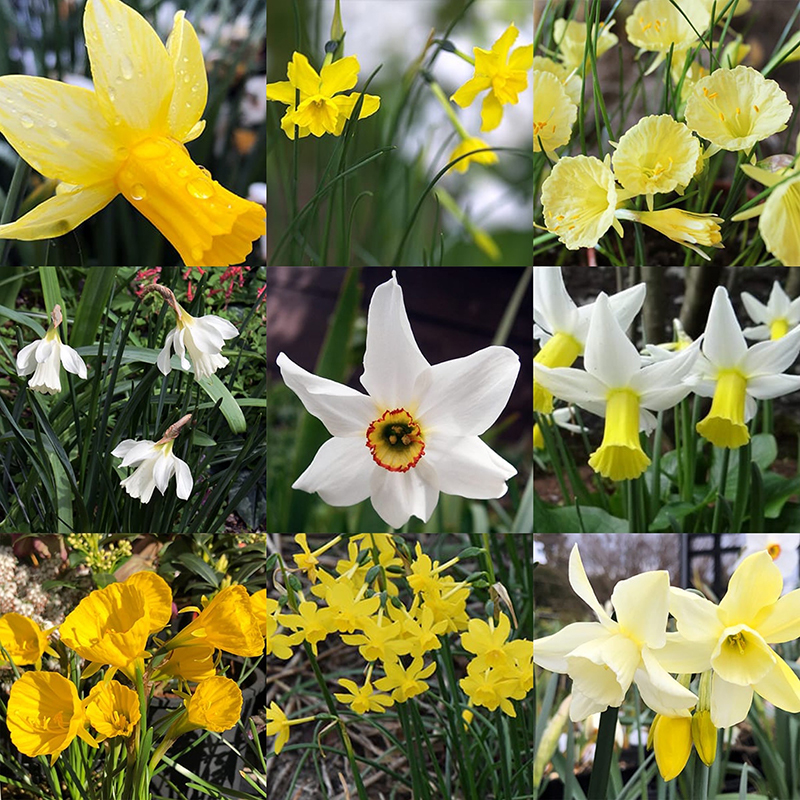
Beautiful, Dependable Daffodils
50 amazing cultivars from demure to rambunctious
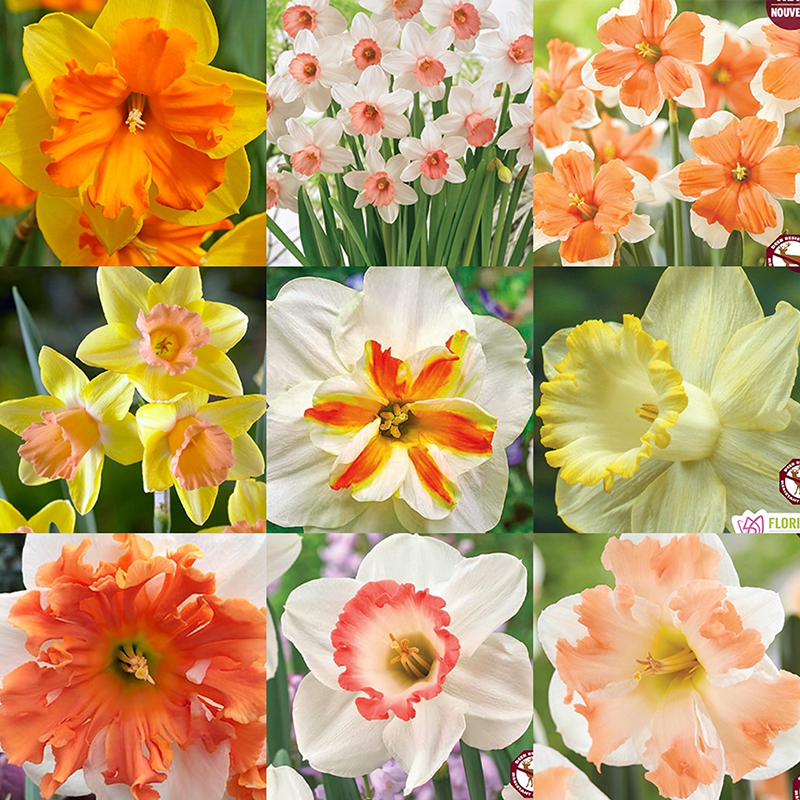
Next to tulips, daffodils are probably the second most beloved of the spring bulbs, the proverbial runner up in spring’s popularity contest. They do not have the broad colour range of the tulips – which offer nearly every colour under the rainbow – but daffodils do their best with the colours given to them: white, cream, yellow, orange, peach, pink, and green.
| |
We have an amazing selection of rare, cutting edge, and tried and true daffodil cultivars this year. | |
Despite their more limited colour palette, daffodils have a few things that tulips don’t. The genus Narcissus, which hails from the Mediterranean with a centre of diversity in Spain and Portugal, offers a range of flower forms which are variations on the central, tubular corona surrounded by six petals. The corona could be large or small, flared or narrow and tubular, whole or split, single or bicoloured, and in all cases variously ruffled and taking on any of the colours available to daffodils. The petals can be broad and overlapping or narrow, mostly flat or twisted, large or tiny, flared out at a 90 degree angle to the corona or reflexed backwards, and appear in shades of white, cream, yellow, and, occasionally, bicolours. | |
Species and species-type Narcissus offer a quiet beauty that is distinctive from the boisterous modern hybrids. | |
|
While tulips are boisterous and colourful, daffodils are mostly demure, understated, elegant, and sophisticated. They add charm to containers or gardens. They are also often fragrant. That being said, there are many split corona and double daffodils that offer large, exciting flower displays.
In the garden, daffodils are easy-to-grow, dependable, and are great performers. Planted in a sunny location their clumps will bulk up over time into stunning spring displays in garden beds or naturalized in fields or on slopes.
We are very pleased to offer 52 different species and cultivars of Narcissus this year for pre-ordering through the summer and fall for pick-up or shipping in late September to mid October. Click on the button to peruse our selection.
| |
Spring Bulbs & Bare Root 2022
Canada's Most Exciting Selection with 590 Species and Cultivars!
We are very excited to launch this year's bulb and bare root line-up with 590 different species and cultivars to choose from including 140 new items that we've never offered before! Shipping and pick-ups will take place in from late September through to the end of October as our shipments arrive.
Over the next few months we'll highlight our selection and all our new additions. For now, as subscribers to the Bulb Alert, you've got a jump start of a day or two before anyone else knows! Follow the link below to explore and shop.
| |
Important Notes
The minimum to place an order is $25.
Note that many of our rare species and cultivars arrive later than conventional ones so most orders will be ready for pick-up or shipping in October.
Some bulbs will likely never ship before mid October: Cyclamen, Cypripedium, Eremurus, Galanthus, Gladiolus, Hippeastrum (Amaryllis), Lilium, Paeonia, and Papaver.
Cold climate gardeners can prepare for this. Bulbs and bare root can be planted in the ground as long as the soil is still workable. You can pre-dig holes and then mulch plantings well with a pile of fallen leaves. Or you can plant in pots and protect in a less freezing location such as a garage or slightly heated basement, shed or greenhouse for the first winter then plant out into the garden in spring.
| |
Fall Citrus and Rare Fruit Pre-Order
105 Amazing Edibles for Home, Patio and Garden
We are excited to offer our largest selection ever of fall Citrus - 37 different varieties - with many new cultivars including cold tolerant and hardy varieties! We also offer an amazing selection of paw paws, pineapple guavas, avocado, dragon fruit, honeyberries, olives and other cool edibles. In total we have 105 rare, unusual and cool edibles for your growing pleasure. Enjoy!
| |
Pre-order now for pick-up or shipping in early to mid October. Follow the link for full details. |
|
|
Travel to France with me in 2023!
Great Gardens
of France
June 24 - July 04, 2023
Join Gary Lewis to visit a selection of the finest and most famous gardens in France. Travel from Versailles to Tours in the heart of the Loire Valley and to Rouen in Normandy.
Together we’ll see fine examples of gardens from Renaissance to contemporary including flower gardens, woodland gardens, grand landscaped parks, and the magnificent formal gardens of the great chateaux. Our trip culminates at Giverny where we marvel, as Monet did, at the play of light upon the pond that inspired his water-lily compositions.
We’ll visit more than 20 gardens, selected for visual impact, horticultural interest, and historical importance over a leisurely ten days with three-night stays in Versailles, Tours, and Rouen. We’ll meet gardeners preserving the grand traditions and others re-inventing the garden with modern informality. We’ll linger too in small villages and medieval towns, and as we explore, we’ll savour the traditions and re-inventions of French cuisine and wine.
An optional extension to Champagne offers a sparkling finale.
| |
Itinerary at a Glance
Day 1 Meet in Versailles, attend the Night Fountains event
Day 2 Visit Arboretum Versailles Chèvreloup, enjoy Palace gardens
Day 3 Château de Courances, Vaux-le-Vicomte
Day 4 Drive to the Loire Valley with beautiful stops along the way
Day 5 Glamorous Château de Chenonceau, village of Chedigny
Day 6 Château de Villandry, Chateau du Rivau, Abbaye Royale de Fontevraud
Day 7 Drive north to Rouen in Normandy, stopping at two gardens on route
Day 8 Le Jardin Plume, one of the finest modern private gardens in France
Day 9 Three magical gardens, plus lunch in the fishing village of Honfleur
Day 10 Monet's gardens in Giverny
Day11 Drive to Paris, depart or join the optional extension to Champagne
| |
|
Fab at Phoenix
Gary's picks of what's exciting right now at the Phoenix Candy Store
The nursery is so full of beautiful plants at this time of year that it's hard to pick favourites.
| |
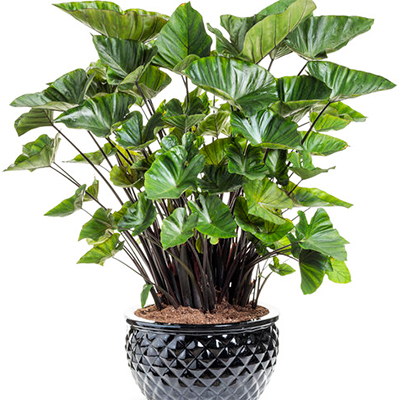
Colocasia 'Coffee Cups' is an elephant ear with cupped olive green foliage with burgundy veining on burgundy stems.
| |
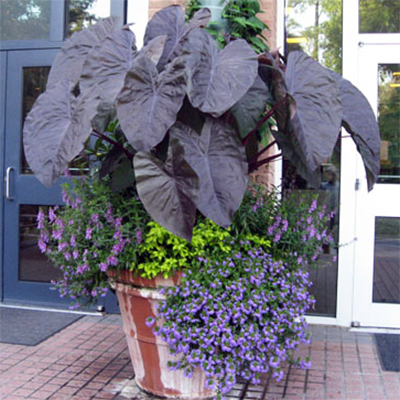
Colocasia esculenta 'Diamond Head' is a taro or elephant ear with large, ruffled, dark brown, tropical foliage.
| |
|
Help Us Spread the Word
Please tell your friends and family about Phoenix Perennials. Share this email with them, tell them about your mail order plants, or bring them with you to visit the nursery.
Thanks so much!
| |
Check us out on Social Media! | |
請加入我們新的微信和小紅書社交媒體賬戶,獲取有關玫瑰、牡丹、亞洲食用植物等的信息!
For our Chinese customers, please join our new WeChat and Red Book social media accounts for information on roses, peonies, succulents, Asian food plants, and much more!
| |
|
Update Your E-Newsletter & Alert Subscriptions
You can manage your subscriptions to our E-Newsletter and occasional subject-based Alerts at any time by clicking on the "Update Profile" link at the bottom of every E-News or Alert. The E-Newsletter comes out twice a month. The 18 different Alerts come out occasionally when we have something exciting to tell you:
| |
- Bulb Alert
- Christmas Alert
- Clematis and Cool Vines Alert
- Edible Alert
- Fragrance Alert
- Hardy Subtropical Alert
- Hellebore Alert
- Hot Plant Alert
- Houseplant Alert
- Kids Alert
| |  |
- Made in the Shade Alert
- Mail Order Alert
- Maple and Cool "Woodies" Alert
- Native Plant Alert
- Rare Plant Alert
- Rose Alert
- Sales & Special Offers Alert
- Small Space Alert
- Succulent Alert
| | | | | |