|
We. Love. Drones.
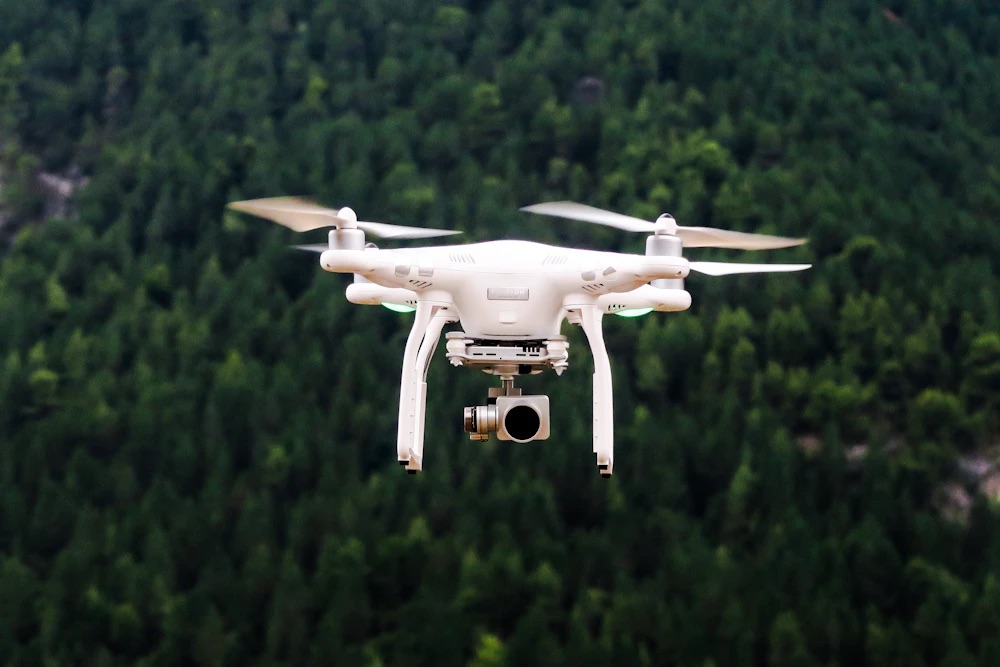
They are a truly groundbreaking tool for private investigators for a myriad of reasons, but mainly because they are stealth... and they can fly.
Occasionally we'll have to work a case that is physically impossible for us mere humans to surveil (think: an abandoned warehouse with an 800-ft long driveway on a hilltop surrounded by dense forest). We don't know if it's safe, if the property is restricted, or if there's any intel we can get from the surroundings. So we'll call upon a drone, specifically our drone, Ariel, who you'll meet later in this newsletter (heads up, she's shy).
While drones are nifty and take b-e-a-utiful footage, they aren't a one-stop shop. First, you have to have a license to fly one, and they have to be registered with the FAA, and they can only operate in timed chunks. So up for a half-hour, down to recharge, then back up.
So when we can't have eyes in the sky, private investigators rely on what's known as unmanned surveillance, aka cameras set up back on earth—either in the wild (hidden in a tree) or attached to a vehicle (i.e. that super covert car parked down the block). Both PIs and law enforcement rely on Unmanned Surveillance Vehicles (USVs) for 24/7, panoramic video and photo capture of suspicious or criminal activity.
While this is *cool* and all, you may be wondering how this affects normal people like us who are walking around and minding our own business. The long and short of it is, it depends on where you live. Nine states in the U.S. currently prohibit drones from flying over private property, while others allow it so long as there's a "reasonable expectation of privacy" to protect civilians against unwarranted searches. Same goes for USVs—expectation of privacy is key.
Keep an eye on how your state legislatures adapt to new technology laws so you can stay informed of your rights the next time you see a something in the sky that's not quite a bird or a plane.
|