https://files.constantcontact.com/224bdf21201/6c9745e5-6344-475d-bfe6-79ab7cbe3046.jpg?rdr=true
Science Take-Out kits are ready-to-go
with no prep and no lab equipment required. 
Convenient, engaging, and cost-effective!

Diabetes Awareness Month

November is Diabetes Awareness Month - a national initiative to to bring attention to diabetes and to prevent diabetes-related health problems.


Diabetes affects over 40 million people in the United States - which is about 12% of the US population. This includes people with diagnosed and undiagnosed diabetes. Almost 29% of people age 65 or older have diabetes.


Data from the CDC National Diabetes Statistics Report indicate that in 2023, about 364,000 children and adolescents under age 20 were estimated to have diagnosed diabetes. This includes 314,000 youth with type 1 diabetes.


Diabetes can damage the eyes, kidneys, nerves, and heart, and it is linked to some types of cancer. Diabetes was the seventh leading cause of death in the US in 2024.


Health experts agree that diabetes awareness and education will be key to curbing the rise in diabetes and reducing the associated escalating healthcare costs, and will also contribute to improving wider health literacy. 


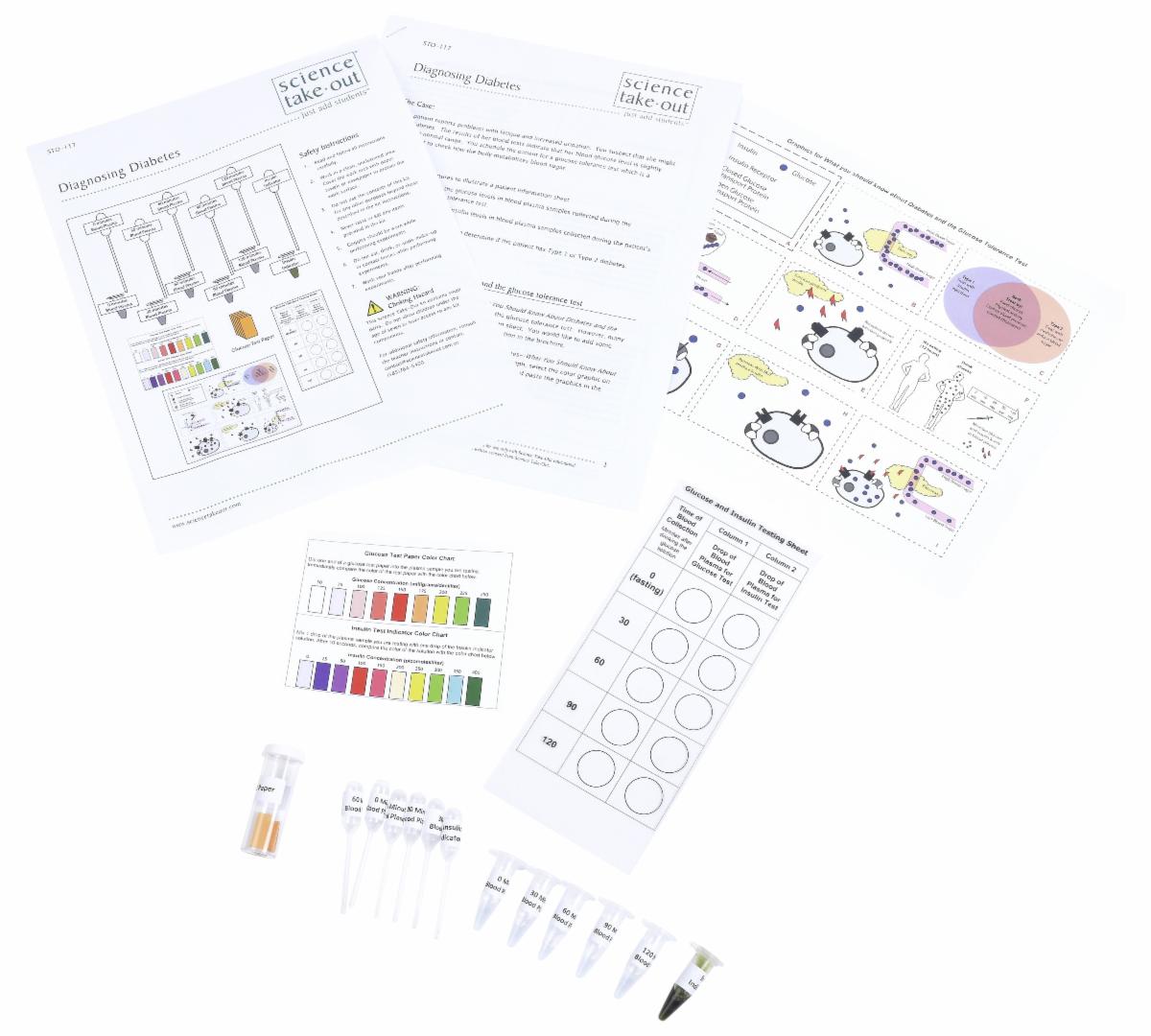
Science Take-Out's Diagnosing Diabetes kit (described below) uses an engaging, real-life scenario for students to learn about diabetes and concepts related to homeostasis and cell communication.


Diagnosing Diabetes


Does your patient have Type 1 or Type 2 diabetes?

  • Create a patient information sheet about diabetes and the glucose tolerance test.
  • Test and graph glucose and insulin levels in simulated blood plasma samples.
  • Analyze the test results to determine if the patient has Type 1 or Type 2 diabetes.

Also available in Spanish! Diagnosticar la Diabetes


Diagnosing Diabetes Core Concepts:

  • To maintain homeostasis, the internal environment must be kept stable - within normal limits that are favorable for cell activities.
  • Homeostasis in an organism is constantly threatened. Failure to respond effectively can result in disease or death. 
  • Organisms detect and respond to change in a variety of ways at the cellular level and at the organismal level.
  • Blood sugar levels are maintained by insulin from the pancreas.
  • Receptor molecules and hormones play an important role in the interactions between cells. 
  • If hormone signals are blocked, cell communication is disrupted and the organism’s stability is affected.
Facebook  X  Instagram  Bluesky  LinkedIn
Science Take-Out | (800) 943-1962 | www.sciencetakeout.com