November | 2026

NEWS


Diabetes and Your Eyes

a woman in a park wearing glasses

The longer someone has diabetes, the higher their risk is of vision loss and blindness. Early detection and treatment can help to prevent significant vision impairment. It is recommended that people with diabetes receive annual eye exams.


Find Out More About Diabetes and Your Sight

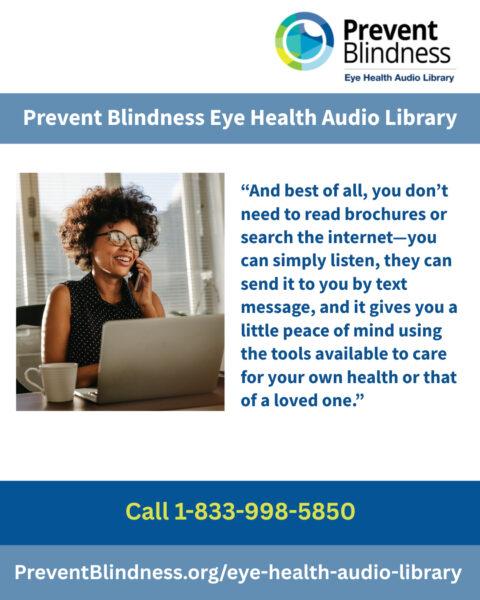
Prevent Blindness Audio Health Library
 

Are You Ready for Your

Open Enrollment Period?

Each year, Medicare’s Open Enrollment Period runs from October 15 through December 7. During this period, people with Medicare can review their coverage and make certain changes to their Medicare Advantage or Medicare prescription drug coverage. Changes generally take effect on January 1.


Use our checklist to help make sure you have all the information you need for the right plan to support your eye health.


Changes to Medicaid


New requirements for Medicaid coming in 2027 may impact your eligibility.


Find out More


Thyroid Eye Disease Week

November 9-15

Thyroid eye disease (TED), also known as Graves’ ophthalmopathy or Graves’ Eye Disease, is an autoimmune disease in which the immune system causes inflammation and swelling which leads to abnormalities within muscle tissue and fat behind the eye. An overactive thyroid gland (hyperthyroidism) is usually caused by Graves’ disease. Up to one-half of people with Graves’ disease develop TED. Learn about TED, Graves' disease and related conditions including symptoms, treatments, and living with TED. Thyroid Eye Disease Week is sponsored by Amgen Rare Disease and Viridian Therapeutics.


This month on the Prevent Blindness Focus on Eye Health Podcast, board certified endocrinologist Dr. Sonalika Khachikian shares vital insights about conditions like Graves' disease and diabetes, and their significant effects on vision.


Host Christopher Hord also speaks with Rachel Kamen, Public Affairs Manager with Waymo about self-driving cars and accessibility for the blind and vision impaired community.


2027 Person of Vision Dinner

Wednesday, March 10, Las Vegas


Sponsored Content

 
Are you or a loved one living with Stargardt disease? Learn about the Northstar Study

The NORTHSTAR study is testing the safety, effectiveness, and tolerability of an investigational drug called gildeuretinol acetate (ALK-001) in those with Stargardt disease. Participants who are medically eligible to take part in the study will be randomly assigned to receive either the investigational drug or placebo during the treatment period. The study drug and placebo come in capsule form and are taken by mouth once a day.


You may be able to join if you:


  • Are 8 to 45 years old
  • Have been diagnosed with typical autosomal recessive Stargardt disease (STGD), a form of inherited macular dystrophy
  • Have genetic test results showing at least one disease-causing change (mutation) in the ABCA4 gene


If you or your child choose to participate, the investigational drug and all study-related visits, exams, tests, and procedures that are not part of routine care will be provided at no cost to you.


Email trials@alkeus.com for more information or to see if you qualify.


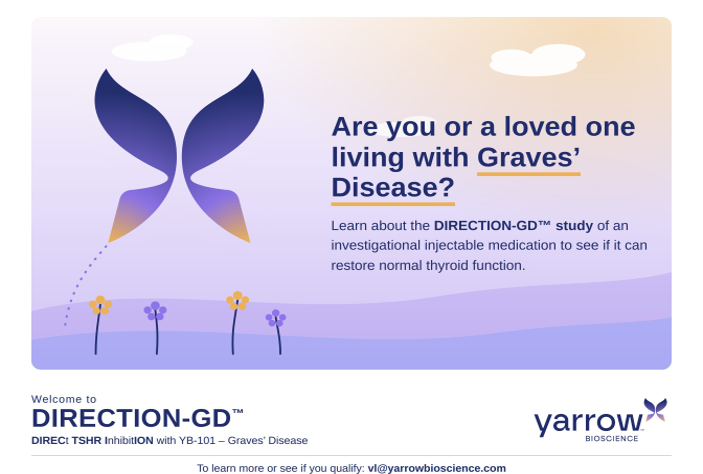
Are you or a loved one living with Graves' Disease?


The DIRECTION-GD study is evaluating an investigational medication called YB-101. YB-101 is a monoclonal antibody (a kind of protein made by your immune system). The study drug is a monoclonal antibody, a type of protein created in a laboratory. Researchers want to learn whether YB-101 helps restore normal thyroid function and reduces the symptoms of Graves’ Disease.

You may be able to take part if you:

  • are 18 years of age or older
  • have a diagnosis of Graves’ Disease with or without Thyroid Eye Disease, and
  • weigh at least 32 kg (71 pounds).


Note: Additional criteria apply.


Participants who are medically eligible will be randomly assigned to receive either YB-101 or placebo during the treatment period. The study drug and placebo are given as an injection just under the skin.


The study lasts up to 10 months, with a 24-week treatment period followed by a safety follow-up period. If you take part in the study, you will be provided with all study treatment, examinations, and medical care related to the study without charge. Assessments and procedures that are part of the standard of care for your condition may not be covered by the study.


Email vl@yarrowbioscience.com for more information or review additional details at Clinicaltrials.gov Study Details | NCT07682896.


Support Our Sight-Saving Mission

Give to Prevent Blindness


PreventBlindness.org

Facebook  X  Instagram  LinkedIn  YouTube