Real People Making Real Things Makes a REAL Difference! | |
| Diatonic Cigar Box Guitar Necks Now Available | | |
For years, folks have asked why we don't offer a diatonic neck, but for one reason or another it never made it to the top of the to-do list.
That changed last week when during a phone call with Steve Arvey, he said "Hey Gitty, you need to make a diatonic neck. Builders will love it!"
The next day, the first prototype was on my desk.
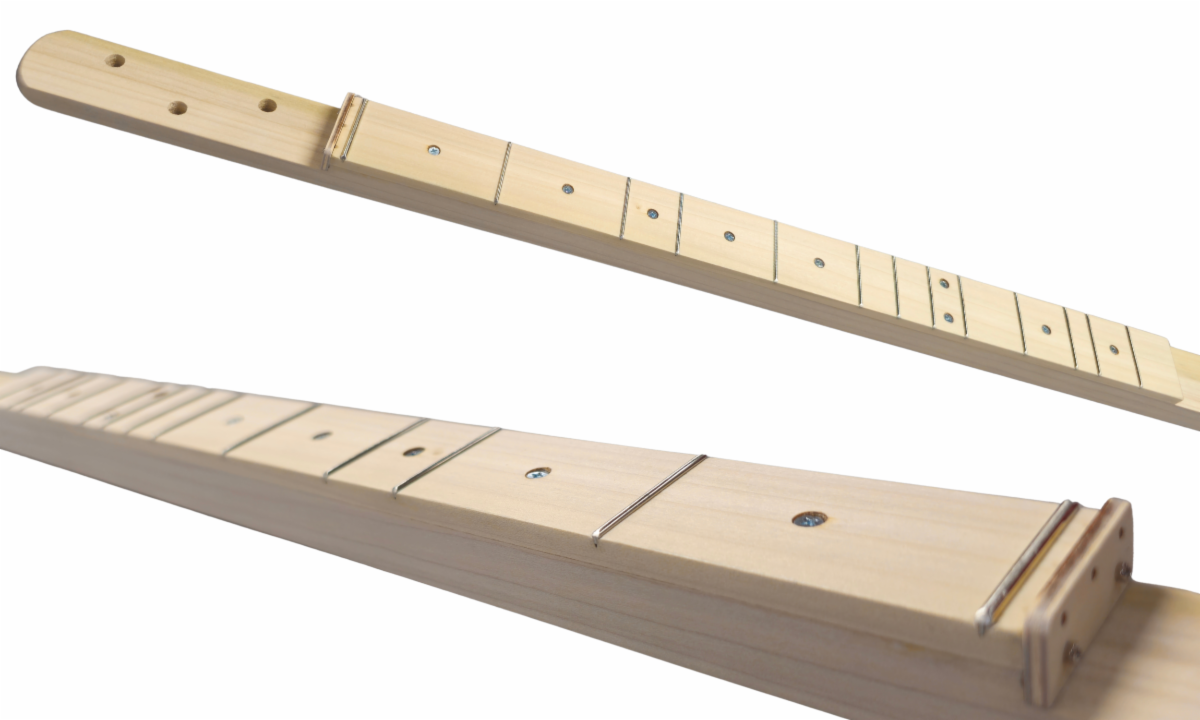
RJay and Deke out in the Gitty shop took our popular fully fretted 3-string "kit neck" and just left a few frets out, to create a ready-to-install diatonic version. Deke then built that first neck into a playable CBG, which I've been noodling around with as I think about a diatonic GDG songbook.
In case you don't know, diatonic fretting, also known as "dulcimer-style", basically just leaves out the "sharps and flats" from the fretboard, making it a lot easier to play the primary notes of a scale. It's the same fretting we use on our canjos, and it makes playing most tunes a lot easier... basically, because there's a lot less potential wrong notes to hit!
These hardwood necks also feature a zero fret, pre-installed guide nut, a recessed headstock with tuner holes drilled for 3-string and a nice long through-box extension.
| | "Scalloped" Fretboards with All-Jumbo Fretwire | | |
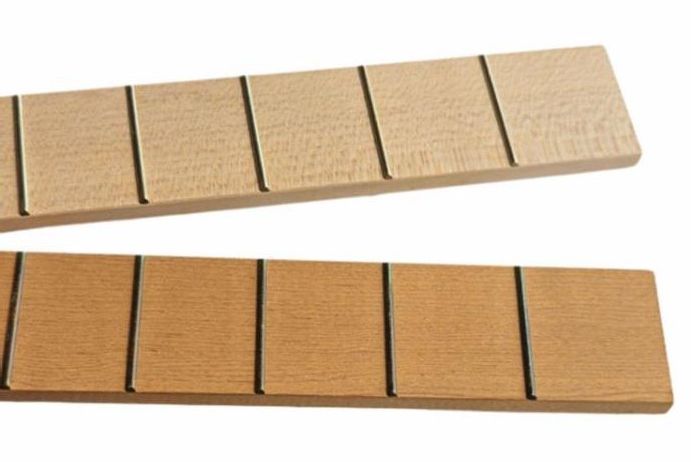
Have you ever heard of "scalloped" fretboards? Sometimes seen on specialty electric guitars, they actually remove some of the wood between each fret, so that the string only makes contact with the fret itself (not the wood), which enhances string bending, vibrato and speed. Virtuoso guitarists like Steve Vai and Yngwie Malmsteen have used this style of fretboard to create some amazing music.
One way to create a scalloped sort of feel on a fretboard is to use all jumbo frets instead of the usual medium/medium - this keeps the string further from the surface of the fretboard, allowing some of the potential of a fully scalloped board.
So, back to these fretboards. The factory mistakenly used all jumbo frets on them (instead of just for the Zero Fret), and at first we thought it was a mistake... but then I remembered the history of scalloped fretboards, and realized that these could be "a thing". I knew there are builders out there who might like to give them a try, so instead of telling the factory to trash them, I said "send them over and we'll see!" So here they are, great specialty fretboards offered at a discounted price from the standard variety.
| | Builder Feature: Steve Holladay | | Way down yonder in the hills of western Tennessee, there's an amazing builder and player of homemade instruments that you need to check out. | |
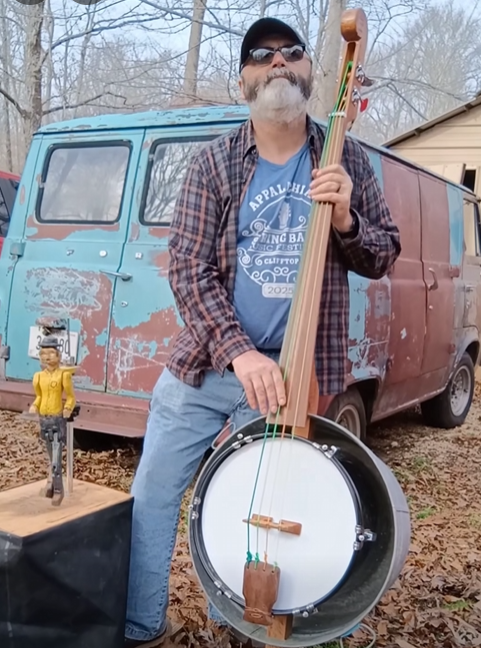
Steve Holladay has been making music for years, both playing and building homemade instruments, and his creations are a constant source of inspiration for us here at C. B. Gitty.
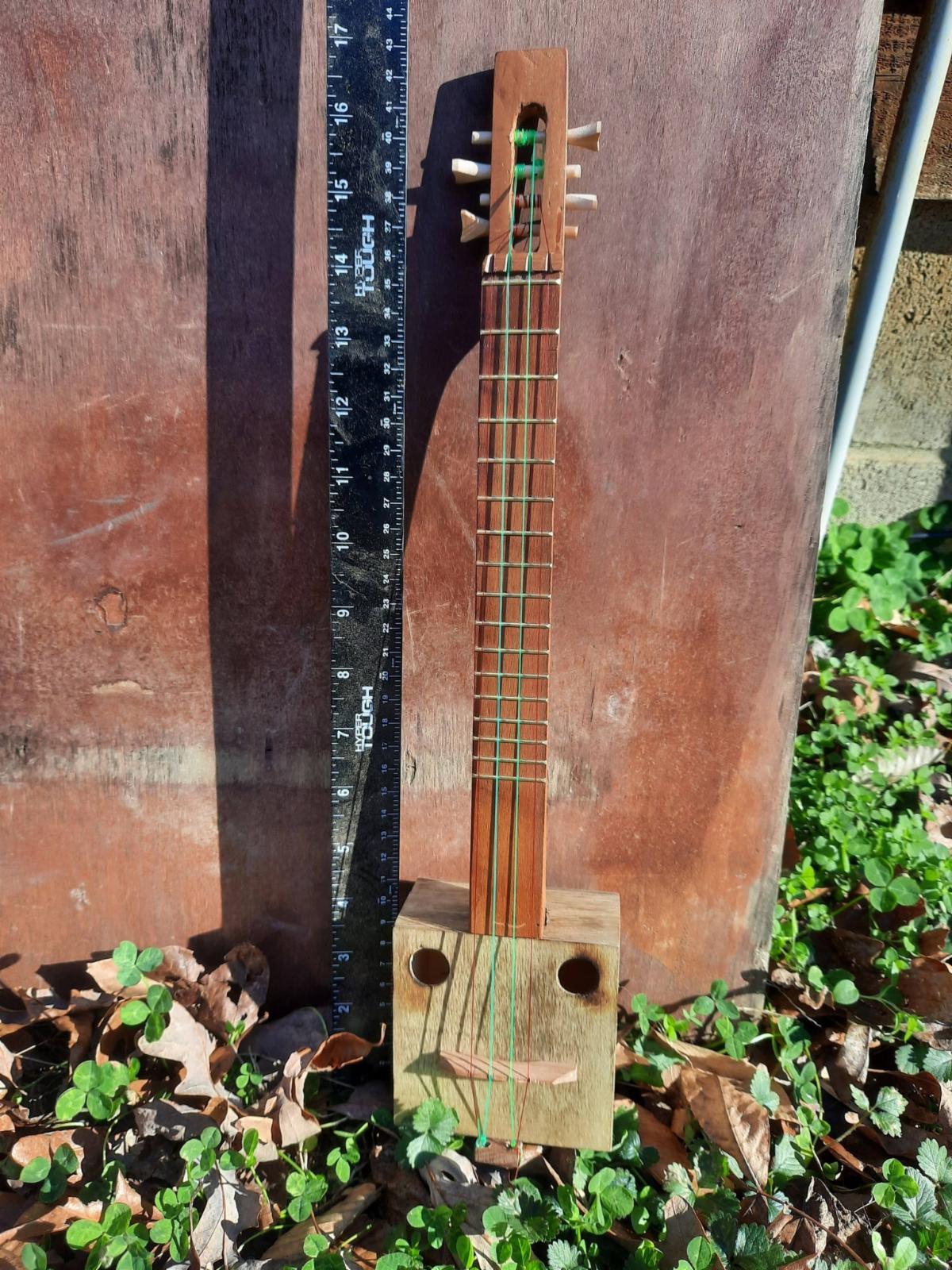
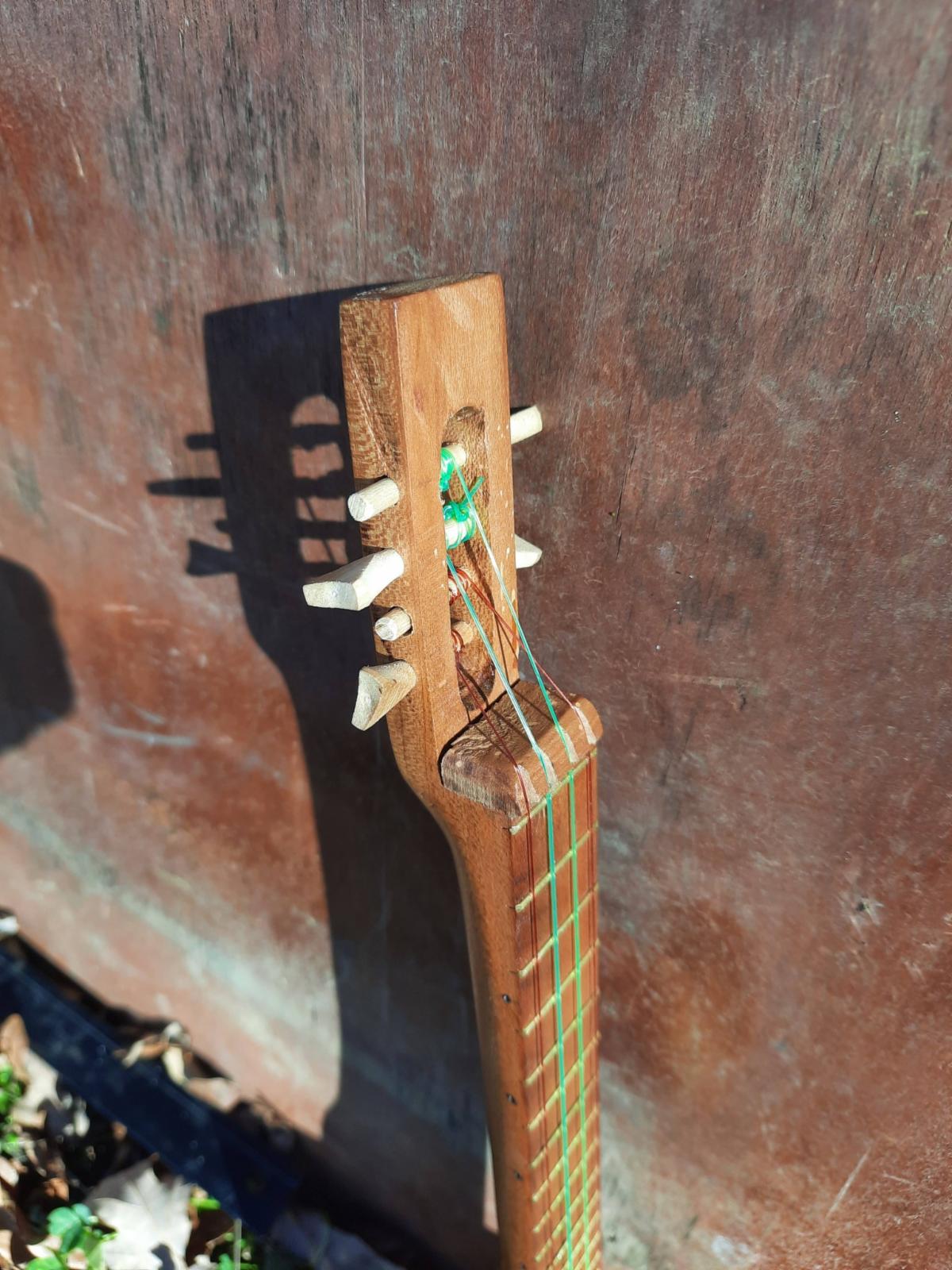
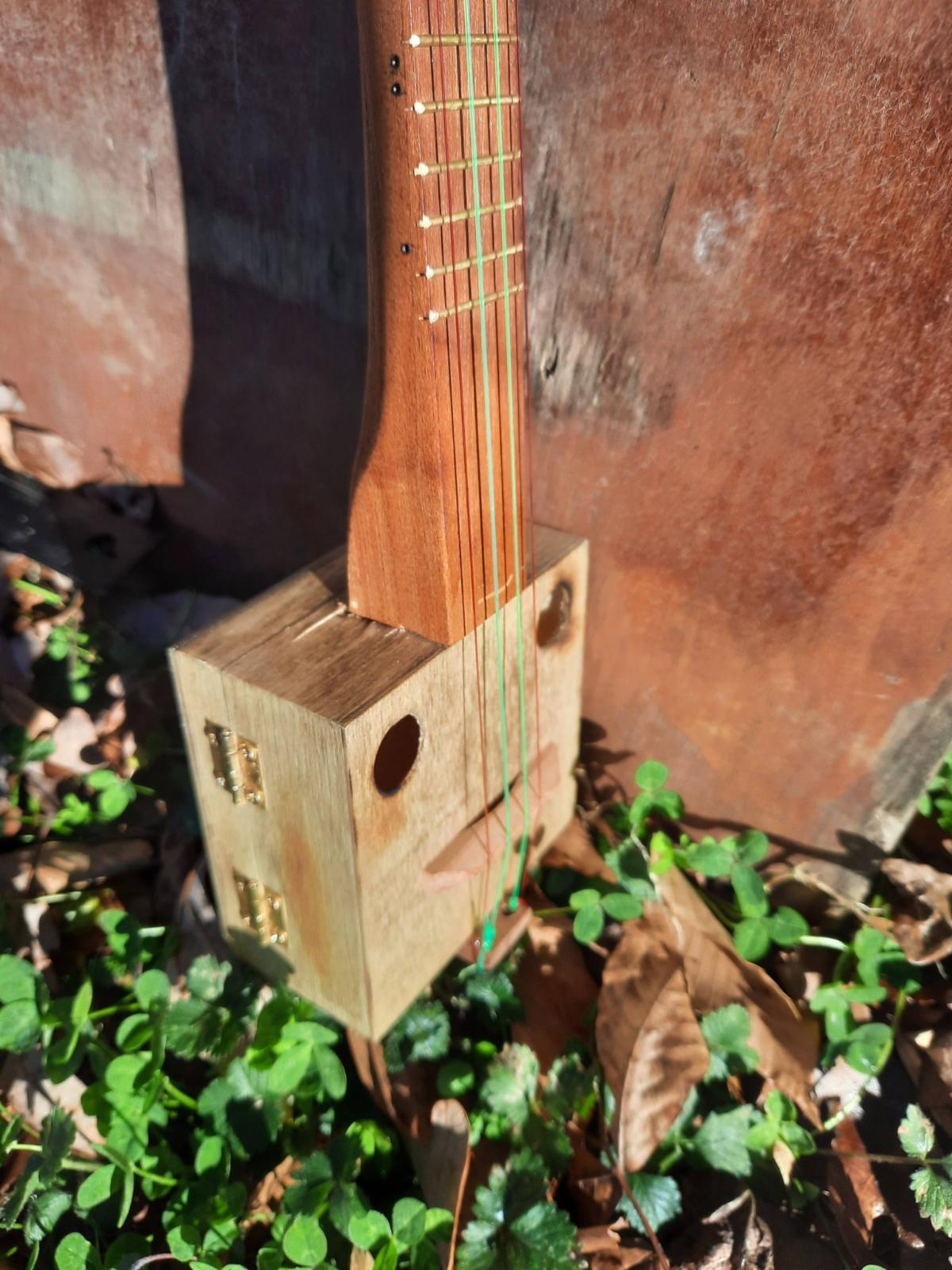
From bass banjos to small-scale "pocket" CBGs (see photos below), to mind-boggling "Fidbanjodles" that combine a banjo and fiddle into a single instrument, Steve certainly has a knack for inspiring, and fully playable, homemade musical creations.
Steve was down in New Orleans this past weekend for the annual Cigar Box Guitar fest there, and his instruments were played on stage by some of the amazingly talented performers there at the show.
Check out Steve's blog here and be sure to spend some time watching the great vids on his Youtube Channel.
| | | Feature: "The Monster" Pocket Guitar | | |
With a 12-inch scale length, carved golf tees for tuners and fishing line strings, this little gitty was designed for a small footprint and making music when traveling.
Here's what Steve shared with us about this CBG:
"[It] only took a couple of hours to build. The little box is from my local Dollar Tree, they have them for $1.25 each. The neck is cherry. In the videos I posted it is tuned to C-G-C-D. I sort of claw hammer it and the chords and most of the notes are in the same places as double C banjo tuning.
Running across the tiny box inspired it partially, and partially because I have to travel a lot for work. I have a tiny toy uke that is about 100 years old that I carry on planes sometimes in my computer backpack. It's about the same scale and is fun to play and not loud enough to draw hotel complaints... but I'd rather carry my own build. This was sort of an experiment to see if it's playable at that scale with the string spacing. The next one may have 5 strings with the short drone."
Steve also mentioned that after finishing this build and playing it a bit, he went back to the dollar store and bought 5 more boxes. I guess it's safe to say he's happy with his creation.
| | Watch the video of Steve playing the "Monster" mini travel CBG below! | |
Gitty Mailbag: A Teachable Moment
& Builder Encouragement Needed!
| | When I send out these e-mails, I never know quite what sort of responses I might get, if any. However, last week's e-mail about decorative hardware prompted a couple of folks to write back. In one case, it highlighted a "teachable moment" about a topic that some builders might not be familiar with. In the second case, it shows a fellow builder in need of some real encouragement about the possibilities of cigar box guitars and other homemade instruments. So without further ado, let's dive in! | | Larry E. up in Minnesota writes: "You would think you would straighten the bridge piece before taking picture shows poor quality" | | |
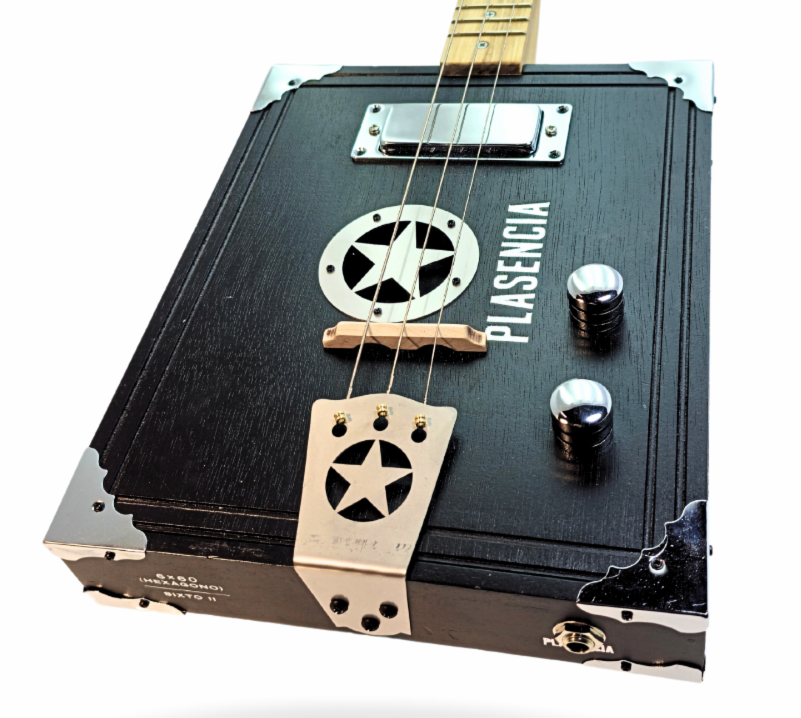
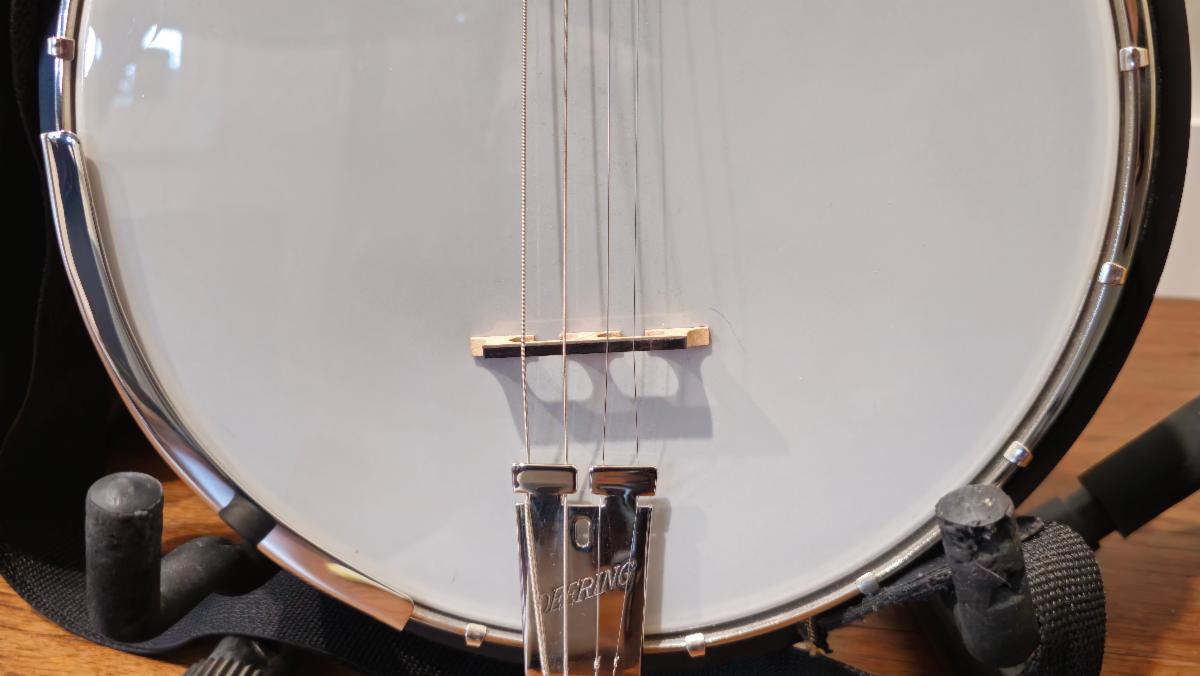
As best I could tell, Larry was referring to the bridge on this Lone Star guitar built by Deke Caldwell here in the Gitty Shop, and he felt that the bridge not being straight in relation to the box shows that we don't know how to build a quality guitar.
I wrote Larry back a note explaining exactly why that bridge is angled, and in doing so realized that it might be good to share the info with everyone this week. So here we go:
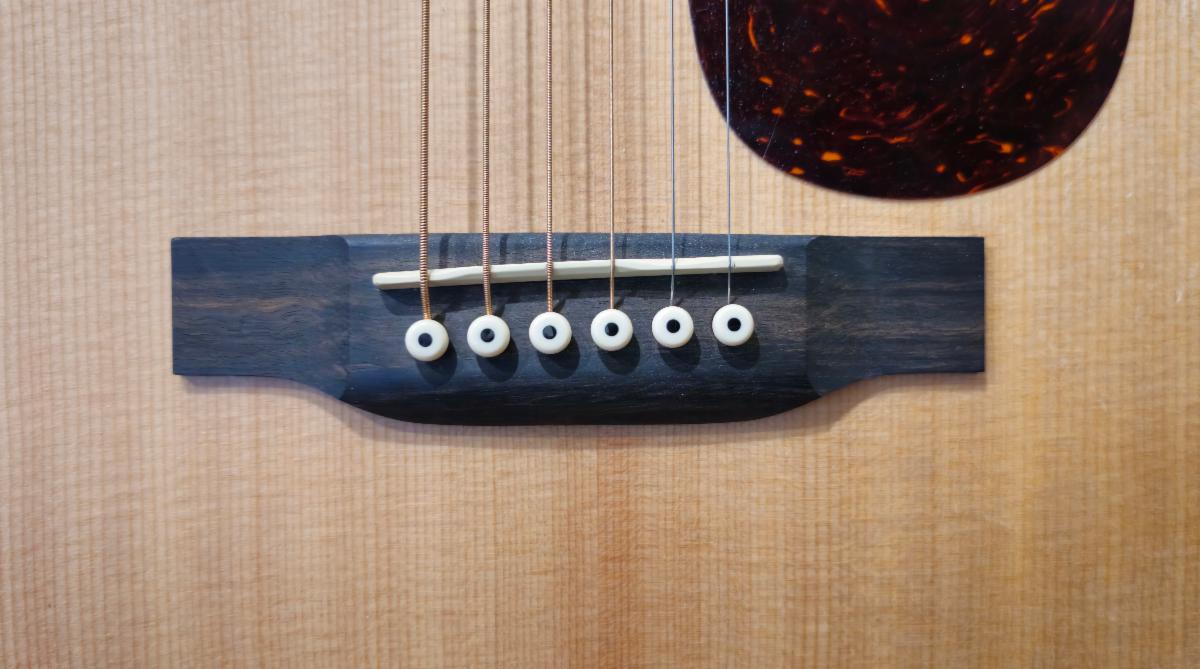
On stringed instruments, larger-diameter strings need a bit more vibrating length to intonate correctly. There is a lot of math and physics behind the “why” of this, but if you ever look at a conventional acoustic guitar or banjo, you’ll see that the saddle/bridge are angled – see example photos to the right.
The goal is that the string will hit as close as possible to the correct pitch when fretted up the neck. It is an approximation at best, but the end result is that this angling of the bridge (technically known as "compensation") helps an instrument play better, which is important for musicians.
So when you see a cigar box guitar with an angled bridge like this, it usually means that the builder understands proper intonation and setup of a guitar for playing – in other words, it is indeed a sign of quality… just not of the poor variety Larry suggested.
It's a good reminder that we learn by staying curious and asking questions... and that's hard to do if we're too busy being critical.
| | Those Lone Star CBGs by Deke are available on the C. B. Gitty site by the way, check them out here and get some more views of that lovely angled bridge! | | Michael B. down in Texas writes: "Mr, gitty I have purchased many items thru your website.parts were good. However, you can't expect a DIY guitar to sound real good. I purchased one it lasted maybe a year.l finally realized you have tens of thousands of equipment in your shop. Therefore there's no way I as a consumer I can produce a viable musical instrument. I know you have testimonies saying how wonder there build turned out. I bet most of these folks had some quality tools to assist them. I am not mad at you. I am mad at myself for believing it was possible. " | | |
When I read Michael's message, I have to admit it made me kindof sad. I felt the immediate urge to write back with encouragement, examples of amazing instruments folks have made with the most basic tools, etc.
But then I had another thought... why not turn to the community and ask you all to write encouraging replies. Not just to Michael, but for anyone who might be struggling with the idea that they can build themselves a playable guitar, or that they need a shop full of fancy tools to create amazing instruments.
So I ask you, if you're reading this... consider taking a minute to reply to this newsletter e-mail with your own story, or thoughts about this topic. Photos are welcome! I ask you to please focus on being positive and encouraging... let's show Michael, and each other, just what really is possible. I hope to be able to put some of the best replies into the next newsletter.
| |
| |
A Personal Note from Ben Gitty
It was bittersweet over the weekend seeing all of the photos and videos show up on Facebook from the New Orleans Cigar Box Guitar festival. C. B. Gitty has been a sponsor of that fest since its inaugural year, and for the first few years of it I headed down every January to take part in the fun.
It's been a few times around the sun now since I've made it down, but I'm so happy it's still going, and so glad to see old friends still down there doing the Lord's work. Steve Arvey, Amzie Adams, John Nickel, Rob Wrobel, Brett Gardner, Collins Kirby... wish I coulda been there with you all.
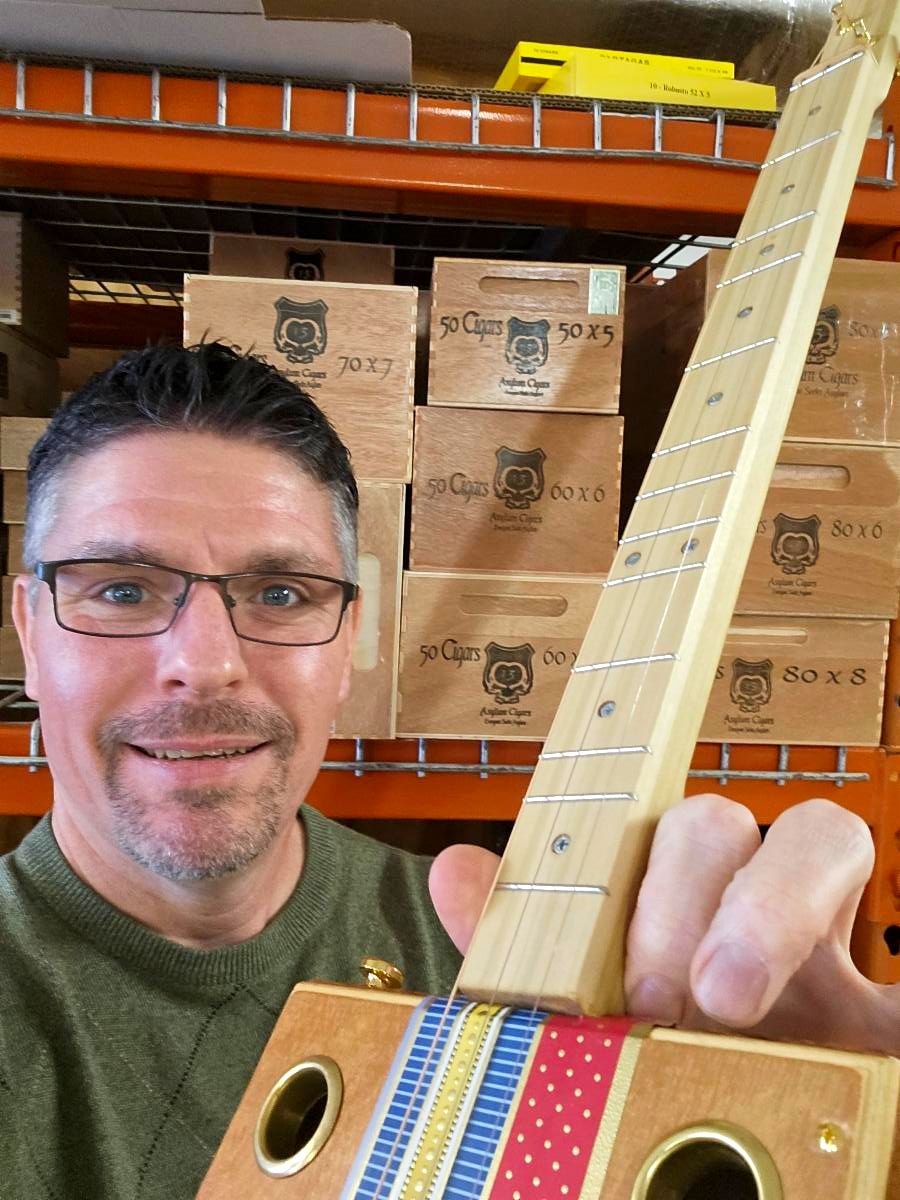
Stuck here in cold and snowy New Hampshire, I've been having fun this week noodling around with this 3-string GDG cigar box guitar featuring our new diatonically fretted neck. Though a diatonic fret system is simplified in terms of playing, it turns out that you can still pick out most well-known tunes on one, even easier than you can on a standard-fretted guitar.
I've already tweaked my magic tablature-creation program to output diatonic GDG tab (it took some doing to knock the computer programming rust off my brain, let me tell you), and I hope to have a printed diatonic songbook available before too long.
Thank you all once again for being subscribed to these e-mails, and reading all the way down here to the bottom. When you reply to these newsletter e-mails it comes to me directly, so feel free to drop me a line and let me know what you're up to, what you think about the work we're doing, or anything else.
Just one thing, maybe no grumpy e-mails about how my glasses not being on straight in the photo are a sign of poor quality...
Until next week, happy building!
Ben Gitty
1/21/2026
| | | | | | |