|
Beware of Thin Stands in Winter Wheat
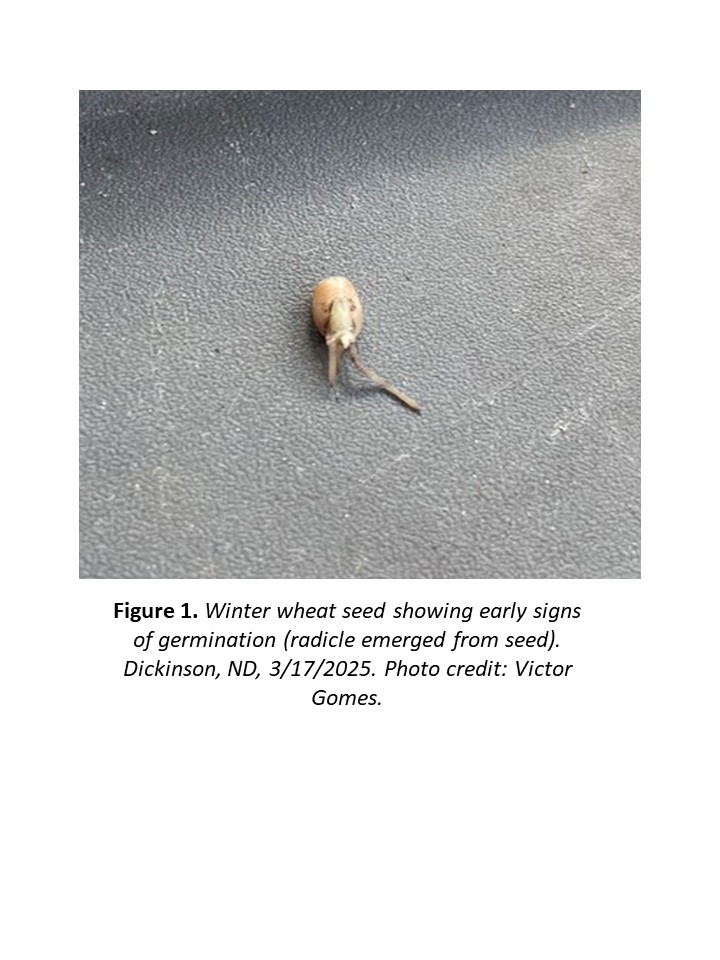
Although winter wheat acres in North Dakota are less common than spring wheat, the USDA NASS estimates that 120,000 acres were seeded to winter wheat last fall. Due to persistent drought conditions, winter wheat germination and emergence was significantly delayed last fall, with some acres still below the soil surface (Figure 1) and others just beginning to emerge. Given reports of patchy fields, now and in the coming weeks may be a good time to assess stands for emergence and uniformity.
In dry years like this, multiple factors can hinder stand establishment. Drought reduces seed germination and seedling emergence, while low soil moisture can slow fertilizer mineralization, limiting nutrient availability for plant uptake. By checking winter wheat stands early in the season, growers can plan for a ‘rescue’ nitrogen fertilization ahead of time. If stands are thin, consider applying nitrogen to encourage tillering. However, avoid excessive nitrogen, as it can lead to nitrate accumulation.
The ideal timing for nitrogen application to enhance tillering is between tillering (Feekes 2-3) and the green-up stage (Feekes 4-5), when the plants are actively growing, but before jointing. Applying nitrogen too early, especially under the current dry conditions, may result in losses due to volatilization before the crop can effectively use it.
For detailed NDSU winter wheat fertility recommendations tailored to different yield potential scenarios (low, medium, or high), refer to this NDSU Extension’s publication.
Late-Emerged Winter Wheat and Vernalization Concerns
Winter wheat requires a period of cold weather (<48°F) for vernalization, a physiological process necessary for transitioning into the reproductive stage and producing a grain head. The required duration of cold exposure typically ranges from 4 to 8 weeks, depending on the variety.
In addition to the patchy, thin stands observed in winter wheat fields across western North Dakota, another concern is whether late-emerged winter wheat will vernalize and produce productive tillers in the spring. Fortunately, winter wheat does not need to emerge aboveground to vernalize—as long as the seed has germinated, it can still undergo vernalization and develop productive tillers.
To assess your crop’s status, scout fields that have not yet emerged and dig into the seed furrow to evaluate seed germination. Germination is identified by the protrusion of the radicle (the first seminal root) (Figure 1).
|