|
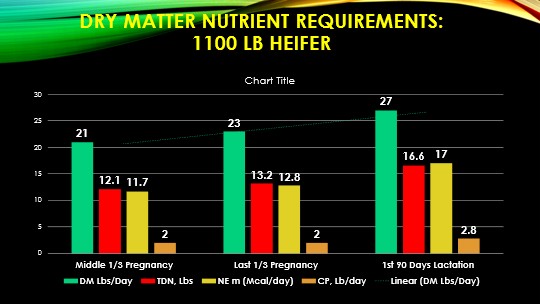
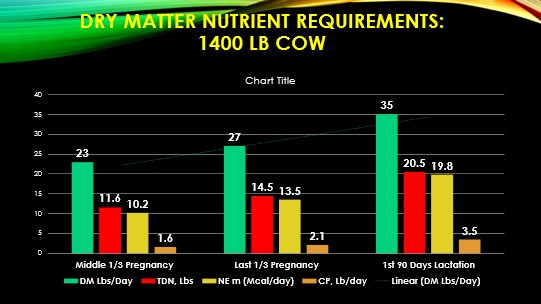
Rebreeding performance following calving is complex physiologically requiring the cow to not only produce milk for her newborn calf but also undergo uterine involution and have one heat cycle before the next breeding season begins. For range cows to stay on schedule and have a calf every year, the interval between calving and the start of the next breeding season is critical. For example, a middle-aged cow (5-6 years old) calving on March 4 has 82-days for uterine repair and ideally to have completed one heat cycle before the start of the breeding season on May 25. Inadequate protein, energy, vitamin, and mineral intake during the last trimester can result in calving difficulties, lower milk production, impaired growth of calves, and delayed/poor rebreeding performance. Therefore, adequate nutrition is essential during the last trimester of pregnancy and during the breeding season. Conversely, overfeeding can have adverse consequences also. Extremely fat cows can have increased calving difficulty, reduced lactation response, and reduced rebreeding performance. Feeding cows during the 90–100-day period before calving to have a body condition score ranging from 5 to 6 (1-9 Scoring System) results in cows having the greatest potential to breed back resulting in a first service pregnancy/calving rate of 70-75% followed by a second cycle calving rate of 18-20%. The dry matter, maintenance net energy, crude protein, and total digestible nutrient (TDN) requirements for an 1,100 lb. heifer and a 1,400 lb. cow are shown in the charts 1 and 2.
Two months before calving (60 days) is the most important period in the pre-born calf’s life because approximately seventy percent of total fetal growth occurs during this critical time. In addition, the cow is also preparing for lactation and immunity transfer. Colostrum (first milk) is being concentrated with high molecular weight immunoglobulins that provide the newborn calf with immunity, since immunity in cattle is not transferred from the mother to the fetus across the placenta.
Focusing on the rebreeding period, early spring grass water content can be as much as 75-80%, which means cows being exposed to bulls can be consuming inadequate amounts of protein and energy from the high moisture grass. To offset the nutrient shortfall, supplemental protein and energy can be provided from more than one source, i.e., 20-30% CP range cake or 25-35% CP self-fed protein-energy blocks. And self-fed high protein 250 lb. molasses-formulated tubs are another option that reduces daily feeding and are convenient to deliver.
When feeding self-fed supplements, it is important to monitor consumption, because consumption can easily be too much or too little. Either way, too much consumption wastes supplement and is expensive and too little consumption results in cattle that do not receive the intended amount nutrient supply/cow/day.
Chart 1. Dry matter nutrient requirement for 1,100 lb. heifer.
Chart 2. Dry matter nutrient requirement for a 1,400 lb. middle-aged cow.
|