|
Fertilizer continues to be one of the highest crop production expenses. According to North Dakota Farm and Ranch Business Management’s 2024 Annual Report – State Averages, the average 2024 fertilizer bill was $137,648. Economical fertilizer management starts with a soil test and fall soil testing is a great time to soil test.
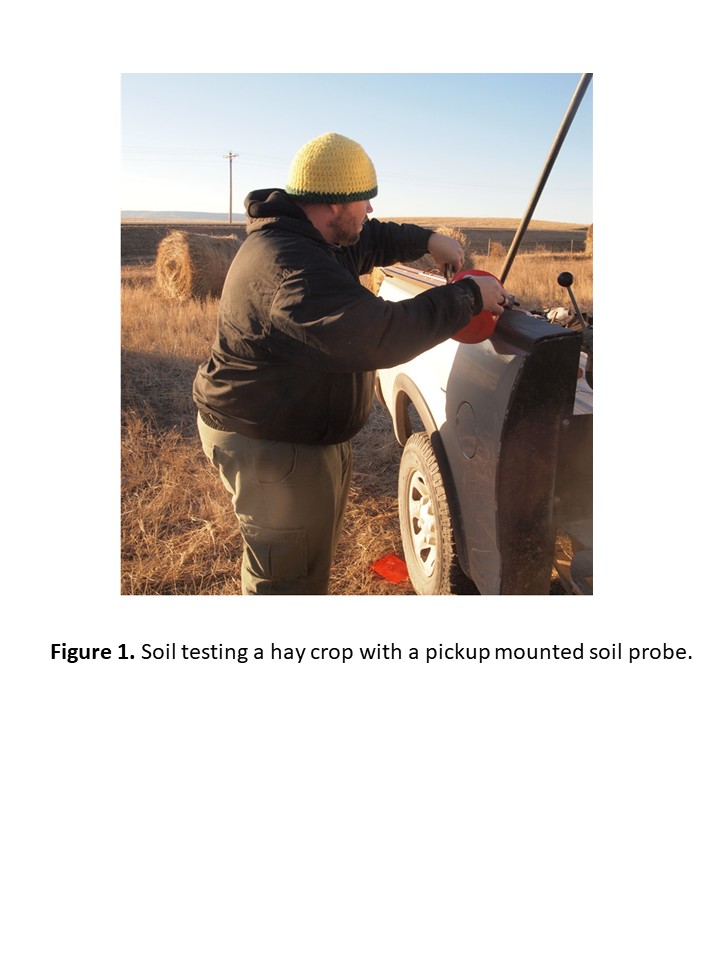
Fall soil testing gives you time to make important management decisions. Soil testing shortly after crop harvest produces a better soil core that is more representative of the crop’s growing conditions. Nutrients measured in the fall will have minimal change between now and the following spring. Soil samples can be collected with a hand probe or a mechanical vehicle mounted probe (Figure 1). More information on soil sampling is available at: https://www.ndsu.edu/agriculture/sites/default/files/2023-09/sf990.pdf
Different nutrients should be tested at different depths. Nitrate nitrogen should be tested to a depth of 24 inches for all crops except for malting barley, and sunflowers. Barley and sunflowers should have a nitrate soil test to a depth of 48 inches. If present, excess deeper nitrates can reduce barley malting quality. Sunflowers are deep rooted and efficient nutrient scavengers. A deeper soil nitrate test can reduce nitrogen fertilizer inputs.
Phosphorus, potassium, and other soil tests should be conducted at the 0-6 inch depth. The Olsen phosphorus test is recommended in North Dakota regardless of pH. The Olsen phosphorus test has been found to be very reliable across the pH spectrum of agricultural soils. Potassium recommendations were recently updated due to the clay minerology. North Dakota fertilizer recommendations are available at: https://www.ndsu.edu/agriculture/sites/default/files/2023-10/sf882.pdf
Fall is an excellent time to soil sample. If you have questions, please reach out to us. We’re happy to help!
|