|
Every October, I return to my family farm to help with the sugar beet harvest. While driving to the field recently, I noticed a floater applying fertilizer to a neighboring field. With soil temperatures still above 50°F, I thought it would be a great time to share some fall nitrogen management tips.
Soil temperature plays a crucial role in nitrogen efficiency. Microbial activity, which drives the nitrogen cycle; slows significantly when soil temps drop below 50°F. Nitrogen applications once soil is colder than 50oF helps minimize nitrogen losses, making timing critical when applying fertilizer in the fall.
Fall Nitrogen Management Tips:
Soil Test First and Use the Nitrogen Calculator
o Make an agronomically sound application based on a soil test. The NDSU Crop Nitrogen Calculator accounts for factors like fertilizer price, tillage vs. no-tillage systems, and regional conditions. Access the calculator here:
👉 Crop Nitrogen Calculator
Choose the Right Fertilizer and Timing
o Anhydrous ammonia is the best option for fall nitrogen applications due to its low potential for loss. Apply only after soil temperatures are consistently 50°F or lower at the 4-inch depth.
o The NDSU NDAWN network provides real-time soil temperature data across the state. Check it here:
👉 NDAWN Soil Temps
o Urea can also be used, but timing and placement are key:
o Band urea into the soil after temps are below 50°F.
o For surface applications, wait at least two weeks after the 50°F threshold has been reached.
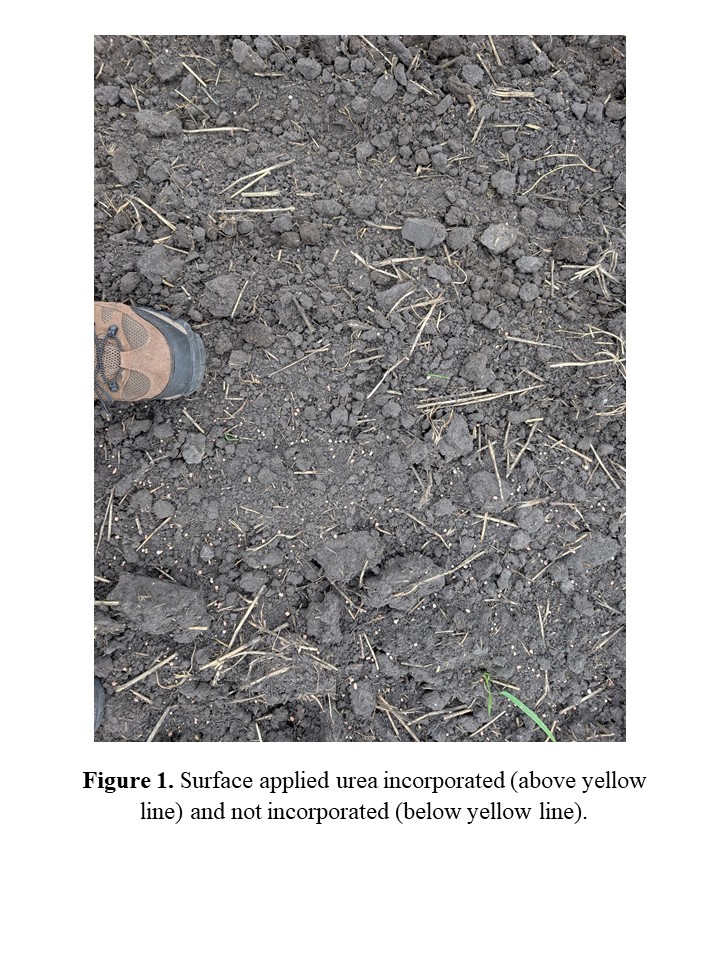
o As much as 30% of the nitrogen can be lost within five days if urea is not incorporated (Figure 1) into the soil or does not receive at least half an inch of rainfall. This is a situation where a nitrification inhibitor, such as NBPT, can help reduce nitrogen loss and improve fertilizer efficiency.
While spring nitrogen applications are generally more efficient, fall applications can still be a valuable part of your nutrient management plan; especially in years with late springs or supply chain issues.
Plan wisely and stay safe!
|