|
Do legumes provide soil health benefits for regional cereal-dominant cropping system of
western North Dakota?
| | |
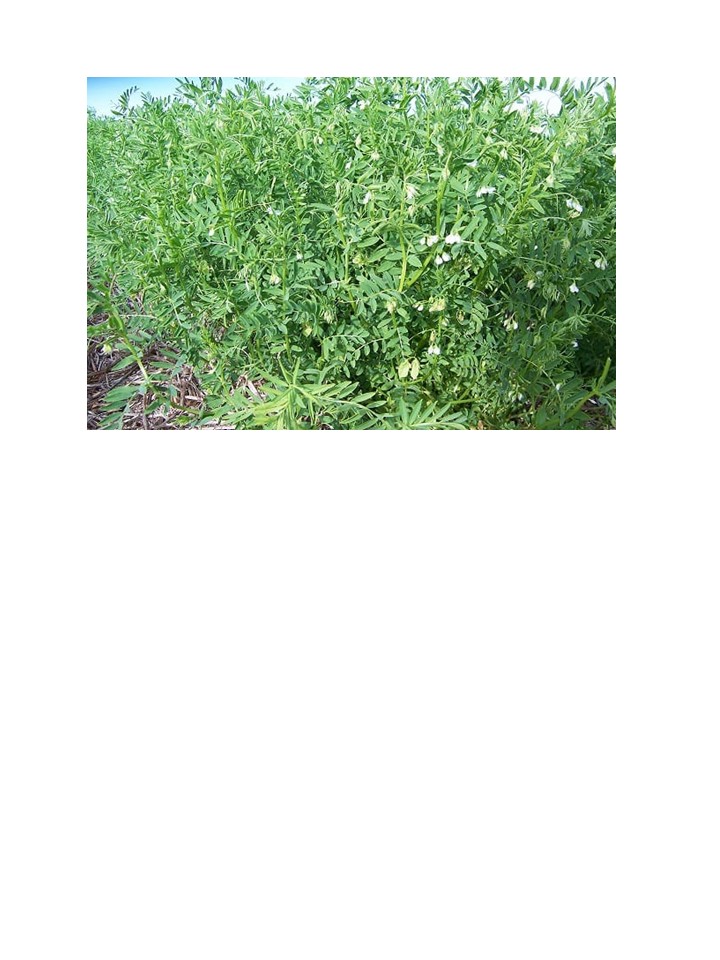
Cereal-dominant cropping systems are common across western North Dakota, but repeated cereal production and fertilizer use under no-till management can create challenges for long-term soil health, including surface soil acidification. Incorporating legumes into these systems may provide several interconnected benefits. Through biological nitrogen fixation, legumes can supply a portion of the N needed by crops and potentially reduce reliance on fertilizer N, which may help slow the development of surface acidity associated with repeated fertilizer application. Legume residues are rich in nitrogen and rotating them with carbon-rich cereal residues can help balance the soil carbon-to-nitrogen ratio, creating a more favorable environment for microbial growth and nutrient cycling. Legumes also have rooting patterns that differ from wheat and other cereals, creating a greater diversity of root channels or biopores that can improve soil porosity, water movement, aeration, and soil structure. In addition, different crops release different root exudates that can support diverse microbial communities. Greater microbial activity, including fungal activity and glomalin production, may contribute to improved soil aggregation and structural stability. Together, these effects suggest that incorporating legumes into cereal-dominant rotations could improve several components of soil health while providing agronomic benefits. However, the magnitude of these benefits under the dryland conditions of western North Dakota needs to be evaluated under regional cropping systems. This topic will be further discussed at the Dickinson Research Extension Center Soil Health Workshop on September 10.
| |
The NDSU Extension does not endorse commercial products or companies even though reference may be made to tradenames, trademarks or service names. NDSU encourages you to use and share this content, but please do so under the conditions of our Creative Commons license. You may copy, distribute, transmit and adapt this work as long as you give full attribution, don’t use the work for commercial purposes and share your resulting work similarly. For more information, visit www.ag.ndsu.edu/agcomm/creative-commons.
County commissions, North Dakota State University and U.S. Department of Agriculture cooperating. NDSU does not discriminate in its programs and activities on the basis of age, color, gender expression/identity, genetic information, marital status, national origin, participation in lawful off-campus activity, physical or mental disability, pregnancy, public assistance status, race, religion, sex, sexual orientation, spousal relationship to current employee, or veteran status, as applicable. Direct inquiries to Vice Provost for Title IX/ADA Coordinator, Old Main 201, NDSU Main Campus, 701-231-7708, ndsu.eoaa@ndsu.edu. This publication will be made available in alternative formats for people with disabilities upon request, 701-231-7881.
| | | | |