|
September 2026 Newsletter from the 30 Mile River Watershed Association
| | |
Assessing Town Stream Crossings
Across the Watershed
| | |
Much of the road infrastructure in our rural Maine towns was not designed to withstand the worsening impacts of climate change. This includes more frequent and intense periods of rain, flood events, and changes in groundwater levels. The first steps that municipalities can take to better understand risks and begin to address infrastructure challenges are (1) completing a town stream crossing assessment and (2) developing an inventory of vulnerable infrastructure.
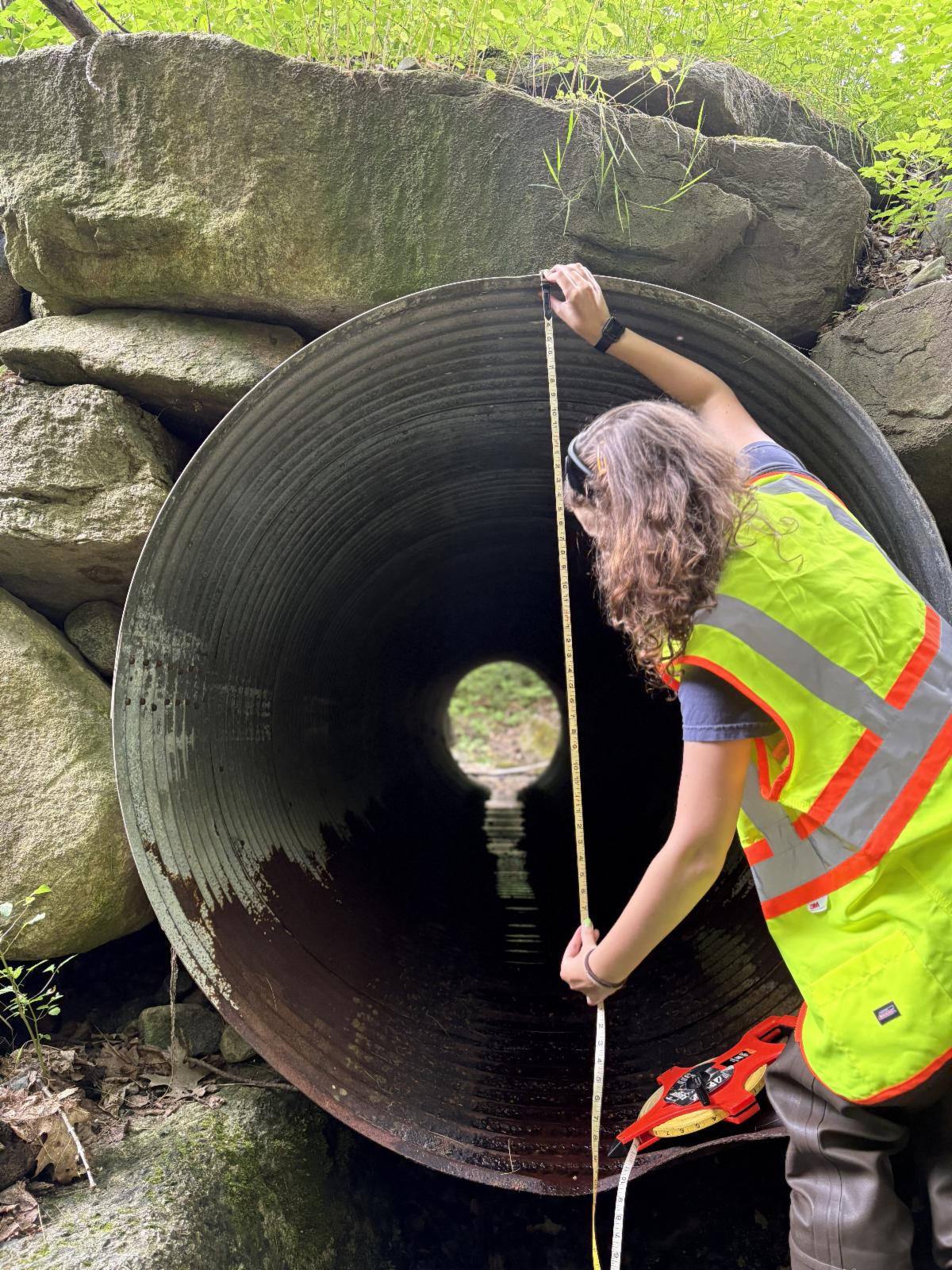
To jumpstart this process, throughout the summer, our staff evaluated 46 stream crossings, from Vienna to Monmouth. Our surveys will continue through September to complete the field portion of this assessment. Using data collected in the field–in tandem with traffic counts and detour lengths, among other factors–will help us identify the sites at highest risk for failing or washing out completely.
Once we have compiled all of the information, we will provide town officials with a prioritized list of road and culvert sites and recommended next steps. For a few of the highest risk sites, we will both consult with a professional engineer and will assist with the needed scoping, design, modeling, and environmental permitting. This will help to alleviate the town’s costs and time commitments.
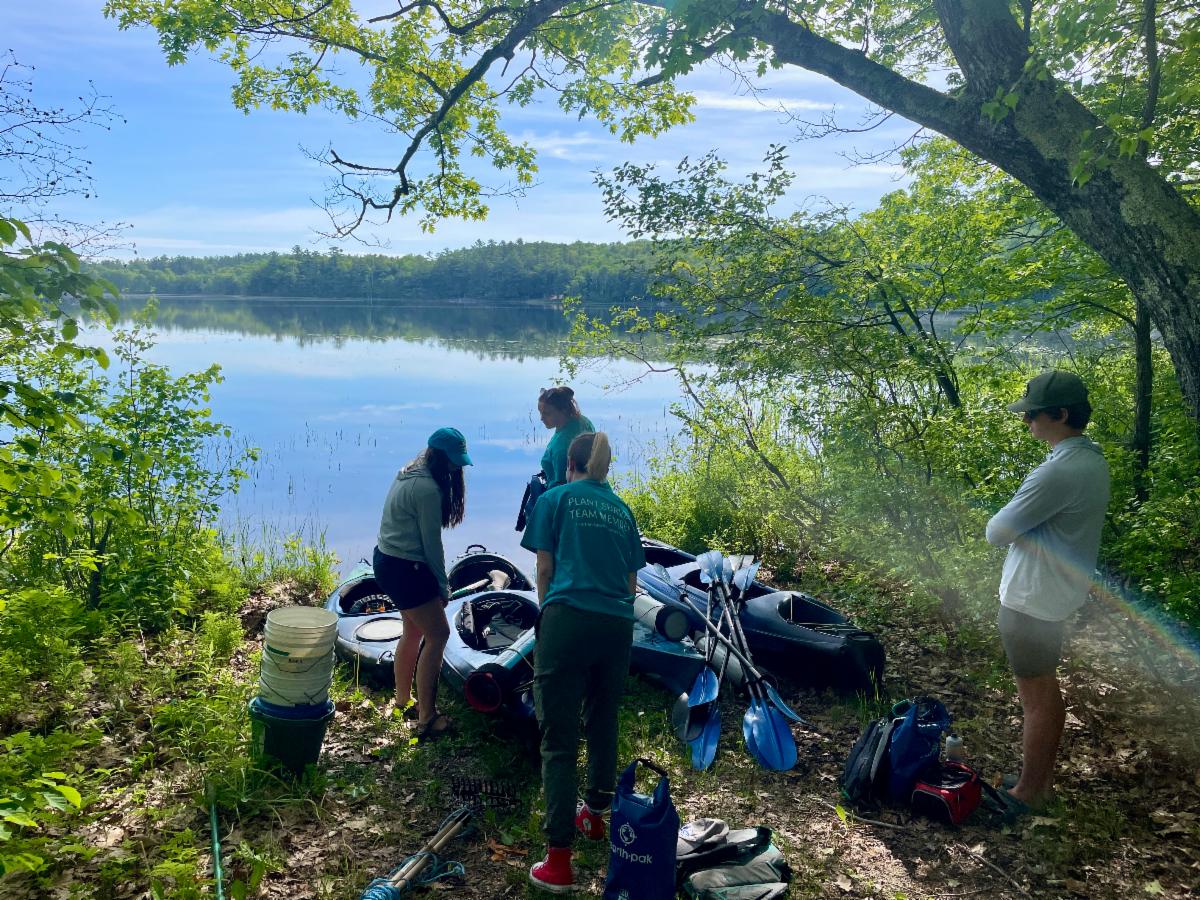
Photos: Land Use Coordinator, Ellie, measuring a culvert.
| | This project was funded in part by the Maine Outdoor Heritage Fund, in which proceeds from the sale of a dedicated instant lottery ticket are used to support outdoor recreation and natural resource conservation. For more information about MOHF, go to www.maine.gov/ifw/mohf. | | |
Question of the month:
Is AI a reliable resource for lake information?
| | |
Artificial Intelligence (AI) can broadly be characterized as technology that solves problems by learning from examples (as opposed to instructions), that would otherwise require human intelligence. There are multiple kinds of AI designed for different fields and purposes. Generally, these programs are successful at recognizing patterns, processing information, and developing or predicting results. Commonly used generative AI programs can answer questions, write lengthy text, and develop images and sounds.
Although AI is a very effective tool for some applications, it is still prone to making mistakes and sharing misleading information. Errors in generative AI are called “hallucinations,” where the program puts forth incorrect information that, at first glance, likely looks right. It is good to be cautious of this form of error in using AI to search for lake-related data, reading AI search-engine summaries (“AI Overviews”), and viewing or sharing AI-generated images.
Generalized AI responses that do not account for a lake’s unique factors–such as its location, size, depth, and development–can overlook essential details. These unique characteristics are critical in evaluating water quality data, trends, and management measures. For example, how we respond to results and manage Basin Pond – 33 acres with a max depth of 32m (106ft) – will be very different from Androscoggin Lake – 4020 acres with a max depth of 12m (38ft). It is important to keep this in mind when looking at AI-generated information about your lake or pond.
Lake Stewards of Maine’s newsletter article (2025) on artificial intelligence and lake data adeptly sums up limitations in using AI for seeking out lake-related information. When seeking out information on the lakes you care about, it is important to use a diversity of sources. Check out different trustworthy websites, look at handouts from lake events, and be sure to scroll beyond the AI Overview when you search a question online.
If you can’t find what you’re looking for, we are always happy to help connect you with resources. Contact us here.
| | Growing Threat of Invasive Species | | |
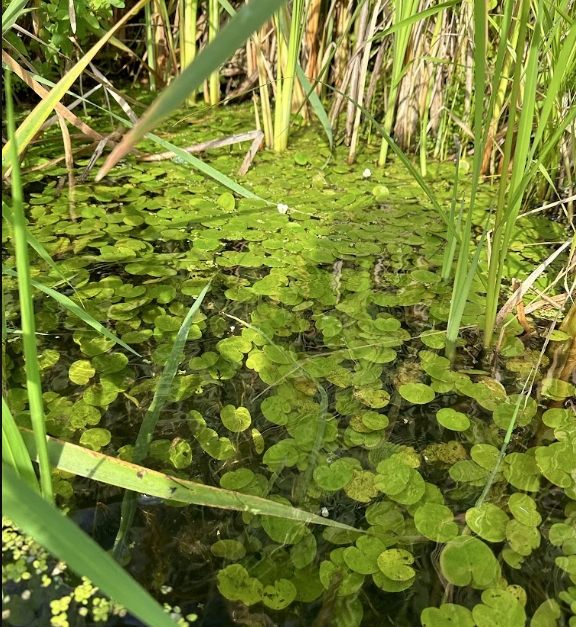
Last month, European frog-bit (EFB) was found in Great Meadow Stream, nearby in the Belgrade Lakes watershed. This marks the first time EFB has been found in Maine outside the Cobbossee Watershed, another neighboring watershed, where EFB is found in multiple waterbodies. EFB is a free-floating aquatic invasive plant that grows in dense colonies.
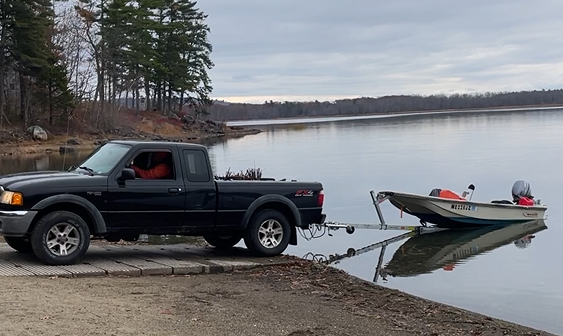
In July, a 7 Lakes Alliance courtesy boat inspector found two aquatic invasive species – Eurasian water-milfoil and curly-leaf pondweed – on a boat. The boat had already been launched in two waterbodies before the find; the owner had been unaware that they were transporting these plants
These are just a few of the recent aquatic invasive plant incidents in the state, and both are in the neighboring Belgrade Lakes watershed.
These discoveries and “saves” are stark reminders of how important it is for boaters and lake users to always practice Clean, Drain, Dry, as these plants are knocking on our watershed’s door.
Photo: EFB in Cobbossee Stream (Ellie Hatt).
| |
In Search of a Truck for 30 Mile | | |
Generously donated in 2017, and used daily to conduct our field work, the 30 Mile work truck is reaching the end of its life. The truck has been an essential element of our day-to-day watershed work – from moving kayaks between invasive plant surveys, to traveling to water quality monitoring sites and property visits. In 2025 alone, we put over 2,000 miles on our truck!
As we’re continuing to scale up our efforts with a growing team and greater capacity, a new used work truck will allow us to better achieve our mission. If you have a truck that you might be interested in donating or giving a new life, please reach out to Miriam (miriam@30mileriver.org | 207-430-1518).
| | Last call for the photo contest! | | |
Do you enjoy taking photos on the lakes, ponds, and streams that make up the 30 Mile River Watershed?
Share your favorites with us by September 30th for a chance to win in our Annual Photo Contest!
The categories: Lovable Loons, Spectacular Scenes, and Watershed Wildlife (includes fish too, but not loons).
Entries may also be featured in our printed materials, social media content, and merchandise.
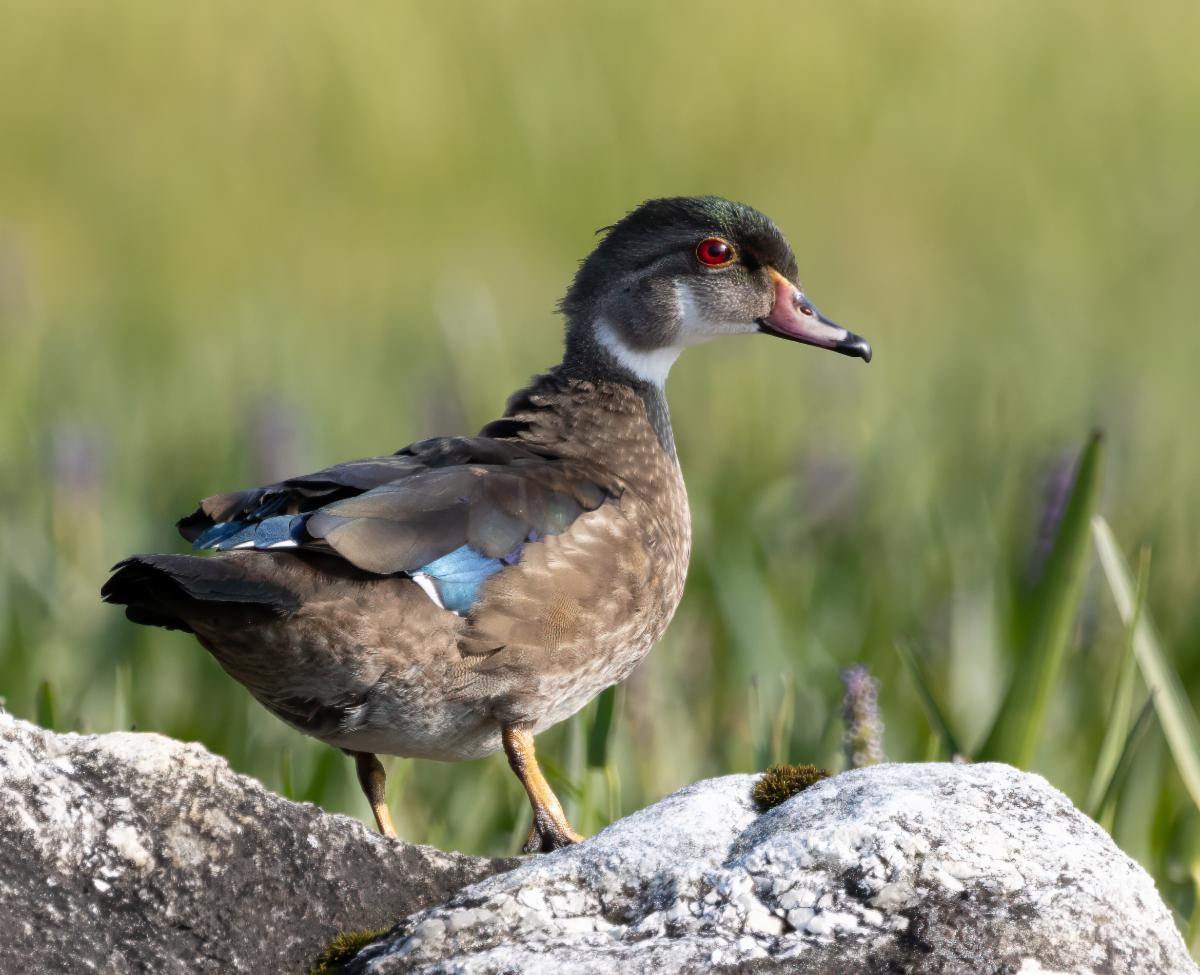
| | Photo: Juvenile Wood Duck by Pamela Santin. | | |
Now Hiring! Operations and Finance Coordinator
We are seeking applicants for the role of Operations & Finance Coordinator to provide essential administrative, financial, and human resources support to ensure the smooth day-to-day functioning of the organization. This position is available as either part-time or full-time and based in our office in Mount Vernon.
| | Looking for live stakes this fall? | | |
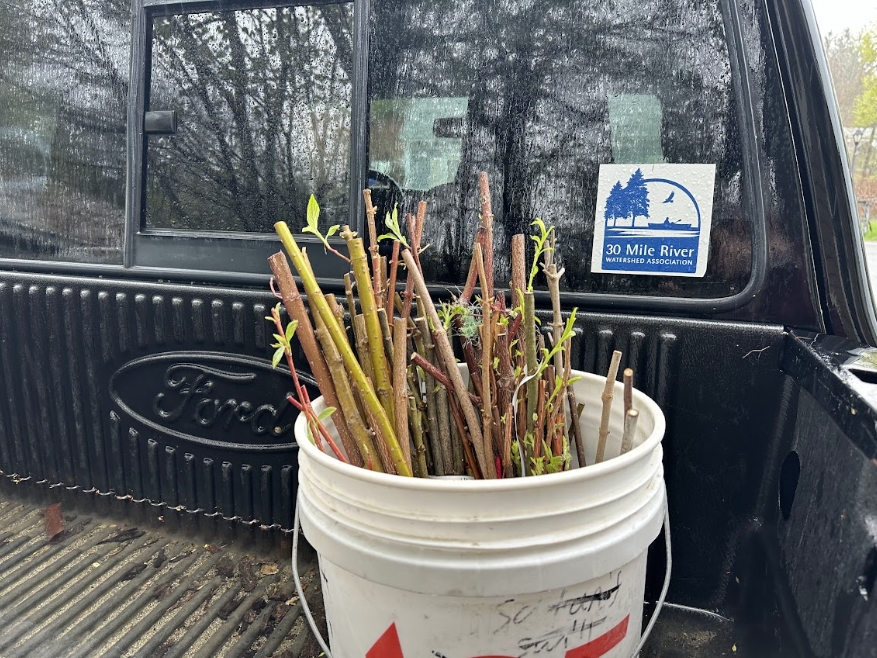
Live stakes help stabilize shorelines, improve buffers and wildlife habitat, reduce runoff in our lakes and ponds, and provide a great low-cost, low-maintenance opportunity to improve your shorefront for the years to come. Read more about live staking here.
Interested in purchasing a live stake bundle? Please fill out our Fall 26’ Live Stake Interest Form, and we will reach out to you when we have ordering information.
| | |
Donor-advised funds (DAFs) are the fastest-growing form of philanthropy in the United States. DAFs allow for streamlined giving and tax-free growth of charitable donations. Upon establishing an account, donors are eligible for an immediate tax deduction. Over time, donors may recommend gifts to certified 501(c)(3) organizations at whatever pace feels best for them.
DAF Day on October 8th celebrates bringing together donors and non-profits to support the work that we all care about, and is the largest DAF giving day of the year. Join in by recommending a grant from your DAF to support the 30 Mile River Watershed Association.
How to participate on October 8th:
-
Log in to your provider: Access your account through your DAF sponsor (such as Fidelity Charitable, Schwab Charitable, Vanguard Charitable, or a community foundation).
-
Select 30 Mile River Watershed Association: Search for us as your 501(c)(3) recipient.
-
Recommend a grant: Designate your desired gift amount to support watershed monitoring and protection.
Your generosity helps safeguard our lakes, ponds, and streams for generations to come. Thank you for working towards a bright and healthy future for our watershed!
| |
Check out 30 Mile
in the News!
Read this article on the Androscoggin algal blooms in the Kennebec Journal.
Learn about threats to Maine lakes and what is being done to protect them in this piece on Maine Public’s “Maine Calling,” featuring 30 Mile’s Executive Director, Lidie Robbins.
| | | Plant surveys found no swollen bladderwort in David Pond | | |
For the third consecutive season, plant surveys by 30 Mile, volunteers, and Maine DEP have found no invasive swollen bladderwort in David Pond. Just a few hundred yards downstream of the heavily infested Tilton Pond, David Pond is at significant risk of having the aggressive aquatic invasive plant spread to it.
Our staff completed two pond-wide surveys in 2026, one during early June and the other in mid-August. Basin-David-Tilton Ponds Association volunteers surveyed areas of shoreline over the course of the summer. In September, Maine DEP completed a dive-tow SCUBA survey of deeper areas of the pond that cannot be seen from a kayak, but where plants can still grow.
| | |
Best Management Practices Workshop for Homeowners
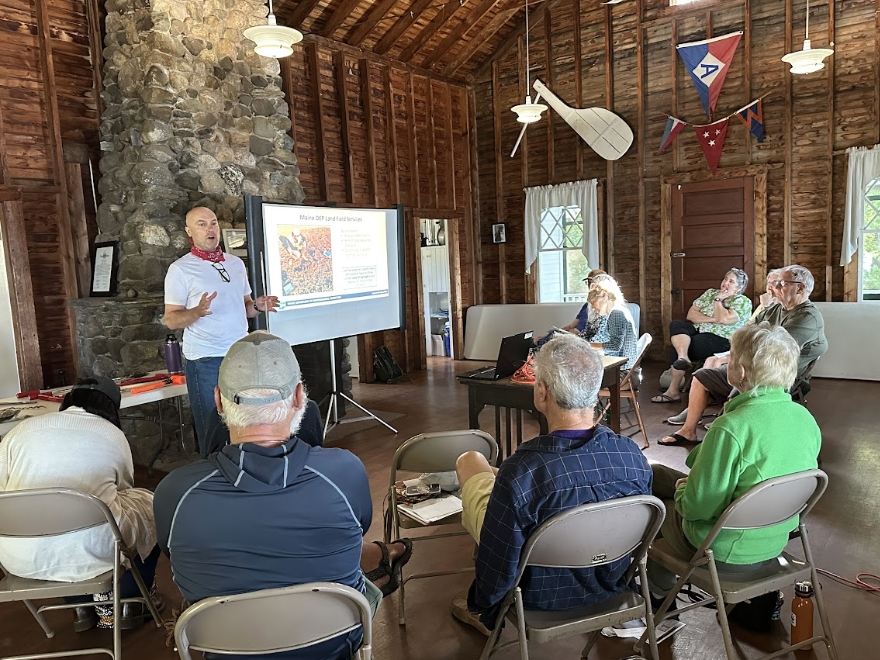
August 4, 2026
Attendees learned about erosion control practices and site stewardship on residential properties in this Maine Nonpoint Source training.
| | | |
Septic Social
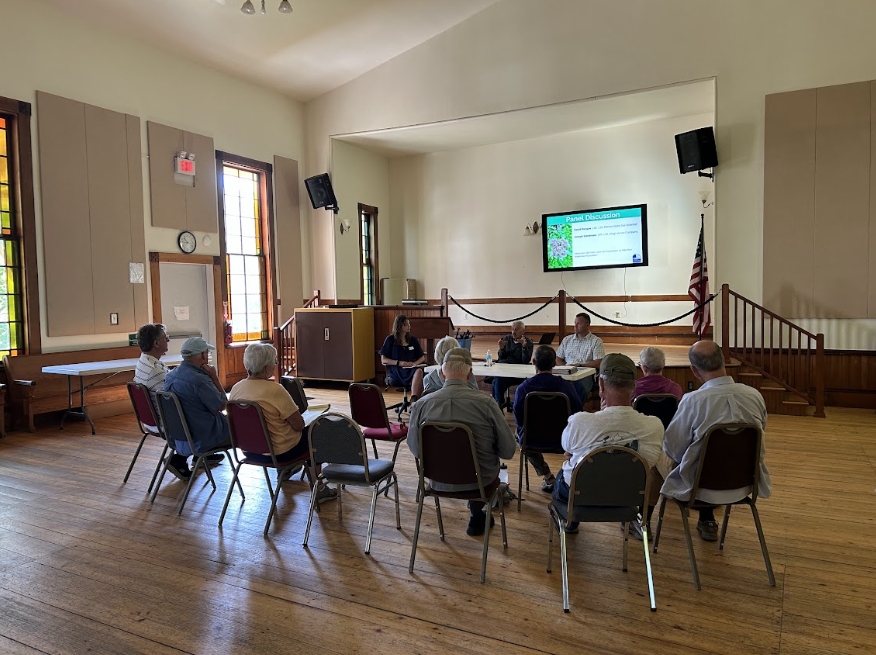
August 21, 2026
Participants joined in on this panel discussion featuring David Rocque and Joseph Stevenson to learn about septic system installation, maintenance, hazards, and resources.
| | | |
2nd Annual Lake Association Leadership Roundtable
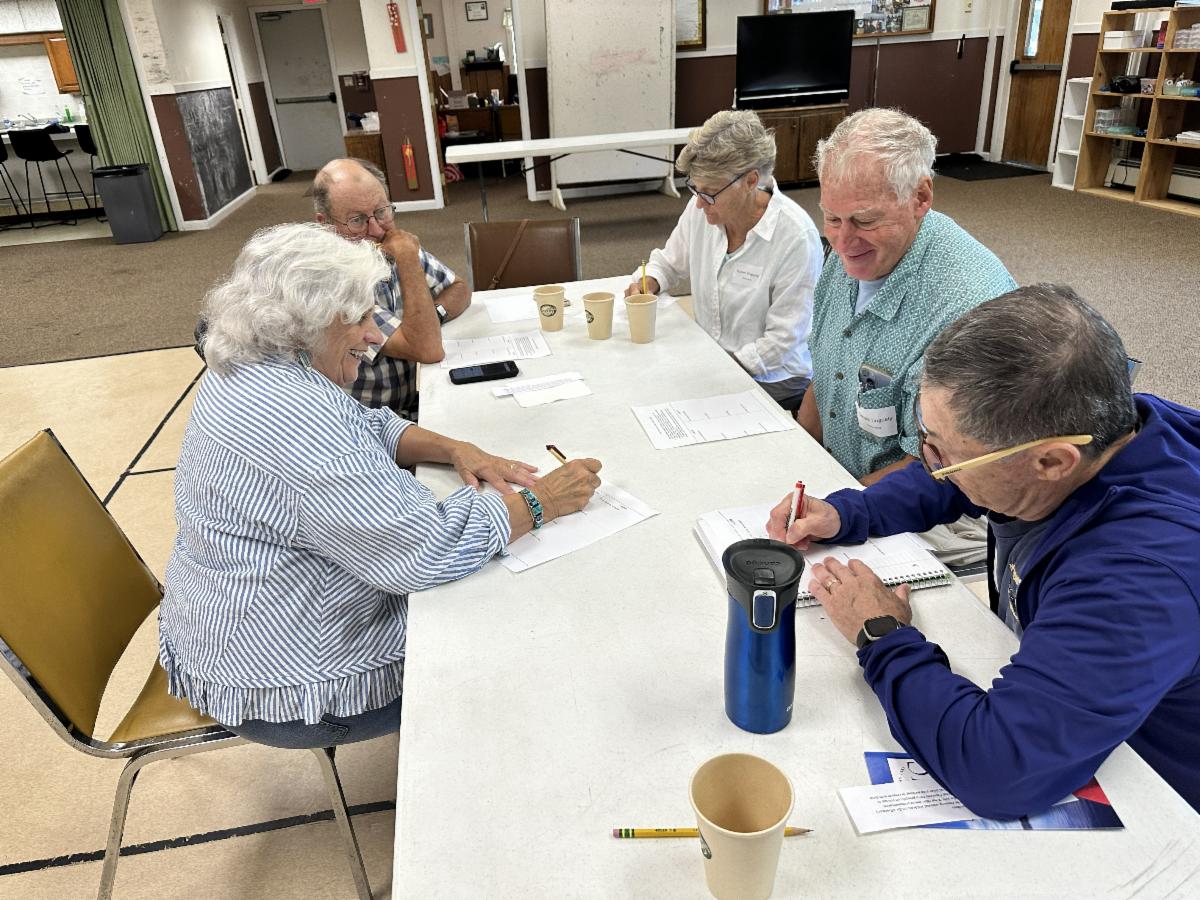
August 26, 2026
Participants from all 9 lake associations in the watershed joined to share their experiences and insights related to this year's theme of communication.
| | | Support 30 Mile! Your gift today will make a difference in protecting our lakes from phosphorus pollution, invasive species, and other threats. Find the giving level that works for you. | | Follow us on Facebook and Instagram! | | | | |