|
Another set of standards…
Another set of solemn phrases…
Another admission that NHS maternity care ‘isn’t good enough’.
The chief midwife says maternity care in the NHS is safe. Alas, perception is everything and she will have a distance to travel before landing that comment.
The numbers are uncomfortable.
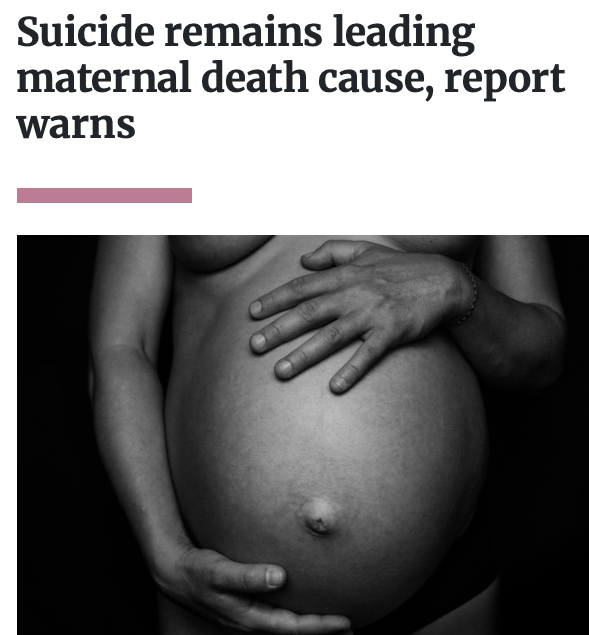
Around 250 women have died during or shortly after pregnancy in recent years.
Not all in labour. Many from cardiac disease, blood clots, or mental health. Most of these deaths are not unpredictable tragedies. They are system failures hiding in plain sight, and…
… here’s the deeper problem.
If more midwives, fewer births, more guidance and more inquiries were the answer, we would have solved this years ago.
We haven’t.
What are we missing?
Look abroad. Not for perfection, but…
… for proof that a different way of organising care actually works.
The best systems lose three mothers per 100,000 births. We lose around ten. That gap isn’t bad luck, lack of people or skills... it’s design.
In Netherlands, maternity care is built around small community midwifery practices. Women don’t see a cast of dozens.
They know a handful of professionals. One of them will be there when it matters. Care is personal, local and continuous… without expecting one individual to be permanently on call.
In New Zealand, every woman has a Lead Maternity Carer. A named professional who owns the journey. They may not attend every moment, but…
… but they are accountable for the whole pathway… if they are not there, someone they know and trust is.
In Sweden, continuity is not defined by who delivers the baby, but by who knows the woman. A named midwife leads antenatal care and remains involved afterwards. The relationship matters more than the rota, and…
… in France, outcomes are protected by something the NHS often struggles with. Tight integration between maternity, physicians and mental health.
Pregnancy is treated as a whole-body, whole-system condition, not a nine-month episode in a labour ward.
Different models. Same underlying principles.
-
First, someone is clearly in charge.
-
Second, care is delivered by small, consistent teams, not anonymous shift systems.
-
Third, maternity is not isolated… it’s integrated with wider medical and social care.
None of this relies on heroic midwives working 24/7.
None of it requires impossible commitments from staff with families and lives. It’s designed continuity, not accidental continuity, and …
… that’s where the NHS has to start some serious thinking. What sets these other systems apart is continuity.
We recognised that one-midwife-per-woman was impractical and we were right, but …
…instead of replacing it with a workable system, we defaulted to fragmentation. Large teams. Rotating staff. Diffused responsibility.
Everyone involved. No one accountable.
The result? Women repeat their story. Risks are missed. Signals are diluted. When something goes wrong, the system cannot say who was in charge… only who was present.
This is not a staffing problem alone. It is a system design problem.
The latest NHS initiatives include;
- risk assessments,
- new clinical standards,
- taskforces…
… are sensible, but they are incremental. They improve the parts. They do not fix the architecture.
What would? A simple, radical shift...
-
Every woman has a named clinical lead
-
Care is delivered by a small, consistent team
-
Data identifies risk in real time, not retrospectively, currently the MOSS system reports 6 monthly.
-
High-risk women get enhanced continuity and follow-up
-
Boards are accountable for outcomes, not just compliance
This is not theory. Other countries are already doing it.
The question is not whether it can be done. It’s whether we are prepared to do it, because …
… until we move from writing reports to redesign care, we will continue to produce the same inquiries, the same findings, the same conclusions; not good enough.
We didn’t fail because continuity was impossible. We failed because we never replaced it with something that works.
In Bevan’s time, the late 1940s, just before the NHS, maternal mortality was ~80–100 per 100,00. Today, around 8–12 per 100,000.
In Bevan's time women died because medicine couldn’t save them.
Today, too often, they die because the system didn’t.
Have the best weekend you can.
|