View as Webpage

X Share This Email
LinkedIn Share This Email

nhsManagers.net

26th February2026

Be in The Loop

Join the Institute of Health and Social Care Management, here.


News and comment from

Roy Lilley


Differently...

_____________

Short on time? Get yer ears-on and listen to Roy Lilley read this morning's eLetter... free!

In the late eighties I had a good friend, Oliver.


Oliver was a shredder. The biggest NHS supplies could find. 


Whenever DH policy palaver turned up in the mail (it was before emails), our lovely administrator-in-chief, secretary and the person who actually ran the place, would just dump it all into the jaws of ‘Oliver’, and…


… we’d get on with the real job of making the services as good as they could be for the patients, residents, relatives, carers, friends and the fabulous people we worked with. 


We Oliver’d everything. I figured; if it was important, someone would send it again.


Oliver?


Oliver North, who unexpectedly fessed-up to helping run the US covert Iran-Contra operation, and admitted shredding documents. He got away with it, on a technicality!


A couple of days ago, speaking at a conference, the DH+ permanent secretary Samantha Jones said, when she was running her hospitals, she;


‘... did not read policy documents’,


she was was busy;


‘... working out how to lead the team, how to do things on a daily basis.


An outburst of Oliver North frankness is entirely unexpected from a permanent secretary, but…


… if you were at that conference;


I hope you stood up and applauded. 

I hope there was an ovation. 

I hope she was cheered from the rafters. 

I hope (if it’s not too chauvinist to suggest it) she was inundated with flowers and champagne (or a bottle of Penderyn)…


… carried shoulder high from the podium.  


She is right…


… the gap between the board and the ward? Everyone knows it exists, but very few dare say it out loud.


Spend time in Whitehall, NHSE or the policy units and you’ll be surrounded by documents;


  • Strategies. 
  • Guidance.
  • Frameworks. 
  • Transformation programmes. 
  • Roadmaps. 
  • Delivery plans. 
  • Re-organisations.
  • Name changes. 
  • Redundancies.


Spend time on a ward and it’s a different world. Wards have their own reality;


  • Patients,
  • staff shortages,
  • bed pressures,
  • families asking questions. 
  • The bleep, bleeping. 
  • The next emergency arriving, before the last one has been sorted.


The business of hospitals is immediate and practical. It is about people, time and resources.


There’s a canyon between these two worlds.


One of my management favourites, Henry Mintzberg distinguished between two forms of strategy;


‘… the deliberate strategy, written in plans and ...

... the emergent strategy, that develops in real life as staff cope with circumstances.’


Hospitals, GP surgeries, community and all the rest, run almost entirely on the emergent version.


Michael Lipsky, in his book Street-Level Bureaucracy, argued that;


… the real decisions in public services are not made in ministries or headquarters but by frontline workers, who interpret policy under pressure.’


Policy arrives from the centre and collides with the reality of crowded wards... limited staff and beds in the corridor.


Frontline staff adapt. They improvise. They don’t need nincompoops redefining a corridor as a ‘non-clinical space’. They want real space.


Only one message travels reliably to the ward…


… it’s money…


… or, the lack of it.


Tariffs change behaviour. Budgets change staffing numbers. Capital investment changes how and where. The rest barely ripple the waterline of hospital life.


New structures. New names for organisations. New acronyms. New frameworks...


... they may dominate policy discussions but their impact on the ward, in the clinic… negligible.


The latest wheeze; neighbourhood services…


... what do they think GPs, district nurses, hospitals and social workers try to do every day? Give them the money and they'll show you how to do it. 


No policy document required. 


Oliver, symbolised something important. The endless stream of junk-mail, clogging up inboxes are meaningless to the people who actually do the real job.


For the people who play parts in the theatres of the NHS, the scene shifters at head office are irrelevant.


Some directives matter … funding or regulatory. The rest can be Oliver’d.


This isn’t cynicism. It is survival.


The health service; a complex operational, organisation. Its only purpose, its raison d’être; the instant a patient meets a clinician...


... making that moment come sooner, safer, and when it does, being sure it creates peace-of-mind... it's the only job.  


Peter Drucker said;


‘… the real work of an organisation happens where it meets the customer, [the patient]. Everything else is support.


Mostly, policy has lost sight of that reality. 


If the DH+ believes that hospitals are run by plans and structures, it will keep producing them.


If it understood that hospitals run through empathy, tender moments, joy, sorrow, effort, judgement, relationships, innovation, determination, inventiveness and skill...


... it might behave differently.

NEW- NEW - NEW

Podcast

In the latest podcast, Niall and Roy delve into the besieged world of nursing with

the leader of the world's largest nursing union


Prof Nicola Ranger


General Secretary and Chief Executive

Royal College of Nursing  


In a frank exchange, Nicola reflects on the crisis  of recruitment and retention, the fact that nurses spend too much of their time on pointless tasks, the unprecedented levels of low morale and the possibility of strike action.


And, she says there is an urgent need to reform nurse education, including in her personal view, a national exam for every nurse wanting to join the register. 


This is a clarion call for reform within and beyond the profession and a warning of an existential threat to the NHS if the government does not invest and start to value nurses. 

For all the previous

In the Loop

podcasts with

Tom Dolphin

Chair BMA

David Gregson

founder of BeeWell

Dr Charlotte Refsum

Tony Blair Institute

Rob Webster

ICB CHEx

Sarah Woolnough

CEO of the King's Fund

Sir Jim Mackey

Dame Jennifer Dixon

Lord Darzi

Professor Tas Qureshi

Dr Penny Dash,

chair NHSE

Richard Meddings,

former chair NHSE,

Sir Jeremy Hunt,

Sir Andrew Dilnot,

Paul Johnson IFS

CLICK HERE


-oOo-


Probably, the most listened to

Podcast in the NHS!

FREE!

Want to contact Roy Lilley?

Please use this e-address

roy.lilley@nhsmanagers.net 

-----------

Know something I don't

email me

in confidence.

Leaving the NHS, changing jobs - you don't have to say goodbye to us!

You can update your Email Address from the link you'll find right at the bottom of the page,

up-date-your-profie,

and we'll keep mailing.

----------

GDPR

We don't sell or give access to your email address to any third parties.

You can unsubscribe at any time.

Click on the link right at the bottom of the page

---------

Disclaimer

... yes, 60 countries listen

to Roy Lilley's podcast, free.

You can, too.

Just click here

Dr Paul Lambden


Gangrene


... Frostbite is a significant cause of gangrene. During Captain Scott’s ill-fated expedition to the South Pole, severe frostbite occurred and Laurence Oates, stricken with frostbite and gangrene, left his tent to die in a blizzard with the words “I’m just going outside and I may be some time..."


News and Other Stuff

---

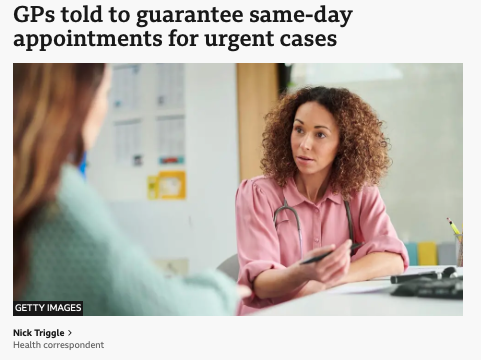
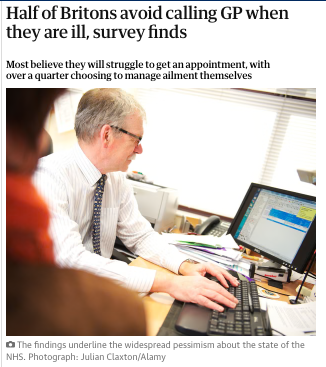
>> Better access to GPs with same-day appointments for urgent care - and other stuff, in the new GP contract.

>> Which 13 systems had their deficit support funding withheld - HSJ reveals.

>> Jackie Smith - to chair Chesterfield Royal FT.

>> Experiences of access to general practice in England - qualitative study and implications for the NHS 10 year plan

This is a cuppa-builder's read;


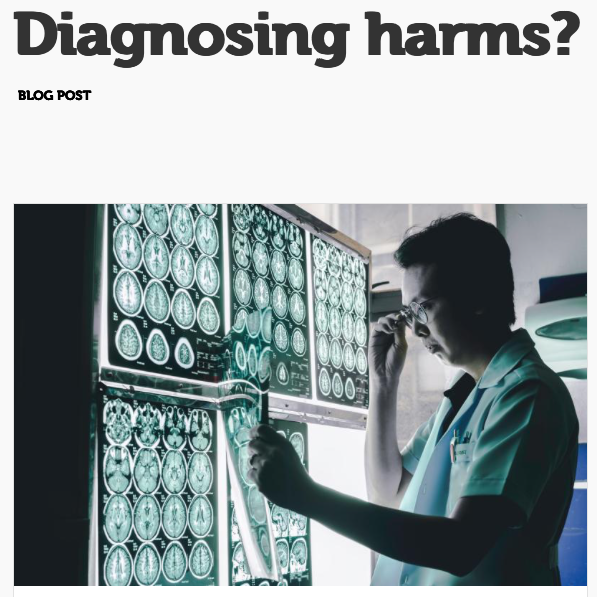
> For those seen in A&E and discharged home, the number of tests per attendance has doubled in the last eight years. 

> The number of “key” diagnostic tests requested for elective patients doubled between 2008 and 2020. 

> In 2011/12, around 1 in 5 admitted-patient spells involved a “key” diagnostic test. By 2021/22 this had risen to almost 1 in 3. 

Reducing Delays, Cancellations, and Readmissions Through Peri-Operative Optimisation


'... a project to transform the Pre-Operative Assessment Clinic into a Peri-Operative Assessment service at Somerset NHS FT.

The goal was to improve elective surgical patient outcomes by proactively managing co-morbidities (e.g., diabetes, anaemia, smoking cessation) and reducing delays, cancellations, length of stay, and readmissions.'


This is what I'm hearing, unless you know different. In which case, tell me, in confidence

__________


>> I'm hearing - proposed amendments aim to ensure that reimbursements for pharmacies "are more reflective of market conditions".

>> I'm hearing - Boots is touring pop-up pharmacy services across the country, to raise awareness of the healthcare support which is available through pharmacies.

THE NOTTINGHAM INQUIRY 

Extraordinarily Difficult Decisions

Prof Brian Edwards 


'During this period, he had seven formal mental health assessments leading to four compulsory detentions.'

More News

----

>> Trump’s State of the Union - 6 healthcare takeaways.

>> DHSC, workforce management information January 2026 - DHSC+ publishes details about staff numbers and payroll costs for payroll and non-payroll staff on a monthly basis.

>> Messaging best practice - advice from NHSE.

Twitter  
Managers Logo