Because Digestive Health Matters

International Foundation for Gastrointestinal Disorders September 2025 eNewsletter

September marks the start of Chronic Pain Awareness Month- a time dedicated to recognizing the millions of individuals living with persistent, life-disrupting pain.

Chronic pain is typically defined as pain that lasts for six months or longer, either continuously or in recurring episodes. It’s a condition that affects between 30 to 50 million Americans, making it one of the most common reasons people seek medical care.


For those managing both chronic pain and gastrointestinal disorders, the burden can be especially heavy. The combination of ongoing pain and digestive symptoms can severely limit daily activities, strain relationships, and lead to isolation from friends and loved ones.


This month, we’re committed to breaking the stigma and silence surrounding chronic pain. By sharing educational resources and encouraging open dialogue, we hope to create a supportive space where patients feel empowered to speak up, share their stories, and advocate for better care.

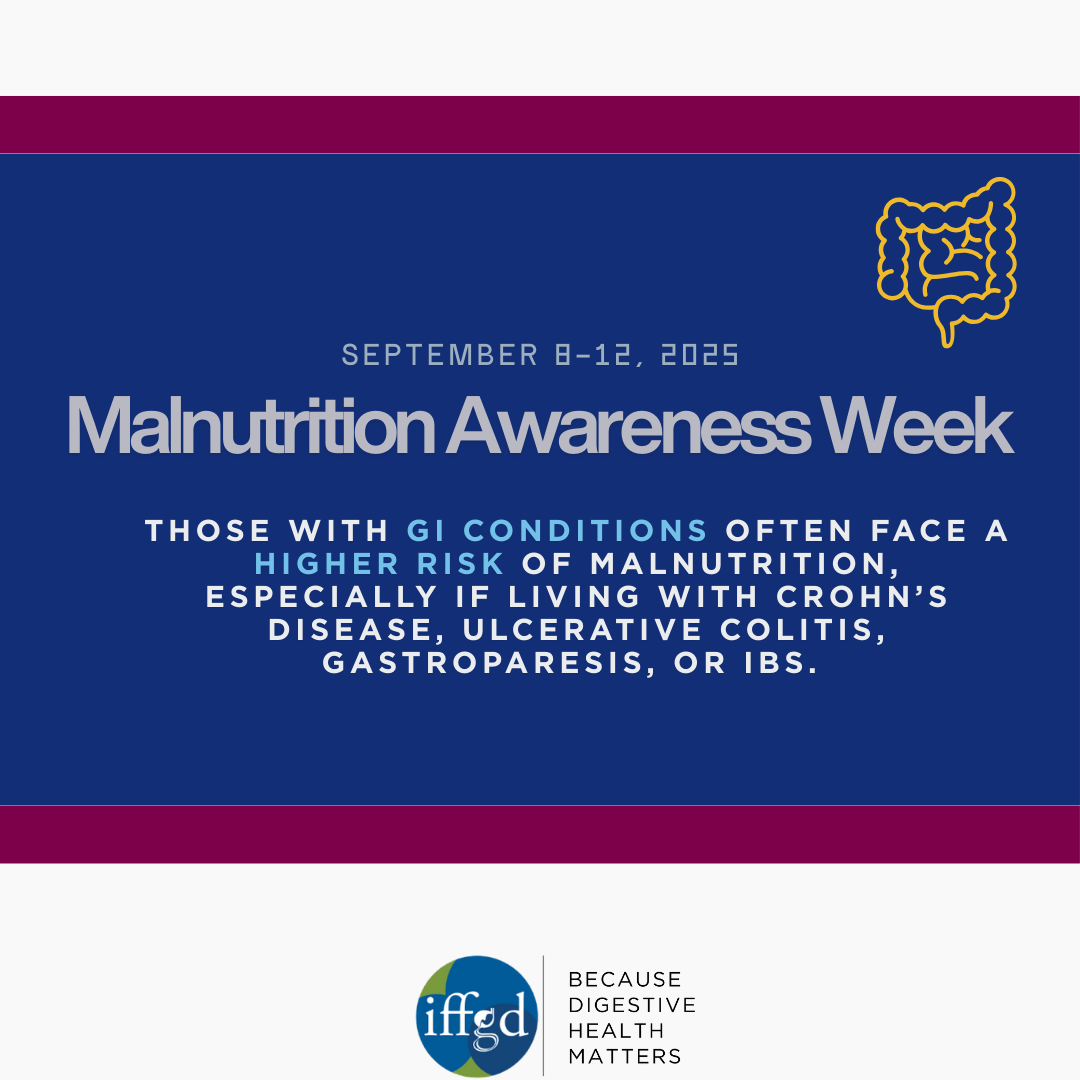
Malnutrition Awareness Week

This year, Malnutrition Awareness Week takes place from September 8–12.


This observance shines a light on the serious and often overlooked issue of malnutrition, which occurs when the body doesn’t get the essential nutrients it needs to function properly. Whether due to inadequate intake, poor absorption, or underlying medical conditions, malnutrition can lead to serious health complications.


For individuals living with gastrointestinal (GI) disorders, the risk of malnutrition is especially high. Conditions like Crohn’s disease, ulcerative colitis, gastroparesis, short bowel syndrome, and IBS can all interfere with nutrient absorption and digestion if not carefully managed.


Join us this week as we spread awareness about the signs, risks, and impact of malnutrition, especially within the GI community.


Click here to explore educational resources and find out how you can get involved.

5 Minutes in GI

For September’s 5 Minutes in GI, we sat down with Dr. Joy Liu to talk about GI disorders and pregnancy. We’ll explore the different GI symptoms women may experience during these months and identify the most common ones. 


Click the button below to watch this edition

Managing Chronic Pain

  Managing chronic pain isn’t about just “toughing it out”, it’s about finding the right tools and support to take back control of your life. 


If you’re living with chronic pain, especially alongside a GI disorder, there are steps you can take to improve daily life and reduce pain’s impact.


Pain management is personal. There’s no one-size-fits-all solution. But small, consistent steps can make a difference.


To learn about pain management, click the button below

2025 Norton Education Series

The International Foundation for Gastrointestinal Disorders (IFFGD), in collaboration with Harvard Medical School, is excited to share our newest edition of the Norton Education Series (NES): "Overview of Gastrointestinal Symptoms." This program is tailored to empower patients with knowledge and tools to manage their health effectively.


Delve into 22 expert-led talks addressing upper, middle, and lower GI tract symptoms, as well as identifying alarm symptoms.


Gain insights from Dr. Kyle Staller, Program Committee Chair and esteemed gastroenterologist at Massachusetts General Hospital.


This initiative is part of IFFGD's mission to provide patient-centered education, aiming to reduce healthcare utilization and enhance long-term health outcomes for individuals with chronic GI conditions.


Coming in early November. Stay tuned for more information.

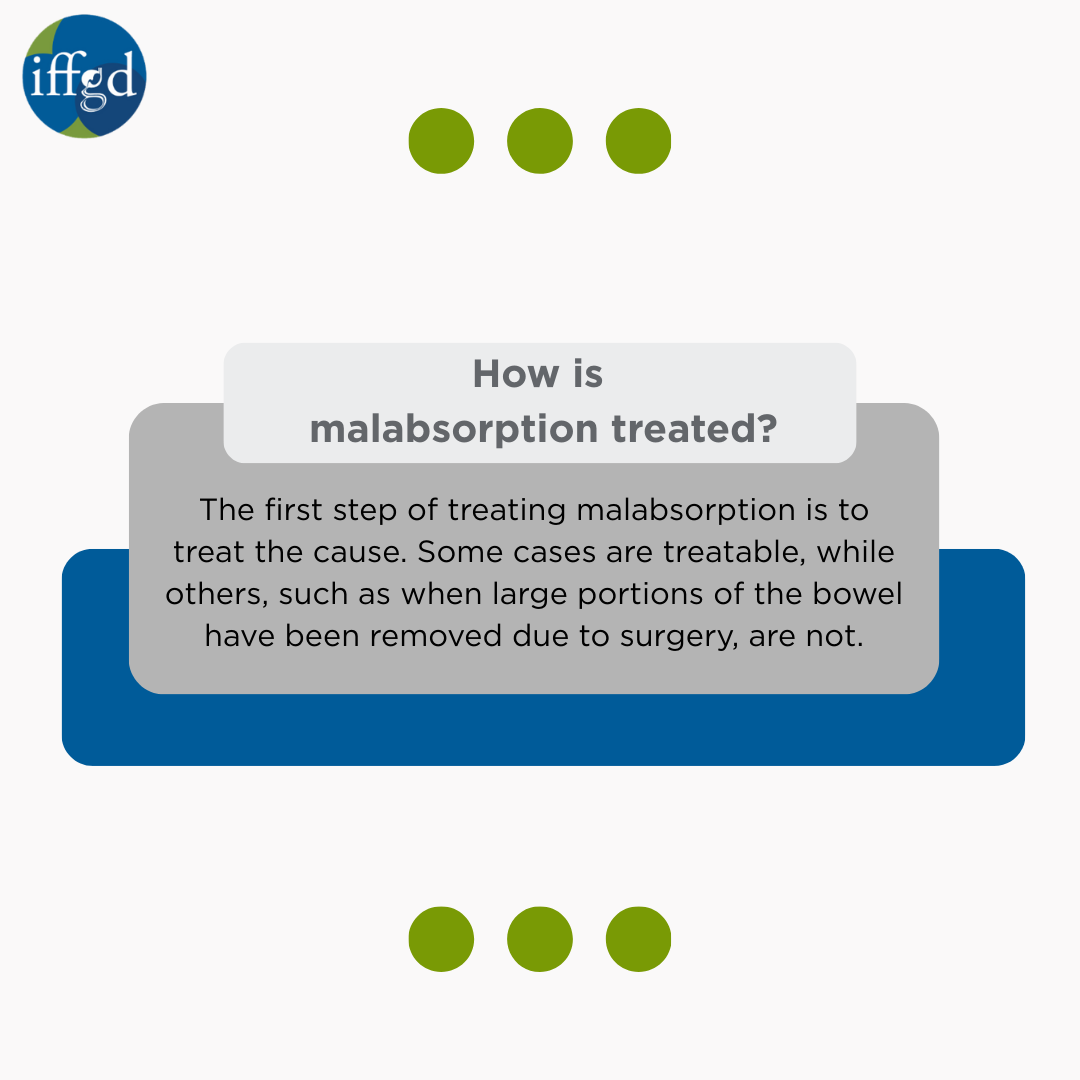
Treating Malabsorption

The first step of treating malabsorption is to discover the cause. Some cases are treatable, while others, such as when large portions of the bowl have been removed due to surgery, are not.


Most of the treatment for malabsorption consists of dietary adjustments. If fat is being malabsorbed, then a low fat diet should be followed. If carbohydrate malabsorption is present, then lactose often must be restricted. When diet changes are not possible, providers may consider intravenous feeding.


For more information on malabsorption, click the button below.

2025 Virtual Digestive Wellness and Walk Event

This year’s Virtual Digestive Health Wellness and Walk Event was our biggest one yet! Thanks to participants like you, we saw record numbers. We can’t wait for next year! Check out the stats below:


  • Registered Participants: 1066
  • Sponsors: 8


Full statistics coming soon!

Clinical trials and research studies help to improve our understanding of the underlying mechanisms of diseases and advance the development of new and better treatment options. By participating in a study, you can help further the advancement of research and learn more about your condition.

Here are 3 studies currently recruiting participants:

IBS-D

Hydrogen Breath Test an Instrument to Predict Rifaximin-Response in Irritable Bowel Syndrome Predominant Diarrhea

GERD

Mechanistic and Clinical Outcomes of a Surgical Innovation Aimed at Minimizing GERD Associated With VSG (INNOVATE-VSG) (INNOVATE-VSG)

IBS

Exclude or Expose in Irritable Bowel Syndrome: What Works for Whom and How?

September Spotlight

Patient Advocate Sarah Shelke

Sarah Shelke is a 17-year-old youth public health advocate and founder of Mind4Youth, one of the largest youth mental health nonprofit organizations, which has brought together over 20,000 volunteers.


Sarah was diagnosed with Irritable Bowel Syndrome when she was 15 due to mental health challenges that affected her academic life. Frequent absences from school and stepping back from physical activities, such as her school’s dance team, made her journey feel isolating. It took five months to reach a diagnosis, making the process tedious and time-consuming. As is typical for many young patients, she often felt unheard during doctor appointments.


This journey fuels Sarah’s passion for advocating for improved patient-centered healthcare services for individuals affected by GI disorders. As the first Youth Representative of IFFGD, Sarah believes that young individuals should have a voice in healthcare policies and decisions that affect them. She aspires to become the voice she once lacked and also reminds fellow young individuals who have GI disorders that they're not alone.  

IFFGD is a nonprofit organization. We rely on donor support to fund research and to provide reliable information and support to those affected by chronic gastrointestinal disorders.
IFFGD | 414-964-1799 | iffgd@iffgd.org | www.iffgd.org
Facebook  Twitter  Instagram  Youtube