Because Digestive Health Matters

International Foundation for Gastrointestinal Disorders March 2024 eNewsletter

March is National Nutrition Month, a time to focus on the significance of making informed choices about food and cultivating healthy eating and physical activity habits. Nutrition significantly contributes to the management of gastrointestinal health and serves as a proactive measure in reducing the risk diseases like colorectal cancer—an awareness month we also recognize this March.


Nutrition assumes a pivotal role in the effective management of gastrointestinal health, concurrently mitigating the risk of colorectal cancer—an awareness we duly recognize this month.


Many people may notice a change in symptoms depending on what they eat. Individuals living with chronic gastrointestinal (GI) disorders often find that food significantly influences their symptoms. Some may notice symptoms worsening after meals or identify specific foods that trigger or alleviate their symptoms.


Understanding GI disorders involves a complex exploration of the relationship between what we eat and the digestive symptoms we experience. Finding a balance between obtaining proper nutrition and minimizing symptoms can be difficult. When challenges arise in managing your GI disorder, seeking assistance from a registered dietitian or other nutrition support specialists, such as healthcare providers or therapists becomes crucial. These trained professionals can help you pinpoint triggers and formulate a dietary plan tailored to your needs.

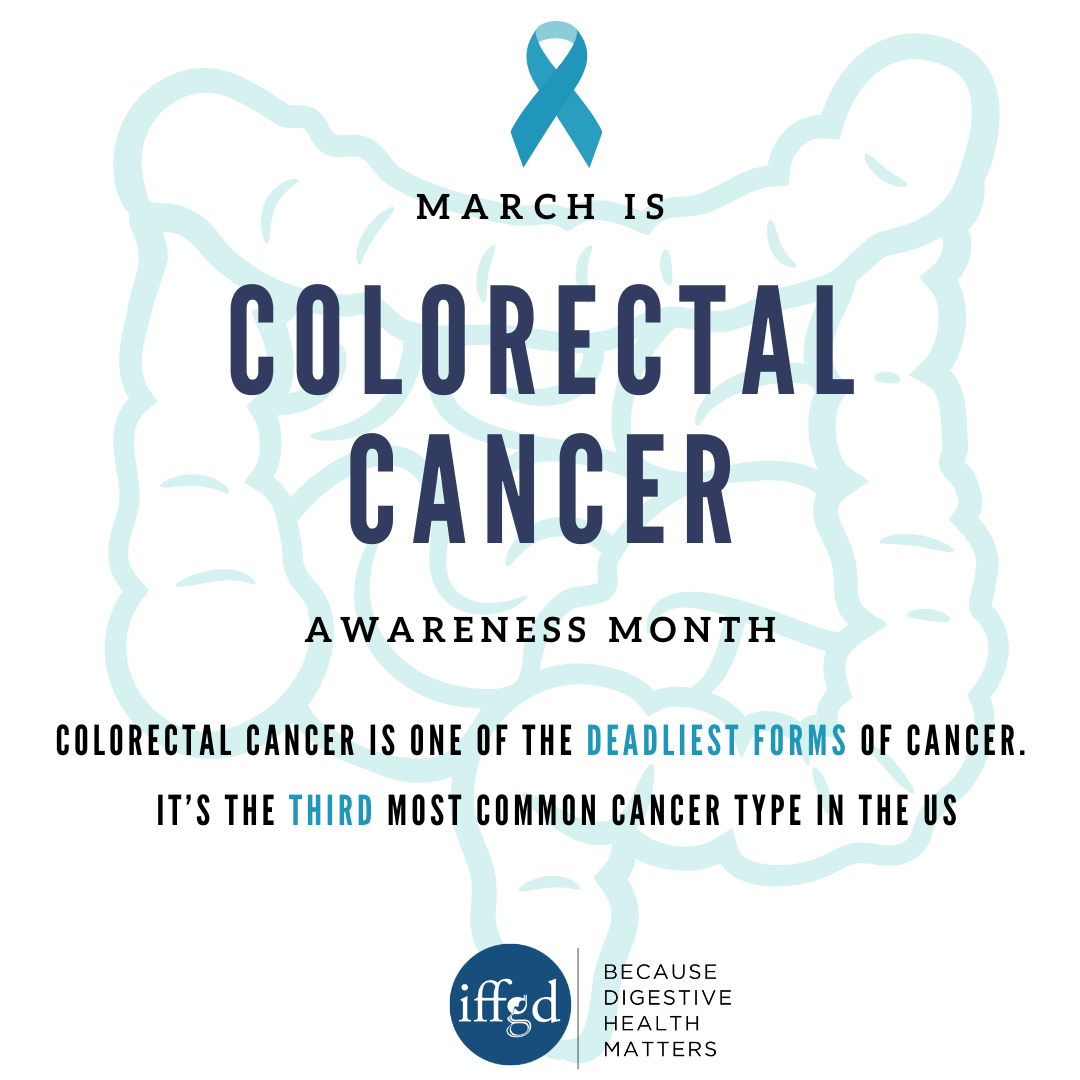
Colorectal Cancer Awareness Month

Colorectal cancer is one of the deadliest forms of cancer and the third most common cancer type in the U.S. 


 In recent years, colorectal cancer has been emerging in younger individuals. While researchers are still investigating the cause of this increase, early detection significantly improves the chances of a cure. Emphasizing the crucial role of early screenings, we invite you to explore our resources for more information on colorectal cancer and the importance of colonoscopies.

Click here to get started.

5 Minutes in GI

This month’s "5 Minutes in GI" video is now live!


Top healthcare providers are geared up to break down the answers to the most commonly asked GI questions in only 5 minutes. We've stripped away the unnecessary details, ensuring that the information is easy to grasp and accessible to everyone.


Join us as we chat with Dr. Justin Brandler about ways to improve bowel control and sensitivity with IBS.


Click the button below to watch the latest release.

5 Minutes in GI

IBS and Nutrition

For centuries, the link between food and health has been known, but there is a growing fascination with understanding the impact of diet and nutrition on gastrointestinal (GI) function and symptoms. This focus has primarily centered around utilizing dietary modifications as a means to address Irritable Bowel Syndrome (IBS).


Among individuals diagnosed with IBS, as many as 2/3 experience heightened GI symptoms following meals. Unfortunately, symptoms induced by food are prevalent in IBS, and those resulting from eating are linked to a diminished quality of life.


To learn more about IBS and nutrition, click the button below.

IBS and Nutrition

IFFGD’s 2024 Education and Advocacy Event is a complimentary event to educate the community about access to healthcare and how to best advocate for yourself in the medical field. This event will be held on April 14-15, 2024 in Washington D.C.


The event will consist of two parts: an educational portion and a hands-on hill day visit. The educational portion will feature presentations from experts in the advocacy space and IFFGD staff to help you understand relevant legislation

and assist you in preparing to meet your representatives. We will also cover access to care issues including how to navigate insurance hurdles.

This event will be held at the Beacon Hotel & Corporate Quarters 1615 Rhode Island Ave NW, Washington, DC 20036. The IFFGD discounted room block closes Wednesday, March 13th. Click here to RSVP and reserve your spot before it's too late!

Food, Nutrition, and the Gut

Understanding nutrition is crucial for individuals with GI disorders due to the direct impact diet has on digestive health. Certain foods may exacerbate symptoms or trigger flare-ups, making it essential to tailor dietary choices to manage and alleviate discomfort. 


A general understanding of nutrition allows individuals with GI disorders to identify and avoid specific foods that could potentially worsen their condition. Additionally, maintaining a balanced and nutrient-rich diet is vital to ensure optimal nutrient absorption, support overall well-being, and promote the healing of the digestive tract. 


To learn more about nutrition and the gut, click the button below.

Food, Nutrition, and the Gut

SMART University x IFFGD: GERD

IFFGD teamed up with Smart University to bring you a presentation on GERD. Our Program Coordinator, Alyssa Sutton, explores some of the common questions about GERD including what it is, symptoms, diagnostic tests, and other treatment options. 


Click the button below to watch this presentation.

SMART University x IFFGD: GERD
Clinical trials and research studies help to improve our understanding of the underlying mechanisms of diseases and advance the development of new and better treatment options. By participating in a study, you can help further the advancement of research and learn more about your condition.

Here are 3 studies currently recruiting participants:

GERD

Omega Cuff for GERD Feasibility Study

Interstitial Cystitis/Bladder Pain Syndrome

Phase 2 Randomized, Double-blind, Placebo-controlled Study to Evaluate the Efficacy, Safety, and Tolerability of 2 Dose Levels of IW-3300 to Treat Bladder Pain in Subjects With Interstitial Cystitis/Bladder Pain Syndrome

Pediatric GI- GERD

GERD Infant Feeding Therapeutics Trial (GIFT Trial) (GIFT)

March Spotlight

Junior Academician Benjamin Lui

Dr. Benjamin Liu’s experience with irritable bowel syndrome has fostered his strong desire to become a physician-scientist dedicated to treating disorders of gut-brain interaction (DGBIs). His research journey began with researching stem cell-derived treatments and leading medical education projects. During medical school, he worked with Dr. Katja Kovacic on pediatric nausea and gastric emptying delays. Now at MetroHealth Medical Center in Cleveland, OH,, he is analyzing large-scale data sets to explore links between weight-loss medications and GERD as well as the under-recognized association between eating disorders and DGBIs.


“As a Junior Academician at IFFGD, I appreciate the support that IFFGD offers its trainees to support our goal to advance the understanding and care for DGBIs, while advocating for these marginalized patients.” 

Donate
IFFGD is a nonprofit organization. We rely on donor support to fund research and to provide reliable information and support to those affected by chronic gastrointestinal disorders.
IFFGD | 414-964-1799 | iffgd@iffgd.org | www.iffgd.org
Facebook  Twitter  Instagram  Youtube