|
|
Because Digestive Health Matters | International Foundation for Gastrointestinal Disorders September 2023 eNewsletter | | |
|
September is Chronic Pain Awareness Month. Chronic pain is estimated to affect around 50 million Americans. Chronic pain is identified as continuous or intermittent pain lasting longer than 3 months. Many people with gastrointestinal (GI) disorders experience chronic pain and other unpleasant symptoms.
Living with chronic pain, among other GI symptoms, can significantly decrease quality of life. People may socially withdraw as they try to figure out how to cope with their symptoms. The social costs of disability and lost productivity cost more than $100 billion annually.
To learn more about chronic pain, click here.
| | |
|
|
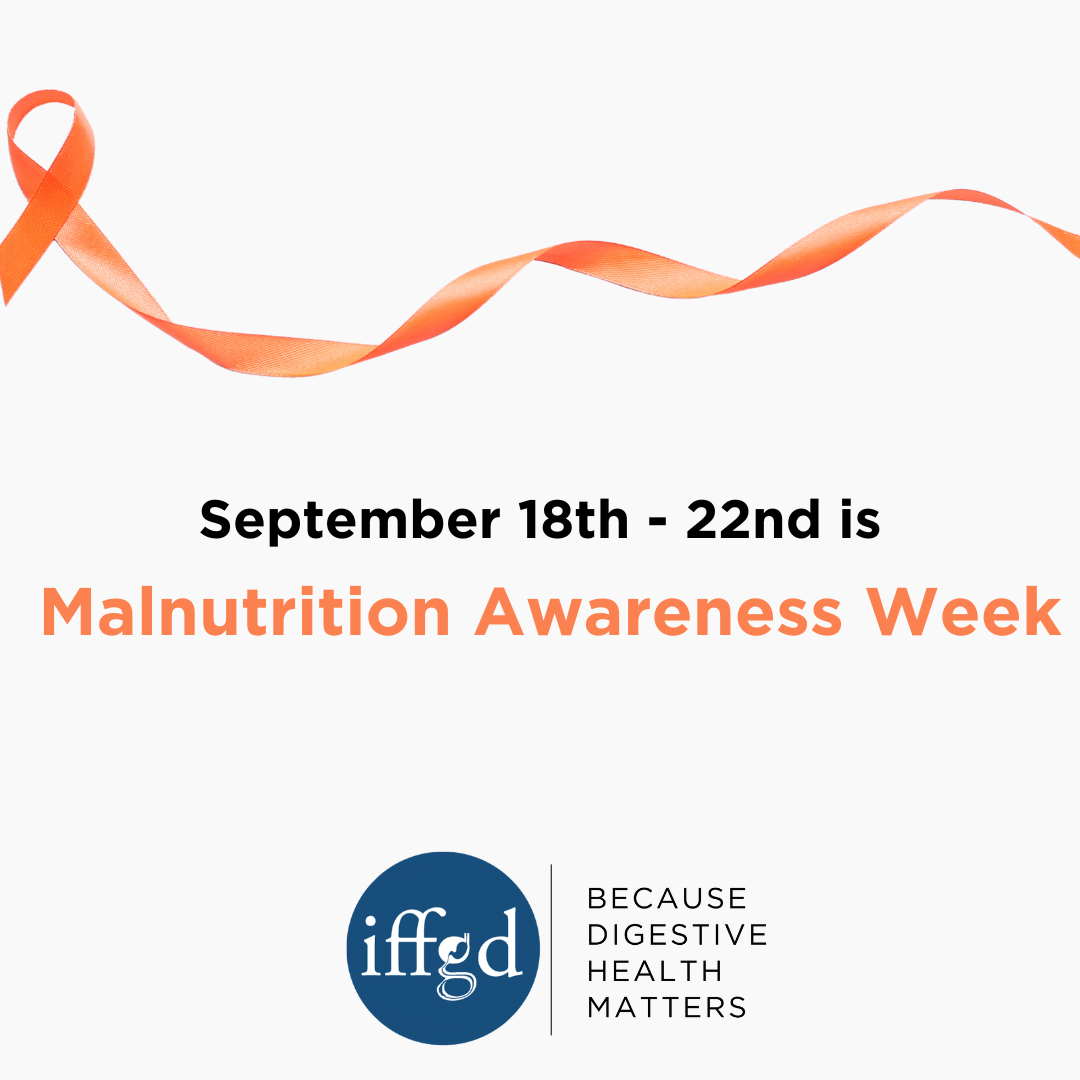
Malnutrition Awareness Week takes place from September 18th-22nd this year. This week, we aim to to educate the public on malnutrition detection, intervention, and treatment.
Malnutrition is a condition that develops when the body is in need of nutrients such as vitamins or minerals to maintain healthy tissues and regular organ function. This can occur due to poor diet choices, not eating enough, or medical problems contributing to problems absorbing nutrients.
| |
|
Malnutrition can occur as a complication when living with various GI disorders such as Gastroparesis or Short Bowel Syndrome (SBS). SBS is a condition where nutrients are not able to be properly absorbed due to the removal of a large portion of the small intestine. If SBS is not managed properly, malnutrition can occur.
Click the button below to learn about SBS management strategies to prevent malnutrition.
| |
|
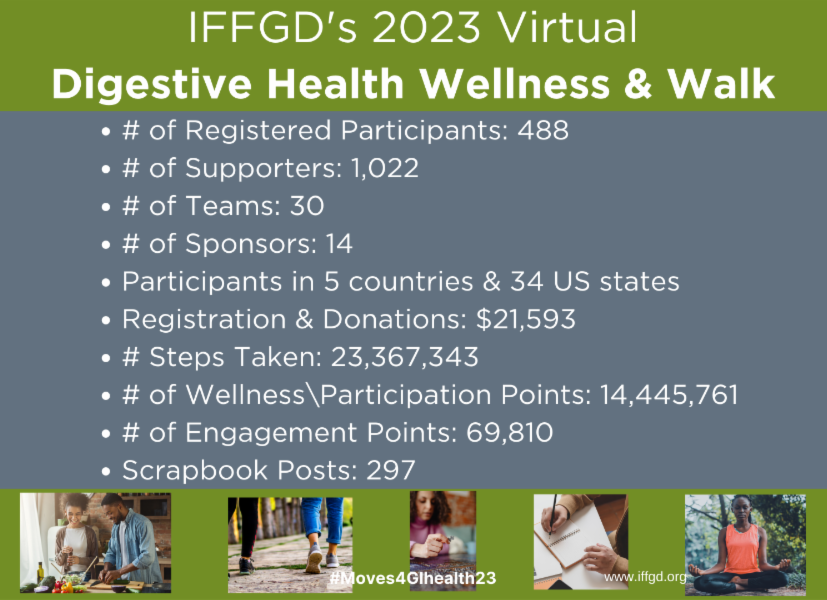
This year’s Virtual Digestive Health Wellness and Walk Event was our biggest one yet! Thanks to participants like you, we saw record numbers. Check out the stats below:
- Registered Participants: 488
- Supporters: 1,022
- Teams: 30
- Sponsors: 14
- Participants in 5 countries & 34 US states
- Registration & Donations: $21,593
- Steps Taken: 23,367,343
- Wellness\Participation Points: 14,445,761
- Engagement Points: 69,810
- Scrapbook Posts: 297
| |
|
Syndromic testing can be used to find out what caused a GI infection by testing one stool sample for bacteria, viruses, and parasites at the same time. It can help healthcare providers choose the right treatment and avoid unnecessary antibiotic use while improving patient outcomes.
Recent advances in medicine have seen the range of syndromic testing broadened. Syndromic testing capabilities can look for a wide range of infections at once.
To learn more about syndromic testing in GI, click the button below.
| | |
|
|
This year's NES program is a complimentary 1-day in-person event that features live educational presentations for patients, families, and caregivers looking to learn more about the microbiome and its relation to the GI system.
You do not want to miss this year's Norton Education Series that will be held at the Beverly Hills Marriott (1150 South Beverly Drive, Los Angeles, CA 90035) in Los Angeles, California on Saturday, October 7th, 2023 starting at 8:30 AM PT.
The meeting will include activities, such as lectures, Q&A panels, and networking opportunities during the lunch break, the post-program reception, and a book signing with Dr. Rezaie and Dr. Pimentel. All attendees are welcome.
| |
|
Topics to Discuss:
- How Does Your Digestive System Work?
- The Gut Microbiome: What is it and Where do We Stand?
- Post infectious IBS: Road to Cure
- Small Intestinal Bacterial Overgrowth: Diagnosis and Treatment
- Helicobacter pylori: Diagnosis and Treatment
- Speaker Panel Discussion and Q & A
Registration ends on September 20th. Click here to register now and learn more about this event.
| |
|
Many Americans suffer from chronic pain, with approximately 21% of the population living with long-term pain. The NIH released a study that found that new cases of chronic pain occur more often in U.S. adults than new cases of other conditions such as diabetes, depression, and high blood pressure.
Pain is defined as chronic when it is experienced on most days or every other day for 3 months. 8% of the population suffers from high-impact chronic pain that limits life or work activities on most days or every other day for 3 months.
This study highlights the importance of using multidisciplinary approaches to tackle the root cause and find new treatment options for those who suffer from chronic pain. To learn more about this NIH study, click the button below.
| |
|
This year’s National Women’s Health and Fitness Day is Wednesday, September 27th. We want to use this day to promote the importance of health and fitness for women of all ages.
A healthy diet, daily exercise, and regular doctor visits are essential for maintaining health. We encourage women of all ages to take the initiative to better their health today!
Click the button below to learn more about the history and importance of National Women’s Health and Fitness Day.
| |
Clinical trials and research studies help to improve our understanding of the underlying mechanisms of diseases and advance the development of new and better treatment options. By participating in a study, you can help further the advancement of research and learn more about your condition.
Here are 3 studies currently recruiting participants:
| |
Volatile Organic Compounds (VOCs) in Active Inflammatory Bowel Disease | |
Non-Alcoholic Fatty Liver Disease, the HEpatic Response to Oral Glucose, and the Effect of Semaglutide (NAFLD HEROES) | |
GI Permeability Change in Response to Aquamin® | |
Junior Academician Alejandro Llanos-Chea | Alejandro Llanos-Chea MD, is a pediatric gastroenterologist specializing in neurogastroenterology and motility disorders. He is an Assistant Professor of Pediatrics in the Division of Pediatric Gastroenterology, Hepatology, and Nutrition at the University of Texas Southwestern (UTSW). He completed his medical education at Universidad Peruana Cayetano Heredia in Peru and his pediatrics residency at Cook County Hospital in Chicago. Dr. Llanos-Chea completed his pediatric gastroenterology fellowship at the Harvard Medical School program at Massachusetts General Hospital in Boston. He trained in pediatric neurogastroenterology and motility at Boston Children’s Hospital under the mentorship of Dr. Leonel Rodriguez and Dr. Samuel Nurko. | |
|
|
Dr. Llanos-Chea provides care to pediatric patients with disorders of the gut-brain interaction and motility disorders at Children’s Medical Center Dallas. He also participates in the multidisciplinary aerodigestive and colorectal programs. Dr. Llanos-Chea has access to state of the art and innovative tools for diagnosing and treating of patients with these debilitating and challenging conditions. He works with an excellent team of medical professionals, including nurse practitioners, dietitians, G.I. psychologists, and social workers.
His research interest involves understanding disorders of the gut-brain interaction and motility disorders on in different/specific patient populations. He has served in different committees at the North American Society for Pediatric Gastroenterology, Hepatology and Nutrition (NASPGHAN), and is currently a member of the neurogastroenterology and motility committee. As an educator, he is actively involved in mentoring UTSW medical students, international graduates, pediatric residents, and gastroenterology fellows. He has been invited to share his expertise and research at regional, national, and international conferences. Dr. Llanos-Chea has also taken the time to contribute to IFFGD publications, including a recent fact sheet on C.diff.
| |
IFFGD is a nonprofit organization. We rely on donor support to fund research and to provide reliable information and support to those affected by chronic gastrointestinal disorders.
| | | | |