September 2026

In this issue:

  • Vibe coding for primary care: Moving from idea to prototype
  • Standardizing referrals: What we’re learning
  • Where to find us this October
  • Remembering Brian Sinclair: In recognition of National Day for Truth and Reconciliation

From Workflow Challenges to Working Prototypes: Vibe Code with Amplify Care

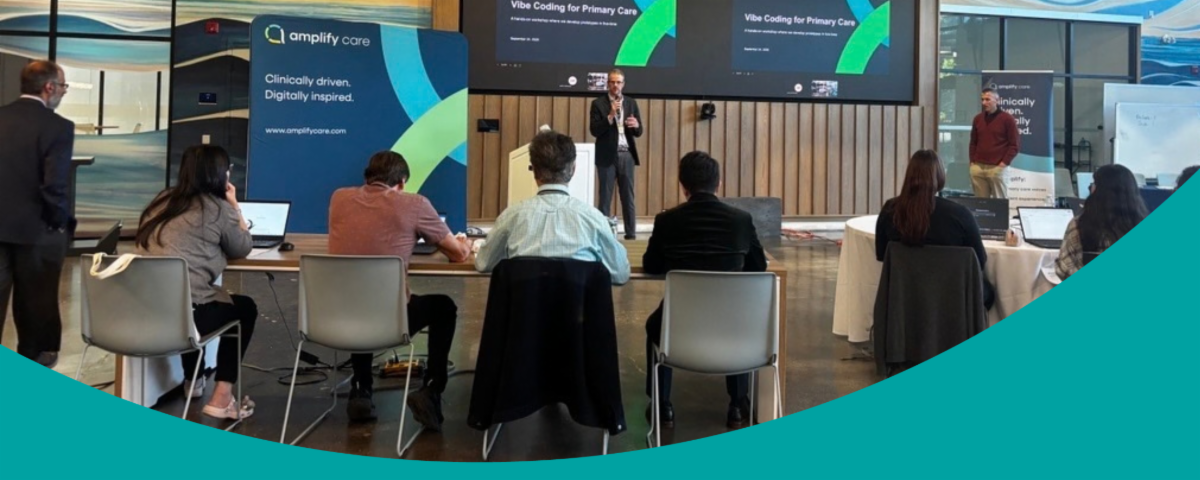
Last week, Amplify Care hosted our first Vibe Coding for Primary Care workshop in Kitchener through HEAL, our Healthcare Advancement and Experience Lab — and it was exciting to see what participants could build in just one evening. 


We started by identifying a real workflow challenge and developing a clear problem statement. From there, participants moved through three 20-minute rounds: Initial Build, Improvement, and Adding a New Feature. Using plain language and sample data only, they worked with an AI-powered vibe-coding platform to turn their ideas into working prototypes.


By the end of the session, participants had something tangible they could take away and continue developing, demonstrating just how quickly AI can help healthcare teams move from identifying a problem to experimenting with a potential solution.


We’re excited to continue exploring how these hands-on sessions can help healthcare teams build practical, responsible AI solutions around the challenges they encounter every day.


Interested in exploring a similar session in your region? 


Making Referrals Easier with Standardized Forms

Referring a patient for care should be as straightforward as possible. That’s why Amplify Care, in collaboration with Ontario Health and clinicians across the province, has been working to standardize referral forms — creating a more consistent and efficient experience while supporting the collection of complete, high-quality information.


We’re excited to share our newly published case study exploring the Medical Imaging Standardized eReferral Form (MI SRF) and what we’re learning from clinicians using it.


Early results are promising

Across three clinicians and three medical imaging scenarios, the MI SRF:

  • Reduced referral completion time by an average of 16 seconds (16%)
  • Reduced the number of clicks required by an average of five clicks (45%)
  • Was recognized by clinicians for its improved formatting, ease of use, efficiency and standardized approach
  • Included features that supported more complete and consistent information collection
    

The findings highlight the potential for standardized forms to reduce administrative burden and improve the referral experience. They also reinforce the importance of change management and onboarding as standardized forms are adopted more broadly.

Thank you to everyone who has contributed feedback and helped move this work forward. Your insights are helping shape a better referral experience for clinicians and, ultimately, patients.


More rounds of feedback are coming starting October 5 — keep watching this space for opportunities to get involved!


Find us at OMD Educates, AFHTO and PEIP by Peer this October

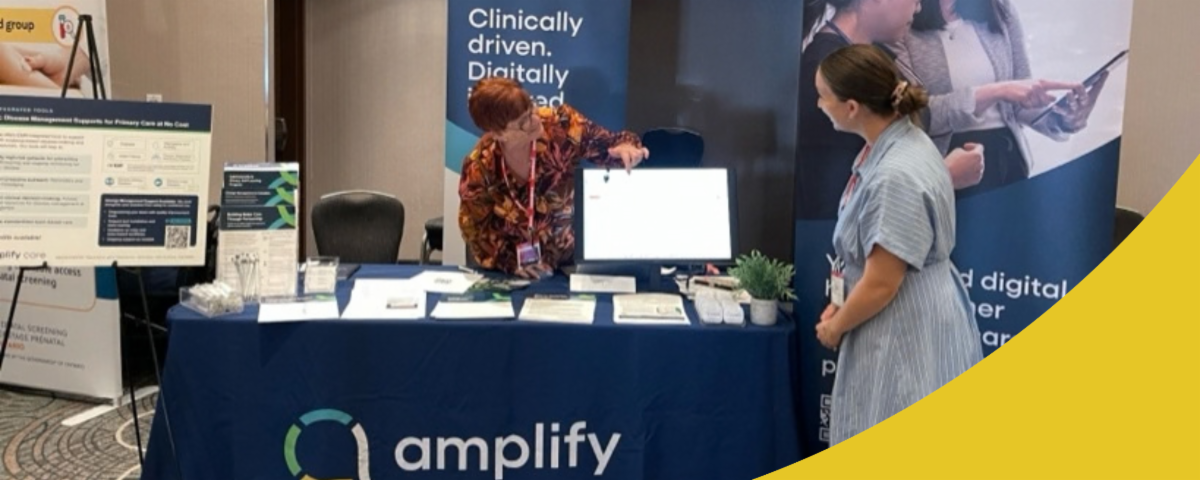
Starting tomorrow, we’ll be hosting a booth at this year’s OMD Educates conference — a great opportunity to connect with clinicians and healthcare leaders, share what we’re learning, and talk about how practical digital and AI solutions can support better healthcare delivery. Come find us at the booth and say hello!


We’ll also be at the AFHTO conference from October 15-16, where we’ll be hosting a booth and connecting with primary care teams from across Ontario. Our CEO, Dr. Mohamed Alarakhia, and Director of Integrated Care, Tricia Wilkerson, will also lead a panel discussion exploring the principles that create and sustain primary care capacity — a conversation we’re looking forward to.


Also on October 16, Dr. Alarakhia will be presenting virtually at the PEIP by Peer conference on “Artificial Intelligence and Clinical Practice: Work Smarter, Not Harder.” This hands-on session will explore Canadian-compliant AI solutions that can support clinicians, including AI scribes, form completion and chart summarization, evidence retrieval, and AI receptionists, with opportunities to try selected tools firsthand.


We hope to see you this October! You can also connect with us anytime here.


National Day for Truth and Reconciliation: Honouring the Memory of Brian Sinclair

For our team at Amplify Care, reconciliation is an ongoing commitment to learning. Recently, we gathered for a session with Jodi Rock, Indigenous Health Liaison, who shared personal experiences and stories from others, including that of Brian Sinclair, that challenged us to think more deeply about the assumptions and biases that can influence how Indigenous peoples experience and receive care.


We know this learning is ongoing, and that meaningful reconciliation requires continued listening, reflection and action.

On September 30, we are taking the opportunity to reflect on Brian’s story and on the responsibility we all share to help create a healthcare system where every person is seen, heard and treated with dignity.


LinkedIn  Instagram  Facebook


www.amplifycare.com | info@amplifycare.com