Texas A&M AgriLife Research logo over agricultural collage

Texas A&M AgriLife Research quarterly agency update • Spring 2026

Director's message

Howdy,


Since January, Texas A&M AgriLife Research has made significant strides across a range of scientific and agricultural disciplines, further strengthening its reputation as a leader in innovative research and impactful outreach. 


This newsletter highlights some notable accomplishments during this period, demonstrating the organization’s commitment to advancing sustainable agriculture, improving health, and fostering economic development in Texas and beyond. 


I extend my deepest gratitude to all faculty and staff members for your unwavering commitment and dedication to the mission of our organization. Your efforts continue to make a profound impact on enhancing the resiliency of our food, feed, and fiber systems, and improving our natural resources. Every day, your work helps shape a sustainable future for our communities and the world beyond.


Leading innovation and discovery in 2026


In just under half a year, AgriLife Research has achieved remarkable milestones in crop genetics, production systems, and resiliency of our food system. 


Our scientists developed and field-tested drought- and heat-tolerant varieties of wheat, cotton, and sorghum, along with gene-editing technologies to boost disease resistance and reduce environmental impact. Intelligent agricultural practices have led to reduced water, fertilizer, and pesticide use, benefiting the environment and farm profitability. Similarly, advances in management and genetics, and use of sustainable grazing practices, are demonstrably improving livestock industry productivity and resilience.


Meanwhile, in water conservation, AgriLife Research scientists developed drought-resilient plants and efficient irrigation tools alongside studies to protect water quality through buffer zones and cover cropping. Technological advancements in AI, remote sensing, and data science enabled precise monitoring and decision-making for crops and livestock, ushering in data-driven intelligent agricultural systems.


Spreading expertise across Texas, the U.S. and the world


Throughout 2026, faculty and student researchers have published in leading scientific journals and presented at major conferences, further raising the profile of Texas A&M as a center of agricultural excellence. Many of our faculty, staff, and students will be traveling across the globe to share their work, which will no doubt highlight the global impact we are creating. 


The accomplishments of AgriLife Research since January reflect a dynamic and forward-thinking organization that addresses the most pressing challenges in agriculture, environmental stewardship, public health, and community development.


Through scientific innovation, strategic partnerships, and a steadfast commitment to service, AgriLife Research continues to shape a more resilient and sustainable future for Texas and the world.


Gig 'em!

G. Cliff Lamb, Ph.D.

Director, Texas A&M AgriLife Research 

Construction update

Progress continues on several AgriLife Research construction projects: 


  • A ribbon cutting ceremony on April 7 marked the opening of the Texas A&M AgriLife High Plains Research and Extension Center in Canyon.
  • A groundbreaking ceremony on May 4 launched construction of the Meat Science and Technology Center.
  • The greenhouse project at the Texas A&M AgriLife Research and Extension Center at Dallas has initiated design.
  • The AgriTech Innovation Hub at the AgriLife Research station in McGregor has initiated design. 
  • The Texas A&M University System has almost completed the design process for the Research and Innovation Building at Texas A&M Fort Worth. This project will be up for construction approval by the Board of Regents in May.
  • The AgriLife Research building at the Texas A&M University Higher Education Center in McAllen has initiated design.
  • Texas A&M University has approved the Department of Poultry Science to initiate a plan for a new Research and Teaching facility.

New leadership

Welcoming new Texas A&M AgriLife Research and Extension Center Directors to Weslaco and Corpus Christi

We are pleased to announce that Dr. Kranthi Mandadi and Dr. Johnson Zeledón will begin June 1 as director of the Texas A&M AgriLife Research and Extension Center at Weslaco and director of the Texas A&M AgriLife Research and Extension Center at Corpus Christi, respectively.


Special thanks to Dr. Juan Landivar for serving as director of the center at Corpus Christi for 18 years, where he significantly increased research expenditures and initiated new research areas that continue to benefit the region. Thanks also to Dr. Beth Racine, who has served as interim director in Weslaco during the search for a director. She contributed steady and transparent leadership, positioning the center for AgriLife Research’s upcoming programming and infrastructure expansions in the Rio Grande Valley.

Man in suit smiling portrait

Kranthi Mandadi, Ph.D.

Mandadi is a Texas A&M AgriLife Research plant pathologist and professor in the Texas A&M Department of Plant Pathology and Microbiology. He has served at the center in Weslaco for over a decade, contributing leadership and research excellence, including major impacts to citrus research.

Man in suit half smiling portrait

Johnson Zeledón, Ph.D.

Zeledón joins the Center at Corpus Christi from Syngenta Crop Protection in Stanton, Minnesota, where he served as the Head of the North America Seedcare Institute. He brings more than 20 years of leadership experience across the academic, industry, and nonprofit sectors.  

Leading discovery and innovation

A row of people with shovels and hardhats behind some short bushes

Texas A&M breaks ground on new Meat Science and Technology Center

Facility aims to modernize applied research, teaching, extension

Leaders from Texas A&M AgriLife and The Texas A&M University System gathered May 4 to break ground for the new Meat Science and Technology Center, a $133.36 million project designed to modernize applied agricultural research, teaching, and extension services.

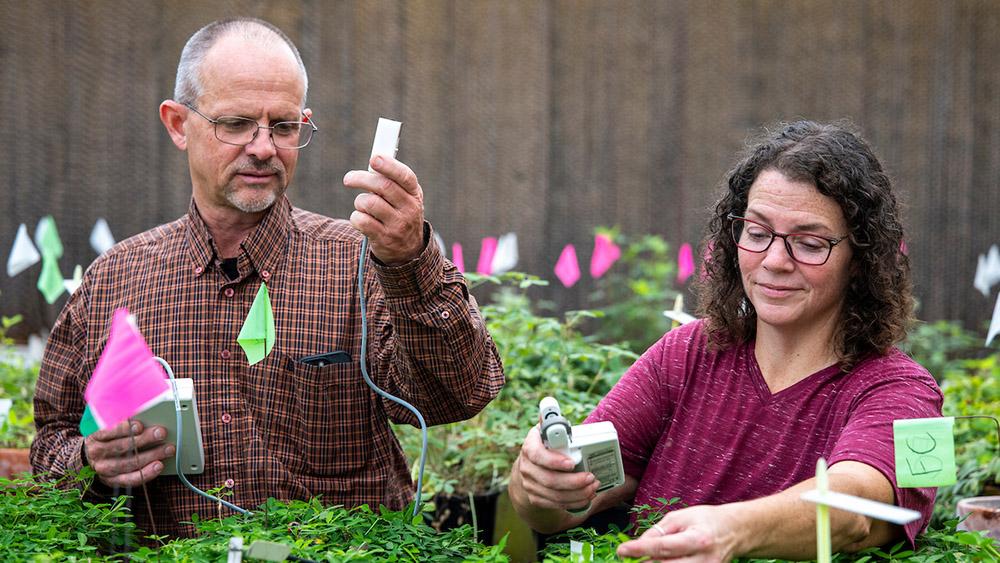
A man and a woman holding gadgets in the middle of many plants with little flags stuck in the pots

How Texas is perfecting the peanut

Texas A&M AgriLife collaborations improve peanuts for consumers, farmers, and industry

At Texas A&M AgriLife, breeders, growers, and industry partners are working to develop peanut varieties with better nutrition, longer shelf life and stronger performance under Texas growing conditions. That work matters well beyond the farm. The whole peanut plant is usable, with value for food, fuel, and animal feed, and it is becoming a more important protein source for people around the world.

Research funding opportunities and project support


The Texas A&M AgriLife Office of Corporate Engagement and Research Support, CERS, assists research faculty in obtaining federal and private funding for comprehensive multidisciplinary research projects.


CERS aims to alleviate administrative burdens associated with larger projects, allowing faculty more focus on research activities. Read more about CERS and sign up for the office’s Weekly Funding Opportunity Newsletter online.

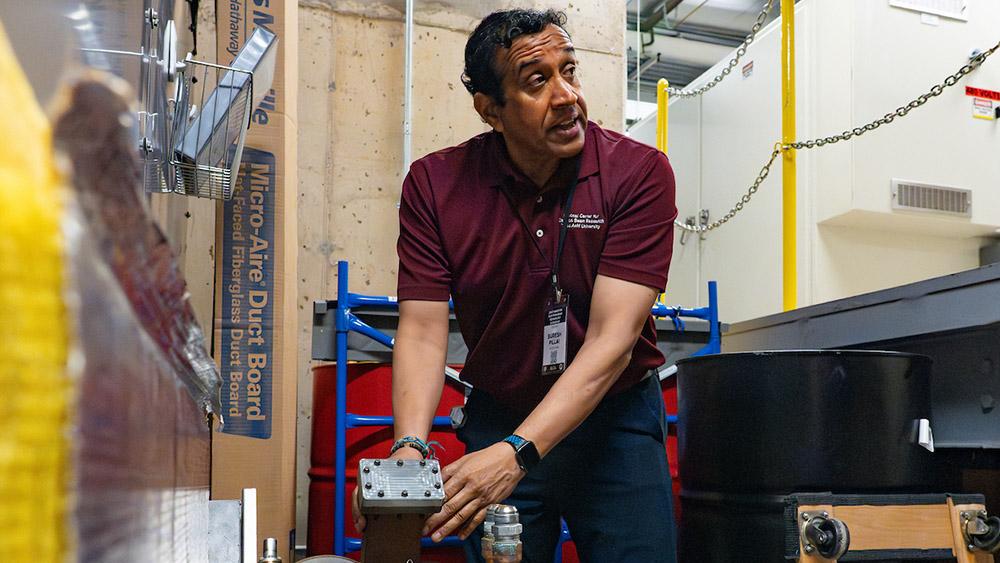
A man in the center of a utility room looking to the right

Modernizing space food for long-duration missions

Texas A&M scientist explores electron beam technology for safer, higher quality space food systems

Suresh Pillai, Ph.D., a Texas A&M AgriLife Research scientist, professor in the Department of Food Science and Technology and head of the National Center for Electron Beam Research, says electron beam, or eBeam, technology could replace many of the thermal stabilization methods currently used to prepare shelf-stable space food.

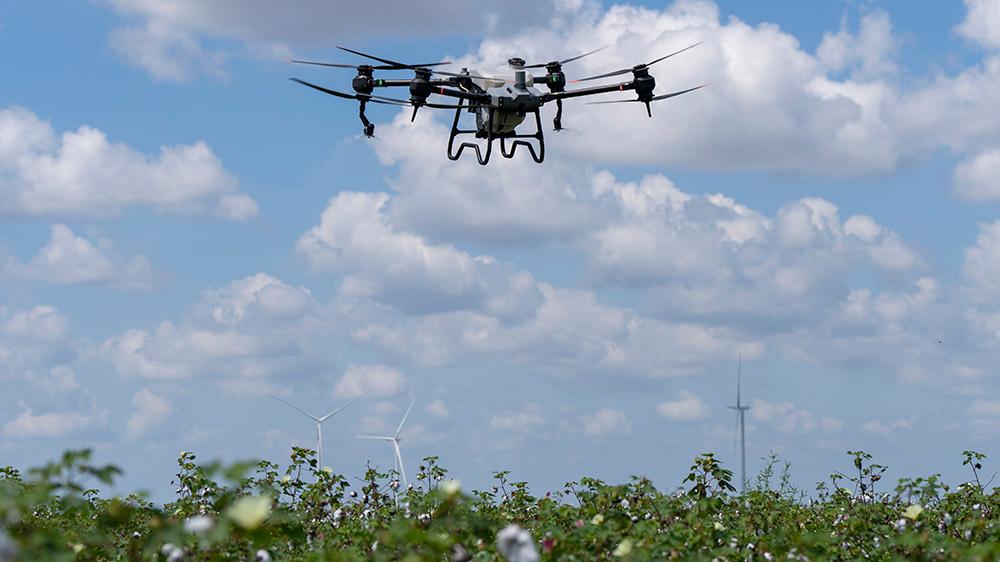
drone hovering over cotton field

Cotton precision: Digital tools tested in Texas fields

Texas A&M AgriLife partners with Coastal Bend cotton producers on digital agriculture project

The digital agriculture team of the Texas A&M AgriLife Research and Extension Center at Corpus Christi has launched a project aimed at providing commercial cotton producers with advanced digital management tools and evaluating the new technology’s performance. The researchers have teamed up with 11 cotton producers across the Texas Coastal Bend to evaluate and demonstrate the tools.

Black and red splotches on a light background

AI-powered forecasts sharpen early warning for destructive crop pest

Texas A&M AgriLife researchers predict western thrips outbreaks more accurately using AI models

New research from Texas A&M AgriLife Research indicates that artificial intelligence, AI, can predict outbreaks much more accurately than traditional methods. The tool could dramatically improve how and when insect pest risks are identified and controlled.

Follow Texas A&M AgriLife Research on social media | @txresearch