|
What If We Changed Where Philanthropy Enters the Equation?
Philanthropy has long played an essential role in helping individuals and families access affordable housing. From rental assistance to supportive services, charitable contributions help bridge the gap between what households earn and what housing costs.
But what if philanthropy could also help close that gap before a building is even constructed?
In a recent Affordable Housing Finance article, "The Next Frontier for Private Capital in Affordable Housing," Jim Gillespie explores how strategically placed capital can unlock housing developments that might otherwise remain stalled. His argument highlights an important principle: the structure and timing of capital can be just as consequential as the amount invested.
At The Affordability Project, we believe this principle offers an opportunity to rethink the role of charitable giving.
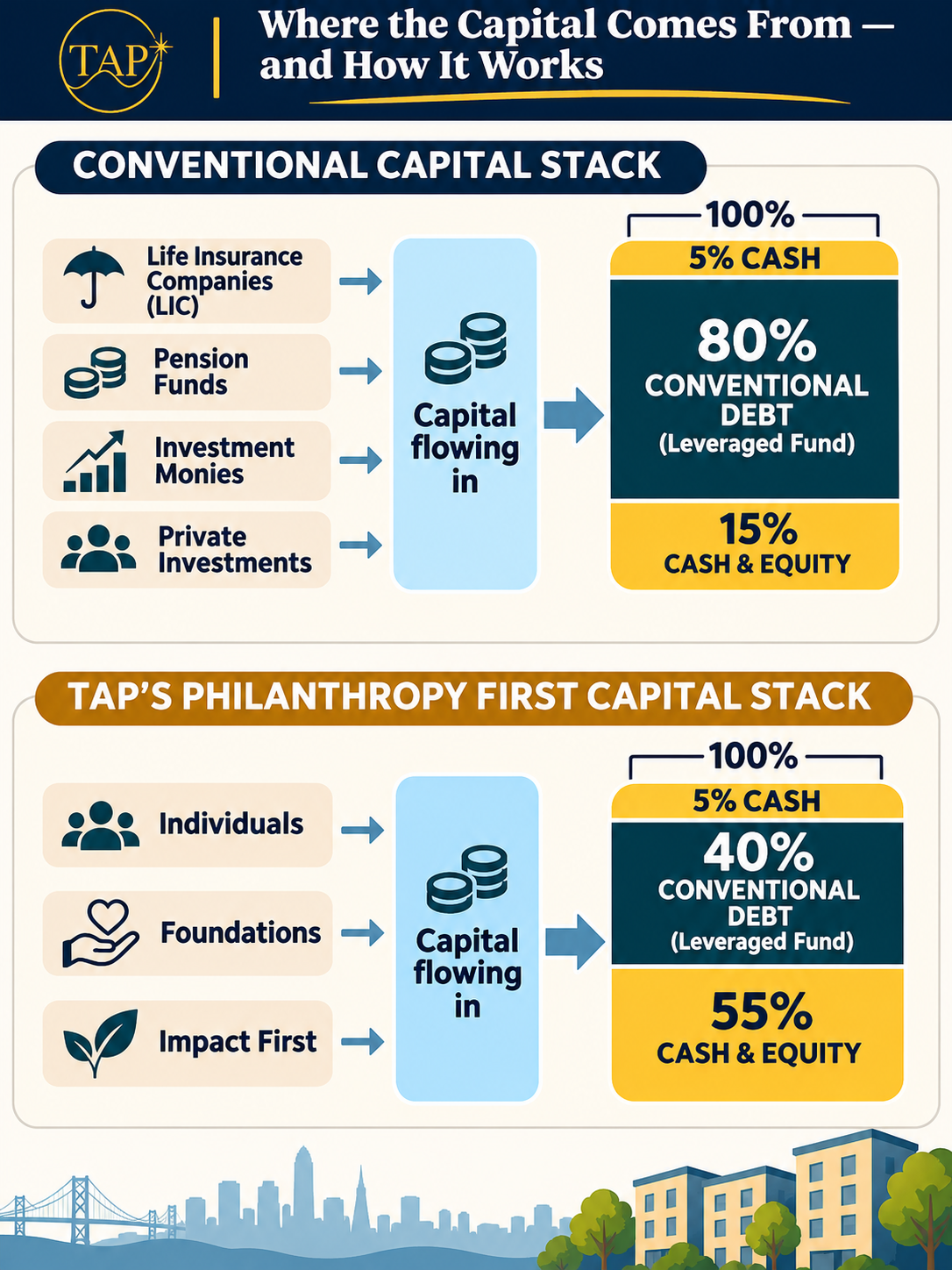
Rather than using philanthropic dollars solely to help households afford rents determined by conventional development economics, we can also deploy those dollars earlier—within the development's capital stack.
When charitable contributions reduce the need for expensive financing or high-return equity, they can lower the financial burden a building must carry. That creates an opportunity to establish rents based on what working households can afford, rather than what is necessary to satisfy conventional investor return expectations.
The distinction matters.
Philanthropy that supports rental assistance helps close an affordability gap. Philanthropy that helps finance development can reduce the gap itself.
And when lower-cost development capital is combined with nonprofit ownership, responsible financial management, and long-term affordability commitments, the benefits can extend far beyond the initial contribution.
A building can continue providing affordable homes for decades. A financially sustainable nonprofit developer can use its experience, operating capacity, and potentially recoverable capital to pursue additional developments.
This is the opportunity TAP sees in philanthropy—not simply as a subsidy, but as productive capital that helps create lasting community assets.
What if the greatest impact of a charitable dollar wasn't measured only by the assistance it provides today, but also by what it makes possible tomorrow?
|