October 2026

Why Housing Cost So Much

This month, we’re diving into the economics of housing finance—and why building new homes costs so much.


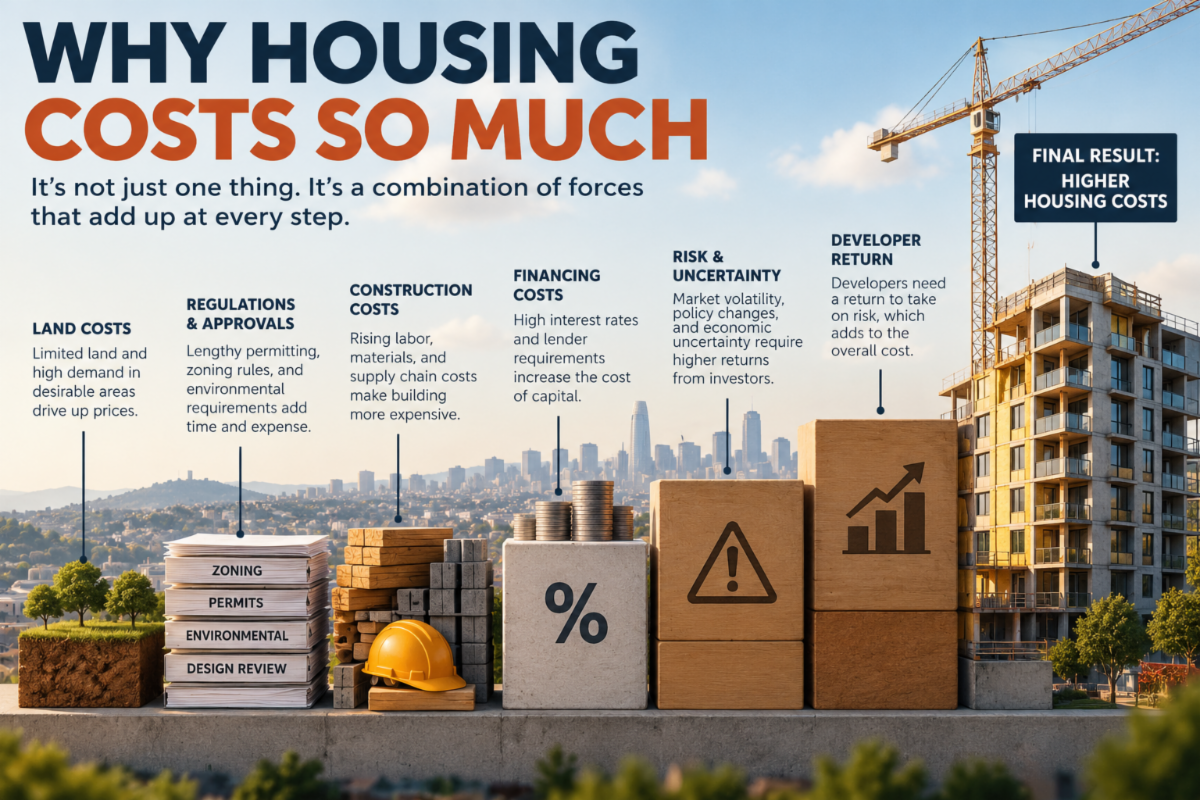
As the graphic above illustrates, there is no single cause. Land, regulations and approvals, construction, financing, risk, and developer returns all add costs along the way. The conventional real estate market is structured to account for these costs while generating a competitive financial return. That isn’t inherently a bad thing. Real estate has historically provided investors with stable returns while creating homes, jobs, and economic activity. But when we talk about housing affordability, we also have to recognize that every layer of cost ultimately influences what residents pay.


What if we could change that equation?


At The Affordability Project, we are already testing what happens when we approach these costs differently through 0ur inaugural project at 5250 3rd Street. Donors contributed the land, professionals volunteered expertise to help navigate planning and permitting, and labor and material partners reduced costs because they believe in our mission. And because TAP is the nonprofit developer, we do not take a traditional market developer fee. Instead, income from the completed project will support our organization and help fund future projects.

Together, these contributions have eliminated or significantly reduced the impact of four of the six major cost centers illustrated above.


That leaves us with one of the most consequential pieces of the equation: capital.


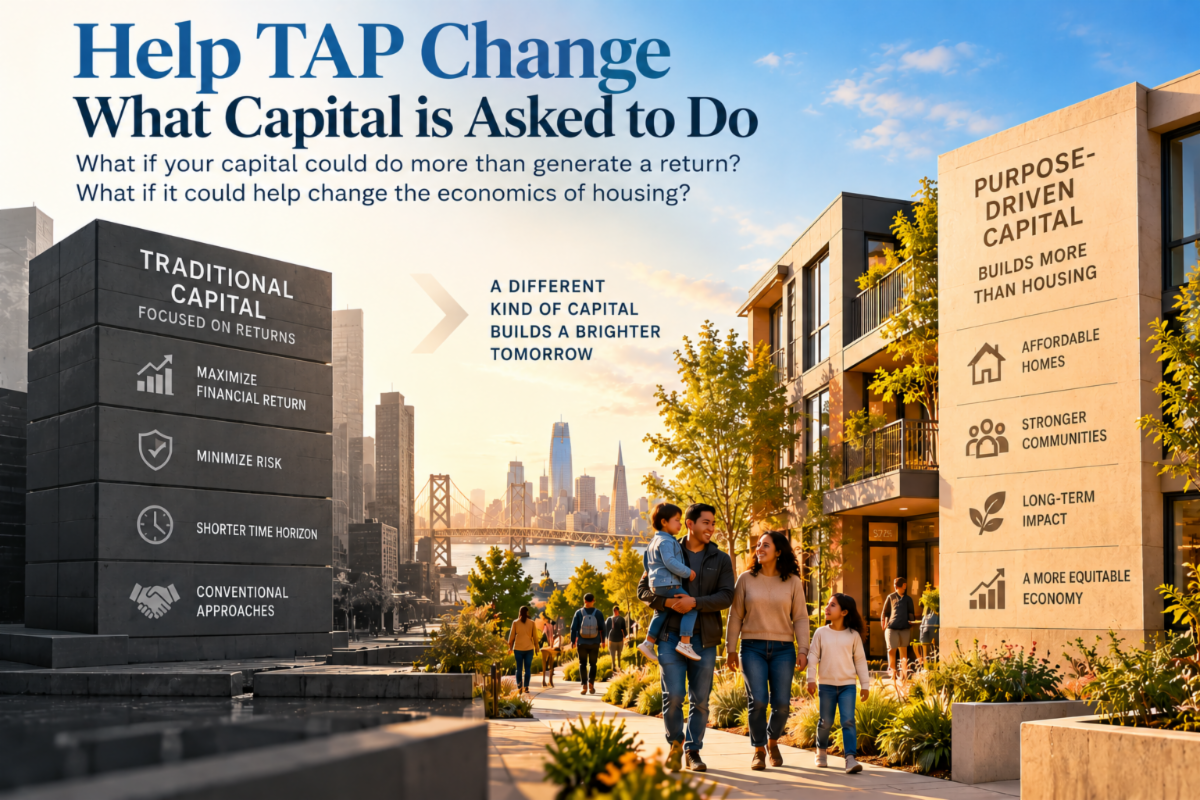
TAP must still navigate a conventional financing market with traditional expectations around risk and return. What if we could approach capital differently, too? What if capital could generate a reasonable return while also helping lower the cost of housing?

In the months ahead, we look forward to sharing more about a new strategy designed to do exactly that—lowering the cost of capital while aligning investments with TAP’s mission.


Because changing what housing costs

may begin with changing what we ask capital to do.


TAP News - Putting the Idea to Work

TAP 's Approach to solving the problem

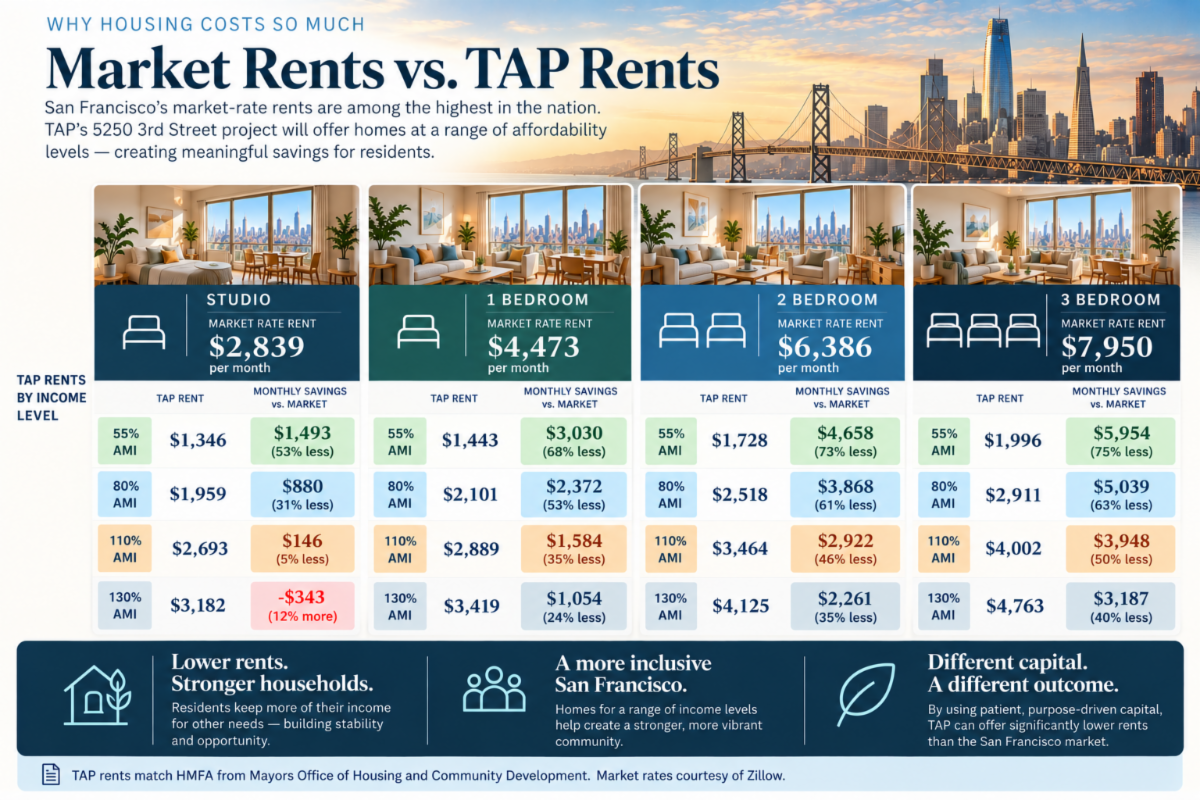
The Affordability Project is reimagining the role philanthropy can play in affordable housing. The numbers below show what that can mean in practice: quality homes at rents designed to work for San Francisco’s working families.


In the graphic below, TAP's rents are materially lower than the current San Francisco market rate offerings. Considering the market rate rent levels, shown above TAP's rents, San Francisco's rental market is unsustainable for people who work to support themselves and their families.


By putting purpose-driven capital to work differently, TAP is demonstrating that affordability can be built into the financial model—not treated as an afterthought.


The time is now to rethink

what philanthropy can accomplish in housing.


Conscious Capital

Let's get creative with capital terms


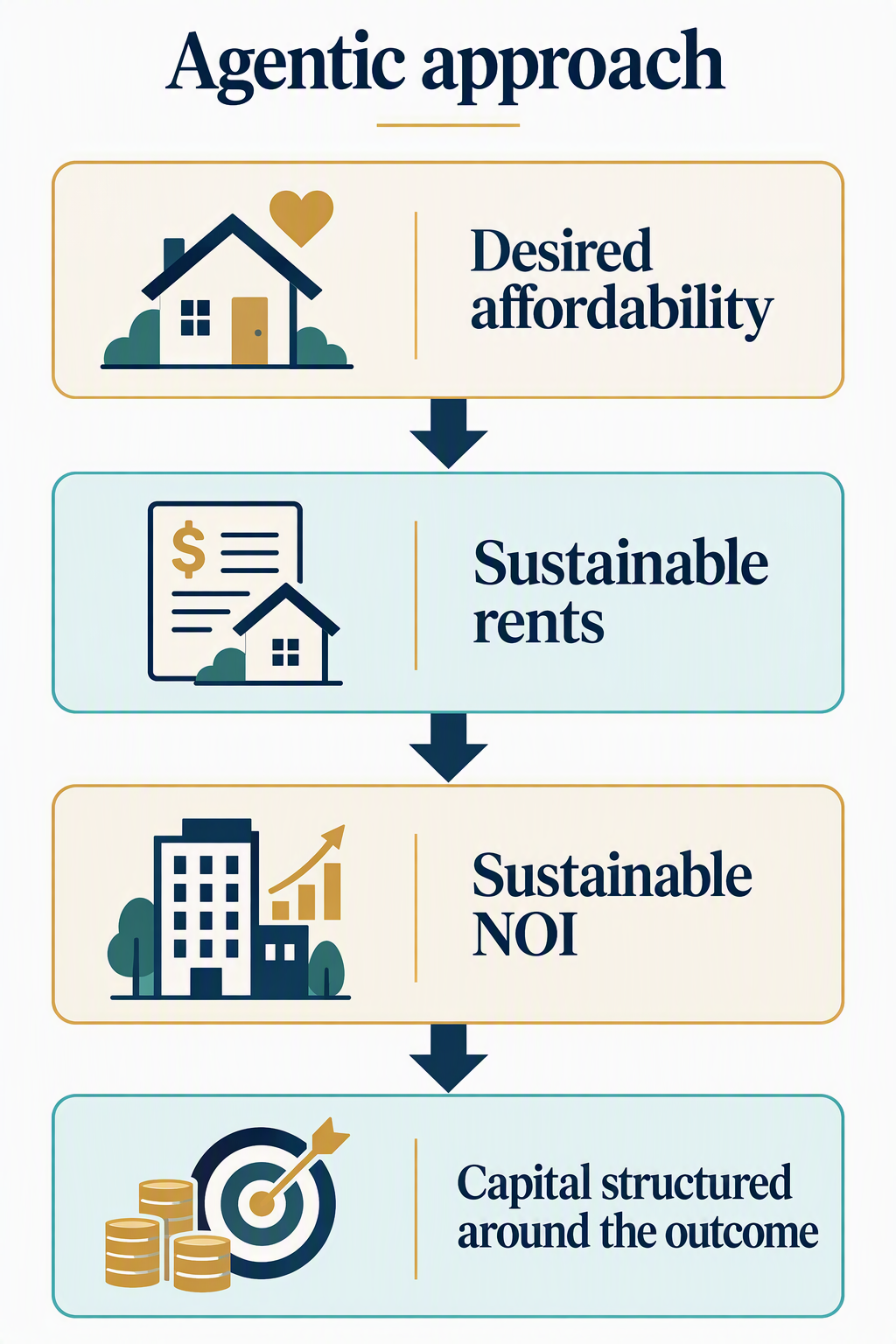
Tim Szarnicki recently wrote about an idea he calls Agentic Capital.


He defines Agentic Capital as, "the approach to deploying capital intentionally, and with the agency inherent in the terms of capital itself: what return is required, what risks are acceptable, how long the capital stays invested, what claims it makes, and what outcomes its structure is designed to enable. Agentic Capital is more than conventional. It is capital that harnesses the power of its ability to choose its terms."


In his essay he proposes defining the terms of capital investment agreements to focus on measured outcomes and value created and notes that taking this approach could accelerate housing production in America.


These are our two primary goals:


  1. TAP will increase the supply of housing by building more affordably and pass the savings to residents.
  2. Design capital terms to achieve our goal.


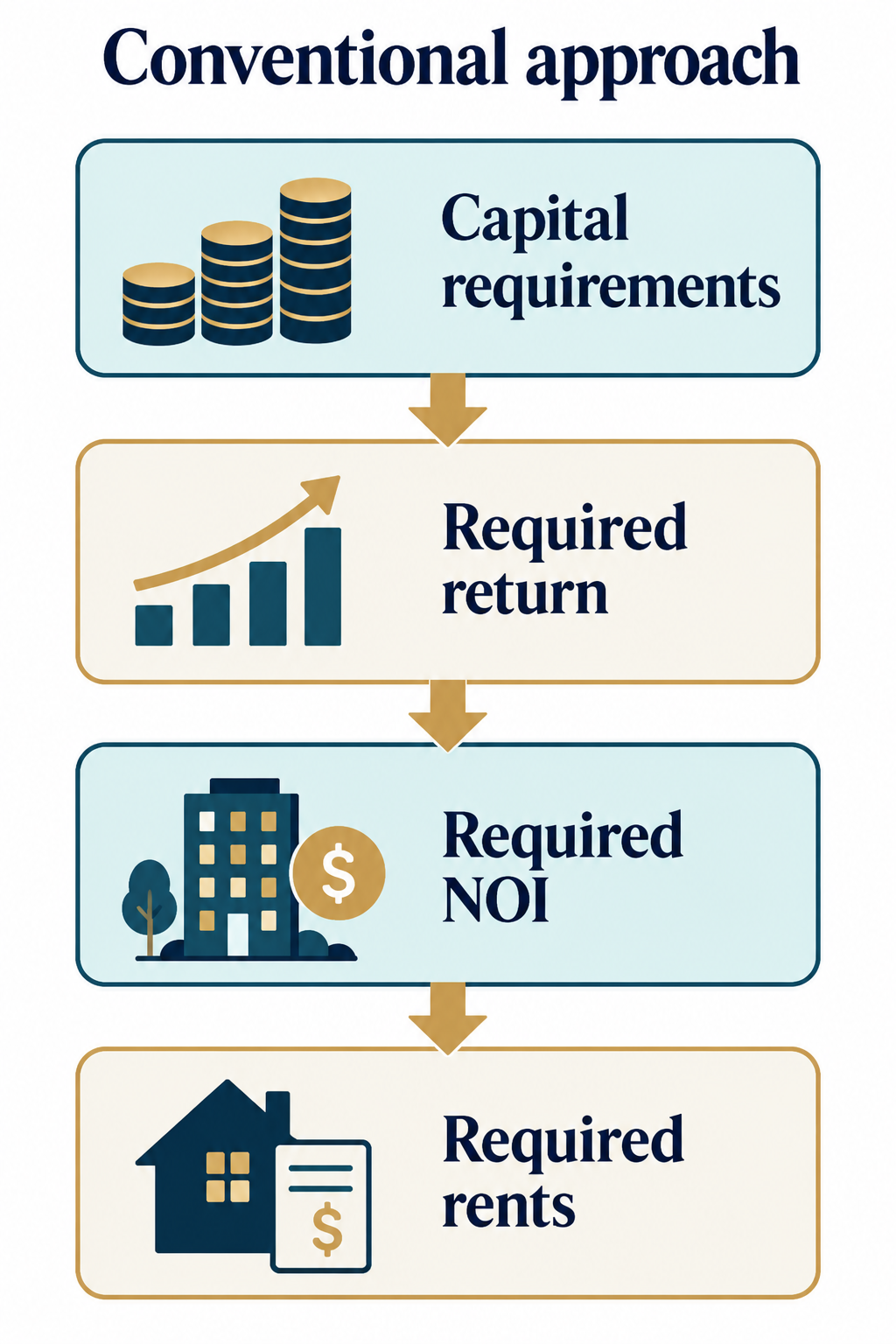
Conventional capital says, "What can a piece of real estate produce in terms of a return?"


Based on the potential return, the up-front capital is priced according to risk, market realities, and potential profit. At the end of the day, high risk equals high reward.


With conventional thinking, building affordable housing is risky, which means it is expensive. 


Agentic Capital starts with the question of outcomes: "How many units can be built that will be provided at affordable rates to residents."


Then it asks what capital would have to cost to make that possible.


With Agentic Capital thinking, can the outcome of more housing built affordably be valuable enough to the market to drive down capital costs?


Something to Read

The Stories that Got us thinking...

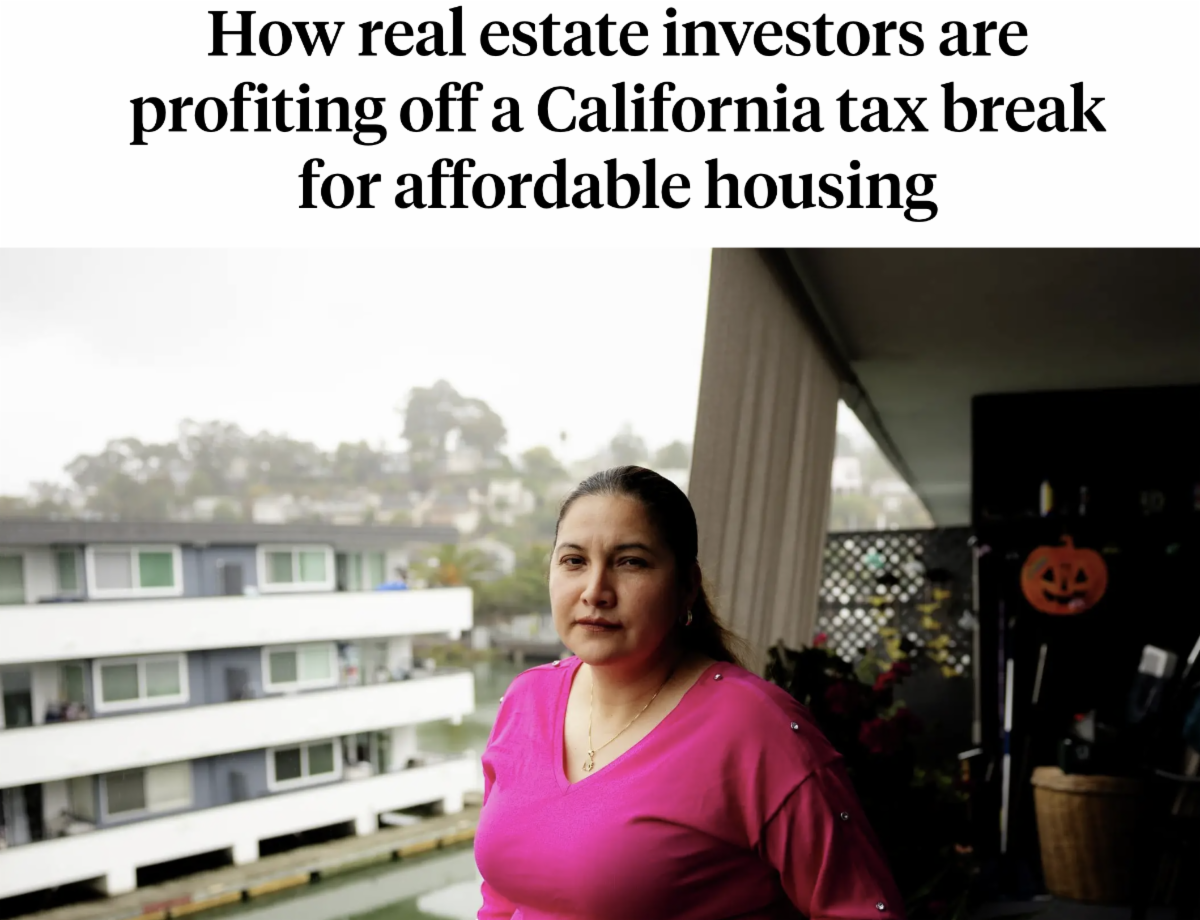
San Francisco Chronicle - October 5, 2026

The Chronicle's investigation asks an important question about California's welfare property-tax exemption: When government gives up tax revenue in exchange for affordability, how much of that economic benefit actually reaches residents?


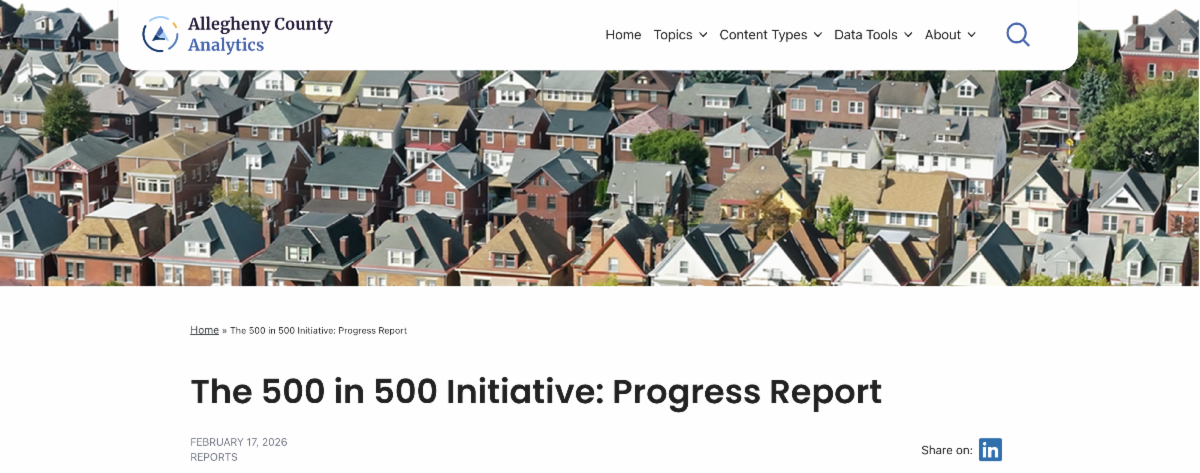
Big problems rarely yield to business as usual. Allegheny County’s 500 in 500 Initiative shows what can happen when government, philanthropy, nonprofits, developers, and community partners align their resources around a shared goal. By rethinking existing systems, removing barriers, and working collaboratively, the initiative turned urgency into measurable results.


This is the kind of collective action TAP believes is necessary to address housing affordability—aligning capital, expertise, and purpose to accomplish what no single organization can achieve alone.


Call to Action

Thank you to our partners in mission!


(415) 424-4739


YouTube  Web  LinkedIn  
 

The Affordability Project | 3364 Sacramento Street | San Francisco, CA 94121 US