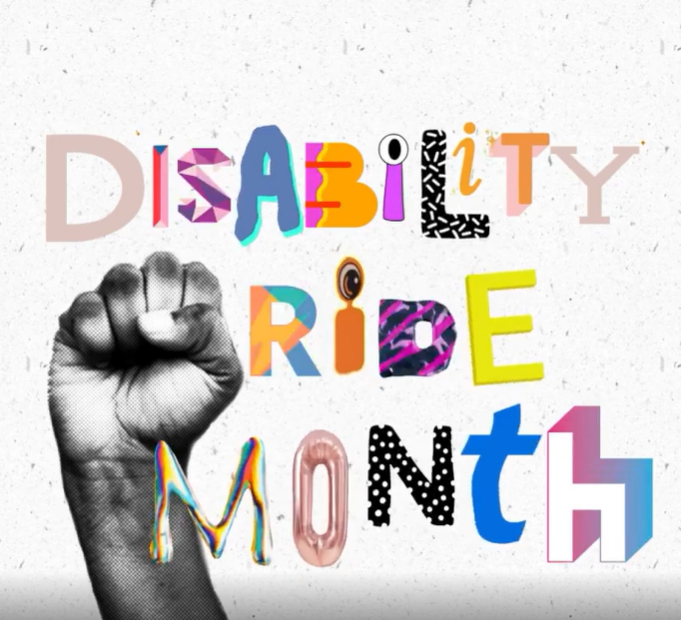
A gif image with letters that spell Disability Pride Month next to a black and white clenched fist. Image created by Jen White Johnson.

Happy Disability Pride Month from the Disability Access and Inclusion Office!

On July 26, 1990, the Americans with Disabilities Act (ADA) was signed into law, creating a new era of change for people with disabilities. Since then, the month of July has been Disability Pride Month. Although it is not recognized as a national holiday, disabled people celebrate in cities across the U.S., including San Francisco, New York and Chicago. 


When we hear stories of people with disabilities in popular culture and media, we often hear stories of pity, tragedy or of "overcoming". Rarely do we hear success stories – or even just ordinary stories! This is in large part because society has often framed disability as something to be afraid or ashamed of.


The Disability Pride Movement is about changing that perception. Switching up the narrative to embrace disability identity and culture, and to recognize that disability is a natural part of our human diversity.  


In his book Exile & Pride: Disability, Queerness, & Liberation, Eli Clare expands on this idea: “Pride works in direct opposition to internalized oppression. The latter provides a fertile ground for shame, denial, self-hatred, and fear. The former encourages anger, strength, and joy. To transform self-hatred into pride is a fundamental act of resistance.”


This July, we are wishing you all joy and comfort in community, time for learning and remembering disability history and spaces for dreaming up and working toward accessible futures.


~ Disability Access and Inclusion Office


Image Description: Image created by disabled artist Jen White-Johnson, showing letters that spell Disability Pride Month next to a black and white clenched fist.

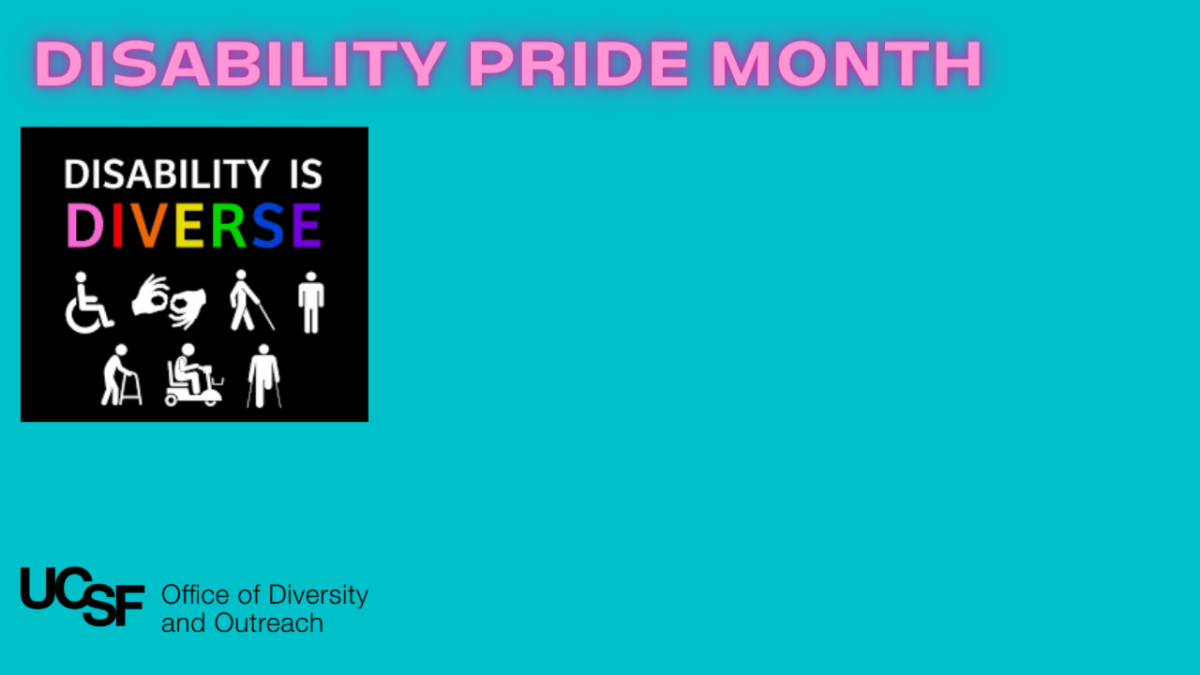
Zoom background in teal color with pink title that reads Disability Pride Month with UCSF logo in bottom left corner and an image that reads Disability is Diverse with seven icons of different disabilities.

Disability Pride Month Zoom Backgrounds


Download any of these virtual backgrounds and add them to your Zoom.


Learn how to set a virtual background.

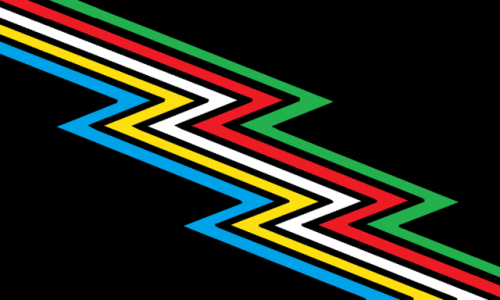
Image of the Disability Pride flag with a black background and diagonally across the flag are five zigzag lines colored blue yellow white red and green.

The Disability Pride Flag


The Disability Pride flag has some interesting symbolism interpreted by disabled artist Ann Magill, which include:


The Black Field: this field is to represent the disabled people who have lost their lives not only due to disability or illness, but also negligence, suicide, and eugenics.


The Lightning Bolt: the shape of the lightning bolt represents the non-lateral lives that many disabled people live, often having to adapt themselves or their physical routes to get around an inaccessible society.


The Colors: each color on this flag represents a different aspect of disability:

  • Blue: mental illness
  • Yellow: cognitive and intellectual disabilities
  • Green: sensory perception disabilities
  • Red: physical disabilities


Image description: Image of the Disability Pride flag with a black background and diagonally across the flag are five zigzag lines colored blue, yellow, white, red, and green.

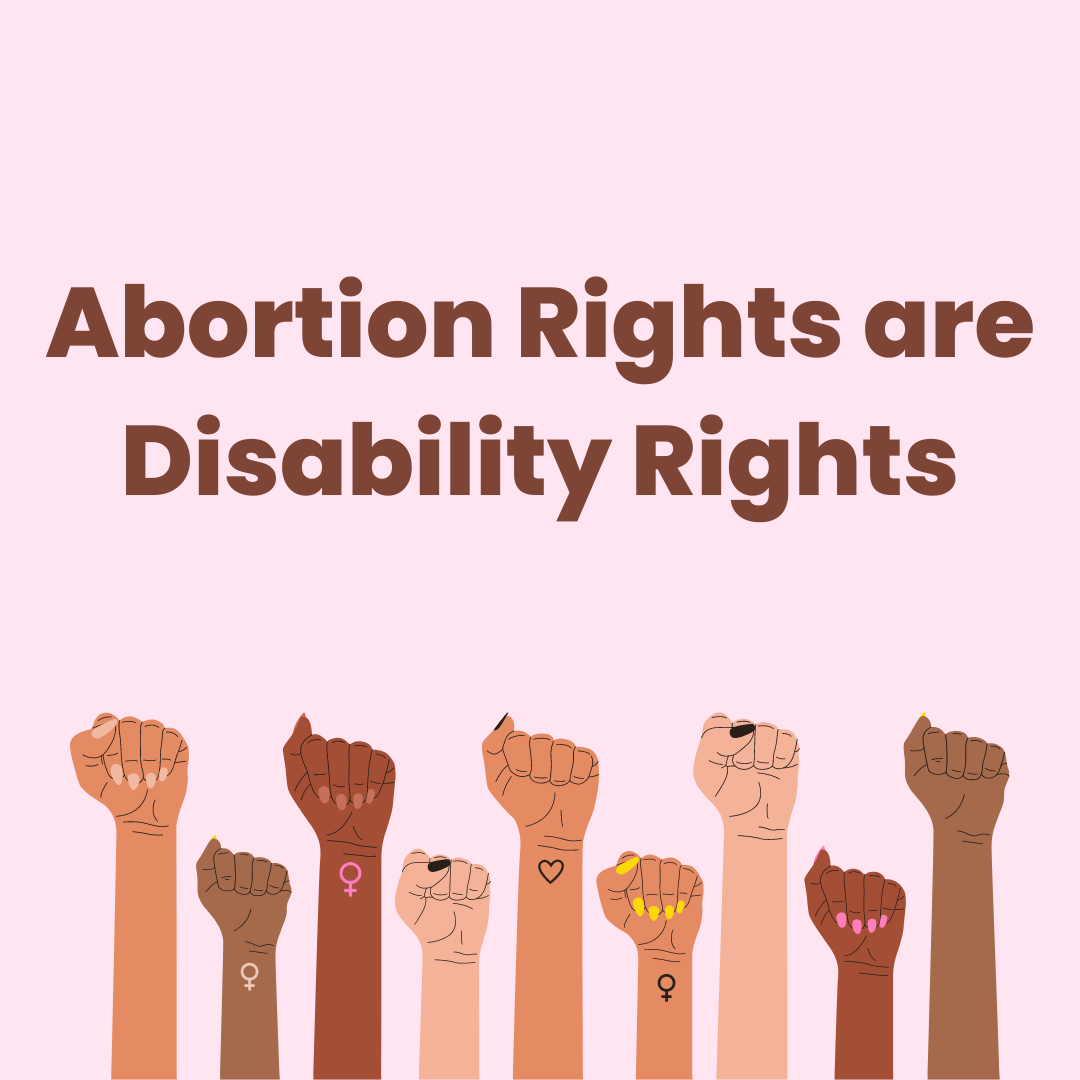
An image on a pink background with 9 raised arms with clenched fists of different skin tones. Text reads Abortion rights are Disability Rights.

Abortion rights are Disability Rights.


See below for a joint letter drafted by a collective of disability organizations calling on Congress to codify the right to abortion into federal law.


Key points:

  • Disabled people have the right to self-determination and bodily autonomy.
  • Disability rights include reproductive rights.
  • People with disabilities face barriers to abortion and contraception.
  • Most sex education classes are not accessible.
  • People with disabilities are more likely to be sexually assaulted.
  • Some people with disabilities have complex medical conditions and pregnancy can be dangerous.


Image description: An image on a pink background with nine raised arms with clenched fists of different skin tones. Text reads: Abortion rights are Disability Rights.

Learn More: Abortion Rights Are Disability Rights

"I Am Not Your Inspiration, Thank You Very Much"


Stella Young was a comedian and journalist who happened to go about her day in a wheelchair — a fact that doesn't, she'd like to make clear, automatically turn her into a noble inspiration to all humanity. In this TedTalk, Stella Young breaks down society's habit of turning disabled people into "inspiration porn."

Screenshot of Stella Young, a white woman with short blond hair in a power wheelchair smiling.

"I got 99 problems ... Palsy is just one"


"I have cerebral palsy. I shake all the time," Maysoon Zayid announces at the beginning of this exhilarating, hilarious talk. "I'm like Shakira meets Muhammad Ali." With grace and wit, the disabled Arab-American comedian takes us on a tour of her adventures as an actress, stand-up comic, philanthropist and advocate for the disabled.

Screenshot of Maysoon Zayid a woman with long hair sitting on a chair with the Ted logo behind her.
Disabled #SayTheWord

#SayTheWord


The #SayTheWord hashtag was created by disability activist Lawrence Carter-Long in 2015. Its purpose is to urge people to say the word “Disabled” rather than avoid it in conversation by using terms like “special needs,” “physically or mentally challenged,” “differently abled,” etc.

Learn More: #SayTheWord
Symposium on Disability Cultural Centers in Higher Education text

Symposium on Disability Cultural Centers in Higher Education

July 8-9, 2022 (Virtual on Zoom)


This week, the University of Illinois, Chicago (UIC) Disability Cultural Center (DCC) is getting together with disability cultural practitioners and scholars from the majority of existing DCCs to knowledge-share and empower students, faculty, staff, and administrators interested in developing a DCC. Events include Histories of DCCs, Designing a DCC, Programs: Successes and Learning Curves, Envisioning a Culture of Accessibility on Campus, and more.


Learn more and register for the DCC Symposium 

Access info: CART and ASL will be available for all sessions. Contact jdsouz5@uic.edu with any other access requests.


Image Description: Symposium on Disability Cultural Centers in Higher Education logo, with “Symposium on” in thin aqua text, sitting on top of “Disability Cultural Centers” in a central block of bold purple text, and “in Higher Education” in small, bolded aqua text underneath. To the upper right are abstract aqua leaf shapes and a circle, suggesting a plant with a bud.

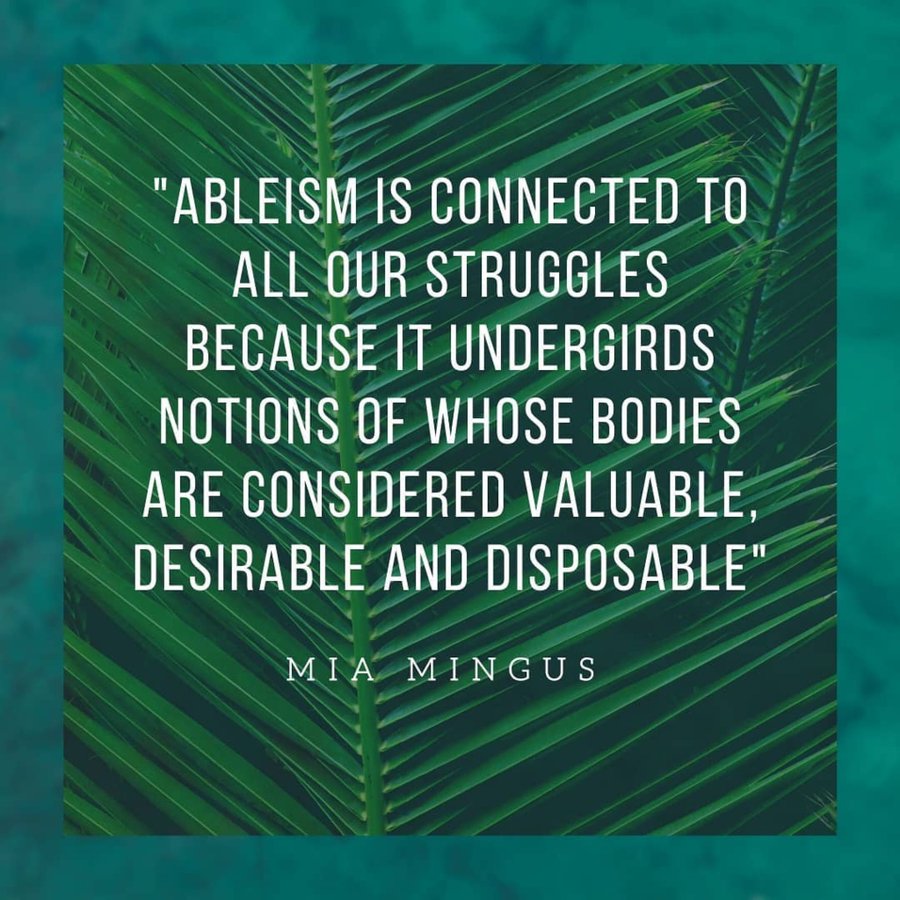
Quote by Mia Mingus that says Ableism is connected to all our struggles because it undergirds notions of whose bodies are considered valuable desirable and disposable. White text against the backdrop of green palm tree leaves and teal colored border.

Changing the Framework: Disability Justice by Mia Mingus


Image description: Quote by Mia Mingus that says, "Ableism is connected to all our struggles because it undergirds notions of whose bodies are considered valuable, desirable and disposable.” White text against the backdrop of green palm tree leaves and teal-colored border.

Learn More: Mia Mingus "Changing the Framework: Disability Justice" 

Contact Us!

Disability Access and Inclusion

UCSF Office of Diversity and Outreach

Learn More


Located in the Office Diversity and Outreach, the Disability Access and Inclusion Office focuses on ensuring UCSF is an accessible inclusive place for people with disabilities to work, learn, visit, and receive healthcare. The Disability Access and Inclusion office offers consultations on creating accessible events, provides disability cultural programming, and facilitates education and training.


Wendy Tobias, Chief Accessibility and Inclusion Officer

Email: Wendy.Tobias@ucsf.edu


Cecile Puretz, Assistant Director, Disability Access and Inclusion

Email: Cecile.Puretz@ucsf.edu

LinkedIn Share This Email