As vaccines for COVID-19 became available, the state showed leadership in developing a task force that included CFILC, Disability Rights California and other advocacy partners in disability and aging policy. The State showed leadership by including prioritization of immunocompromised people for vaccine access and a commitment to providing in-home vaccination and transportation to and from vaccination appointments.
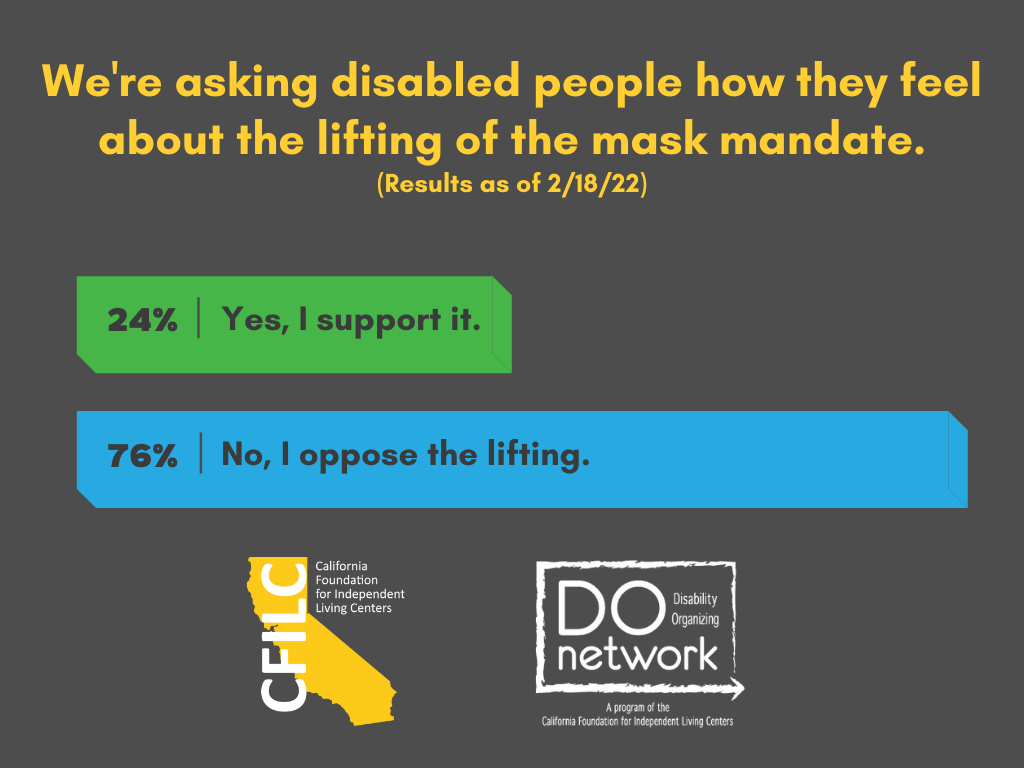
The announcement of this new direction towards relaxing and repealing public safety mandates has many within the disability community feeling pressure from a growing effort to declare an end to the pandemic and to treat our lives as expendable. The State leadership in prioritizing people with disabilities and older adults seems to be disappearing.
This pandemic has only increased issues of health access and societal inequity for disabled people. COVID-19 testing, a fundamental strategy to reduce community spread, remains difficult for the disability community. Simple interactions like grocery store shopping have become nearly impossible for many disabled people during this pandemic, forcing many to rely on expensive delivery services, adding burden to already underpaid in-home caregivers, and forcing some to rely on the mutual aid of friends and family for shopping related needs. While the beginning of the pandemic brought about dramatic investments in technology and creating access through virtual environments, we are already seeing local governments and businesses choosing to revert to in-person meetings and office environments. When combined with the relaxing of public health mandates, these environments become inaccessible to people with disabilities who are high risk for COVID-19.
While many in our community are exhausted from feeling excluded and unseen, the CFILC’s DOnetwork (Disability Organizing Network) calls upon the influencers of culture and policy — both our elected leaders and major media outlets — to insist that people with disabilities are visibly a part of the conversation as this pandemic continues. We refuse to acknowledge that our health crisis has ended, as many were experiencing dramatic inequity in healthcare access even prior to COVID-19. If we are to begin conversations about preparing for the future, we must take a seat at the table.
On March 15, 2022 — just under a month away — California’s Senate will hold a hearing on ending the Governor’s State of Emergency. With this will come a powerful opportunity to share a vision for California’s future during the pandemic and beyond that includes the visibility and leadership of disabled people. The DOnetwork invites disability community members to join statewide organizers and advocates in sharing a collective vision for a new chapter of the pandemic that includes a future that is an accessible California for ALL. Please watch for future alerts, and if you wish to be a part of the organizing effort, email DisabilityOrganizing@cfilc.org with the subject: State of Emergency Hearing.
We also call upon the mainstream media to listen to the voices of disabled people. During the pandemic, the disability community, throughout the state, the nation and globally, has rallied behind the hashtag
#NoBodyIsDisposable — a declaration that our community is powerfully united against healthcare rationing and policies that harm or exclude disabled people during times of crisis. Throughout the pandemic, we have adapted, and even led societal transformation through envisioning a world less reliant on able-bodied norms. As a result, all communities have benefited. Workplaces have been reimagined, and an entire sector of a delivery-based economy has become increasingly possible.
While California’s guidelines regarding masking may have changed, we insist that upcoming changes include our community. By appointing disability community representation to the newly proposed Office of Community Partnerships and Strategic Communications, we can ensure that future planning efforts visibly include the disability community in an effort to build a California for ALL. This is a powerful moment in time for our community in the state of California, our nation, and the world.
Nothing About Us Without Us!
--By Russell Rawlings, on behalf of CFILC.